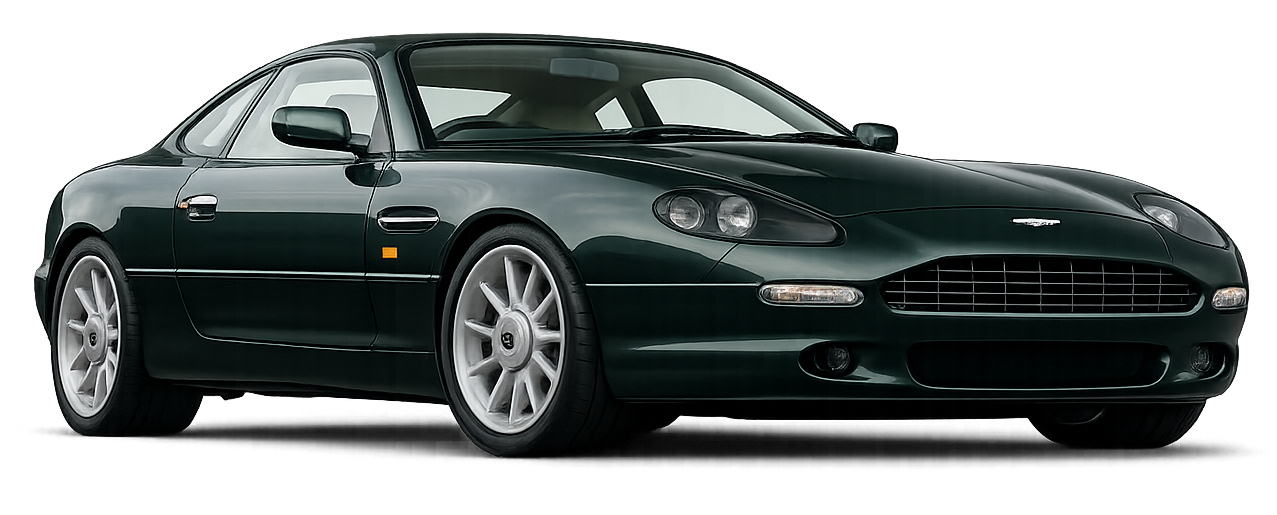
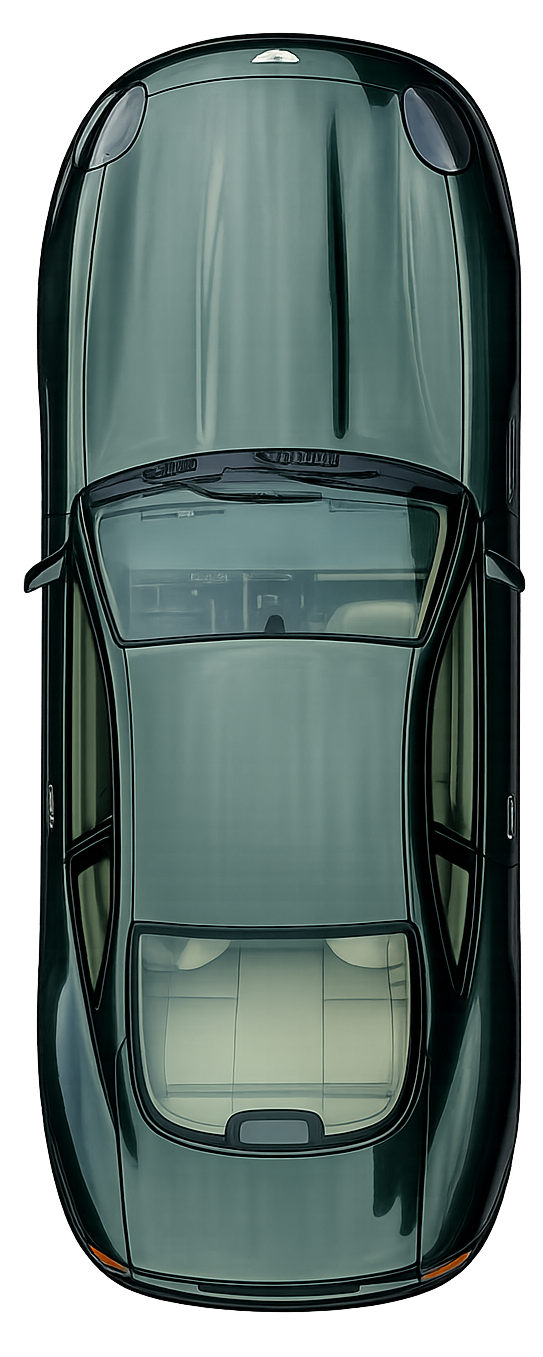
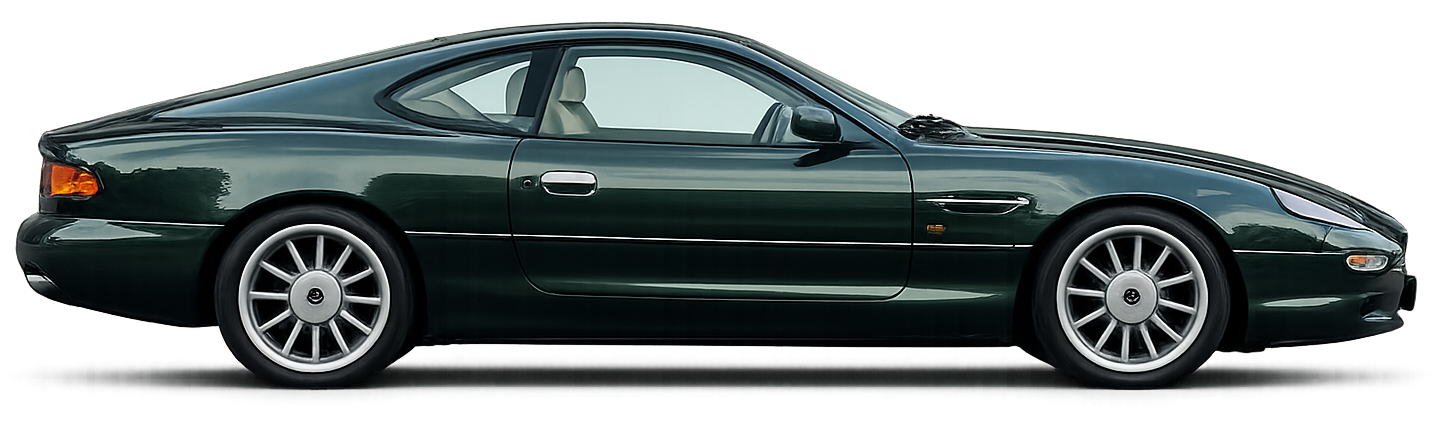
DB7 — 1999
The introduction of the 6.0-litre V12 in the DB7 Vantage in 1999 marked a major turning point in Aston Martin’s history. This entirely new engine — technically made up of two coupled Ford Duratec straight-six blocks — produced 420 bhp and gave the DB7 Vantage the performance of a true supercar: 0–100 km/h in 5.0 seconds and a top speed of 299 km/h. Its deep, complex tone is instantly recognisable and became one of the marque’s most cherished signatures.
The DB7 Vantage was available as a coupé and as a Volante, as well as in GT form from 2002, with aerodynamic improvements and a few extra horsepower. The DB7 Zagato, built in 99 examples in 2002–2003, represented the aesthetic pinnacle of the family, with a body entirely restyled by the Milanese coachbuilder. With around 3,500 examples produced, the DB7 Vantage V12 remains an accessible way into the Aston Martin world, and the members of Aston Passion devote numerous technical discussions to it.
The DB7 i6: the renewal (1993–1999)
Launched in 1993 under the direction of Walter Hayes and designed by Ian Callum, the DB7 marked Aston Martin’s rebirth. Its supercharged 3.2-litre straight-six producing 335 bhp, developed with Jaguar, was nothing exotic on paper — but in such a sculptural body, it restored to the marque a commercial credibility it had lost. With more than 700 examples sold in the first year alone, the DB7 instantly became the most-produced car in Aston Martin’s history.
The DB7 Vantage V12: the culmination (1999–2004)
In 1999, Aston Martin replaced the straight-six with an in-house 6.0-litre V12 producing 420 bhp — the marque’s first V12 since the Lagonda of the 1930s. The same body, the same grace, but an entirely different dimension. The DB7 Vantage V12 became overnight one of the finest grand tourers in the world, unanimously praised by the press. It would lay the mechanical foundations for the Vanquish, the DB9 and the whole of Aston Martin’s modern range.