Cygnet, quatre paradoxes assumés : iQ premium, prix de 911, outil CO2, 390 exemplaires. Un éclairage précis sur une parenthèse éloquente d’Aston Martin.
The Cygnet distils into four paradoxes an era, a strategy and a certain British humour applied to a city car. Born as a concept in 2009 and sold from 2011 to 2013, this tiny model based on the Toyota iQ sparked plenty of ink for good reasons. We revisit, with sources in hand, what its genesis, its price, its regulatory purpose and its discreet production say about Aston Martin’s identity.
A Toyota iQ under the winged badge: what “co-development” really meant
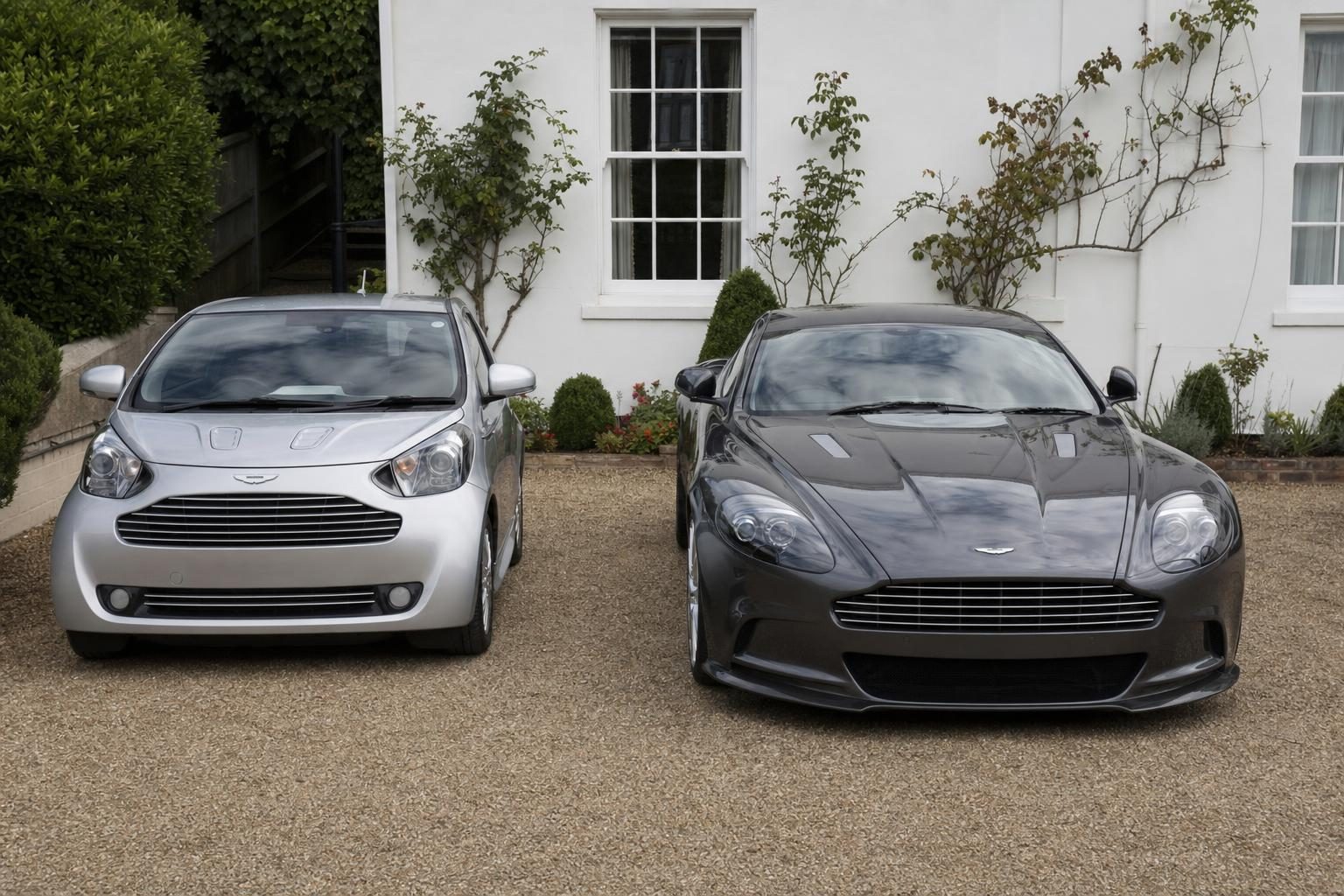
On paper, the idea looked like a win–win: build on the Toyota iQ, a proven urban platform, to offer a micro city car to Aston Martin owners seeking a city-centre tool. In practice, “co-development” chiefly meant adapting an existing base — compact bodywork, front transverse engine layout — to finish standards far above the norm.
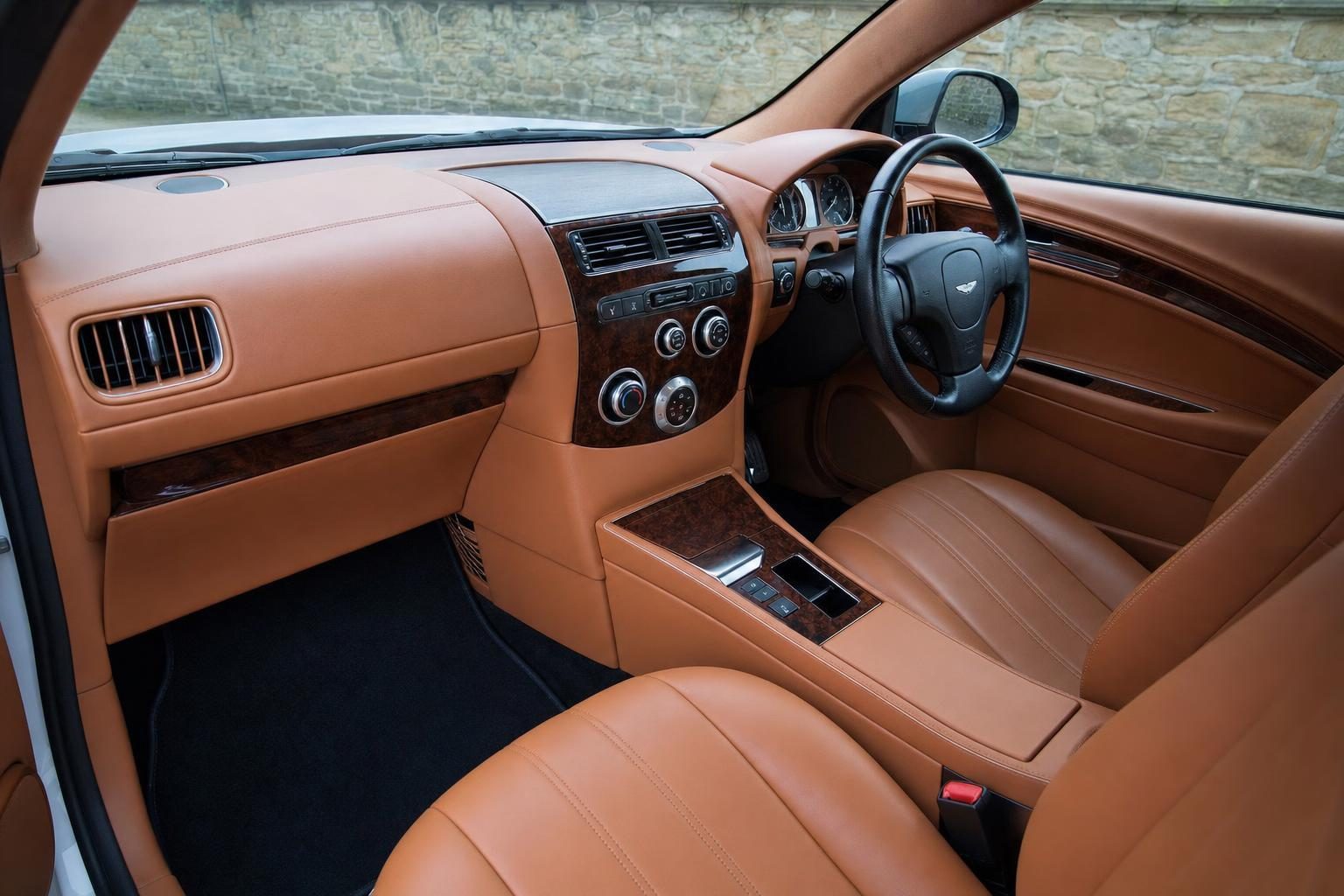
According to Wikipedia (English edition), the Cygnet explicitly rests on the Toyota iQ, from which it takes the 1.3‑litre 4‑cylinder with 98 PS. The difference plays out inside: hand‑stitched leather upholstery, inserts, leathers and configurations customisable via Q by Aston Martin. The winged badge is therefore not a mere sticker: it imposes artisanal treatment rare in this segment.
This approach blends pragmatism and house culture. Pragmatic, because the Japanese base brought proven safety, manoeuvrability and compactness. “House”, because Gaydon injected its trimming and personalisation know‑how, turning an urban mite into an object of taste — without touching the mechanical core, and that is precisely the paradox.
The price of a Porsche 911 for a 98 PS car: the logic of a delicate positioning
Pitched in the UK at around £30,995 — roughly the order of a Porsche 911 Carrera of the time according to Wikipedia EN — the Cygnet’s price crystallised criticism and puzzlement. How do you justify, for 98 PS, the price of a sports icon? By the same logic that makes a bespoke suit worth more than ready‑to‑wear, even if both cover the shoulders.
The heart of the proposition lay in perceived quality and exclusivity: full‑grain leather, meticulous finishes, Q by Aston Martin configurations case by case. The target client was not buying “performance”, but a coherent extension of their garage, a city keystone to match their GT, with the service assurance of a prestige brand.
This positioning, delicate by nature, nevertheless revealed its economic limit. Price/pleasure elasticity in the A‑segment does not obey the same rules as in GTs. In trying too hard to fit the Newport Pagnell spirit into three metres of length, you realise how much the design of the offer counts as much as its spec sheet.
Why the Cygnet was above all a regulatory tool, not a commercial product
Officially, the aim was clear: help lower Aston Martin’s average fleet CO₂ emissions to meet European standards. Again, Wikipedia EN highlights this central point. The small city car, frugal by design, mathematically “greened” the average of a range dominated by characterful V8s and V12s.
Viewed this way, the Cygnet becomes an instrument of compliance more than a new revenue line. On one side, the regulatory tool: small displacement, contained consumption, reduced footprint. On the other, the image object: upmarket finishes, prestigious badge, restricted production. The project’s dual nature explains many apparently counter‑intuitive choices.
One wink remains: in 2018, Aston Martin Works built a unique 430 PS V8 Cygnet, a passion project shown publicly. A way of reminding, with a discreet smile, that even the most urban Aston can, at times, harbour the soul of a miniature muscle car. This one‑off, mentioned by Wikipedia EN, casts the project in a knowingly tongue‑in‑cheek light.
About 390 examples and a puzzling valuation: the Cygnet in 2026
Total production would be around 390 examples according to Wikipedia EN. Other sources cite 150 to 160 units sold in the first year, with variations by market — a divergence to keep in mind when gauging real rarity. In any case, distribution remained confidential, which today feeds the interest of collectors of coherent curiosities.
In 2026, the Cygnet’s valuation surprises less than it prompts questions. Rarity, singular story, a place apart in Aston Martin’s trajectory: all the ingredients of a conversation piece are present. Value is not read only on the stopwatch, but also in the narrative, and this one ticks several boxes prized by lovers of transitional objects.
To set this parenthesis in the lineage, consult the page of former models on the official site via this overview of past models, or Aston’s press publications on special projects on the brand’s media portal. As for summarised figures and dates, they are listed on the dedicated Cygnet entry.
To delve deeper into brand culture, our Aston Martin history and legend panorama usefully places the Cygnet in the long conversation between artisanal tradition and modern constraints.
Conclusion: what the Cygnet says about Aston Martin
Ultimately, the Cygnet tells a fertile tension: reconciling regulation, image and customer service. Yes, the Cygnet was an iQ at its core and 98 PS by its engine; but it was above all an experiment — imperfect, deliberate — to answer its time without betraying the artisanal gesture. The mini‑Aston lived only three years, yet its cultural footprint exceeds its size.
This interlude invites a nuanced reading of Gaydon’s strategy. While today’s range — from the DB12 to special series — champions power and refinement, the memory of the Cygnet reminds us that innovation is not always loud. It can be regulatory, urban, almost silent. And sometimes, it takes the form of a tiny badge on a very short bonnet.
For a detailed model‑by‑model sheet, refer to our dedicated page on the Cygnet and its particularities, and, in echo, to modern GT news with the DB12 and its grand touring positioning. Another era, another use; the same underlying exacting standards.