Aston Martin and James Bond: 60 Years of Cinema Legend
Since 1964, Aston Martin and James Bond have formed one of the most iconic pairings in the history of cinema. In sixty years, the British marque has become inseparable from agent 007, to the point where the silhouette of an Aston Martin instantly evokes the world of the most famous spy on screen. This is a look back at six decades of an alliance between Aston Martin and James Bond that has deeply shaped popular culture.
Before the film: the DB Mark III of the novel
The story of Aston Martin and James Bond actually begins in literature. In Ian Fleming’s novel Goldfinger, published in 1959, the secret agent pursues his enemies at the wheel of a DB Mark III. The big screen would later seize on this association, but it was Fleming’s pen that first tied the fate of the marque to that of 007.
1964: the DB5 of Goldfinger, birth of an icon
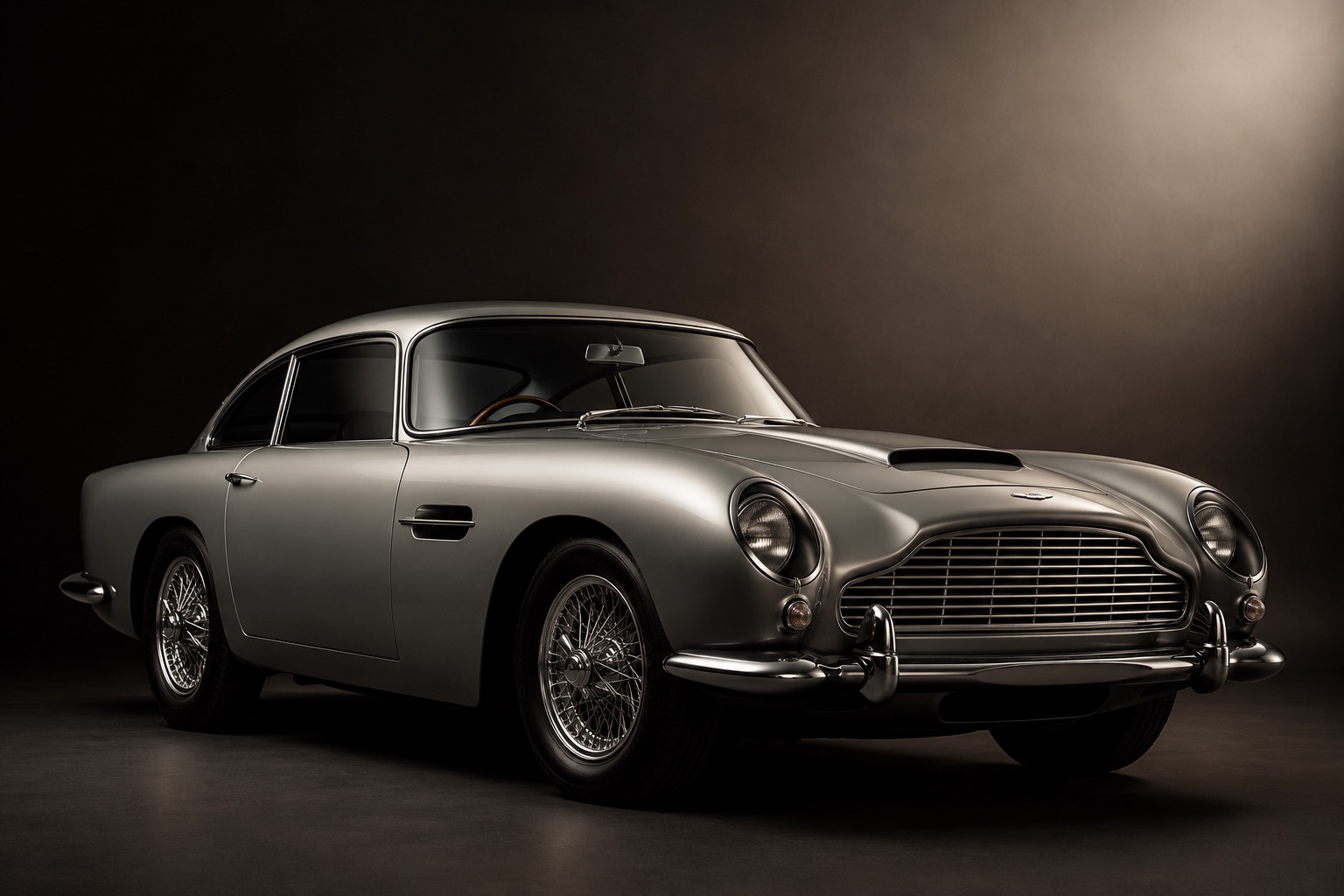
Everything changed in 1964 with Goldfinger. The DB5 driven by Sean Connery, fitted with gadgets dreamed up by Q (ejector seat, retractable machine guns, revolving number plates), instantly became the most famous car in the world. The film sealed forever the union of Aston Martin and James Bond, and the DB5 would return in many films, from GoldenEye to Skyfall, Spectre and No Time to Die.
The other 007 Aston Martins
Over the decades, Aston Martin and James Bond kept up their memorable appearances. The DBS joined George Lazenby in 1969, the V8 Vantage served Timothy Dalton in The Living Daylights (1987), and the Vanquish with its adaptive camouflage stunned audiences in Die Another Day (2002). In the Daniel Craig era, the DBS V12 shone in Casino Royale (2006), while a DB10 created specially for the film lit up Spectre (2015).
The DB5, a star that never ages
No other car has benefited more from Aston Martin and James Bond than the DB5. Returning in GoldenEye (1995), Tomorrow Never Dies, Casino Royale and Skyfall, it crosses generations of actors without ageing a day. The cars used in the films fetch record sums at auction, and the marque has even built a small continuation series, faithful to the original gadgets, for the most passionate collectors. The DB5 has become a rolling legend.
No Time to Die and the modern era
In 2021, No Time to Die celebrated the bond between Aston Martin and James Bond in style, bringing together on screen the historic DB5, the 1980s V8, the modern DBS Superleggera and the spectacular Valhalla concept. This gathering of models, both classic and contemporary, illustrates the depth of a relationship that few brands can claim in the history of cinema.
A priceless global showcase
For the marque, the association with 007 is exposure that no advertising budget could buy. With every film release, Aston Martin enjoys worldwide media coverage and an immediate boost in desirability. This partnership, one of the oldest and most fruitful between a carmaker and a film saga, has done much to raise the brand to the status of a cultural icon.
Aston Martin and James Bond, a legend that endures
Sixty years after Goldfinger, Aston Martin and James Bond remain inseparable in the collective imagination. Every new 007 adventure rekindles the anticipation of a fresh Aston in the credits. More than a mere marketing tie-up, Aston Martin and James Bond have grown into a shared symbol of British style, daring and timeless elegance, one that keeps resonating with audiences all over the world and across every new generation of fans. To dig deeper, explore the official Aston Martin website or the Aston Martin page on Wikipedia.
Aston Martin in Motorsport: From Le Mans 1959 to Formula 1
The story of Aston Martin in motorsport is almost as old as the marque itself. From the banked circuit of Brooklands in the 1920s to the 24 Hours of Le Mans, and on to modern Formula 1, racing has always been woven into the brand’s DNA. This is the history of Aston Martin in motorsport, where its sporting reputation and enduring legend were forged.
1959: Victory at Le Mans and the World Title
The historic peak of Aston Martin in motorsport came in 1959. That year the DBR1, driven by Carroll Shelby and Roy Salvadori, won the 24 Hours of Le Mans, the most demanding race on the calendar. The marque went on to clinch the World Sportscar Championship for constructors, beating Ferrari and Porsche. This double remains the greatest achievement in the brand’s history and the moment that defined Aston Martin in motorsport for a generation.
The GT Era: A Return to the Track
After several quieter decades, Aston Martin in motorsport was reborn in the mid-2000s with the Aston Martin Racing squad. The DBR9, derived from the V8 Vantage, dominated the GT1 category and won its class at Le Mans in 2007 and 2008. The marque continued with the Vantage GTE in the World Endurance Championship (WEC), taking several class wins and confirming its mastery of long-distance racing, a hallmark of Aston Martin in motorsport.
The Valkyrie and the Summit of Endurance
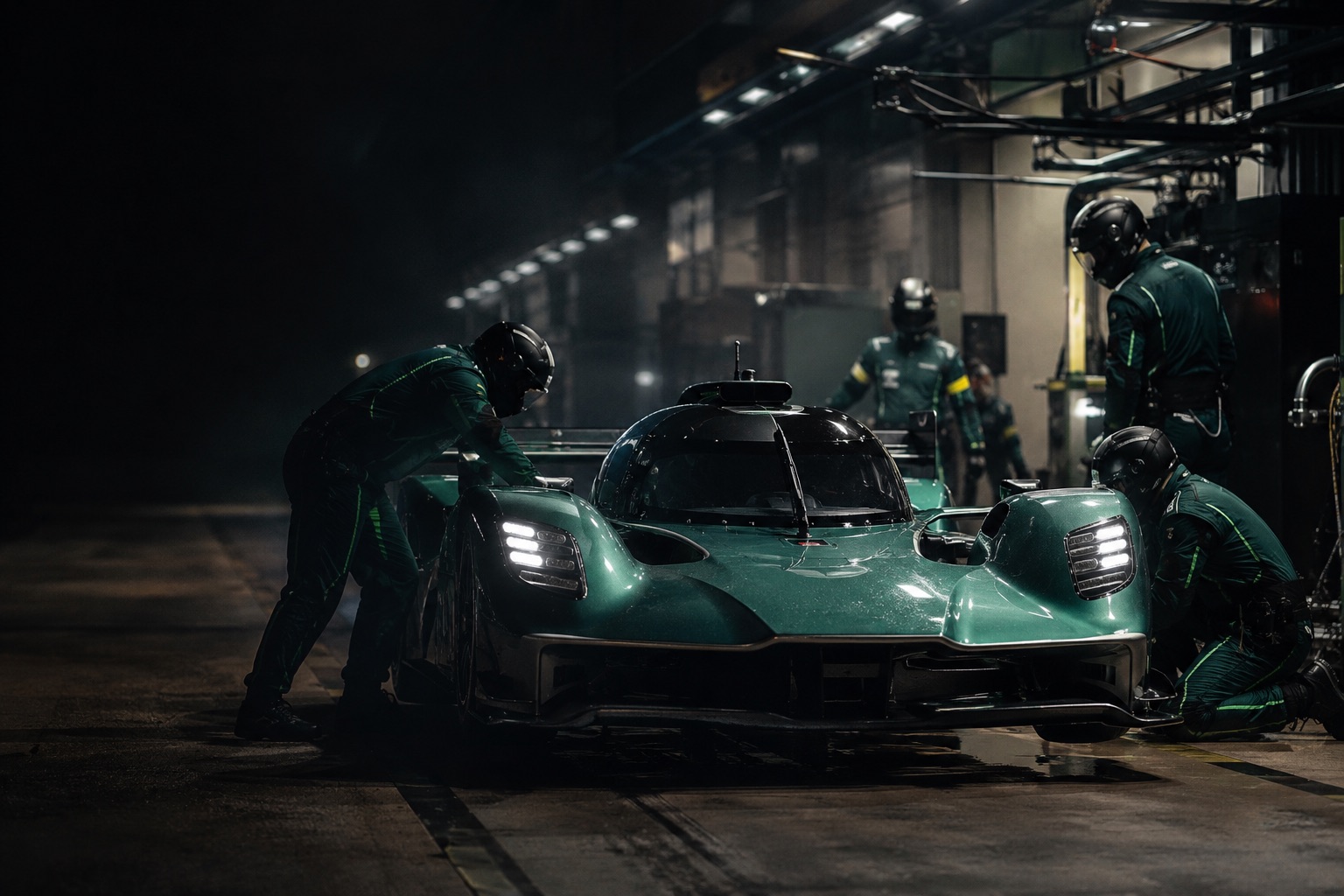
More recently, Aston Martin in motorsport has aimed once again for overall victory. The marque has entered the Valkyrie, its road-going hypercar penned by Adrian Newey, in the top tier of endurance racing, marking a return among the fastest prototypes. It is a powerful symbol: nearly the same car for road and track, faithful to the spirit of the brand’s origins.
The Return to Formula 1
In 2021, Aston Martin made its grand return to Formula 1 as Aston Martin Aramco, more than sixty years after its first attempt in 1959-1960. This commitment placed Aston Martin in motorsport once more at the very highest level of world motor racing, with the stated ambition of fighting at the front. The series also serves as a formidable technological and marketing showcase for the marque.
The Early Years: Brooklands and the Birth of a Racer
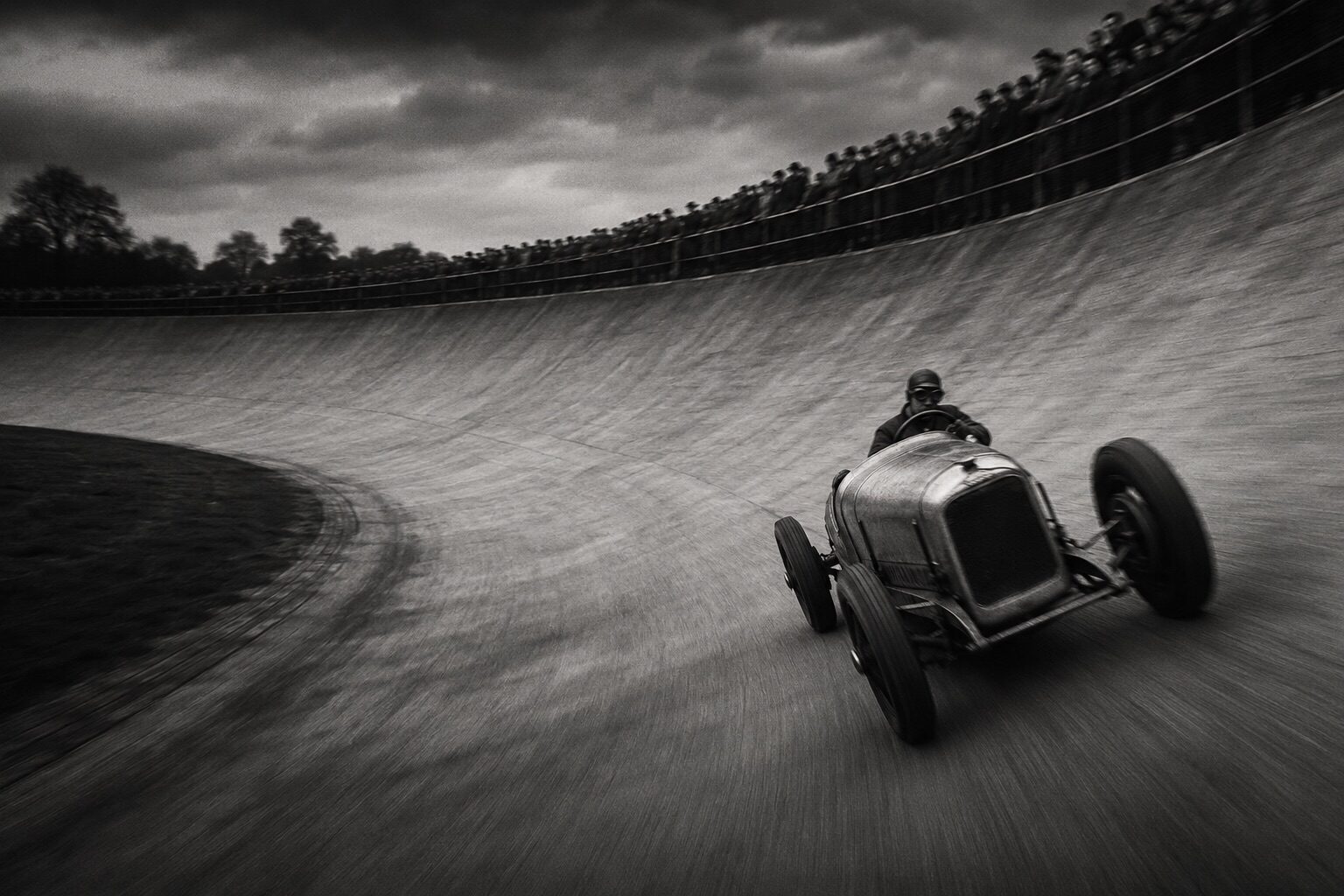
Long before Le Mans, Aston Martin in motorsport cut its teeth on the banked oval of Brooklands and in demanding road races such as the Ulster Tourist Trophy. The very name of the marque pays tribute to competition: it joins the Aston Clinton hillclimb, where founder Lionel Martin raced, with his own surname. From the outset the company built lightweight, agile machines designed as much for the track as for the road, and these early campaigns shaped the engineering philosophy that would carry it to Le Mans glory in 1959.
From Track to Road
What sets the marque apart is how directly its racing feeds the showroom. Lessons learned in endurance racing, aerodynamics honed on prototypes and engines proven over twenty-four hours all find their way into the road cars. The DBR9 shared its bloodline with the V8 Vantage, and the Valkyrie blurs the line entirely. This constant exchange is the quiet engine behind Aston Martin in motorsport, turning every lap into research and every trophy into brand equity.
Aston Martin in Motorsport Today
From Brooklands to Formula 1, Aston Martin in motorsport spans nearly a century of racing, between Le Mans triumphs and successive revivals. Competition remains a laboratory and a showcase that feeds directly into the road cars. To go further, visit the official Aston Martin website or the Aston Martin page on Wikipedia.
Aston Martin Models: The Complete Guide to Every Era
Aston Martin models form one of the most prestigious bloodlines in motoring: more than seventy years of British grand touring, from the elegant DB coupes to the most extreme hypercars. This complete guide reviews the great families of Aston Martin models, their philosophy and their milestones, to help you understand a range as rich as it is desirable, from the classic collector car to the sharpest modern sports car.
The DB line, heart of the Aston Martin models
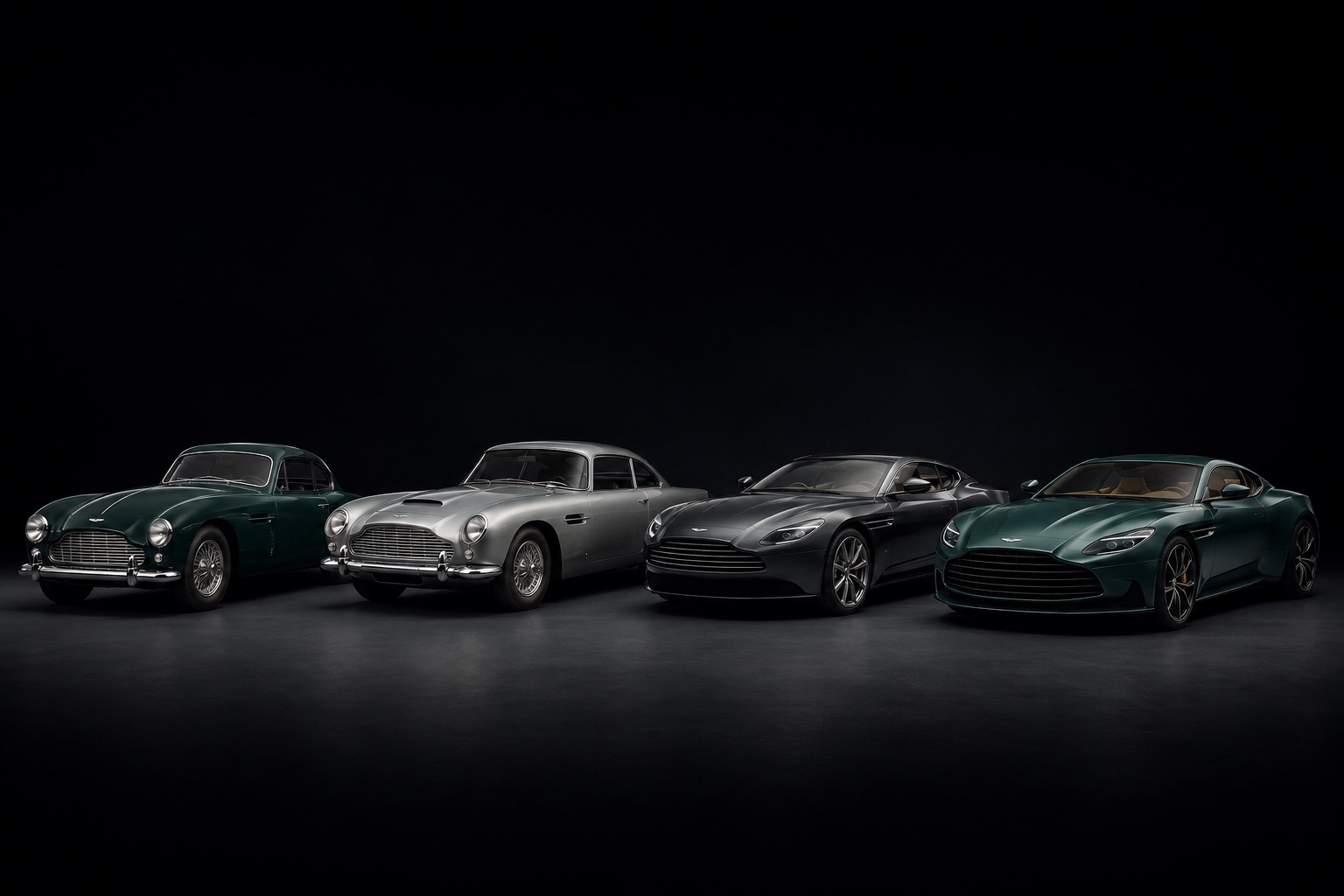
Launched by David Brown in 1950, the DB series is the soul of the marque. The DB2 opened the way, the DB4 (1958) introduced Touring Superleggera coachwork, and the DB5 (1963) became world-famous thanks to James Bond. The DB6 and the 1970s DBS carried on the grand touring spirit. In the modern era the line continues with the DB7 (1994), the DB9, the DB11 and the DB12 (2023), a true contemporary Super Tourer. These grand tourers embody the blend of comfort, elegance and performance that defines the Aston Martin models.
Vantage: the everyday sports car
More compact and more incisive, the Vantage is the most accessible sports car in the range. From the V8 Vantage of the 1970s to the current model, by way of the V12 Vantage cherished by purists, it targets drivers in search of pure thrills and a sharp chassis. Now powered by a twin-turbo V8 developed with Mercedes-AMG, it is often the gateway into the world of Aston Martin models.
DBS and Vanquish: the V12 flagships
At the top of the grand touring range sit the DBS and Vanquish, powered by mighty V12 engines. The first Vanquish (2001) introduced a paddle-shift gearbox and a structure blending aluminium and carbon fibre; the modern DBS Superleggera tops 700 bhp. These flagships combine sovereign power with refinement, and include some of the most coveted cars the marque has ever built.
Lagonda: avant-garde ambition
The 1976 Lagonda, with its wedge silhouette penned by William Towns, was one of the most daring saloons of its time and a pioneer of electronic instrumentation. The marque revived the name in 2015 with the Lagonda Taraf, an ultra-exclusive luxury saloon, a reminder that the Aston Martin models are not limited to sports coupes alone.
DBX: the first SUV from the marque
Launched in 2020, the DBX marked a historic turning point: it is the first SUV in Aston Martin history. In DBX707 form, with its 707 bhp, it proves that an SUV can combine family practicality with the dynamism of a sports car. It quickly became the best-selling model of the marque and a commercial cornerstone of its balance sheet.
The hypercars: Valkyrie, Valhalla and limited editions
At the absolute summit, the hypercars push every limit. The Valkyrie, born of Formula 1 with Adrian Newey, exceeds 1,000 bhp thanks to its naturally aspirated V12; the hybrid Valhalla follows in its wake. Alongside them, ultra-limited series such as the One-77 and the track-only Vulcan showcase the exceptional craftsmanship of the Aston Martin models.
How to choose among the Aston Martin models
It all depends on use: the DB line for grand touring, the Vantage for sportiness, the DBX for everyday versatility, the hypercars for collecting. When choosing, also weigh the running costs and the rarity, which make certain Aston Martin models genuine passion investments. Whatever your choice, the Aston Martin models share the same DNA: the British art of the exceptional car. Across more than seventy years, the Aston Martin models have remained handbuilt, exclusive and unmistakably British, blending motorsport know-how with everyday usability. To dig deeper, explore the official Aston Martin website or the Aston Martin page on Wikipedia.
Aston Martin: The Complete History of a Legendary Marque
The history of Aston Martin is that of one of the most desirable car marques in the world: more than a century of British elegance, punctuated by sporting triumphs, repeated crises and spectacular revivals. Founded in 1913, the marque forged a unique identity — that of the thoroughbred grand tourer, halfway between sports car and luxury object. To trace Aston Martin history is to travel through more than a hundred years of automotive passion.
The origins: Bamford & Martin (1913–1926)
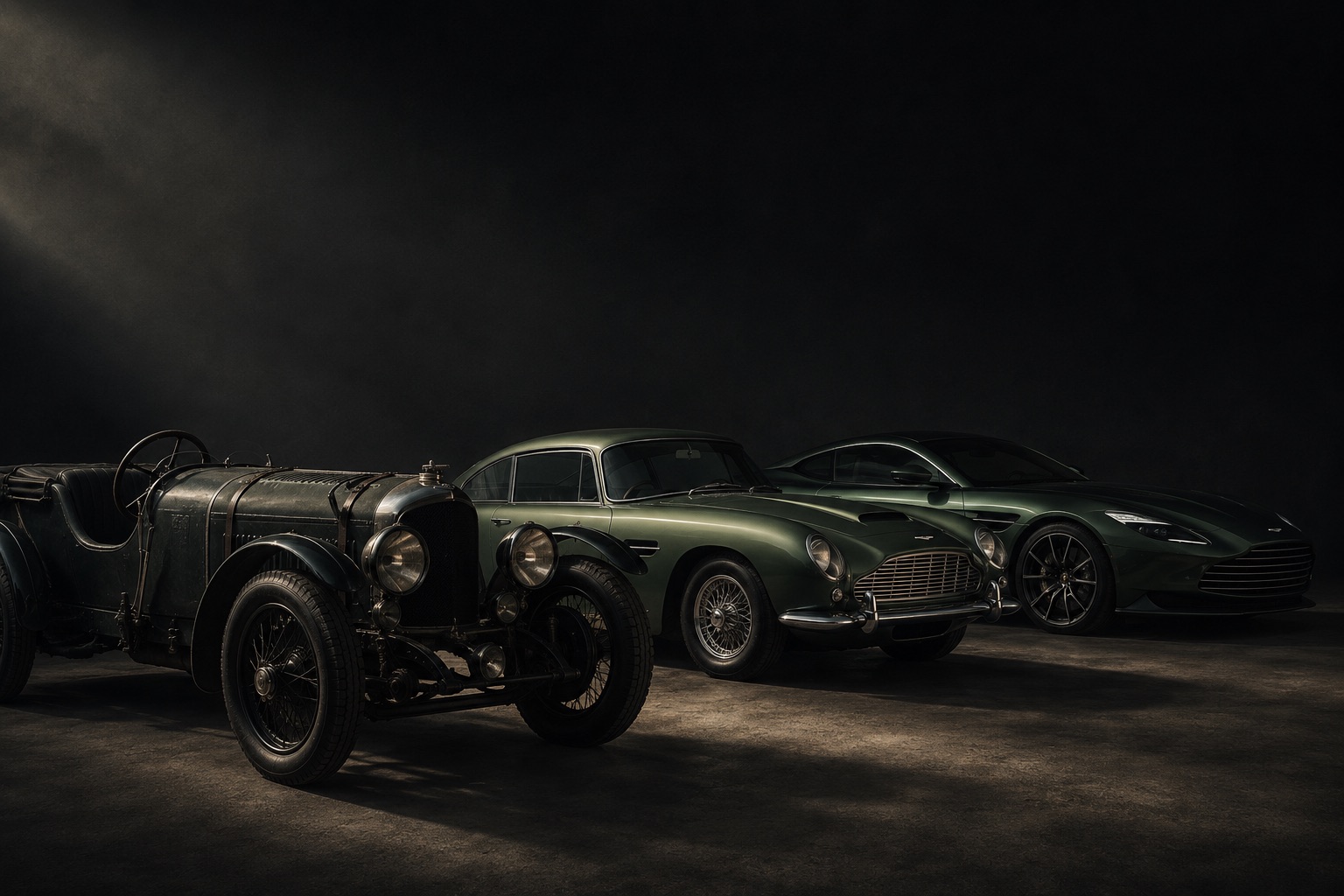
It all began in London in 1913, when Lionel Martin and Robert Bamford founded Bamford & Martin Ltd. The name “Aston Martin” was born of Lionel Martin’s victory at the Aston Clinton hillclimb in Buckinghamshire. The First World War interrupted the venture, but production resumed in 1919. From the 1920s the marque made its name in competition, notably at Brooklands, and its cars stood out for their lightness and agility. Built in tiny numbers, these early machines already embodied the blend of refinement and competitiveness that still defines the brand — performance in the service of elegance, a philosophy that has never left Aston Martin.
The David Brown golden age (1947–1972)
In 1947, the industrialist David Brown bought the firm for £20,500 after spotting a classified ad in The Times. He gave it his initials: the “DB” era had begun. The DB2 (1950) launched the line, the DB4 (1958) adopted Touring Superleggera coachwork, and the DB5 (1963) became, thanks to James Bond, the most famous car in the world. The DB6 (1965) extended that success with greater practicality. On the track, the high point came in 1959: the DBR1 driven by Carroll Shelby and Roy Salvadori won the 24 Hours of Le Mans, and Aston Martin clinched the World Sportscar Championship constructors’ title.
The turbulent years (1972–2007)
After David Brown’s departure in 1972, the marque went through troubled decades, brushing with bankruptcy several times and passing from hand to hand amid financial crises. Figures such as Victor Gauntlett kept it afloat in the 1980s, while Newport Pagnell continued to build the muscular V8 and the futuristic Lagonda. The Virage revived production in 1988, while the rare collaborations with coachbuilder Zagato became prized collectors’ items. The real rebound came with the DB7 (1994), built in more than 7,000 examples — a record for the marque — under Ford, which had taken a stake as early as 1987.
Revival and the modern era (2007–present)
In 2007, Aston Martin regained its independence, before floating on the London Stock Exchange in 2018. The Gaydon factory in Warwickshire became the heart of a fully renewed range under the design direction of Marek Reichman. The marque dared to build an SUV with the DBX (2020), now its biggest-selling model, after creating the extraordinary One-77. Then came the Formula 1-derived hypercar, the Valkyrie, born of the collaboration with Red Bull Racing. The return to Formula 1 as Aston Martin Aramco, since 2021, sealed this renewed ambition. Today, Aston Martin still builds its cars largely by hand and exports them across the globe.
Aston Martin history, still in the making
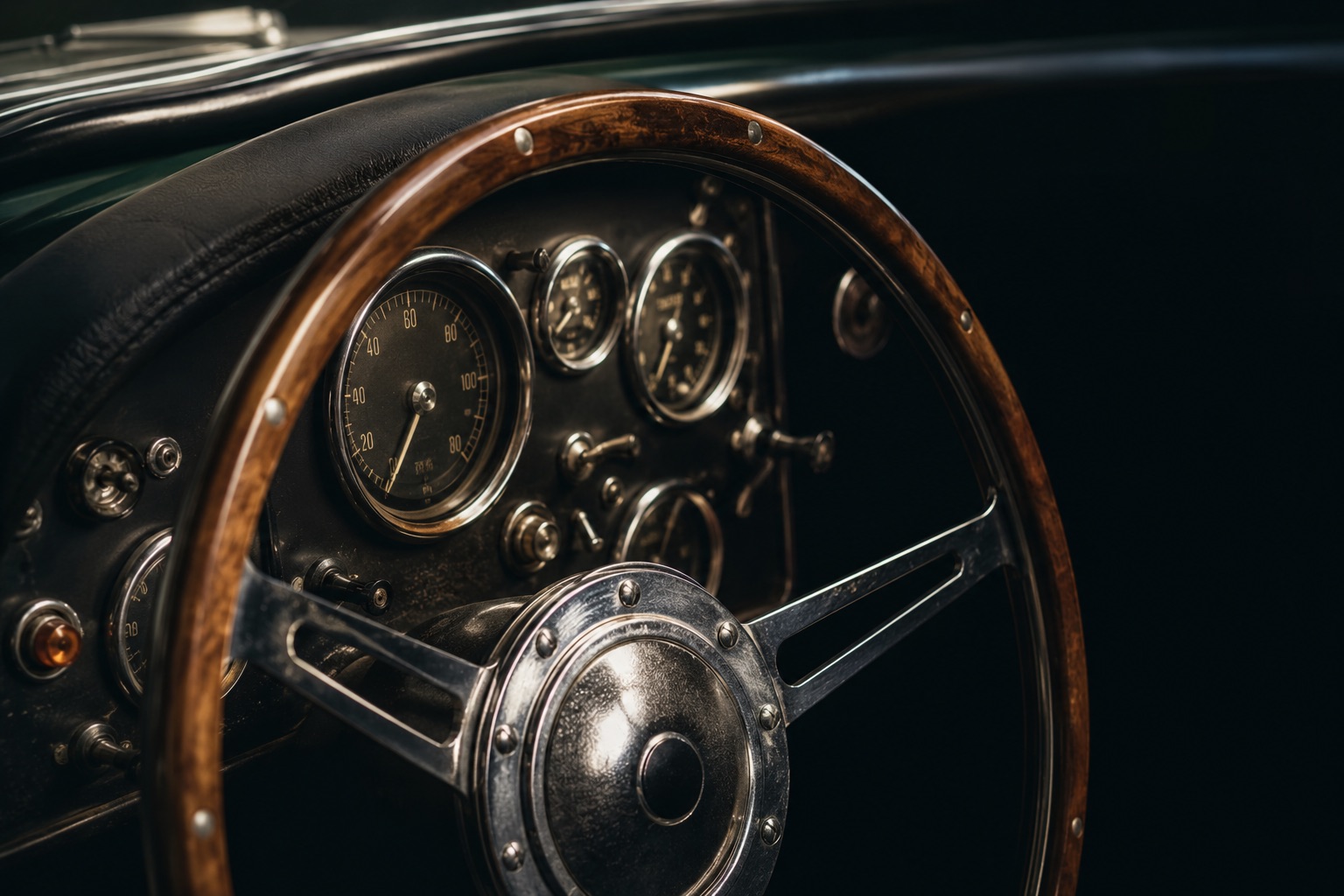
From the first Bamford & Martin to hybrid hypercars such as the Valhalla, Aston Martin history reads like a great British novel: flair, reversals of fortune and sheer obstinacy. Valued at several billion pounds at its stock-market debut, the marque is now preparing its shift towards electrification while staying true to its purpose: to build the most beautiful grand touring cars in the world. To dig deeper, see the official Aston Martin website or the Aston Martin page on Wikipedia.
Today, the history of Aston Martin is still being written, between a heritage more than a century old and resolutely modern ambitions.
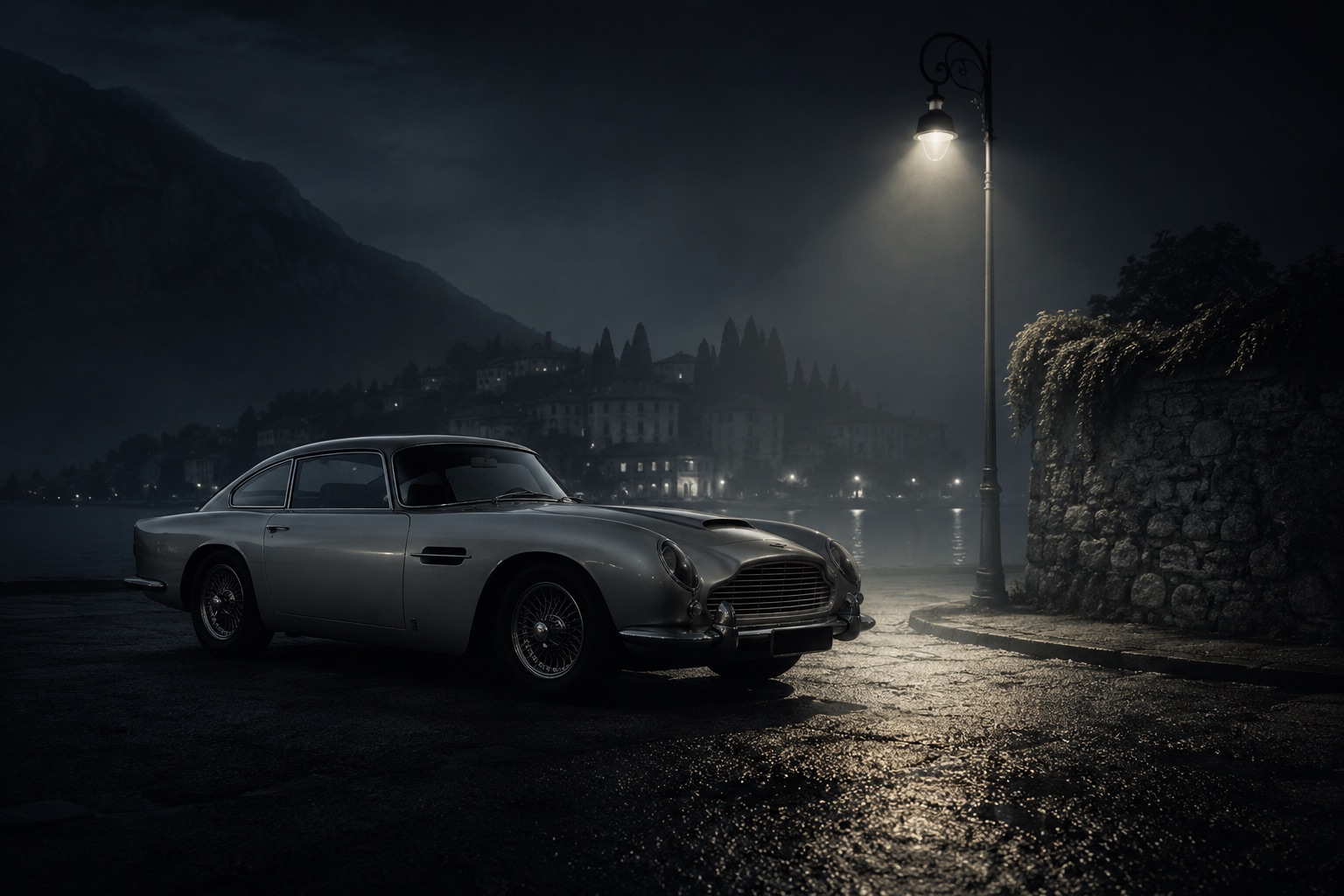 1964: the DB5 of Goldfinger, birth of an icon
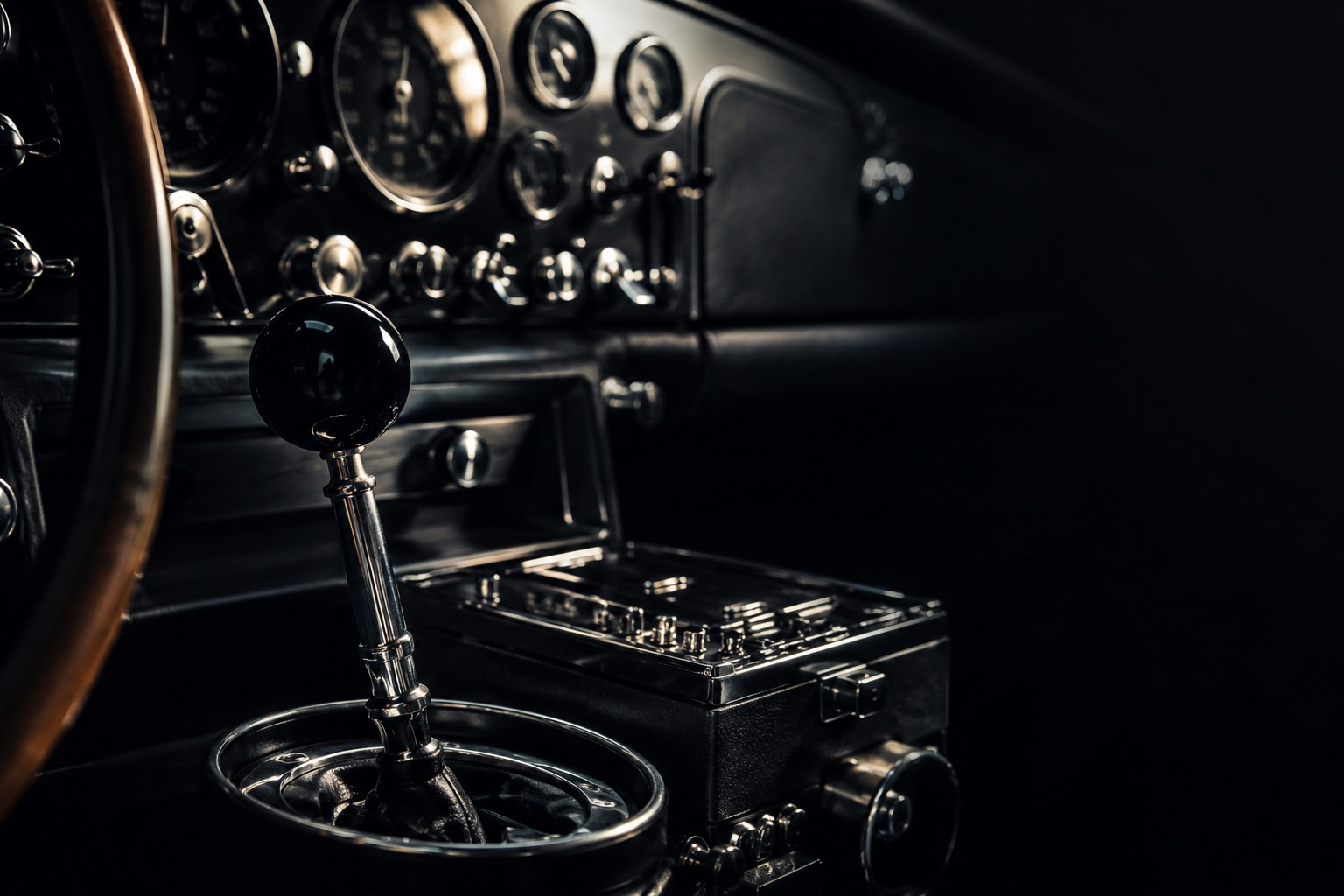 Aston Martin and James Bond, a legend that endures
 1959: Victory at Le Mans and the World Title
 Aston Martin in Motorsport Today
 The DB line, heart of the Aston Martin models
 How to choose among the Aston Martin models
 The origins: Bamford & Martin (1913–1926)
 Aston Martin history, still in the making