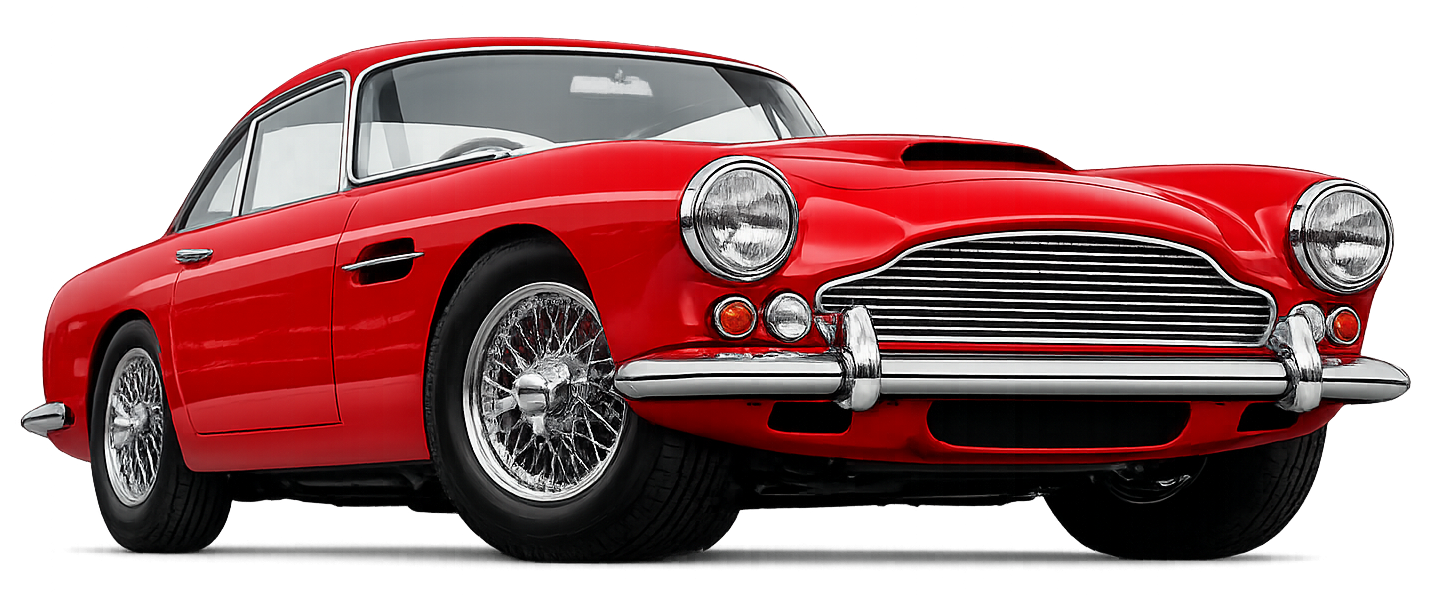
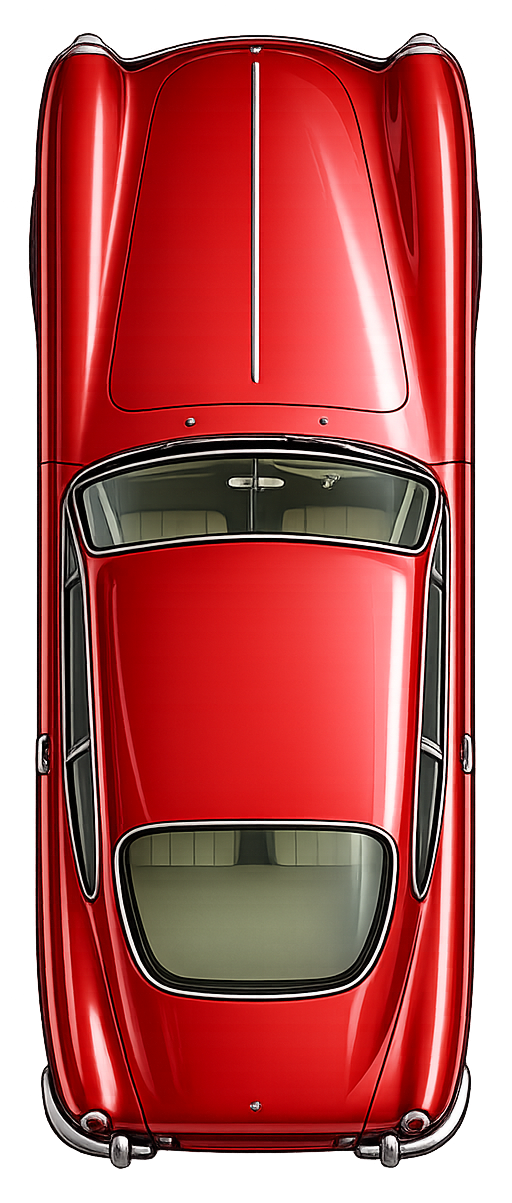
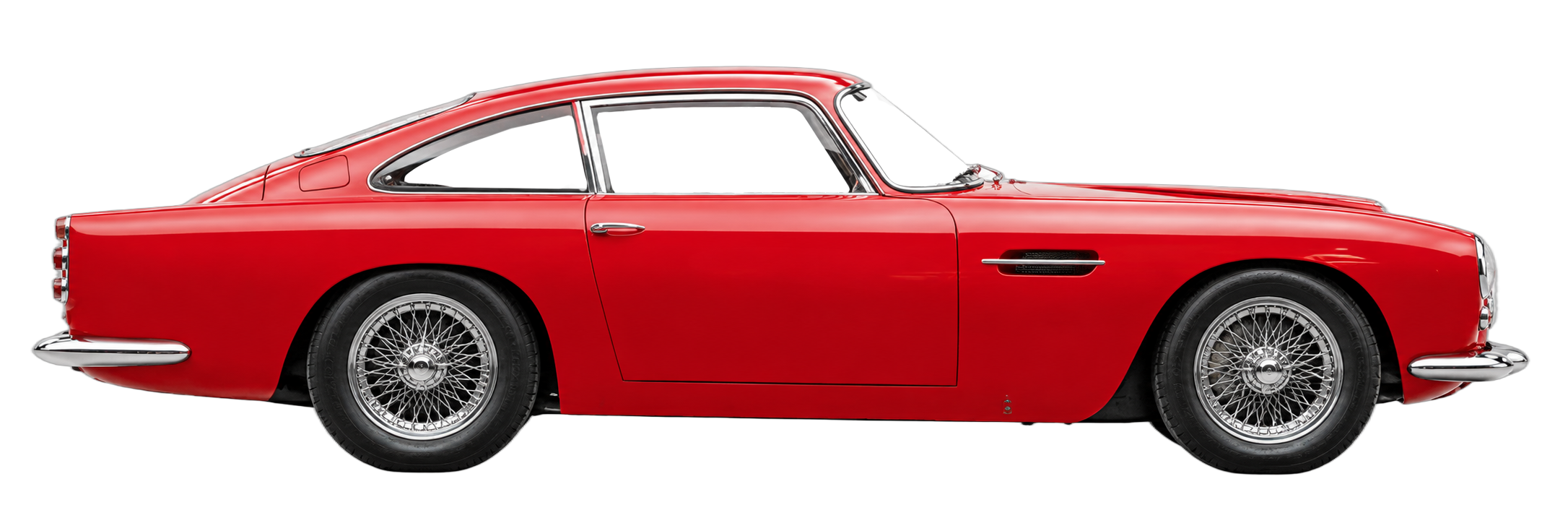
DB4 — 1958
The DB4 marked an absolute turning point in Aston Martin’s history. Styled by the Milanese coachbuilder Touring and built using the Superleggera method — a tubular framework over which thin sheets of aluminium are stretched — it introduced a silhouette of timeless beauty that would influence the entire range for fifteen years. Its 3.7-litre twin-cam engine, developed by Tadek Marek, was technically exemplary, combining reliability with a sporting temperament in an architecture that would become emblematic.
The DB4’s extraordinary lineage illustrates the versatility of its platform: the GT, lightened by 90 kg and fitted with a 302 bhp engine, was one of the fastest road cars of its era; the GT Zagato, built in just 19 examples, is regarded as one of the most beautiful cars ever made and regularly fetches record prices at auction. The members of Aston Passion who follow these models attest to a fascination with the precision and refinement of the original mechanicals, remarkably well preserved on cared-for examples.
The DB4 GT: the racing version (1959–1963)
In 1959, Aston Martin unveiled the DB4 GT, a radical evolution of the DB4 aimed at competition and the most demanding customers. The body was shortened by 5 inches, the weight reduced by nearly 90 kg, and the 3.7-litre straight-six received two spark plugs per cylinder and two Weber carburettors to produce 302 bhp. Only 75 examples were built, of which 19 were delivered to racing teams. The DB4 GT is today one of the most coveted and most highly valued classic Aston Martins on the collector market — and the direct starting point for the legendary DB4 GT Zagato.