DBR1, l’histoire d’un prototype né en 1956, affûté par la règle des 3 litres et victorieux en 1959. Un cas d’école entre ingénierie, hommes et stratégie.
DBR1: three letters and a number that encapsulate a singularity in Aston Martin’s history: a prototype conceived in 1956, honed by evolving regulations and carried by a team that kept learning until the triumph of 1959. Here is why this success remained unique in its kind: the Ted Cutting method, the impact of moving from 2.5 to 3 litres, surgical management of the chassis, then a victorious twelve-week campaign the marque still talks about. The facts, sourced from Aston Martin and consolidated by public archives, paint a precise and, let’s say it, very British picture.
Ted Cutting and the blank page of 1956: why the DBR1 is not an improved DB3S
In 1956, a rule change opened the way for pure prototypes for the first time. According to Aston Martin (media), Ted Cutting started from a blank page to design the DBR1, rather than tinkering with a late DB3S. The nuance matters: moving from a production-derived sports car to a dedicated prototype means freeing up the architecture, aerodynamics and component placement — in short, writing a new grammar for endurance racing.
This break explains the project’s long-term coherence. The DBR1 is not just another iteration; it is an engineer’s response to a rethought rulebook. The foundations laid in 1956 allowed mechanical evolution without betraying overall balance. That is what makes the programme legible and, later, formidably effective.
The ambition is clear: build a car conceived from the outset for Le Mans and the great classics, while keeping the technical restraint dear to the company. Wikipedia (DBR1) and Aston Martin (media) converge on this point: the 1956-1957 regulatory framework acted as a trigger, but it was Cutting’s rigour that turned opportunity into a winning tool.
The engine’s evolution from 2.5 to 3 litres: what Le Mans rules imposed
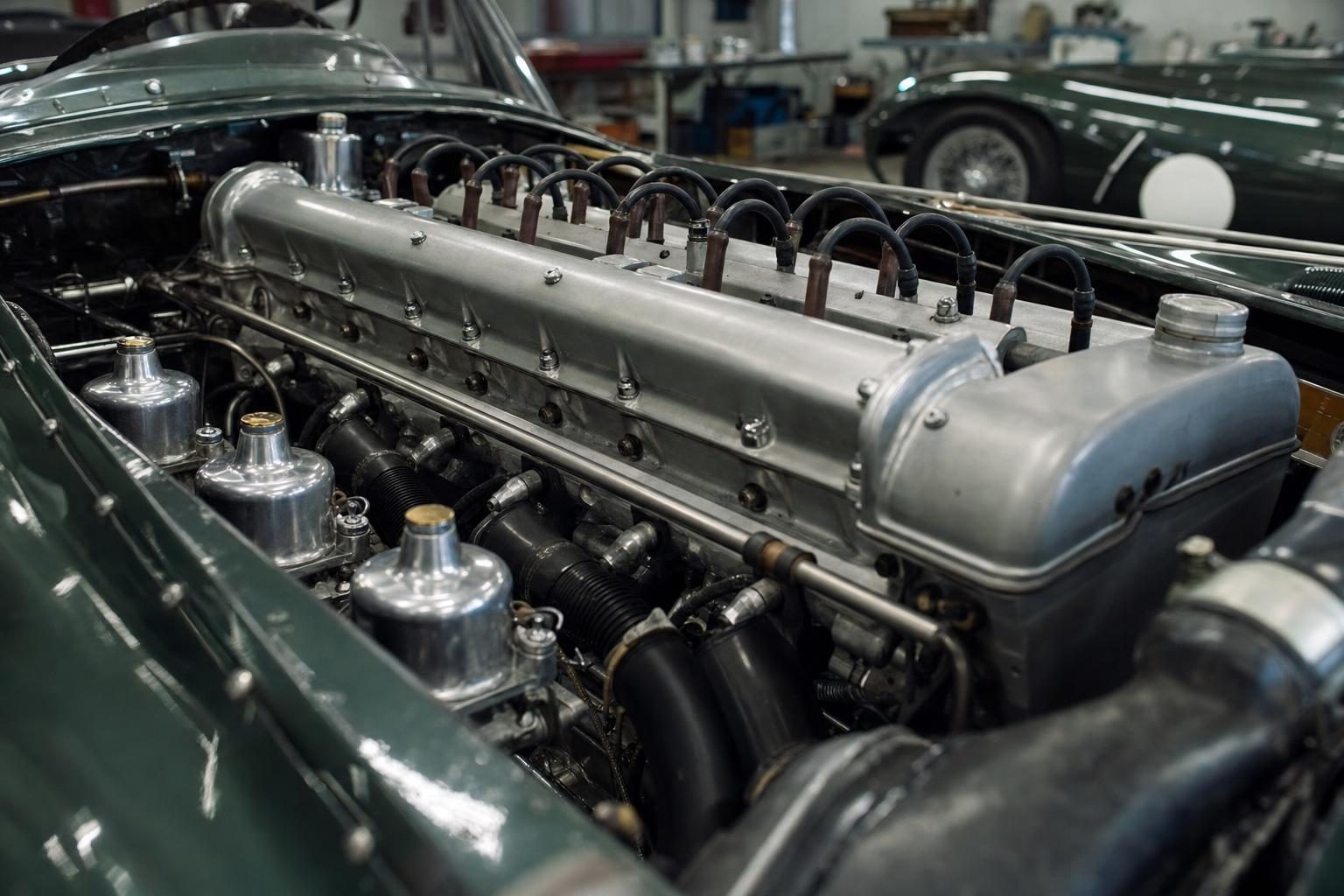
If the car was born right, the engine set the tempo. First at 2.5 litres (RB6.250), then at 3 litres (RB6.300) from 1957 with around 250 PS, in line with Le Mans rules, notes Aston Martin (media). The move to 3 litres was not a quest for unlimited power, but a rational adjustment for a 24-hour distance where torque delivery and reliability matter more than a few qualifying laps.
This increase in capacity illustrates the DBR1’s philosophy: evolve within the framework without losing oneself. The mechanics gained breathing space, the chassis kept its neutrality, and the whole remained exploitable over the long run. This alignment between regulation and concept made the difference when it came to holding an endurance pace to the degree.
The result was visible as early as 1957, when DBR1/2 won at the Nürburgring with Tony Brooks and Noel Cunningham-Reid, the programme’s first landmark victory according to Wikipedia (DBR1) and Aston Martin’s archives. This success validated the shift to 3 litres in a 1000 km race, a useful prelude to the Le Mans exercise.
Five chassis, four works, one privateer: the logistics of a tight racing programme
From 1956 to 1959, Aston Martin built five examples: DBR1/1 to DBR1/5. Four chassis remained in works hands and only one was sold to a privateer along the way, according to Wikipedia (DBR1) and the marque’s historical summaries. This split says it all: a compact programme, limited resources, but orchestrated methodically.
Managing five cars for an endurance campaign means constantly arbitrating between development, parts and crew availability. The DBR1 did not live in abundance; it lived in discipline. This choice explains sharpened logistics and an ability to build reliability without spreading too thin.
- DBR1/1 to DBR1/5: five chassis in total from 1956-1959.
- Four fielded by the works team, one sold mid-programme to a privateer.
- Allocations tailored to major fixtures (reliability and endurance pace prioritised).
The 1959 season: Nürburgring, Le Mans and Tourist Trophy in twelve weeks
1959, the pivotal year. In three major meetings and twelve weeks, the DBR1 ticked off the Nürburgring, Le Mans and the Tourist Trophy. According to Wikipedia (DBR1), this treble matched the haul of the Ferrari 250 TR in 1958. The message was clear: consistency, performance and a tightly managed calendar.
At Le Mans, the demonstration was emphatic. DBR1/2 (Carroll Shelby/Roy Salvadori) won and DBR1/4 (Maurice Trintignant/Paul Frère) followed, sealing the marque’s first and only outright one-two on the Sarthe classic, recall les archives des 24 Heures 1959 and Wikipedia (DBR1). A high point, more than a culmination: the confirmation of a method.
This success cannot be explained in a single act. It stems from the accumulation of previous seasons, the move to 3 litres framed by the rules, and chassis management that allowed the team to field honed, interchangeable cars. In short, the victory of the system as much as that of the car.
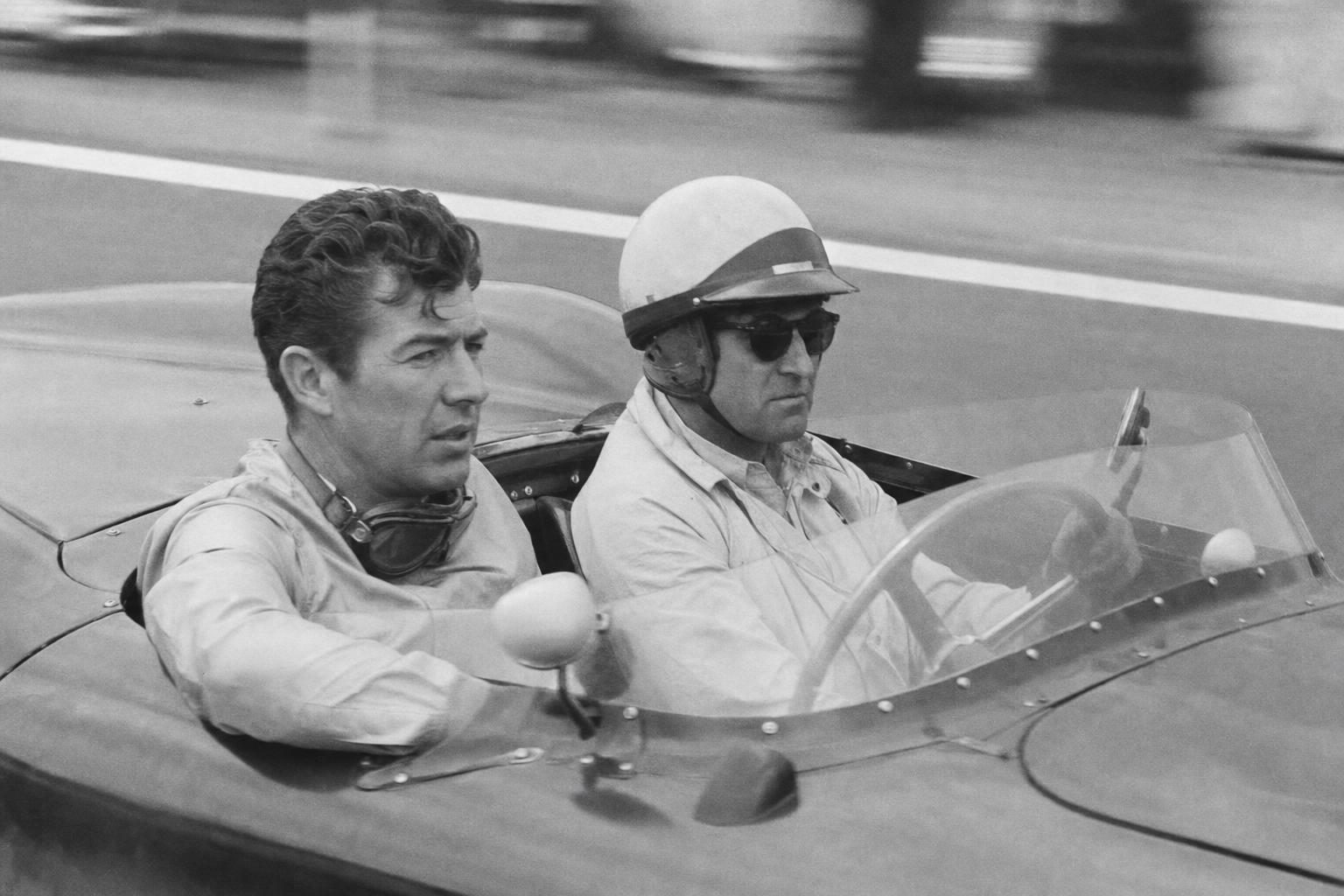
After the victory: the sale of the chassis and the decision to move into Formula 1
The Aston Martin paradox came immediately after. Buoyed by the 1959 title, David Brown sold the four works chassis to privateers to turn to Formula 1 with the DBR4, according to Wikipedia (DBR1). A clear choice: capitalise on the aura gained in endurance to attempt the single-seater venture.
This orderly withdrawal freezes the DBR1 legend. Far from a prolonged hegemony, the career closed on an apotheosis. Strategically, the marque preferred to build elsewhere rather than wear down a costly programme. Result: a record thickened in a short time, and rarity intact around the five chassis.
The contrast with the in-house grand touring path, which would notably yield the DB4 lineage, tells of a culture able to embrace competition and the road with the same precision. To carry this thread forward, see our analysis of the industrial shift initiated with the DB4, as well as our return to the roots with the DB2 and the Sarthe foundations of the 1950s.
Conclusion: a singular success, from the DBR1 blank page to 1959
The story rests on three axes. First, a prototype conceived from 1956 for the new rules, which Aston Martin’s official archives describe as a true break. Next, mechanics that moved from 2.5 to 3 litres to suit Le Mans without betraying reliability. Finally, parsimonious management of five chassis, culminating in 1959 with a major treble and a Le Mans one-two confirmed by les résultats 1959.
Thus the DBR1 remains a unique success: a matter of method and choices, rather than a roll of the dice. To delve into the details of the Le Mans night and the men who won it, our dedicated feature revisits the key facts of 1959 and their consequences for the marque: the keys to the DBR1’s Le Mans victory. A lesson in applied engineering and strategy, done the English way.