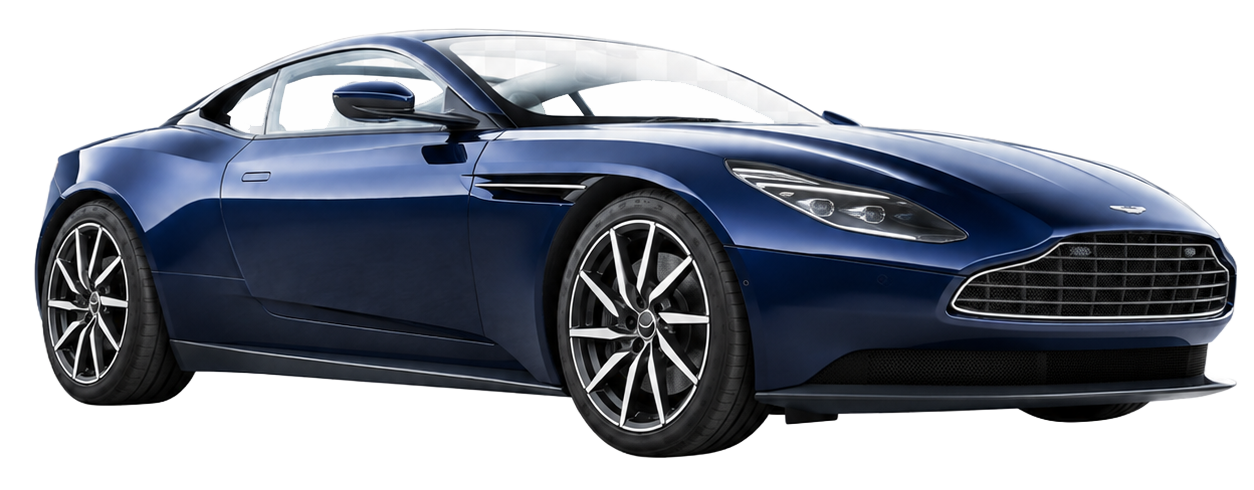
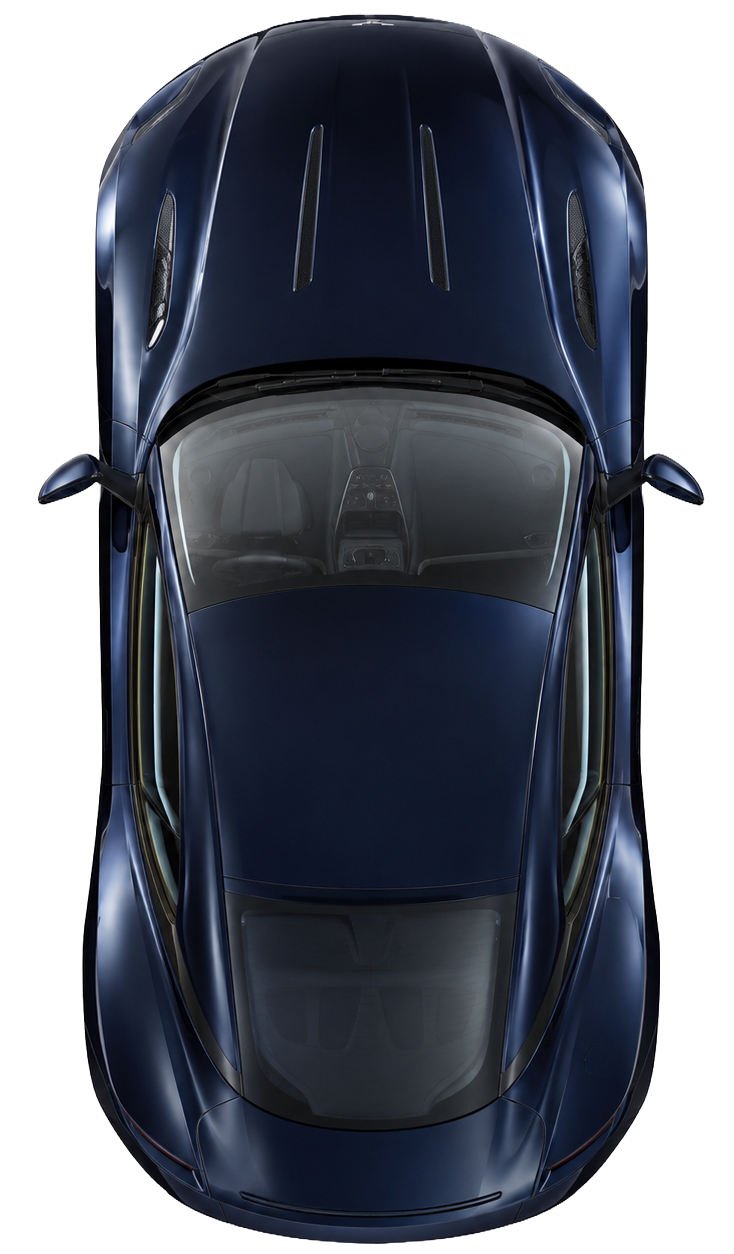
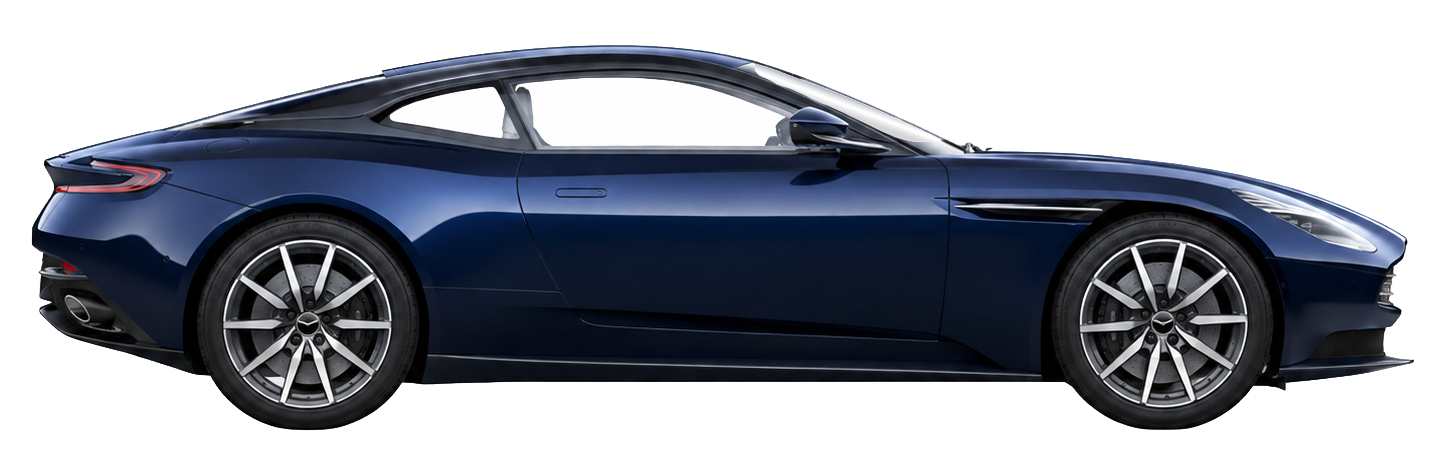
DB11 — 2016
The DB11 marked a profound technological break in Aston Martin’s history. The first model developed with input from Mercedes-AMG, it carried an entirely new 5.2-litre twin-turbo V12 — a first for the marque after decades of naturally aspirated engines — producing 630 bhp. Its active aerodynamics, with air channels integrated into the rear quarter panels and a movable rear lip, represented an unprecedented level of technical sophistication. Designed by Marek Reichman, its lines introduced a new stylistic tension that announced the marque’s contemporary era.
The AMG V8 version, introduced in 2017 with the 4.0-litre twin-turbo engine producing 510 bhp, surprised purists but proved an excellent alternative: lighter, more agile, and barely less capable than the V12. The Aston Passion forum followed the DB11’s evolution closely, with discussions on the new digital interfaces and the maintenance specifics of the AMG powertrains. The 2018 DB11 AMR, raised to 639 bhp, is the culmination of the range before the move to the DB12.
The DBS Superleggera: the peak of the generation (2018–2023)
In 2018, Aston Martin revived two names laden with history — DBS and Superleggera — to crown the DB11 platform. Beneath this body, restyled with 72% of its surface in carbon, hides the 5.2-litre twin-turbo V12 raised to 725 bhp, 130 bhp more than the DB11 V12. The aerodynamics were entirely reworked to generate 180 kg of downforce at high speed. Where the DB11 is the balanced, versatile grand tourer, the DBS Superleggera is its extreme alter ego — the same DNA, a radically opposite character.