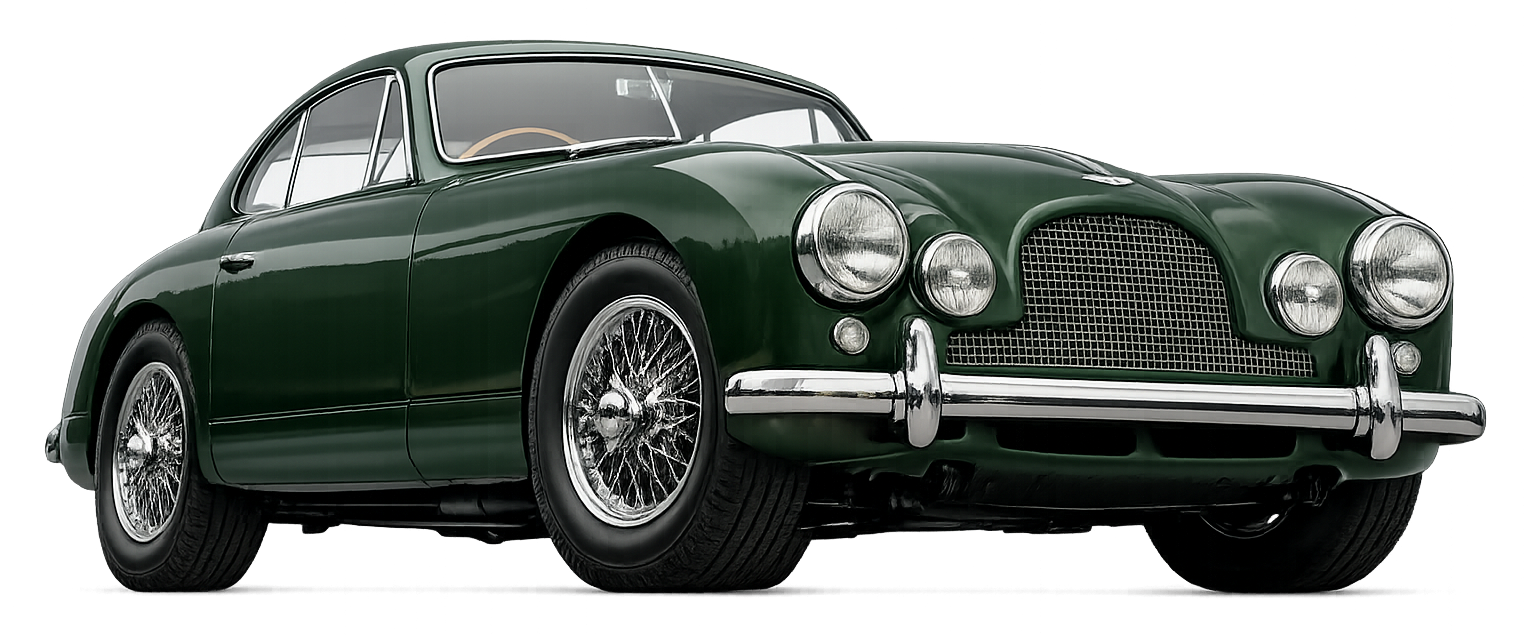
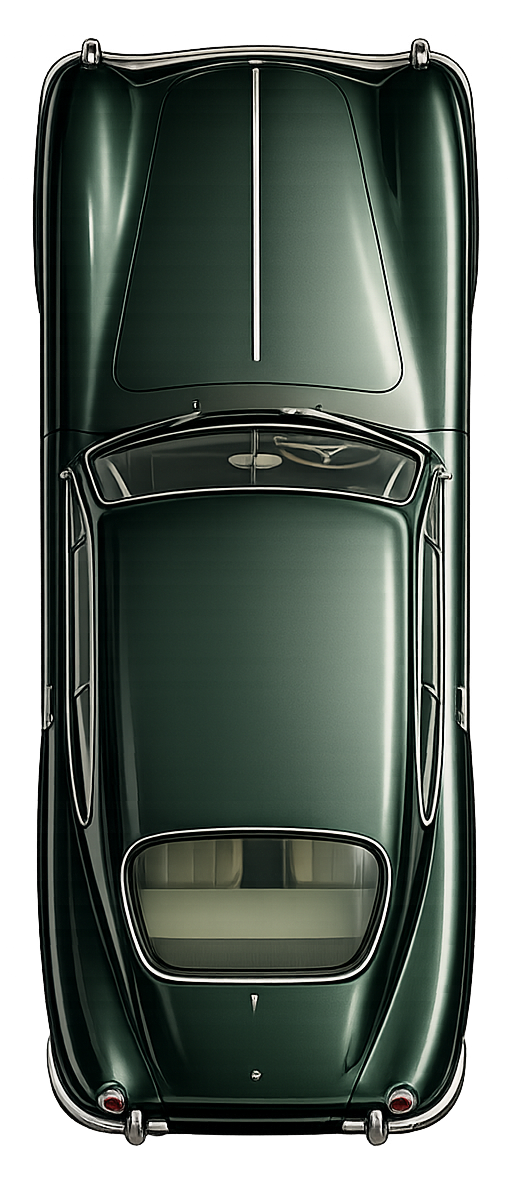
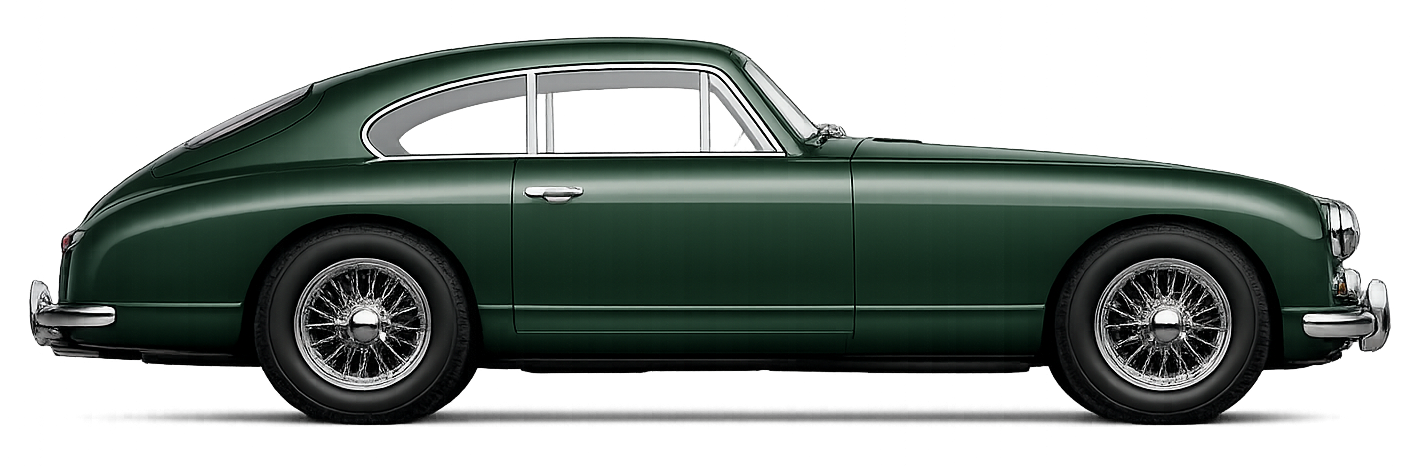
DB2 — 1950
Born in the Feltham workshops at the instigation of David Brown, the DB2 was the first Aston Martin to truly embody the philosophy that would define the marque for decades: a union of the finest British craftsmanship with performance worthy of Europe’s best sports cars. Its 2.6-litre DOHC straight-six engine, inherited from the Lagonda takeover, was the work of W.O. Bentley himself.
Entered at the 24 Hours of Le Mans as early as 1949, even before it went on sale, the DB2 immediately established Aston Martin’s dual character: competition as a laboratory, the road as a stage for everyday expression. With just 411 examples built, it is today one of the rarest and most sought-after classic Aston Martins among collectors the world over.
The DB2/4: the family-oriented evolution (1953–1957)
In 1953, Aston Martin broadened the DB2 family with the DB2/4, a coachwork evolution designed to accommodate two extra passengers in the rear. Technically identical to the DB2 — same tubular chassis, same DOHC straight-six, now enlarged to 2.9 litres — it broke new ground with its rear tailgate, a first for an Aston Martin, making it one of the first grand touring hatchbacks in history. With 565 examples built across the Mark I, II and III, the DB2/4 represented the commercial culmination of the DB2 line, paving the way for the DB Mark III of 1957.