One-77 at auction: 77 built, a 750 PS naturally aspirated V12 and a value ranging from €1.2m to €2m+ depending on condition and provenance. Public-sale analysis.
One-77 auctions: behind the sheen of a heavily publicised hypercar, this article compares known public sales, details price spreads by mileage, colour and provenance, and positions the One‑77 against its rivals on the secondary market. We draw on data published by Aston Martin and by Wikipedia, and we recall that auctions reflect a moment in the market, not a truth set in carbon.
77 examples in 3 years: why rarity was engineered from the outset
Built in 77 examples between 2009 and 2012, the One‑77 was conceived for rarity — a deliberate strategy. According to Wikipedia, its launch price hovered around £1.15 million, which placed it from the start in a very niche bracket. Better still for future demand: all units were sold before the end of production, according to Aston Martin’s official communications.
Rarity is not just a matter of arithmetic. The One‑77 programme also relied on artisanal construction and a carbon-fibre monocoque, with hand-formed panels — an approach detailed by the manufacturer on its dedicated page Aston Martin One‑77. This combination of low volume and craftsmanship mechanically limits supply on the secondary market, a key factor when observing One‑77 auctions a few years later.
This deliberate calibration has a direct consequence: public transactions remain rare and often hotly contested. Few cars change hands in the room, many favouring private sales. When One‑77 auctions do appear, they therefore focus attention — and comparisons.
Early auctions: hammer prices observed between 2013 and 2018
The first post-production appearances set a useful range for the market. According to public sources, hammer prices observed for One‑77s generally sit between €1.2 million and over €2 million, with spreads explained by condition, mileage and provenance. Early One‑77 auctions typically reflected the fact that a low‑mileage, well‑documented example in a sought‑after specification outperforms the average.
However, the right reading scale is essential. Auctions are not an official price list, but a snapshot. Two sales a few months apart can post very different results without contradiction: they simply reflect the relative quality of the cars presented and the mood of the moment. That is why we speak here of ranges, not certainties.
For enthusiasts tracking these transactions, the most instructive insight is not a single result, but the constant tension of demand within these price bands. In other words, One‑77 auctions do not contradict the thesis of a model supported by minimal supply and a highly qualified clientele.
750 PS naturally aspirated and carbon bodywork: the arguments that support the value
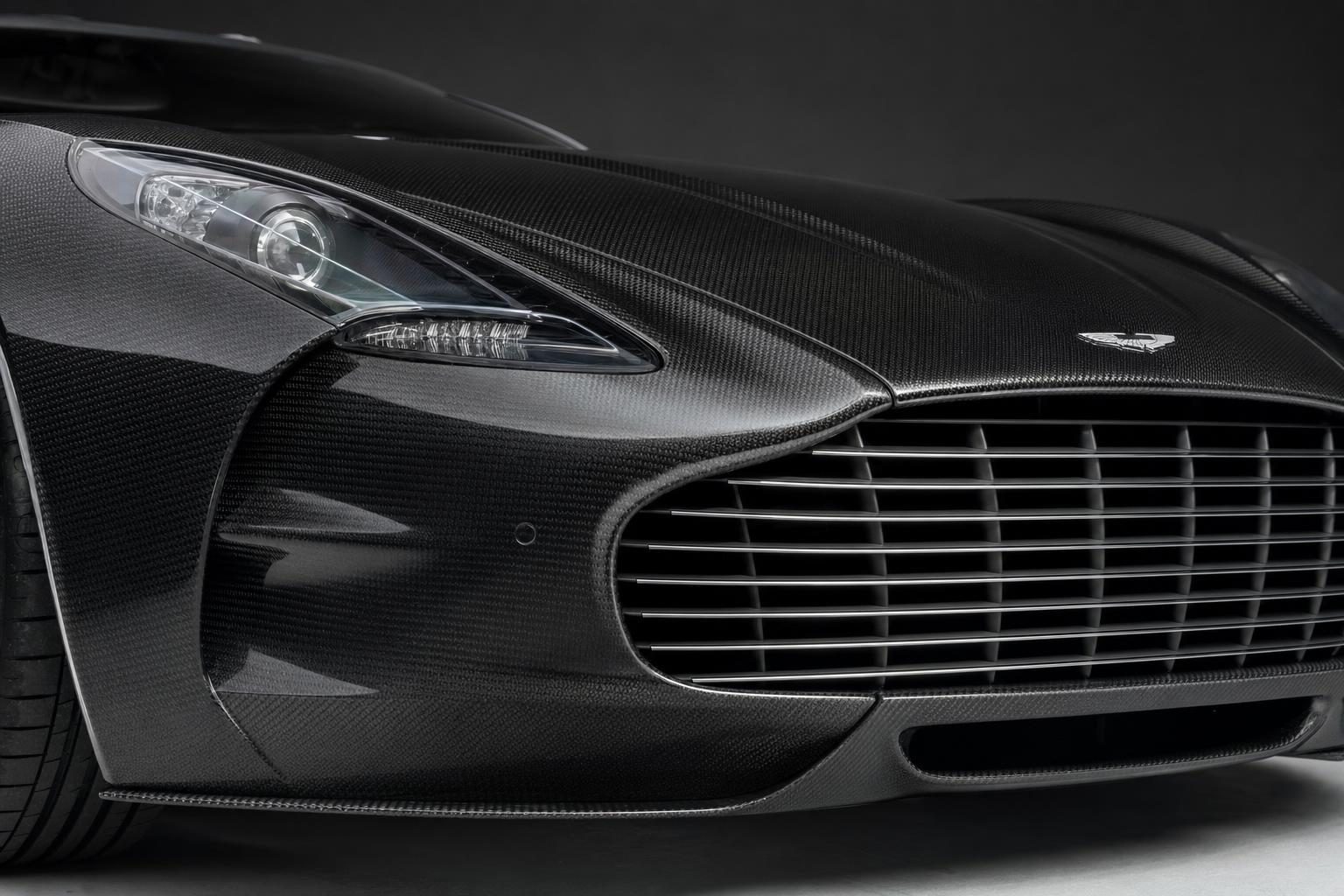
Technical substance matters in the market, especially when it tells a story. With its 7.3‑litre naturally aspirated V12 with 750 PS — at the time the most powerful road‑going Aston Martin ever built, notes Wikipedia — the One‑77 ticks the “last of the Mohicans” box in the hybrid era. This rare and resonant argument structurally supports One‑77 auctions.
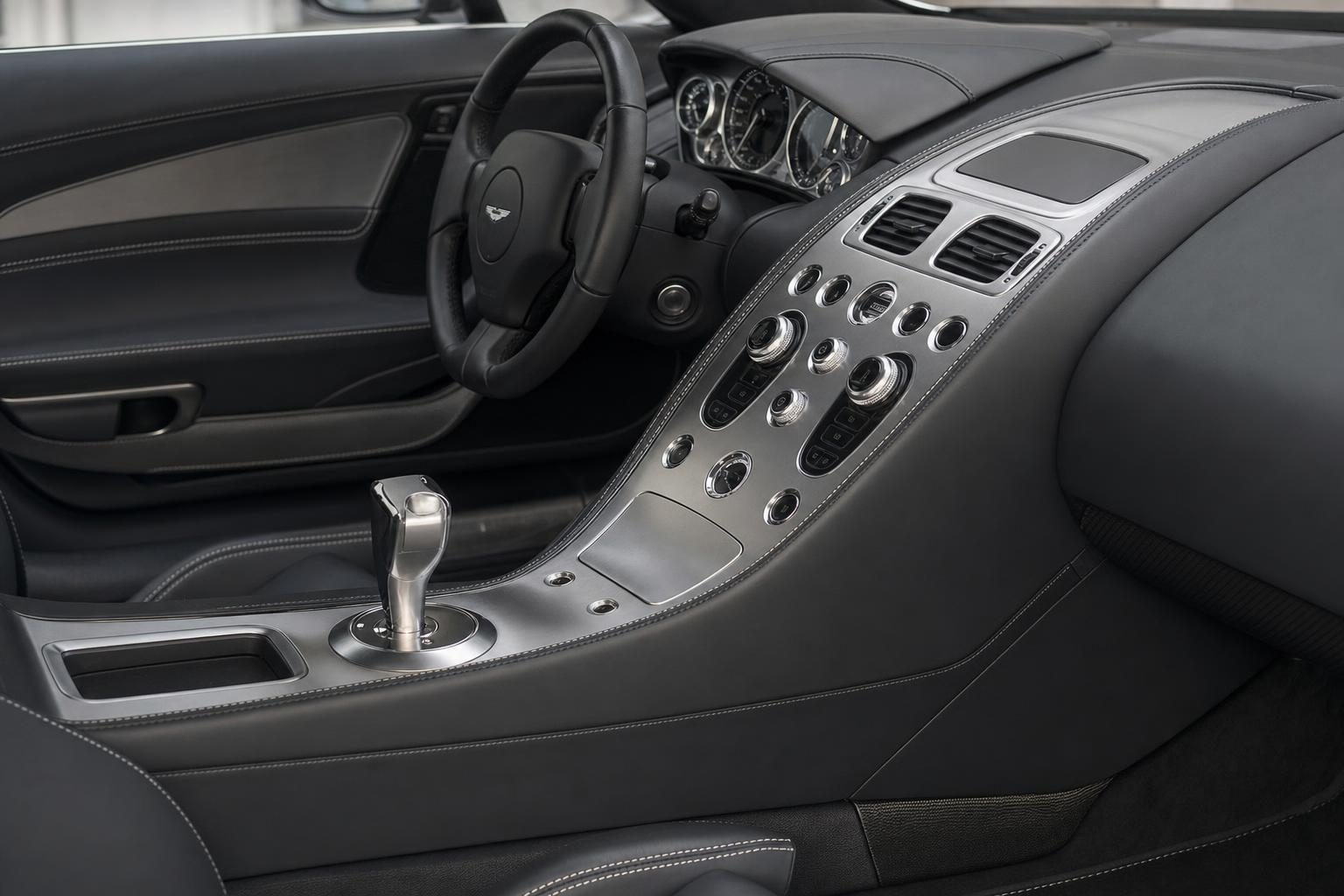
The carbon-fibre monocoque, the hand‑built panels and the attention to detail, presented by the manufacturer on Aston Martin’s media centre, also play a part. They create an emotional and rational barrier to depreciation: the buyer knows why he is paying, and what he is paying for. In a world of sometimes overhyped hypercars, this balance between pure performance and elegant execution remains a strong marker.
Finally, brand identity matters. Gaydon’s DNA, less flamboyant than others, speaks to collectors who value understatement and line over a spectacular spec sheet. It is easy to see why One‑77 auctions tend to reward a sober combination, clear history and low mileage, sometimes more than a shouty colour.
One-77 versus Bugatti Veyron and Ferrari Enzo on the secondary market: trend comparison
Comparison does not mean conflation. The Veyron and the Enzo follow different production, technology and audience logics. But in terms of trends, the One‑77 sits in the circle of hypercars with limited public supply, an international clientele and price variance linked to use. One‑77 auctions show a comparable amplitude, sometimes lower in transaction volume due to production being lower than these rivals.
Technically, the One‑77 advances a singular proposition: 750 PS naturally aspirated and a hand‑fashioned carbon body. Versus the Veyron and its world of “total engineering”, or the Enzo and its direct link to Maranello, the Briton plays the atelier piece card. This different narrative also explains why demand responds finely to provenance and configuration, a phenomenon clearly visible at One‑77 auctions.
Lastly, value trajectories are a long‑term analysis. Public auctions, by definition selective, sometimes amplify the impression of rises or slowdowns. To read the One‑77 correctly, one sets several spaced‑out sales against known private supply. It is on this basis that the value stabilises, within the €1.2 million to €2 million‑plus range indicated by public sources.
What recent sales (2022–2025) indicate about the value trajectory
The latest One‑77 auctions confirm a robust market, still sensitive to the classic criteria of low‑volume hypercars. Ultra‑low mileage, complete documentation and restrained hues remain price catalysts; regular servicing within the network adds a welcome layer of reassurance. Conversely, sustained mileage or poorly documented work methodically weighs on the hammer.
Context matters too. In periods of appetite for naturally aspirated engines and “pre‑hybrid” limited series, the One‑77 enjoys a tailwind. When the market turns selective, the best examples pull up the average. In other words, dispersion in recent results is not a signal of instability, but the consequence of a small and heterogeneous sample.
To guide the buyer, we would retain three practical points observed at recent One‑77 auctions: 1) crystal‑clear provenance and low use justify the top of the range, 2) sober colours and coherent specifications aid liquidity, 3) private sales can show different levels without invalidating public prices — they answer to different constraints and opportunities.
Conclusion – One-77 auctions: reading the value without being dazzled by the carbon
At the end of this review, One‑77 auctions draw a constant: ultra‑scarce supply, informed demand and value underpinned by clear fundamentals — a run of 77, a 750 PS naturally aspirated V12, artisanal carbon bodywork. The published ranges between €1.2 million and over €2 million are not price certainties, but robust markers for anyone assessing this model.
To delve deeper into the One‑77’s history and engineering, our feature on the hypercar and its genesis usefully complements a market reading. Our dedicated model page gathers key information, while the Vulcan allows a comparison with another ultra‑exclusive approach from Gaydon. From manufacturer sources, the page Aston Martin One‑77 and the Wikipedia article offer useful factual background.
In short: if you’re looking for a rare, legible and elegant hypercar, the One‑77 has the attributes to hold its line. The task is to select the right example — and to remember that at One‑77 auctions, patience is often the best opening bid.