Valkyrie Le Mans 2026, why Aston Martin’s commitment is credible: WEC progress, road-derived engineering and a near‑century legacy at the Sarthe.
Valkyrie Le Mans 2026 is not just a flash in the pan: it is a constructed, methodical programme, firmly rooted in engineering and history. In this article, we detail why the Valkyrie AMR‑LMH’s entry in the 2026 24 Hours of Le Mans is a credible and anticipated step, in light of its WEC season, its unique architecture and a legacy dating back to 1928.
The only Hypercar born from a road car: what that changes at the Sarthe
Valkyrie Le Mans 2026 rests on a simple fact: it is the only Hypercar derived from a road‑legal car to contest both the WEC and IMSA in 2026 (source: media.astonmartin.com, 8 June 2026). This road‑to‑race lineage influences the fundamentals: compact packaging, aerodynamics designed for high‑speed downforce and energy efficiency — all crucial parameters at the Sarthe where you spend long periods above 300 km/h. Without fanfare, it makes a tangible difference to the operating window and the ease of sustaining a strong pace.
At the heart of the project, the 6.5‑litre naturally aspirated Cosworth V12 is capped at 500 kW (680 PS) by LMH regulations (source: media.astonmartin.com, 8 June 2026). The linear response of a naturally aspirated engine, thermal stability and mechanical endurance ease night stints and precision on lift‑off through the fast sections. Over a double round‑the‑clock, that character counts for more than a few theoretical horses. Again, Valkyrie Le Mans 2026 capitalises on a proven engine base adapted to the regulatory framework.
The road‑to‑race DNA did not come in a straight line. The LMH project was cancelled in February 2020 then revived in October 2023 (source: Wikipedia EN). This detour allowed chassis‑engine development to be aligned with Hypercar BoP and to arrive, in 2026, with a more mature specification. Valkyrie Le Mans 2026 is not marketing shorthand: it is an assumed technical trajectory.
WEC 2026 progress before Le Mans: Imola, Spa and the test day up front
To gauge the sporting credibility of Valkyrie Le Mans 2026, you have to look at the build‑up. First, a bedrock of reliability: both Valkyries finished the 2025 24 Hours of Le Mans without mechanical incident, in 12th and 14th (source: astonmartin.com, 8 December 2025). Finishing cleanly provides baseline data — temperatures, wear drift, consumption — that guide the off‑season.
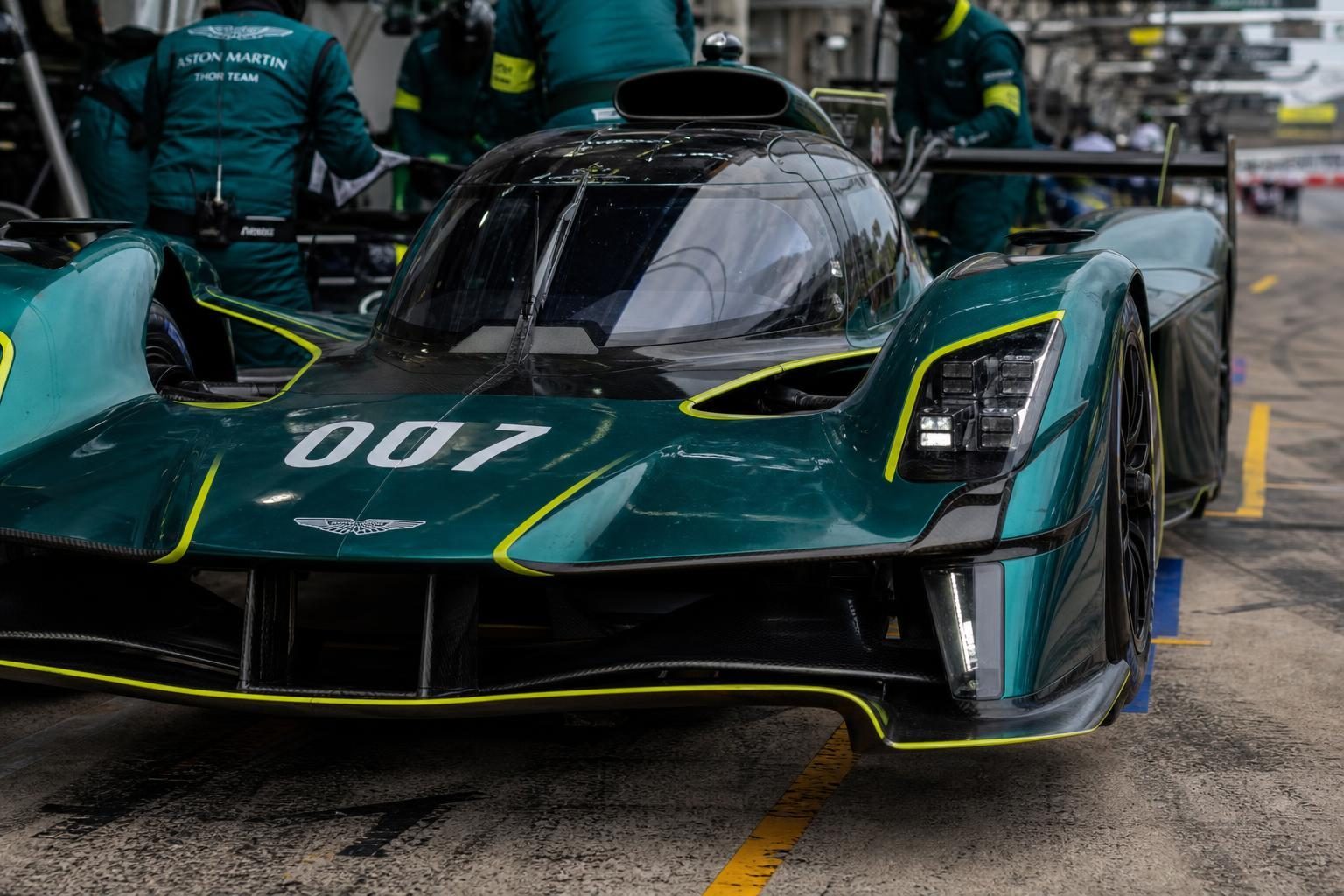
In 2026, progress shows through key markers. At Spa, the #007 (Tincknell/Gamble) finished 4th, the best WEC result to date for the Valkyrie (source: fiawec.com, Carter article). This result puts Valkyrie Le Mans 2026 in the strategic conversation rather than the pack. As for Imola, a key step in the campaign, it served as a benchmark for setup and operation, at the core of the road to race WEC 2026, from Imola to Spa dossier.
The clearest signal arrives on the Sarthe itself: Tom Gamble set the fastest time of the official test day on 7 June 2026 with a 3:26.293 in the #007 (source: fiawec.com, Test Day article). Valkyrie Le Mans 2026 promises nothing it hasn’t shown: competitive top speed and a baseline setup that literally holds the road.
To frame these indicators, see the official elements and paddock analysis, notably the test day round‑up published by the FIA WEC after the test day. And for the manufacturer’s perspective, Aston Martin’s release sheds light on the ambition and regulatory context of Valkyrie Le Mans 2026 ahead of Le Mans.
The #007 and #009 crews: why this pair of line‑ups makes sense
The #007 fields an all‑British crew: Harry Tincknell, Tom Gamble and Ross Gunn (source: media.astonmartin.com, 8 June 2026). A cohesive trio combining Le Mans experience, outright speed and in‑house knowledge. This continuity partly explains the dynamic seen at Spa and the test day. Above all, it gives Valkyrie Le Mans 2026 a clear reference for stint management, technical communication and night strategy.
On the #009, the cited sources did not detail the crew at the time. Silence is better than guesswork. What can be observed, however, is the overall logic: a showcase #007, readable and British to the fingertips, and a second car as a technical and strategic support. In the balance of a two‑car entry, this is precisely how Valkyrie Le Mans 2026 secures its options over 24 hours.
The relevance of this pair is also borne out by complementary roles on track. The #007, already fastest at the test day with Gamble, sets the benchmark. The #009 can explore other setup windows or undercut opportunities during neutralisations. Without extrapolating, we can note that Valkyrie Le Mans 2026 gives itself, in effect, two paths to performance: one confirmed by the clocks, the other devoted to strategic amplification.
The Union Jack livery and what it says about Aston Martin’s British ambition
The 2026 livery sports a Union Flag on the front splitter in tribute to British heritage at Le Mans (source: media.astonmartin.com, 8 June 2026). This graphic choice is more than a motif: it signals a determination to embrace the brand’s identity in the Hypercar arena. Valkyrie Le Mans 2026 claims a lineage, from the DBR1 to contemporary GTs, projected onto a stage where symbols matter as much as lap times.
The aesthetic nod matches a sporting reality: a British car, a British crew in the #007, an engine conceived with Cosworth, and a programme set for the long term. In a global championship, this cultural coherence serves as a common thread for fans and engineers alike. It gives Valkyrie Le Mans 2026 a clear narrative, backed by facts.
For the curious, the official presentation and images from the current season are available via Aston Martin’s press release and a recap video rich in on‑track footage. Again, the Union Jack varnish says it all: very British seriousness, without bluster.
Aston Martin at Le Mans since 1928: a near‑century presence that feeds into 2026
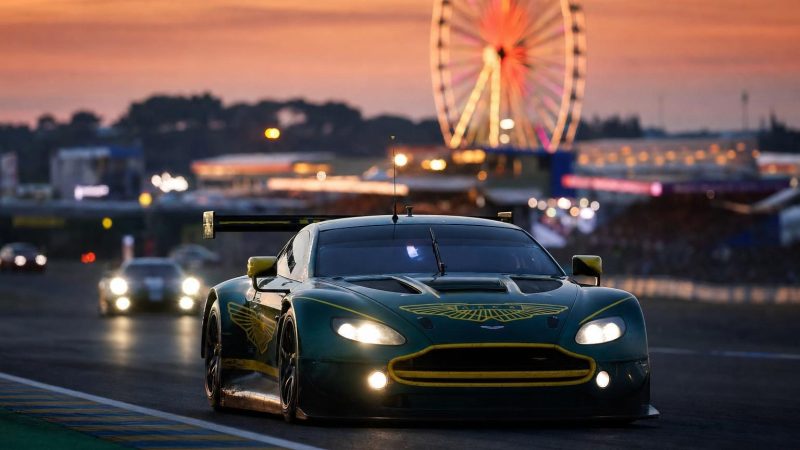
Valkyrie Le Mans 2026 fits into a long timeline. More than 240 drivers have raced Aston Martins at Le Mans, in 27 chassis‑engine combinations, over nearly 95 years (source: media.astonmartin.com, Valkyrie AMR‑LMH release). This breadth of experience feeds a fine‑grained understanding of the Sarthe: managing brake temperatures at Mulsanne, ratio calibration for Indianapolis, and downforce compromises through the Porsche Curves.
This historical depth is anything but museum‑piece. It structures development processes and endurance checklists. Having moved a Valkyrie from road to race with rigour, then gone the full 24 hours in 2025, gives Valkyrie Le Mans 2026 a bedrock of methods: track‑sim correlation, driver feedback, and relevant iteration loops.
When it’s time to line up on the grid, this capital of experience combines with fresh 2026 data: Spa as proof of concept on race pace, the test day as peak gauge, and a readable technical identity. Valkyrie Le Mans 2026 is therefore not a prestige interlude, but the next step in a long‑running story at the Sarthe.
Conclusion — Valkyrie Le Mans 2026, credibility before prestige
Three reasons, one thread: the only Hypercar from a road car, WEC 2026 progress embodied by Spa and the test day, and a near‑century heritage. Add an all‑British #007 crew and an assumed Union Jack livery: Valkyrie Le Mans 2026 arrives with facts, not promises. To extend the perspective, revisit our debrief on the 2025 24 Hours of Le Mans from the Valkyrie side and the setup log from Imola to Spa. And for the full genealogy from road hypercar to endurance, our dedicated Valkyrie page puts each milestone in its place.
To conclude, let’s recall the official markers framing Valkyrie Le Mans 2026: WEC/IMSA entry, 6.5‑litre naturally aspirated V12 limited to 500 kW, reliability proven over 24 hours, and top speed shown at the test day. Seriousness precedes prestige — the British way.
Useful sources: the manufacturer’s dossier Aston Martin Media and the FIA WEC test day report.