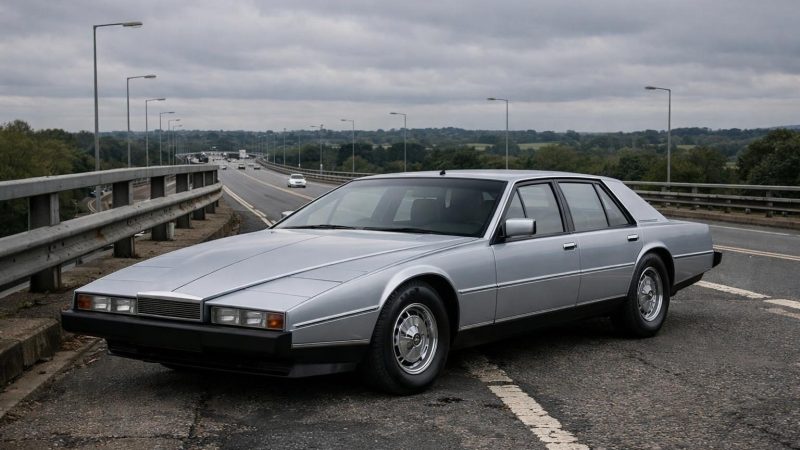
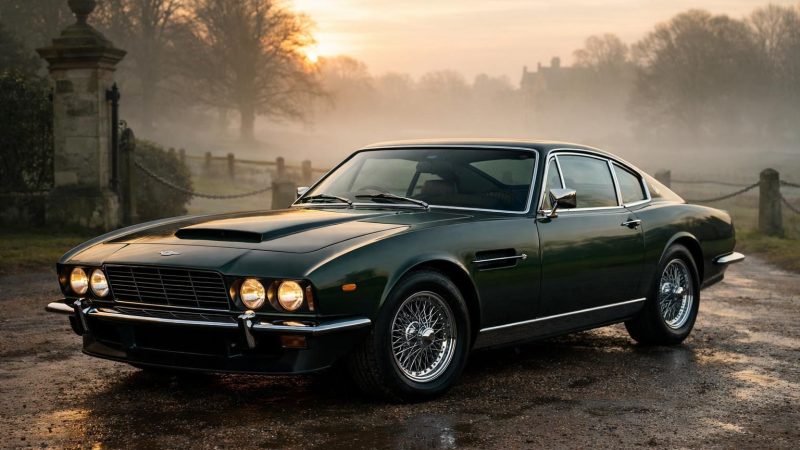
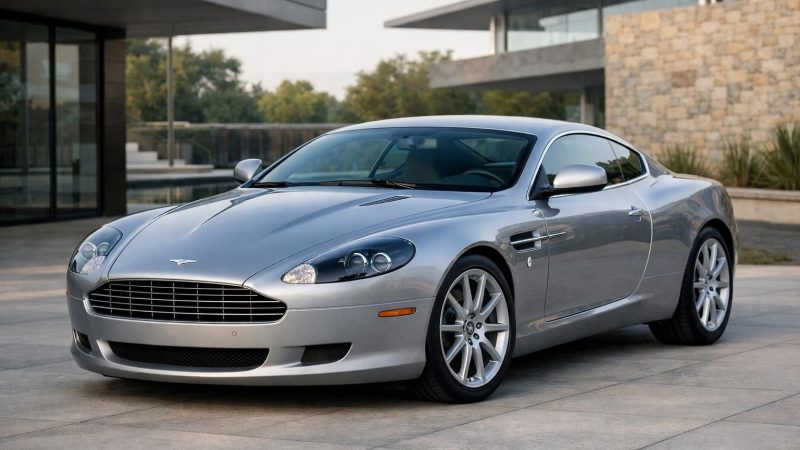
AM V8 1969: 5.3 litres, a 24-year lifespan and power figures that vary by source. A look back at the V8 that ensured Aston Martin’s survival.
The AM V8 is Aston Martin’s great survivor: launched in 1969 and produced until 1989, it weathered crises, ownership changes and two liquidations while serving as the pillar model. Here’s how this coupé, then convertible and even Zagato, carried the marque for twenty-four years, spanning DBS heritage, officially muted power and emblematic versions.
1969-1972: the DBS V8/AM V8 transition, why the name changed
In 1969, Aston Martin unveiled the DBS V8, a grand coupé designed to house the new eight-cylinder. Three years later, in 1972, the model changed its name to AM V8 after the six-cylinder was dropped from the range. According to Wikipedia (Aston Martin V8), this renaming marked the end of the DBS era and clarified the line-up around the V8, now the sole mechanical heart of the company.
This change was not a matter of simple badging. It accompanied an industrial and commercial reorganisation as the marque sought its path between GT tradition and the imperatives of financial reliability. The silhouette remained similar, but the emphasis shifted from the DBS name, inherited from the six-cylinder, to a simple acronym that said the essentials: AM V8.
This repositioning also corresponded to a pivotal time for the manufacturer, when every range decision had to serve long-term viability. By making the V8 the reference point, Aston Martin prepared for the following decade, when the car would, by force of circumstance, become the main — and sometimes only — offering.
The 5.3-litre V8: intentionally vague power figures
At the heart of the car, the 5.3-litre (5,340 cm³) twin-cam V8 gave the series its personality and its name. According to Wikipedia (Aston Martin V8), Aston Martin chose not to officially communicate the exact power output, a rarity at the time. Estimates range from 280 to 340 PS depending on intake and emissions configurations.
Car and Driver archives mention the same caution and confirm varying performance depending on markets and model years. This ambiguity was not just a marketing ploy: it reflected successive changes to carburation, injection and settings required by regulations, with noticeably different results from one series to the next.
This choice maintained a degree of mystery and avoided a numbers race against chattier rivals. Above all, it let the car speak through its torque, soundtrack and the finesse of a GT chassis. In use, the AM V8 favours surge and flexibility rather than raw data tallied to the last horse.
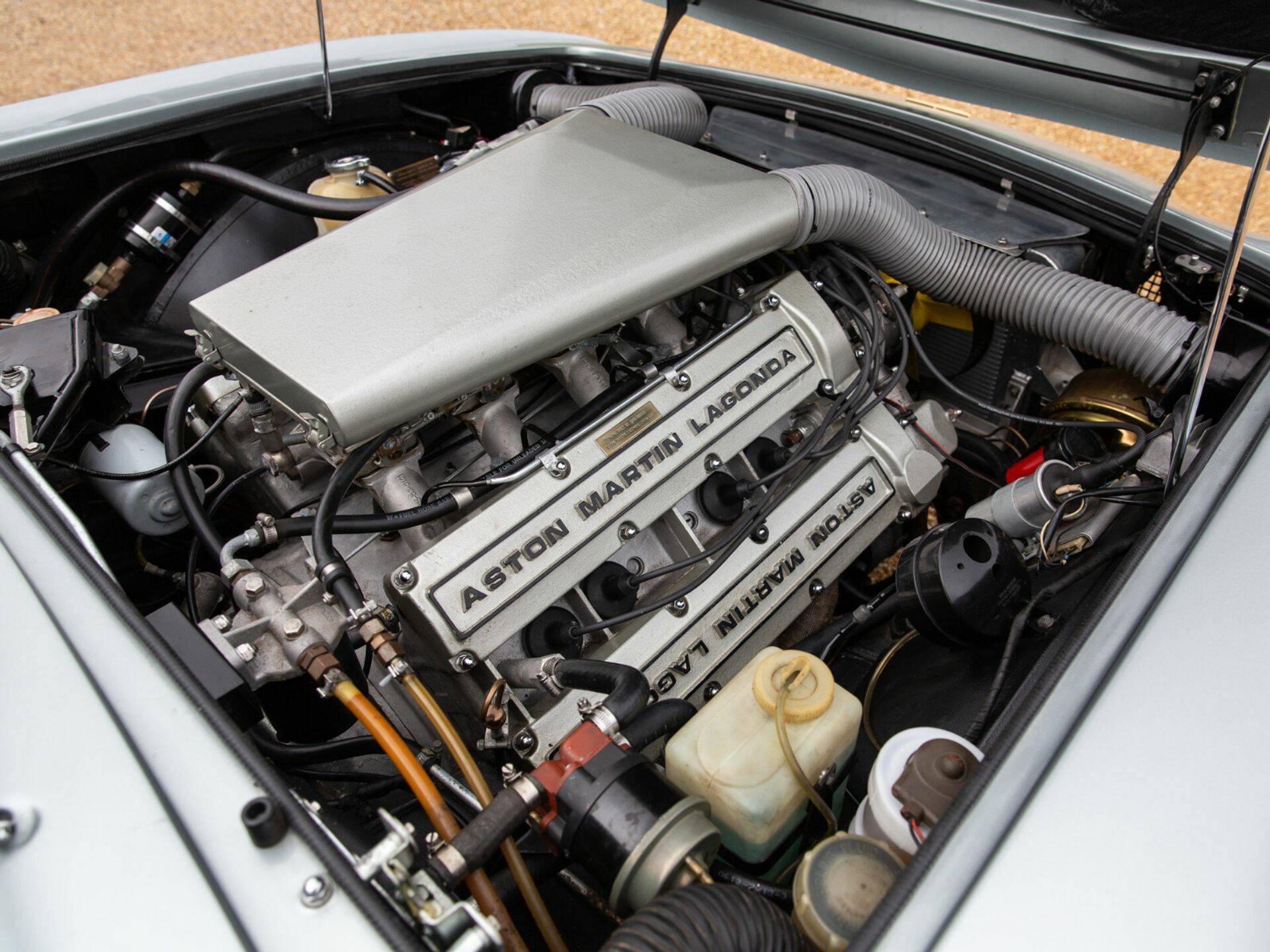
The major variants: 1977 Vantage, Volante and 1986 Zagato
The lineage first expanded in 1977 with the V8 Vantage, a high-output version that became the series icon. Wikipedia (Aston Martin V8 Vantage 1977) reports power estimates at around 380 PS according to some sources, and 432 PS according to others. Again, the marque did not endorse a single figure, and configurations varied. The result was clear: the Vantage asserted the platform’s sporting potential.
The Volante, the convertible interpretation, broadened the range’s appeal without denying its temperament. It added a more hedonistic grand touring dimension, much sought-after in the late 1970s and mid-1980s. The mechanical base remained the 5.3-litre, with settings aligned with the series’ evolutions.
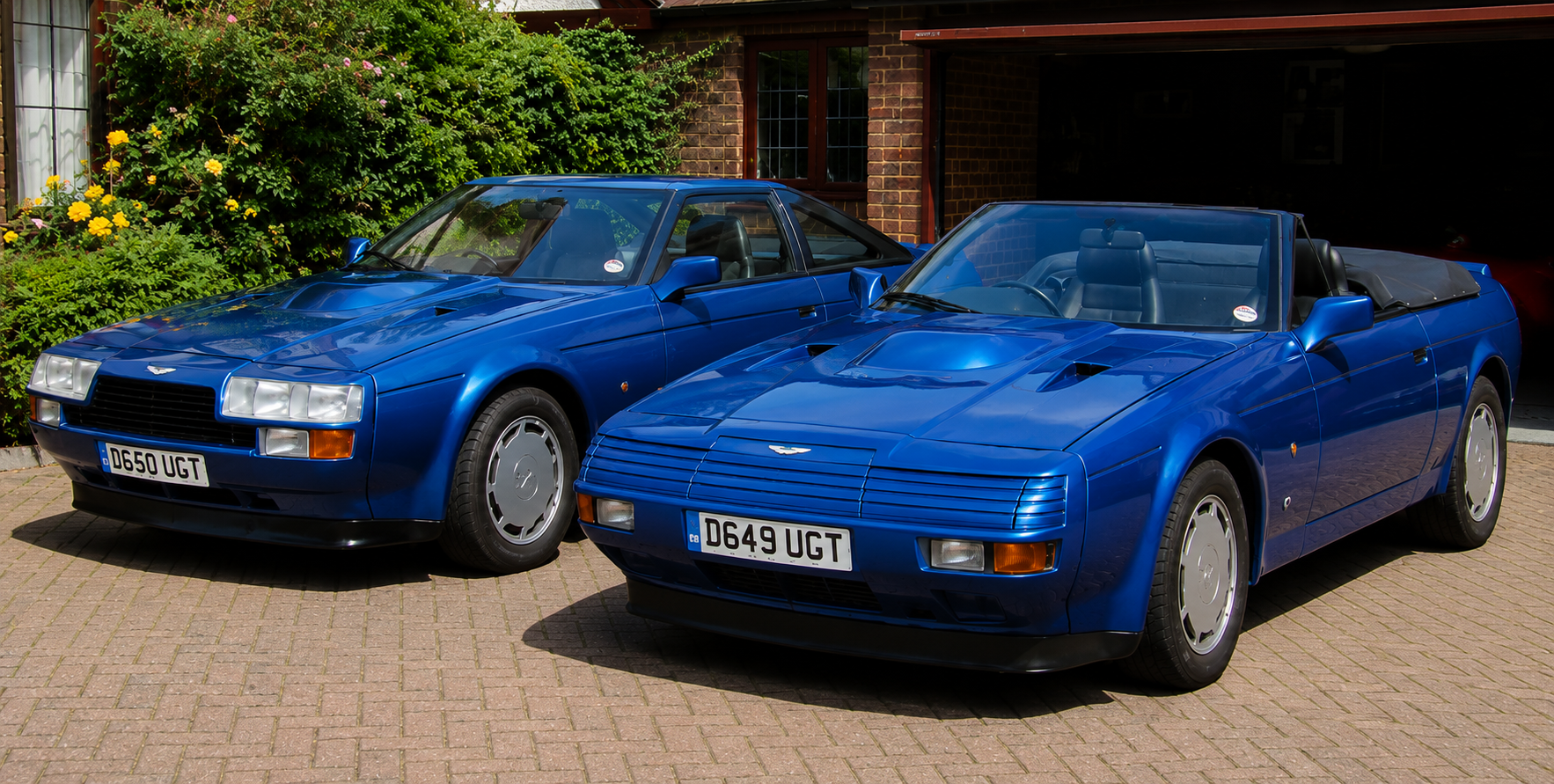
Finally, the AM V8 Zagato (1986-1989) offered a more radical and limited take on the GT, with coachwork by the Milanese carrozzeria. According to Wikipedia (Aston Martin V8 Zagato), around 52 examples were built. This separate series, crafted in small numbers, crystallised the 1980s aesthetic and testified to a historic collaboration with Zagato rekindled.
24 years, multiple owners, two liquidations: the V8 as a lifeline
The car’s career mirrored Aston Martin’s turbulence. According to Wikipedia (Aston Martin), the marque went through two liquidations in 1974 and then 1975, while the V8 series remained its sole product. In that period, the model was not just a shop window: it was the revenue, the workshop and the reason to open on Monday.
- 1974: first liquidation, activity contracted.
- 1975: second liquidation, production reorganised on a small scale.
These episodes came with frequent ownership changes. Despite this, the car continued to evolve in measured steps. This continuity, sometimes artisanal, partly explains the model’s exceptional longevity, with production spanning 1969 to 1989.
The platform’s versatility — coupé, convertible, high-performance version and coachbuilt special — sustained commercial appeal over the years. Around 1,675 examples across all variants are mentioned by Wikipedia, with the exact figure debated. In the Aston world, where volumes remain confidential, this constancy translated into symbolic capital and minimal cash flow.
Current values: AM V8, Vantage and Zagato on the classic market
On the classic market, the AM V8 attracts with its timeless style and historic role. Standard versions offer a more accessible entry into Aston Martin’s V8 universe, with values influenced by condition, original specification and provenance. Successive evolutions and tuning differences weigh on appraisal, as does restoration quality.
The 1977 V8 Vantage and its derivatives sit at the top of the family in terms of aura and demand. Power estimates from 380 to 432 PS depending on sources contribute to its image, but it is the overall mechanical package and dynamic poise that set the price. Original, well-documented examples trade at a marked premium over milder versions.
The AM V8 Zagato (1986-1989), limited to around 52 units, occupies a connoisseur’s niche. Its very limited production, strongly 1980s styling and distinct place in the lineage justify high price levels. To gauge the market, auction catalogues and specialist platforms such as Aston Martin V8 listings on Classic Driver offer a useful snapshot of recent transactions and value spread.
To place these values in the context of the marque and model-by-model specifications, consult factory history pages such as the official Aston Martin V8 and V8 Vantage archive, as well as the encyclopaedic overview on Wikipedia dedicated to the Aston Martin V8, bearing in mind period discrepancies in figures.
Conclusion: why the AM V8 still matters
Beyond the — sometimes blurry — figures, the AM V8 embodies rare resilience. Born a DBS, renamed AM V8 in 1972, it carried a turbulent marque on its back, served as a laboratory for the Vantage, offered an open-air interlude with the Volante and rekindled the taste for bespoke with the Zagato. Its twenty-four-year longevity was no accident: it proves that a well-born grand coupé can, in its own way, save a company.
To explore the details of this lineage and its offshoots, see our dedicated model file on the AM V8 and its evolutions, the genesis of the V8 at Aston via the story of the 1969 DBS V8, and put the epic in perspective with our history of the Aston Martin marque. For many enthusiasts, the AM V8 thus remains more than a model: a discreet and essential milestone in Aston Martin’s survival.