DB9 : premier modèle de Gaydon, plateforme VH en aluminium, million de miles de tests et rigidité doublée. Voici pourquoi le DB8 a été sauté en 2003.
DB9 is not a simple numbered succession: it is the industrial pivot that inaugurates Gaydon, the aluminium VH platform and an unprecedented scale of development. In five breaks, we understand why the DB8 never existed and how this coupé laid the technical foundations for twenty years of production. Those who want to explore the car in detail can continue reading on our page dedicated to the DB9, its versions and its history.
Why the DB8 never existed: the decision to skip a number in 2003
Aston’s numbering has its habits, but 2003 is an exception: the DB8 stayed in the drawer. According to Aston Martin and its press office, the carmaker deliberately skipped a digit, judging the technological leap between DB7 and DB9 too great for a mere arithmetic continuity. The marque chose to signal a rupture, not a spec-sheet evolution.
This choice was not a naming whim. Behind the badge, the DB9 introduced a new architecture, a new factory, and a development process without precedent. In other words, putting “DB8” on the V5C would have trivialised what was changing in depth: the way an Aston is conceived and built.
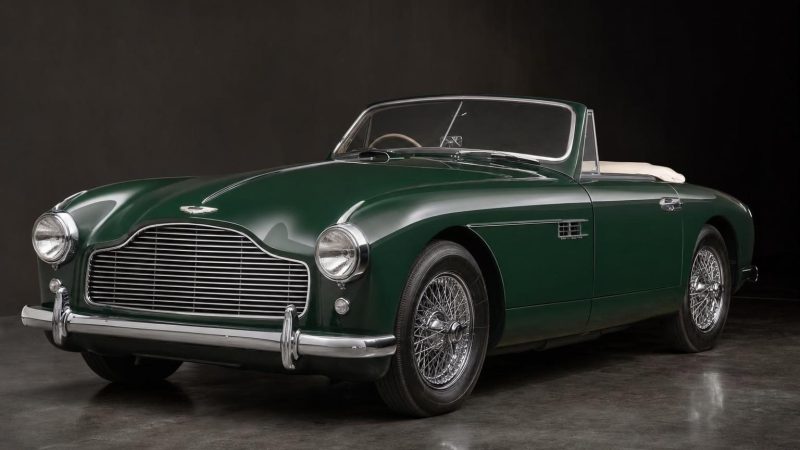
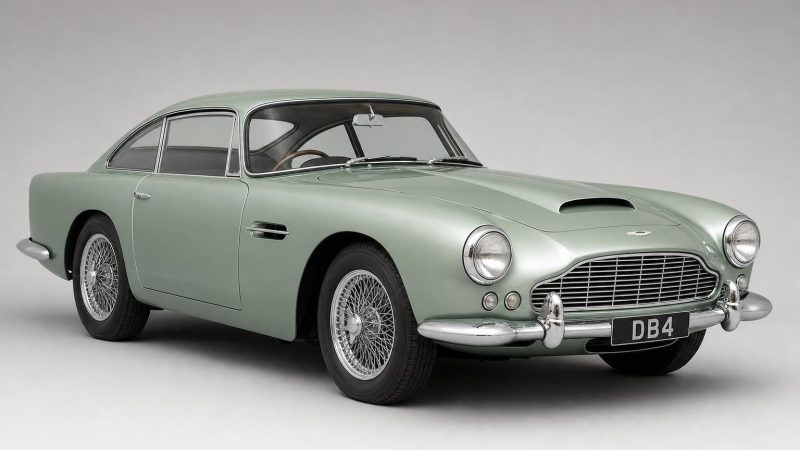
To gauge the gap, it suffices to put the DB7 back in its context. The 1990s benchmark laid the groundwork for the revival, but it relied on a platform and manufacturing logic it inherited, which the DB9 completely reset. Readers wishing to revisit that milestone will find a clear overview on our DB7 dossier, from project to final series.
The aluminium VH platform: what the DB9 brought that the DB7 could not offer
The DB9 inaugurated the VH (Vertical/Horizontal) platform, a modular aluminium structure assembled with self-piercing rivets and adhesive. According to the Aston Martin media site, the resulting body-in-white weighs 25% less than the DB7’s while offering double the torsional rigidity. At the scale of a chassis, that’s a seismic shift: less mass and more stiffness, hence a sounder basis for dynamics, passive safety and day-to-day refinement.
In practice, this approach enables virtuous industrialisation: VH was conceived to extend vertically (segments) and horizontally (models), reducing compromises. The DB9, first beneficiary, immediately stands out for a body precision and isolation that eluded the DB7. Here, the engineering is not a slogan; it makes the difference at every bead of glue and every rivet.
This backbone then served as the spine for an entire generation of road-going sports cars. For an overview of two decades of aluminium architectures at Aston Martin, our analysis of the VH platform and its 20-year derivatives provides useful perspective.
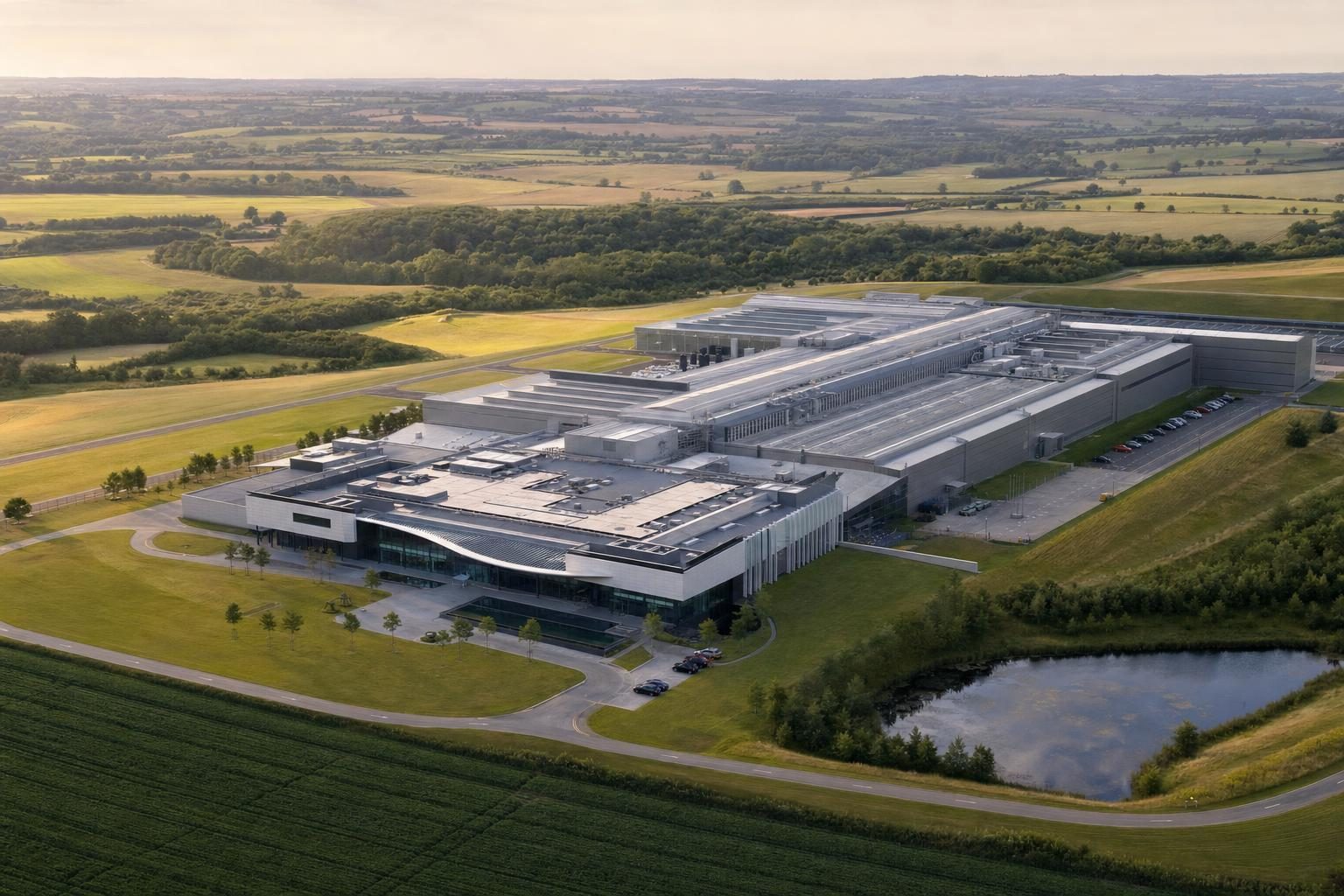
Gaydon: 55 acres on a former RAF V-bomber base, the brand’s first dedicated industrial tool
Another decisive break: the place. The DB9 was the first car to leave the Gaydon factory, opened in 2003 on a former RAF V-bomber base, and set on 55 acres. According to Wikipedia Aston Martin and the official site, it is the first modern industrial tool fully conceived for the brand’s needs. A single site, flows drawn for quality, and a line that mirrors the logic of the VH platform.
This location was not a simple change of address. It marked Aston Martin’s entry into an era where production control and repeatability of performance became the standard. The DB9, first-born of Gaydon, carried that ambition: it embodied the starting point of a rationalised production without renouncing hand-finished craftsmanship.
The result was tangible as soon as ramp-up began. The berlinetta officially entered production at Gaydon in January 2004, laying the foundation stone of a site that would remain, for the years that followed, the beating heart of the range. For a detailed retrospective on the model, including its place in the factory’s history, this synthesis on the DB9 gathers the key milestones.
The one-million-mile development programme: Death Valley, Arctic Circle, Nardò
Rigour did not stop at the factory walls: it drove far. The DB9 underwent a validation programme covering more than one million miles. According to Aston Martin and the brand’s media portal, teams piled on the kilometres in Death Valley (United States), in the Arctic Circle in Sweden, on the Nardò ring in Italy, at Ford’s Lommel proving ground in Belgium and even at Volvo’s crash-test centre in Sweden.
This geography is anything but anecdotal: extreme heat, polar cold, sustained speed, broken surfaces and safety tuning each brought their share of constraints. The DB9 emerged with a broader operating envelope, tighter tolerances and an endurance that was out of the DB7’s reach without such a campaign.
Beyond robustness, the aim was to harmonise the car’s character in radically different conditions. That is precisely where the rigidity of the VH platform makes the difference: it isolates variables and makes tuning more intelligible. The result, perceptible at the wheel, stems from engineering work accumulated mile after mile.
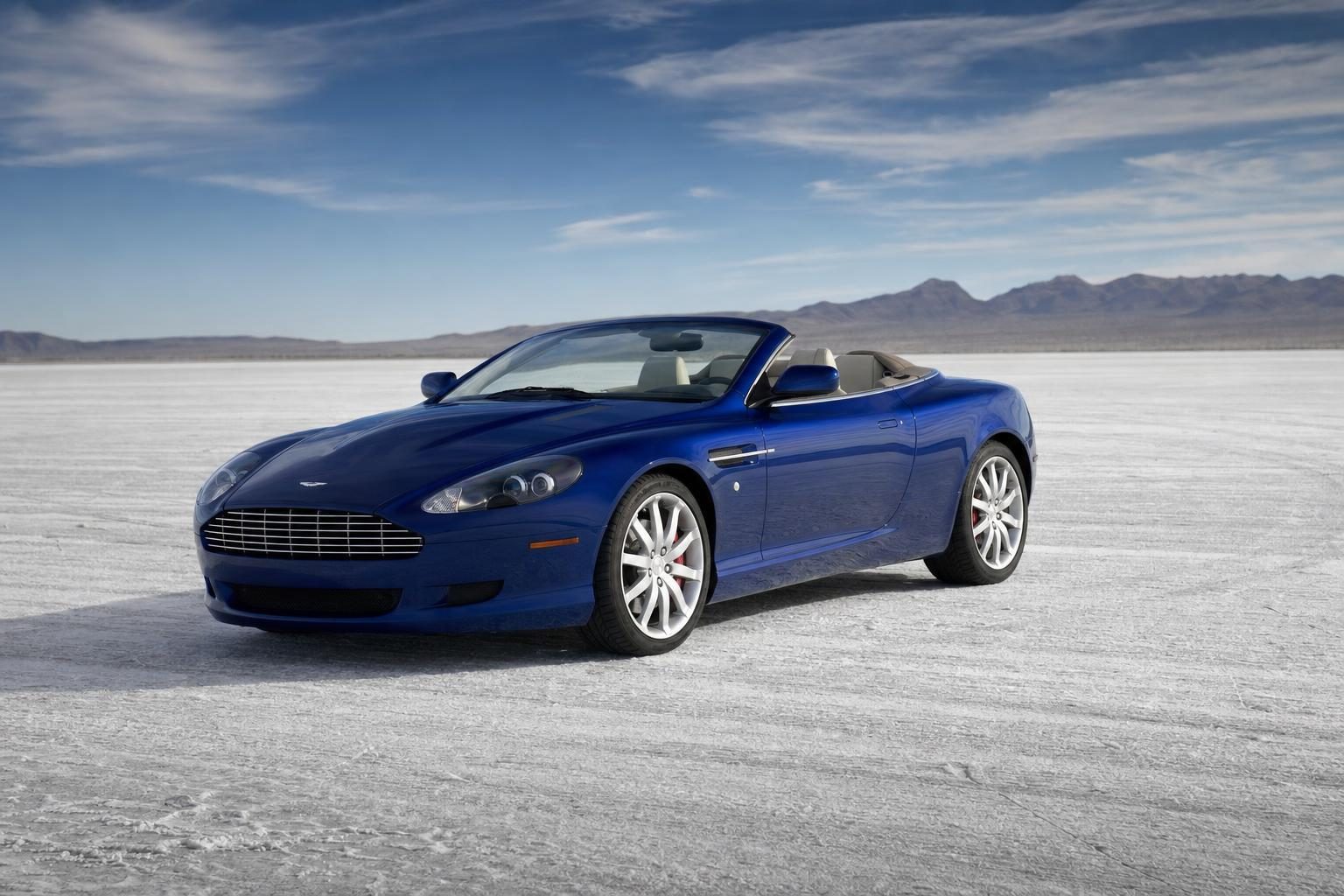
DB9 and DB9 Volante over 12 years of production: the major evolutions from 2004 to 2016
The timeline is clear. Official production of the coupé began in January 2004 at Gaydon, and the Volante was unveiled in Detroit in 2004 before entering production in 2005. Twelve years later, in July 2016, the line ended after around 16,500 units, according to estimates reported by Wikipedia (DB11 entry). Between these markers, the DB9 occupied centre stage as the archetype of grand touring, Gaydon-style.
This long cycle was not synonymous with inertia. On the contrary, it reflects the strength of the technical base. The aluminium structure, assembly quality and validation discipline allowed the car to evolve without betraying the DNA laid down in 2003. Iterations followed a coherent continuity, from coupé to Volante, leveraging the rigidity and mass gains inherited from VH.
To place these milestones in the maker’s chronology and among contemporary models, the official site Aston Martin Past Models – DB9 and the dedicated page on the Aston Martin media portal offer a useful base, which we cross-reference here with the historical markers on Wikipedia.
Conclusion: why the DB9 changed the game for twenty years
What the DB9 tells is the transformation of a carmaker: an aluminium VH architecture that lightens the body by 25% and doubles rigidity versus the DB7, a modern 55-acre factory at Gaydon, and development of more than one million miles across five reference sites. Plenty of facts that fully justify the absence of a DB8: the leap was too great for a simple “plus one”.
First-born of Gaydon, the DB9 defined a technical and industrial standard that irrigated the entire following decade. When judging this rupture, we can let the numbers speak: less mass, more stiffness, exhaustive validation. That is how a number is skipped and an era begins.