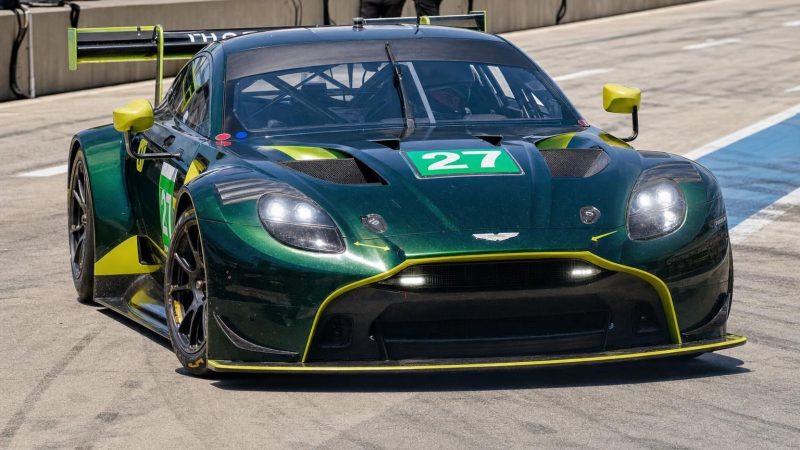
AMR26, nuanced review: Honda vibrations in Bahrain, 1 point after nine GPs, in-house gearbox and active aero, Newey’s arrival. Context and outlook.
AMR26 is the starting point for this unvarnished review of a turbulent 2026 season at Aston Martin. In a few months, the new technical era, a novel Honda hybrid V6 and ambitious bets on the gearbox and active aerodynamics have brought the team back to cold realism: adding up promises doesn’t make a championship position. Here, with facts in hand, is why the campaign slipped… and what can still be adjusted.
The Honda RA626H engine: the vibration issue that paralysed Bahrain testing
From Bahrain onwards, the Honda RA626H hybrid V6 laid down the law: vibrations so severe that the manufacturer acknowledged they could cause nerve damage if running was prolonged. According to Wikipedia EN (Aston Martin AMR26) and Autosport (5 March 2026), the phenomenon limited useful mileage, disrupted correlations and, more prosaically, eroded driver confidence. In a category where maximising the package is paramount, this mileage deficit weighed heavily from Melbourne.
The team even considered capping both cars at 25 laps during the Australian Grand Prix to preserve the hardware (Wikipedia EN, Aston Martin AMR26). That such a scenario was studied speaks volumes about the scale of the problem. The engine was not just a performance topic, but one of mechanical and human sustainability: when stamina at the wheel becomes a variable, the complexion of a race weekend shifts.
Beyond the urgency, this case study is a reminder of an F1 2026 truism: chassis–power unit integration is an all-encompassing discipline. The margins lie in architectural details, inertia and damping. Here, the wave set the tempo.
Just one point after nine Grands Prix: what the constructors’ standings say
As of 5 July 2026, after the British Grand Prix, Aston Martin have only one point and sit second-last, ahead of Cadillac (Wikipedia EN, Championnat du monde de F1 2026 and GP de Grande-Bretagne 2026). The number is stark, but it says several things. First, the exploitable performance window is narrow: to score a point in this dense field, you need a clean race, stable stints and a Sunday without mishaps. Next, consistency is lacking: the conversion of the few opportunities hasn’t followed.
The contrast is sharp with the team’s stated ambition, having secured in February 2026 the perpetual rights to the “Aston Martin F1 Team” name (£50m, according to Wikipedia EN, Aston Martin in Formula One). The institutional project is consolidating, but the championship only credits laps completed and points banked. With a single point, there is zero margin: every stint counts double, every pit stop is a match point.
Still, this meagre haul reflects imperfect reliability and constrained exploitation as much as pure speed. Saturdays have at times shown encouraging flashes, but without a robust enough Sunday stint profile, the points sheet remains a patchwork.
The in-house gearbox and active aerodynamics: what the AMR26 achieved on paper
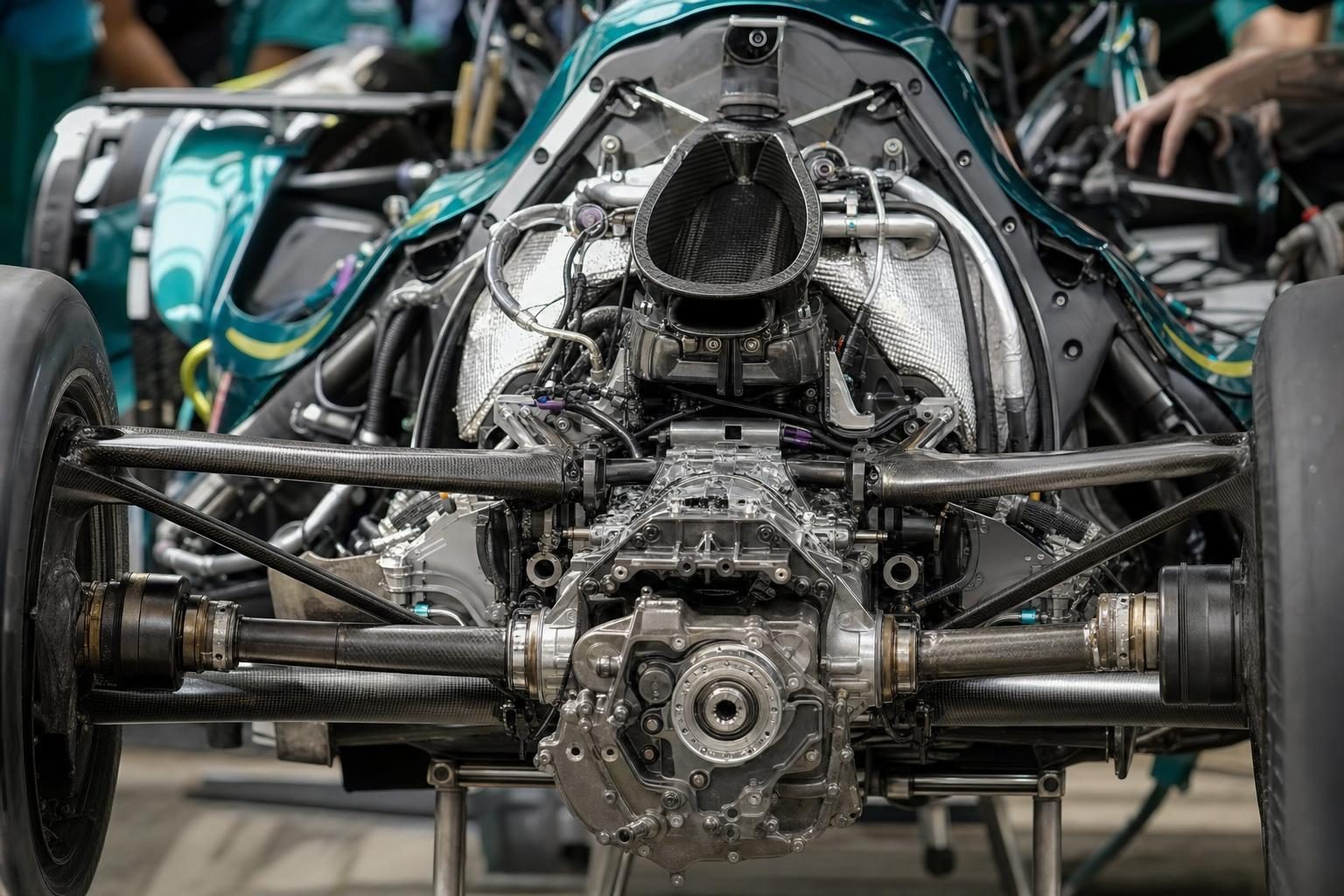
In the shadow of the setbacks, a genuine industrial step: the eight-speed gearbox designed in-house at Silverstone, a first since 2004. Aston Martin present it as a strategic milestone on the model’s dedicated page (astonmartin.com). Bringing the transmission in-house restores leverage over mass–inertia stacking, compactness and rear-end packaging. On paper, the architecture opens up gains in centre of gravity and satellite downforce.
Another area is active aerodynamics, central to the 2026 regulations. The car’s philosophy, outlined in our technical dossier, combines drag reduction on the straights with downforce recovery in the corners via permitted devices. When aligned, these levers promise superior energy efficiency and fine-grained management of overtakes, hot topics in the 2026 hybrid era.
The problem, again, lies in the orchestration. A new transmission, a power unit with specific vibrational behaviour and a modulable aero concept demand flawless correlation between CFD, wind tunnel and track. The season has shown signs of coherence… too sporadically. To go further, our analyses detail the architectural choices and their expected effects on race exploitation: five technical breakaways decoded and in-house gearbox, fuel and active wings.
Adrian Newey as team principal: what that concretely changes mid-season
The AMR26 is the first Formula 1 car designed by Adrian Newey for Aston Martin (Wikipedia EN, Aston Martin AMR26). Seeing him lead the team in 2026 raises a simple question: what can the hand of a renowned architect change in a few months within a fresh regulatory framework? The answer rests on two axes. First, resource arbitration, to prioritise fixes with the highest return (vibrations, chassis–engine correlations, operating windows). Second, method, with a shorter decision chain between concept, testing and iterations.
Practically speaking, instant miracles aren’t expected. Major packages take several races, sometimes a factory shutdown, to translate geometry to the track. However, the quality of the “small steps” improves quickly: cleaner mappings, tweaked local stiffnesses, tightened tolerances, and a parts hierarchy that stabilises set-up from Friday to Sunday. That is often where one point is saved rather than three lost.
In the medium term, the impact is also measured in industrial direction. The transmission conceived at Silverstone, the tight reading of the 2026 regulations and the optimisation of flows on the electrical side sketch a trajectory. To follow the project upstream and place this season in context, our recap of the beginnings is useful: the debut of the Aston Martin AMR26 with Honda and Newey.
Conclusion: what the AMR26 can still salvage
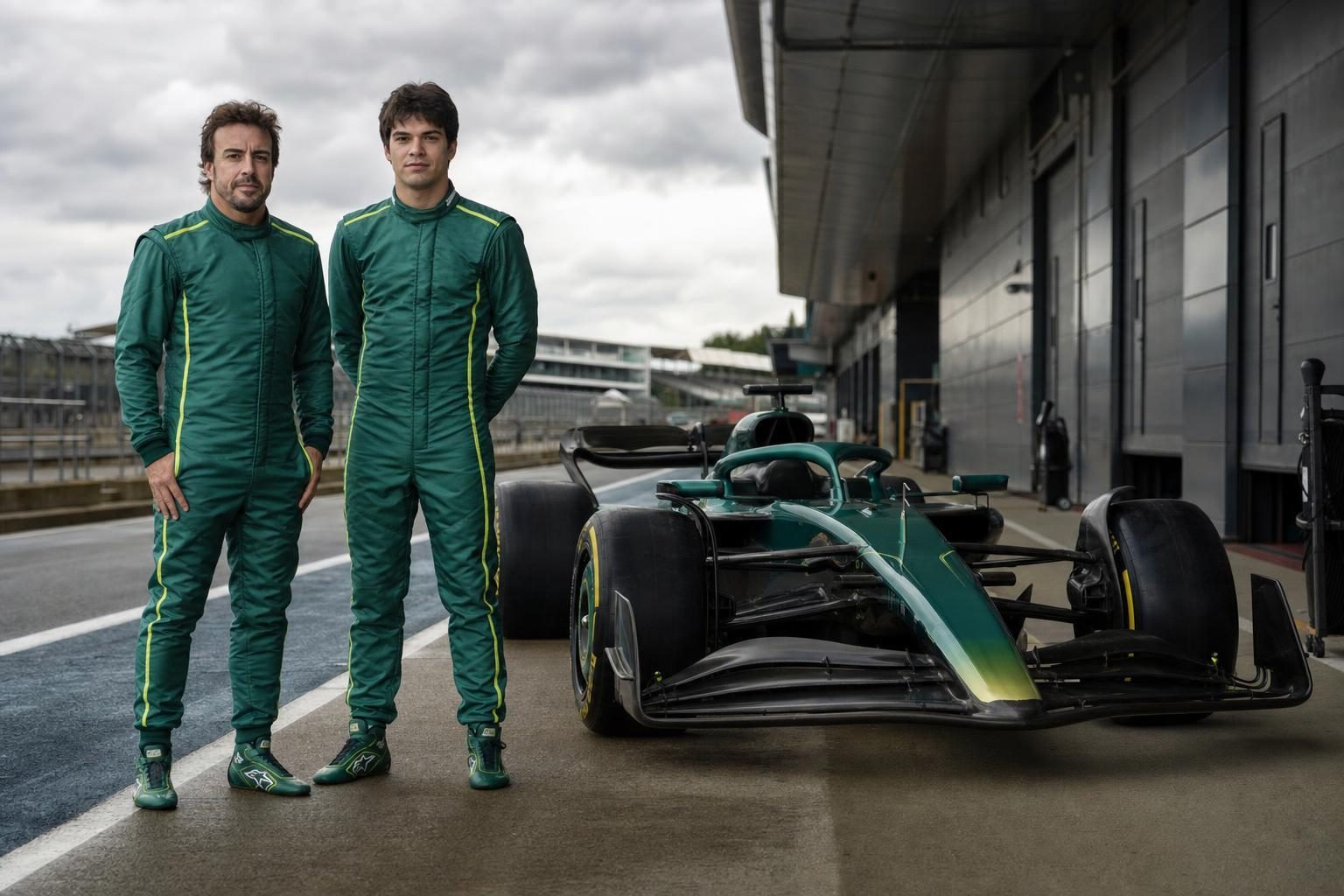
After nine rounds, the picture is blunt: one point, testing hampered by RA626H vibrations, and exploitation too often thwarted. But the AMR26 also carries solid seeds: an internal gearbox that restores control at Silverstone, active aerodynamics aligned with the regulation’s efficiency DNA, and a clarified technical leadership. The key now is to add up the details: tame the vibrational environment, make mileage reliable, lock in correlation and capitalise on less severe circuits.
In the championship, every clean weekend is worth more than its weight in carbon. If the team can turn running capacity into strategic consistency, the AMR26 can convert its technical foundations into points, without excessive promises or talk of a grand turnaround. The 2026 season may not have delivered the expected curve, but it still offers useful learning ground for the immediate future.
To go further
- Technical sheet and official presentation: AMR26 page at Aston Martin.
- Regulatory context and field trends: Championnat du monde de Formule 1 2026.
- Timeline and factual sources: Wikipedia EN – Aston Martin AMR26.