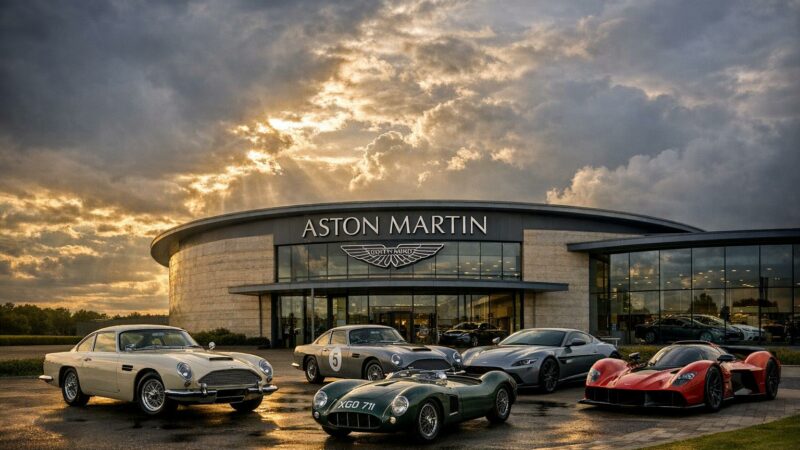
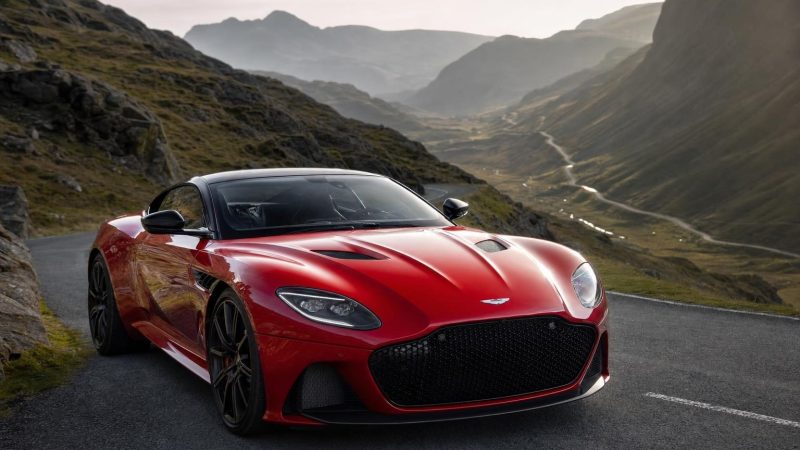
DB11 succession analysée en trois décisions fondatrices, du V8 AMG à l’AMR puis à l’arrêt en juin 2023, pour comprendre la bascule vers le DB12.
DB11 succession: three words to sum up seven years in which Aston Martin clarified its technical, industrial and commercial priorities. From Geneva 2016 to Cannes 2023, three structuring decisions — the introduction of the AMG V8, the early shift to the DB11 AMR and the end of production in June 2023 — draw the unbroken line leading to the DB12. Here is what they tell us about Gaydon’s strategy, and why this transition matters as much as the model that follows from it.
Geneva 2016: the DB11 as the first model of the “Second Century Plan”
Unveiled at the Geneva Motor Show in March 2016, the DB11 ushered in a new era for the marque: a new aluminium platform, a new twin‑turbo V12 and a clearly stated ambition to modernise. According to the Aston Martin DB11 Wikipedia page, official production began on 28 September 2016 at Gaydon, marking the industrial kick‑off of the programme.
The initial version featured a 5.2‑litre twin‑turbo V12 developing 600 PS (447 kW) at 6,500 rpm. This technical choice illustrates the balance sought between grand touring and performance, with a sportier positioning than the DB9 while remaining a long‑distance coupé. The DB11 was thus tasked with setting the tone for the “Second Century”: elegance, efficiency and contemporary technologies.
In parallel, the break in style and philosophy compared with the DB9 underlined the scale of the task. To grasp the contrast with the previous era, it is worth consulting the official page dedicated to the DB9, which places the DB11 within both continuity and a comprehensive upgrade of the range.
The AMG V8 in an Aston Martin: the industrial logic behind a controversial choice
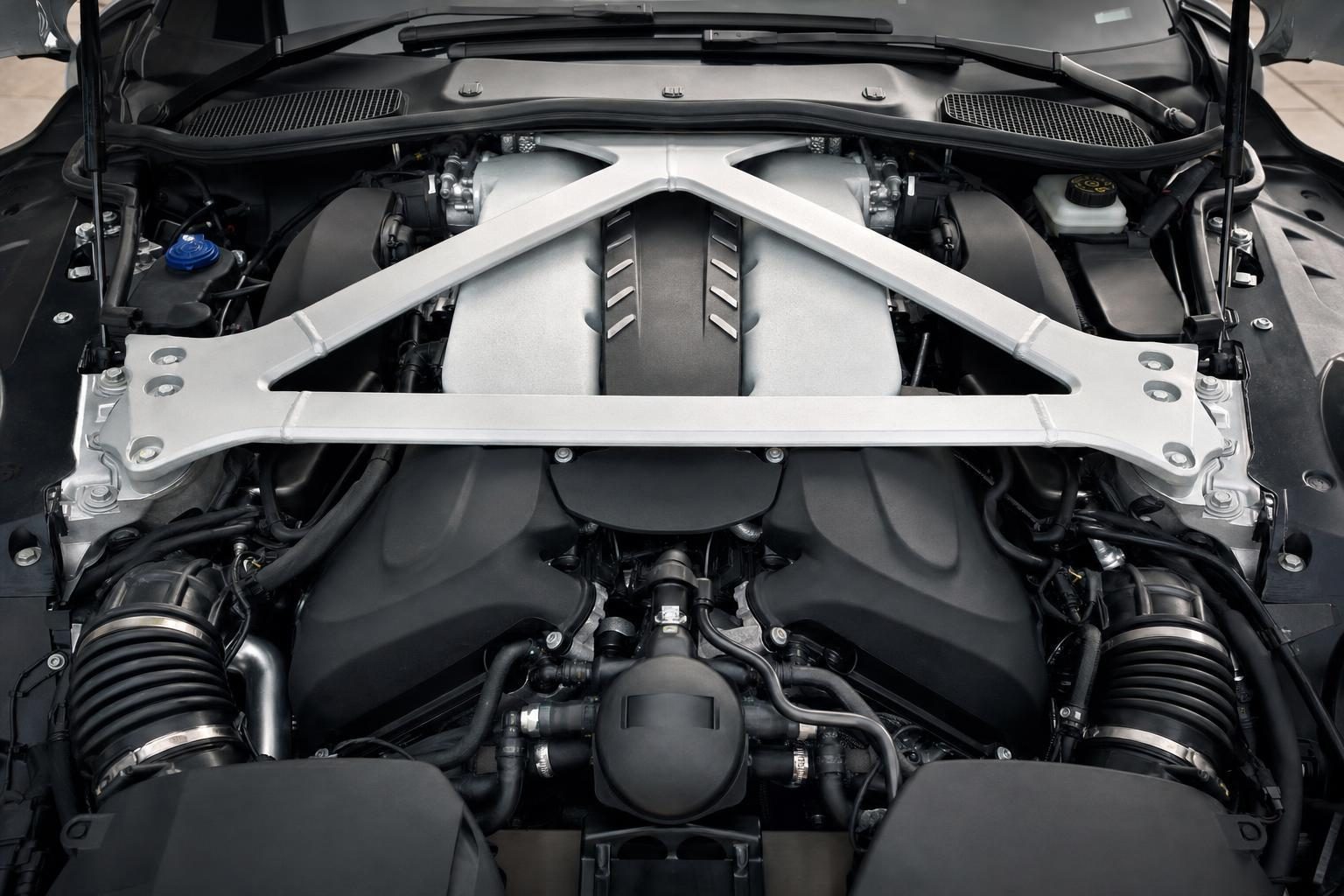
The arrival of Mercedes‑AMG’s 4.0‑litre twin‑turbo M177 V8 in the DB11 raises a simple question: why entrust powertrain supply to a partner on a core‑range DB model? The answer lies in industrial rationality. Still according to the Aston Martin DB11 Wikipedia page, this engine — the first non‑Aston Martin power unit in a modern DB model — formed part of a broader collaboration also covering infotainment.
This V8, compact, efficient and heavily amortised, provided an immediate solution in terms of consumption, emissions and industrialisation costs. It also broadened the customer base with a lighter version, easier to exploit day‑to‑day, without betraying the grand touring DNA. The controversy is real — an Aston with an AMG heart is bound to fuel debate — but the operational logic is hard to dispute.
For readers wishing to revisit the DNA of earlier DBs and gauge the pivot undertaken, heritage resources such as the press archive dedicated to the DB9 offer useful perspective on the evolution of Aston Martin’s technical and stylistic priorities.
DB11 AMR in May 2018: why the standard V12 was dropped after just 18 months
Second key decision: the rapid move upmarket for the V12. In May 2018, the DB11 AMR replaced the standard V12 after only 18 months of production. According to the Aston Martin DB11 Wikipedia page, this unusual pace signalled a desire to align the coupé’s character more squarely with contemporary grand‑touring performance.
The DB11 AMR lifted output to 630 PS (470 kW) at 6,500 rpm and announced a top speed of 335 km/h. Beyond the figures, the strategic message was clear: the pinnacle of the DB11 range had to be more assertive, its intent more explicit. Standardising the V12 around the AMR signature streamlined the offering, toughened the proposition and installed a clear hierarchy above the AMG V8.
For the full DB11 file and our in‑house analysis, we have compiled the major milestones, including this shift to AMR that reframed the V12’s image. In the context of the DB11 succession, it is one of the era’s most telling inflection points.
End of production in June 2023 and series figures: what 7 years of DB11 mean for Gaydon
Third structuring decision: the curtain call. DB11 production ended in late June 2023, replaced by the DB12. This timeline, reported by the Aston Martin DB11 Wikipedia page, closes a seven‑year career typical for a GT of this standing, yet rich in technical and marketing inflections — AMG V8, AMR, and, in the background, rising customer expectations in connectivity and dynamic refinement.
Seven years is long enough to adjust the industrial tool and prove out the alliance strategy in technologies. It is also short enough to avoid fatigue in a niche product facing renewed competitors. The DB11 succession reads here as a controlled handover: no revolution, but clear decisions to hold the British grand‑touring line, with a technical base better equipped for the next step.
To place this chapter’s close within the current range, see our DB12 dossier, which carries the story forward by detailing the priorities inherited from the DB11 period.
DB12 unveiled at Cannes in May 2023: what the succession reveals about the brand’s current priorities
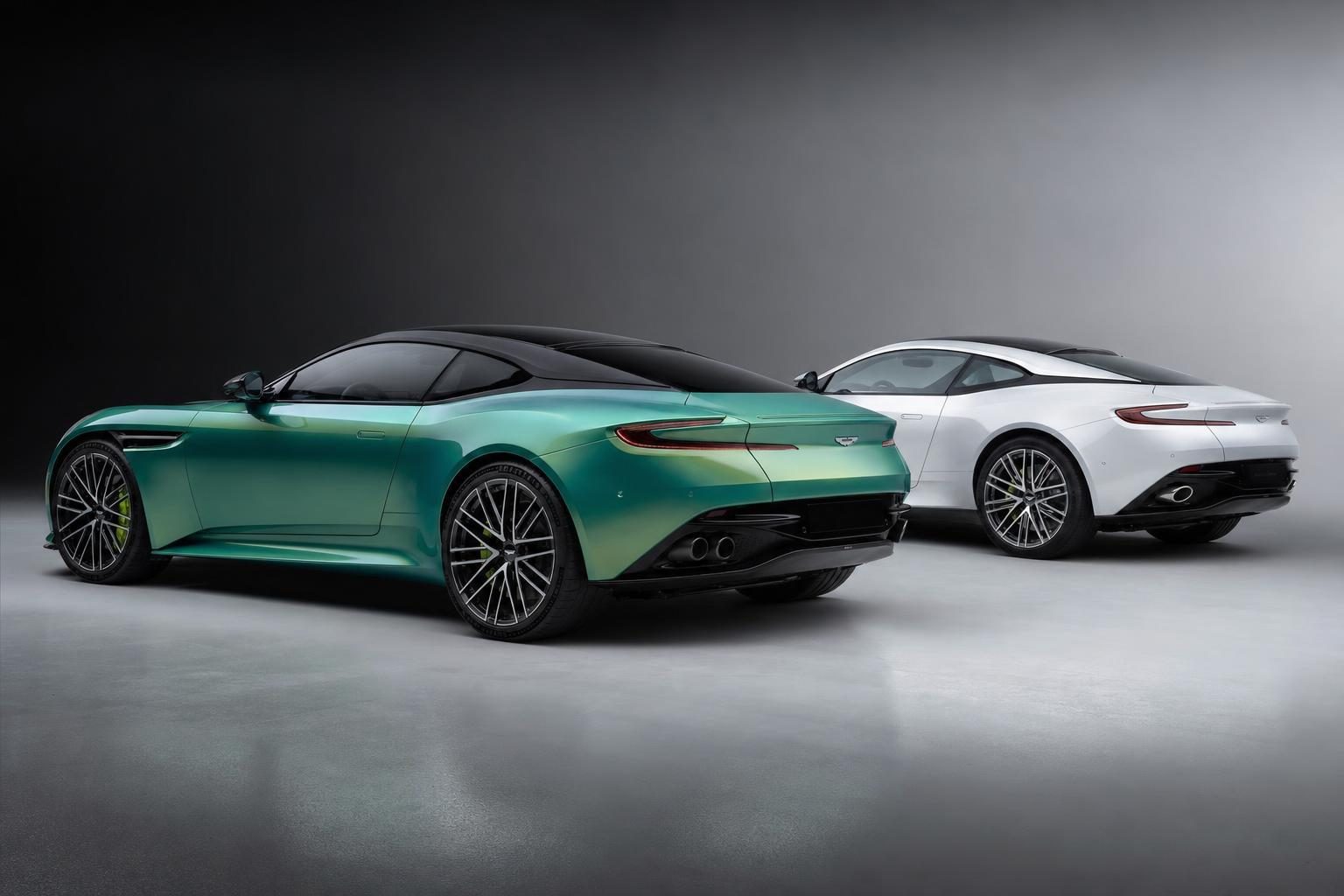
Unveiled at the Cannes Film Festival in May 2023, the DB12 picked up the baton just as the DB11 was preparing to leave the stage. This calendar coincidence underlines a seamless transition, maintaining the GT course while readjusting the brief in light of lessons learned since 2016.
The DB11 succession highlights three priorities now hard to ignore: 1) a powertrain optimised for efficiency and mass (the AMG V8 lesson), 2) a high‑performance version that is unambiguous and legible (the AMR legacy), 3) an upmarket progression perceived as continuous, not sporadic (the Cannes “event” reveal as springboard). In other words, more precision in execution than rupture in discourse.
To trace the narrative and factual arc of this transition, readers can consult the Wikipedia page detailing the DB11, which lists the key milestones cited here, as well as the official Aston Martin website for an overview of the current range.
Conclusion — DB11 succession: three decisions, one clear trajectory
In retrospect, the DB11 succession is not a simple glide towards a newer model. The adoption of the AMG V8, the rapid conversion of the V12 to AMR and the June 2023 stop form a coherent triptych: optimise, clarify, follow through. It is this discipline — discreet yet firm — that prepared the ground for the DB12.
The outcome is more an art of continuity than a dramatic flourish. The DB11 succession set out clear‑eyed compromises, which the DB12 inherits without hesitation. And for those now wishing to judge on the merits, our dedicated analysis of the DB12 “Super Tourer” and its S version usefully completes this handover — a very British way to evolve an icon, with restraint and resolve.