Rapide 2010: Aston Martin’s first series-production saloon, sketched in seven weeks by Marek Reichman, assembled in Austria then brought back to Gaydon. Four facts that illuminate its singular journey.
Behind the polished image of the most famous modern-era berline Aston Martin, the 2010 Rapide, lie four production and distribution decisions that complicated its path from the outset. From rapid-fire styling sign-off to outsourcing in Austria, from repatriation to Gaydon to AMR and electric attempts, this analysis sets into perspective the industrial choices that weighed on the career of Gaydon’s only saloon.
Seven weeks to design the Rapide: the brief given to Marek Reichman in May 2005
The Rapide’s genesis was a sprint. According to Wikipedia (Aston Martin Rapide, English edition), the design was entrusted to Marek Reichman in May 2005, with an initial concept wrapped up in around seven weeks. An unusual pace for a four-door grand tourer, which immediately set the project’s timeline constraint as its guiding thread.
This tight deadline explains an almost orthogonal approach to the traditional saloon: lengthen and widen the coupé’s design language without diluting the elegance. The exercise succeeded visually, but the speed of the styling freeze inevitably limited the scope for downstream industrial iteration. In this context, the in-house aluminium platform (VH) and the Gaydon lines, already under strain, were not the easiest to stretch.
This lightning launchpad therefore dictated a logical next step: find a partner capable of industrialising without disrupting the manufacture of existing coupés and roadsters. The equation wasn’t purely aesthetic; it was also about capacity and timing.
Magna Steyr in Austria: why production was outsourced from the start
Series production began on 7 May 2010 at Magna Steyr in Graz (Wikipedia EN, Aston Martin Rapide). Outsourcing offered two decisive advantages: absorbing a longer, more complex body without immobilising Gaydon, and capitalising on a subcontractor’s expertise with premium small series. A pragmatic way to protect the brand’s other lines while meeting the launch timetable.
This decision also reflected commercial expectations at the time. The Rapide was meant to broaden the clientele beyond the coupé, with volumes sufficient to justify a dedicated line, yet modest enough to remain in Magna Steyr’s wheelhouse. In short: a measured bet, subcontracted to stay agile.
The flip side was a diffuse industrial footprint. By stepping away from its VH base and Gaydon’s production tools, the saloon gained responsiveness but lost direct control. A dependency that would soon be felt when the sales curve dipped.
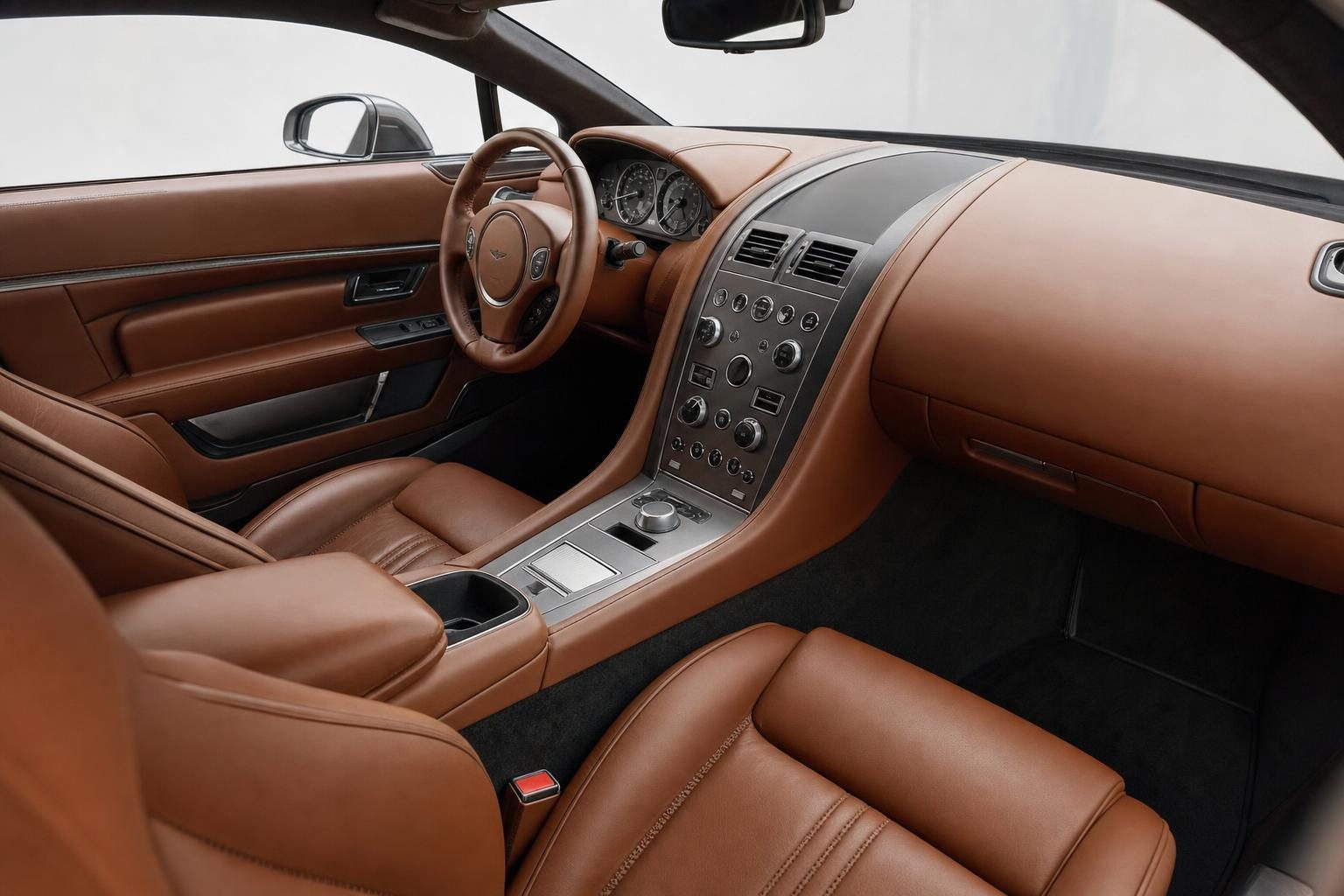
Repatriation to Gaydon in 2012 and what it reveals about sales forecasts
In 2012, Aston Martin ended its partnership with Magna Steyr, six years earlier than planned, and brought production back to Gaydon, with £1.6 million support from the UK’s Regional Growth Fund (Wikipedia EN, Aston Martin Rapide). A decision laden with meaning: volumes were below those envisaged at launch, to the point that outsourcing was no longer the most rational option.
The numbers followed suit: by early 2013, when the Rapide S arrived, fewer than 2,900 units had found buyers (source: CarJager, “Aston Martin Rapide: comme son nom l’indique”). For a car meant to smooth the coupés’ seasonality, the arithmetic was stubborn. The return to Gaydon refocused costs and strengthened quality control, but also confirmed the contraction of initial ambitions.
In passing, the exercise highlighted a vulnerability: when demand is weaker than expected, a dispersed industrial architecture becomes a burden. Coming “home” was likely the right operational decision, but it acknowledged the model’s difficulty in asserting itself against rival grand tourers.
Rapide AMR and Rapide E: two attempts to revive a model that struggled to find its audience
To restore momentum, the marque launched the Rapide AMR. Its output is quoted at 603 PS by CarJager (November 2025), while Motor1 (June 2018) mentions 580 bhp. Both figures coexist depending on markets and measurement standards: the essence lies elsewhere, in the intent to sharpen the dynamic proposition of a car conceived for long distances. A credible response for purists, but one that didn’t change the usage pattern: four doors, large footprint, and a naturally more rational clientele.
Another, more strategic avenue: electrification. The Rapide E project was announced at 155 units, assembled at St Athan. It was cancelled in January 2020 without any series-production example seeing the light of day (Wikipedia EN, Aston Martin Rapide; Wikipedia EN, Aston Martin Rapide E). Beyond the disappointment, the message is clear: electrifying an existing architecture does not always suffice to create a credible offer — especially if the industrial window closes.
These two paths speak volumes about the period: a marque balancing heritage and change, seeking a high note for a singular car in its range. To continue the exploration, our file dedicated to the Rapide traces the lineage’s evolutions, while the portrait of Marek Reichman sheds light on the initial styling stance.
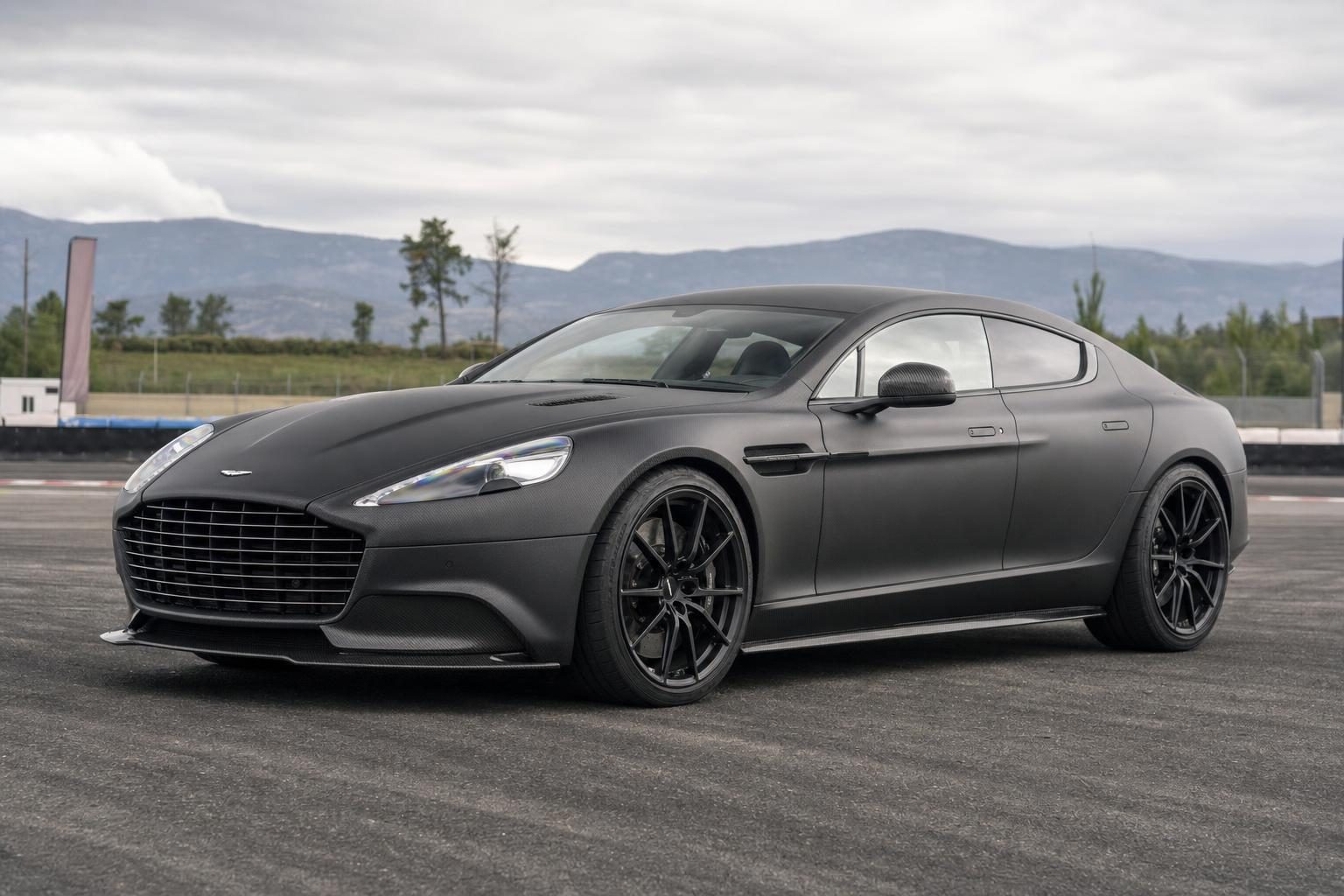
Conclusion — the berline Aston Martin facing workshop realities
In the end, the 2010 berline Aston Martin Rapide underwent a series of rational, constraint-driven decisions: design fixed in seven weeks (Wikipedia EN), outsourcing to Magna Steyr to meet the schedule (start on 7 May 2010), return to Gaydon in 2012 aided by £1.6 million when volumes softened, relaunch via AMR (603 PS per CarJager, 580 bhp per Motor1) and the electric Rapide E pivot ultimately cancelled in January 2020 (Wikipedia EN/EN). Each, taken alone, makes sense; together, they fragmented the model’s trajectory and complicated its promise.
The lesson is less spectacular than useful: for such a specific car, industrial coherence matters as much as aerodynamics. Without redefining the segment, the Rapide marked a pivotal period for Gaydon, a reminder that a beautiful drawing does not, by itself, make for a lasting career.
To delve into sources and historical markers, see the dedicated page on Wikipedia (Aston Martin Rapide), the official past Rapide models at Aston Martin and the presentation of the Rapide E project on Wikipedia.