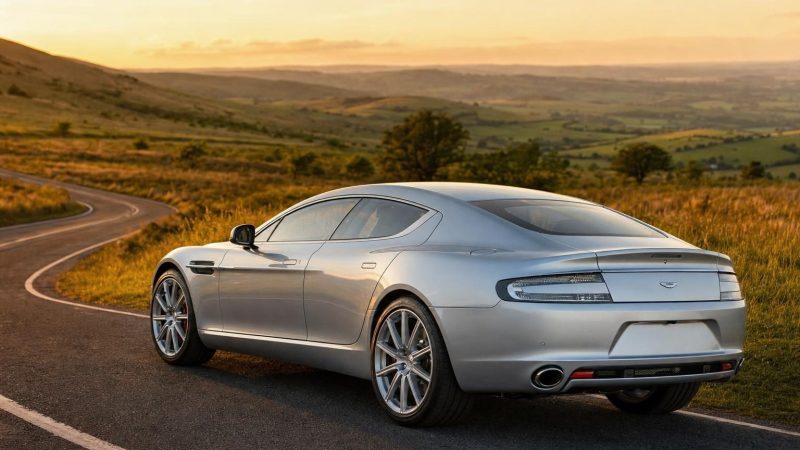
Lagonda Rapide, berline DB4 produite à 55 exemplaires: pourquoi Brown relance Lagonda en 1961, ses choix techniques, son échec nuancé et sa cote.
The Lagonda Rapide tells a clear ambition: in 1961, to offer a refined British alternative to the great grand tourers from Crewe. Here we follow David Brown’s gamble, the grafting of the DB4 base, three singular technical choices, a measured commercial reception and, today, the valuation of a curiosity that connoisseurs regard with kindness.
Why David Brown chose Lagonda rather than Aston for his luxury saloon
At the turn of the 1960s, David Brown had to decide: put the Aston Martin badge on a large family saloon or revive Lagonda, a marque already linked to stately luxury. Choosing Lagonda allowed Aston Martin’s sporting DNA to be maintained on coupés and convertibles, while reserving the upmarket saloon intended to rival Bentley for another banner. According to CarJager, the debut at the 1961 Paris Motor Show immediately set out this positioning: a DB4 for the family, but with more protocol.
This brand decoupling is strategic. It gives Newport Pagnell the opportunity to offer a more spacious, more hushed product without diluting Aston’s sportiness. The Lagonda Rapide thus becomes a range lever, set against Bentley, with Touring’s Italian elegance waiting in the wings. The pitch is restrained: the same engineering rigour, a different usage brief.
Brown’s revival of Lagonda also leans on an already prestigious history. Putting the Lagonda name on a four-door immediately elevates the proposition. At a time when the DBs were making Aston Martin shine in competition, entrusting the saloon to Lagonda avoided any cacophony of image. The Rapide could then play its own tune: British luxury, sustained pace, without raising its voice.
The DB4 base: what the Rapide shares with the coupé and how it differs
Technically, the Lagonda Rapide is based on the DB4 chassis, as documented by Wikipedia (EN). You find the architecture, Newport Pagnell’s assembly rigour and the Grand Tourer spirit, transposed to a four-door body. It is an acknowledged lineage: guarantees of performance, balance and long-distance handling.
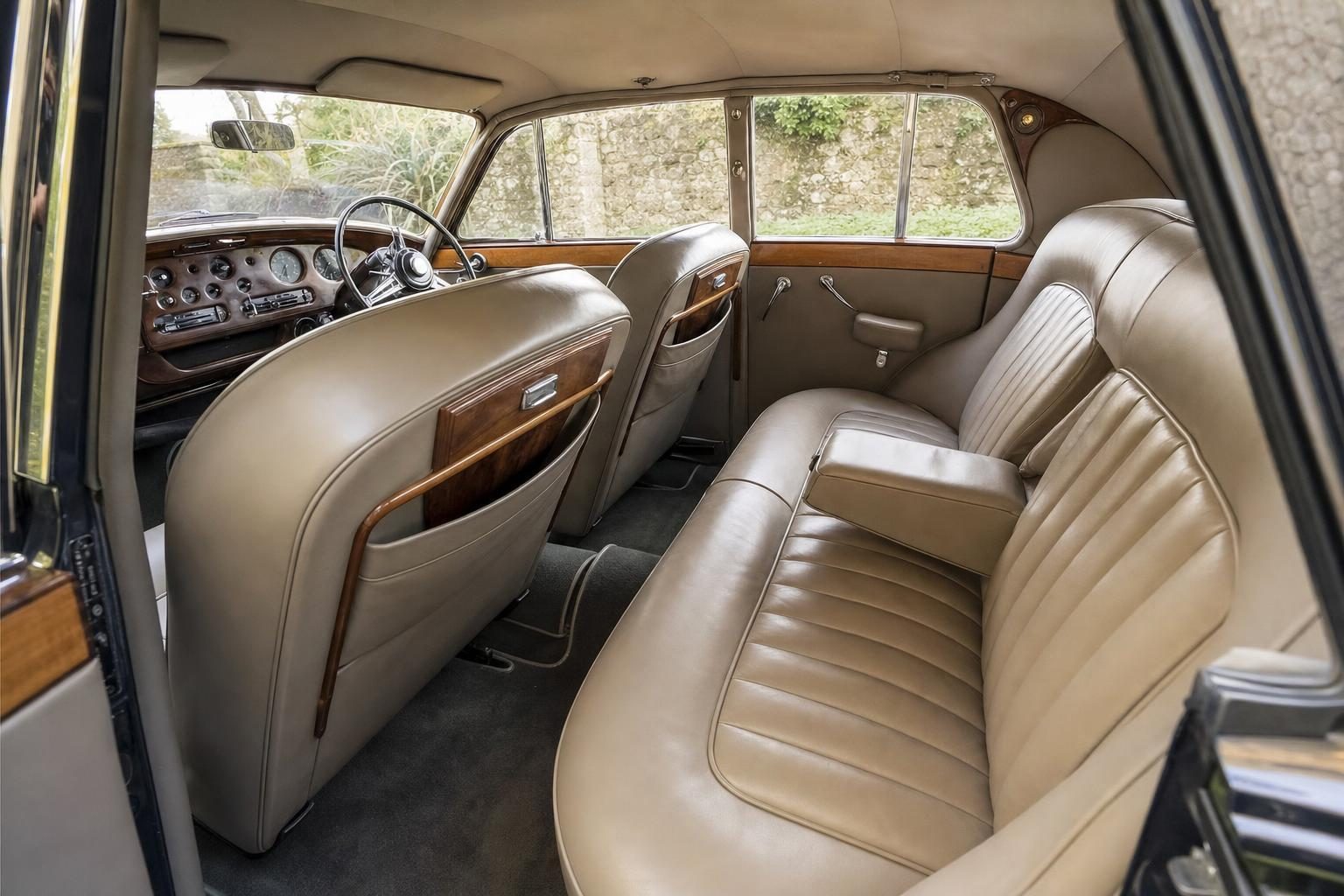
But the kinship stops at philosophy. The wheelbase is lengthened to provide real rear accommodation, and the interior layout favours ease over compactness. The Lagonda Rapide trades the coupé’s taut lines for a more majestic presence, designed for the open road and discreet arrivals at the hotel. The end-goal is no longer the same: it promises to cover miles at a good clip, without fuss.
This DB4 base also serves as a mechanical springboard. The twin-cam straight-six grows to 4.0 litres on the saloon before later equipping the DB5, notes Wikipedia (FR). A mechanical bridge that anchors the Rapide at the heart of Aston Martin’s story: it is not an adjunct, but a useful laboratory for what followed.
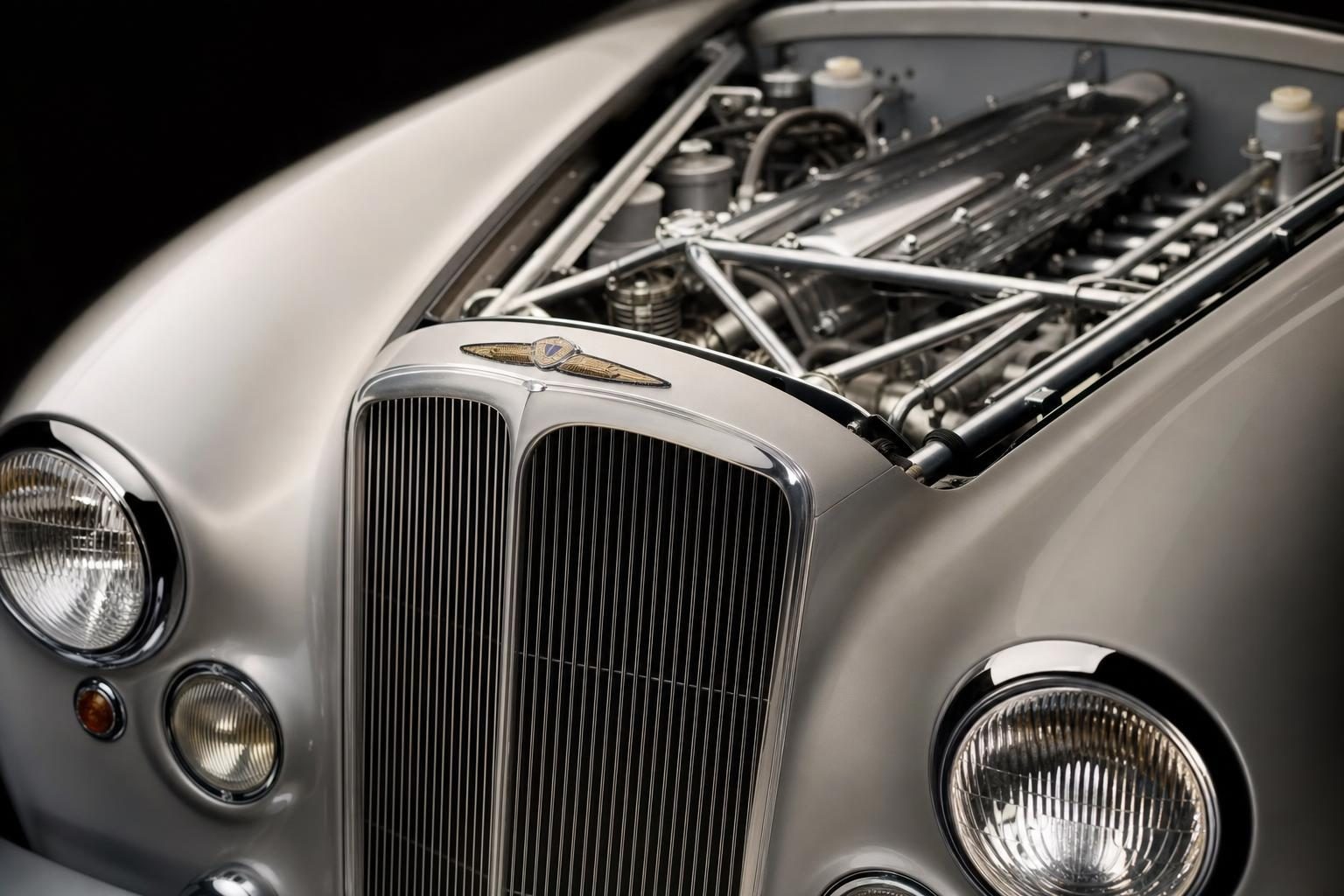
Carrozzeria Touring, the 4.0‑litre engine and the De Dion suspension: 3 little-known technical choices
First choice: styling by Carrozzeria Touring. The same Milanese school that drew the DB4 lends its light touch here. The proportions remain restrained, with a high waistline and generous glass area. The Superleggera is more discreet, but the eye finds that Italo‑British elegance that suits the great transcontinental cars.
Second choice: the 4.0‑litre DOHC straight-six. According to Wikipedia (EN), this engine, introduced on the Lagonda Rapide, would later power the DB5. The saloon thus offers itself a technical head start: more torque, greater ease on a light throttle, and that hushed sound that befits a high-born four-door. A logical progression from the DB4’s 3.7‑litre, adapted to the greater weight and roadgoing brief.
Third choice: the rear De Dion suspension. Still according to Wikipedia (FR), the Rapide tried it before the DBS adopted it. A rare technical gamble at the time for a British car, seeking stability and traction without sacrificing comfort. In other words, the saloon played the pioneer, with concrete benefits for the range’s evolution.
Taken together, these three stances say much about Newport Pagnell in the early sixties: cautious about its DNA, bold in the details. The Lagonda Rapide does not chase showiness, but lines up an intelligent spec sheet, embracing a discreet sophistication that today appeals to lovers of subtle engineering.
55 examples in three years: the real reasons for a nuanced commercial shortfall
The numbers are stubborn: only 55 examples built between 1961 and 1964, according to Wikipedia (EN) and as CarJager reminds us. Is that a failure? Yes, if you look at volume. Nuanced, if you consider the context: Bentley reigned over the segment, artisanal costs were high, and Lagonda’s international reach remained limited versus Crewe’s networks.
The separate-badge strategy has image virtues, but it complicates commercial clarity. Clients who know Aston Martin sometimes hesitate before a saloon with the less visible Lagonda crest outside the UK. The Lagonda Rapide also suffers from a tight timeframe: three years is short to establish a model, especially when the workshop runs at a measured cadence.
You can add the technical choices, demanding to build and costly to maintain, which do not help bring down the entry ticket. Yet these 55 cars draw an interesting diagonal through the marque’s history: laboratory for the DBS (De Dion), springboard for the DB5 (4.0‑litre engine), and showcase for Touring style. Not a fiasco, rather a calculated image investment with a long horizon.
The current value of the Lagonda Rapide and its place among collectors of curiosities
According to CarJager (November 2025), the value of the Lagonda Rapide sits a little below a DB4 coupé of the same period, but transactions are rare and any valuation remains uncertain. In other words, the market treats it as a piece for connoisseurs: a low-production model, technically singular, historically pertinent.
This intermediate position has a double face. Compared with a DB4, the saloon suffers from a less sporty imaginary. Conversely, it appeals to those seeking a different angle: four doors, Touring, De Dion, an engine heralding the DB5. For those who embrace nuance, the Lagonda Rapide offers a more discreet gateway into the world of sixties Astons, with the amenity of a great grand tourer.
Culturally, it occupies a niche of “enlightened curiosity”. It attracts collectors sensitive to transitions: from DB4 to DB5, from live axle to De Dion, from sporty Aston to refined Lagonda. Its aura is also enriched by a foundational presence at the 1961 Paris Motor Show, noted by CarJager, which anchors the car in a very European grand touring story.
Conclusion: Lagonda Rapide, the hushed gamble that shaped what came next
With the Lagonda Rapide, David Brown played a subtle card: isolate the luxury saloon under a distinct crest, seat it on a proven DB4 base, dare a Touring style, a 4.0‑litre DOHC and a harbinger De Dion. The 55 units produced between 1961 and 1964 speak as much to the limits of artisanal distribution as to the technical ambition of a house preparing for the future. Today, its value behind the DB4 coupé, according to CarJager, does not prevent enlightened curiosity from preferring it for what it is: an Aston… that does not say its name, and a Lagonda… that showed the way.
To delve deeper into the mechanical bridges with the reference coupé, see our panorama of the DB4 and its evolutions, as well as our breakdown of the five technical ruptures of the DB4 at Newport Pagnell. And for the posterity of the Lagonda name within the group, see the Lagonda episode of the 1970s, which extends the thread of a great English saloon.
Useful sources: the entry on French Wikipedia, the detailed page on English Wikipedia and the contextual analysis by CarJager, which shed light on the history and technology of the Lagonda Rapide.