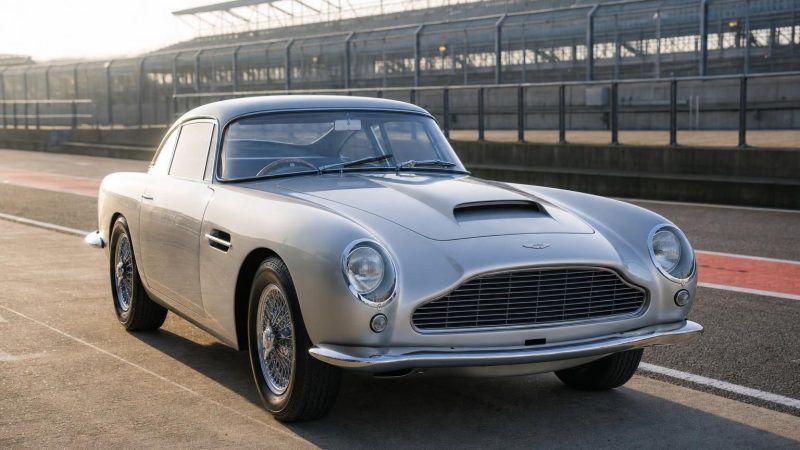
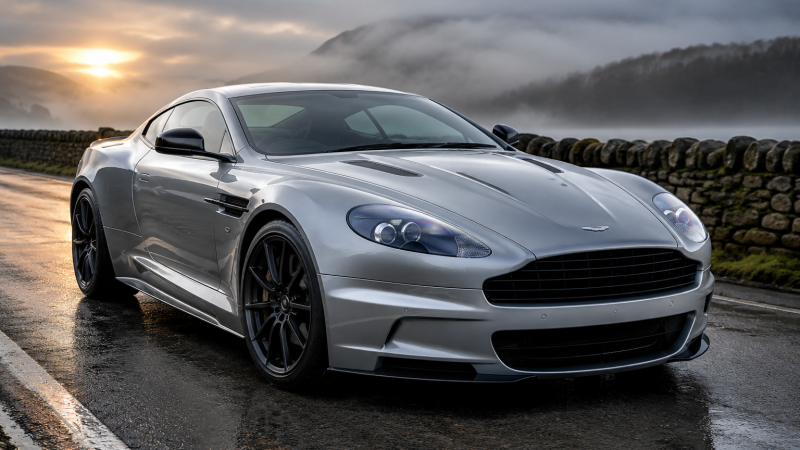
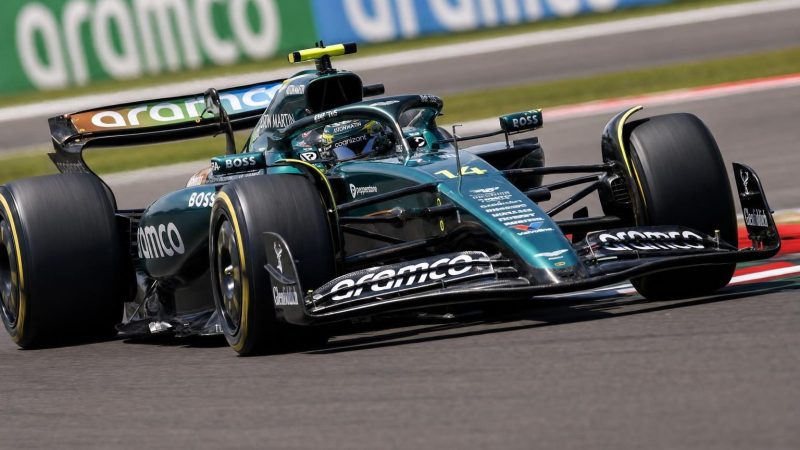
Aston Martin One-77: 77 units, 7.3-litre V12 Cosworth with 750 PS, top speed recorded at 354 km/h. All about the hypercar that laid the groundwork for the Vulcan and Valkyrie.
The One-77 stands out as the stylistic and technical turning point for Aston Martin: this hypercar has redefined the brand’s image and initiated the era of extreme machines such as the Vulcan and the Valkyrie. In this article, we analyse how the One-77 served as a laboratory for structural, mechanical, and aesthetic choices that shaped the future of the Aston catalogue.
Code BDX: the secret origin of the One-77 project
The One-77 project was conducted under a discreet envelope before its gradual presentation to the public. The car was partially revealed at the 2008 Paris Motor Show and then unveiled in full at the 2009 Geneva Motor Show, according to the car’s Wikipedia page.
This media build-up prepared the ground for deliveries that began in 2011. The gradual revelation underscores the ambition: the One-77 was intended to rewrite the narrative of Aston Martin, not just as luxury but as a technological laboratory.
The 7.3-litre V12 Cosworth: figures and discrepancies between sources
The One-77’s powertrain is based on a 7.3-litre V12 developed with Cosworth. The main sources agree on the engine size and technical partner, but differ regarding the power output.
According to Wikipedia and Garage Voltaire, the official power is 750 PS, while other sources such as Caradisiac and v12-gt.com mention 700 PS. This discrepancy is not resolved in the facts available here: it is therefore important to explicitly mention both figures and their sources.
The precision regarding the powertrain remains key to understanding the positioning of the One-77: a V12 prepared by Cosworth that has served as a reference for subsequent Aston hypercar powertrains.
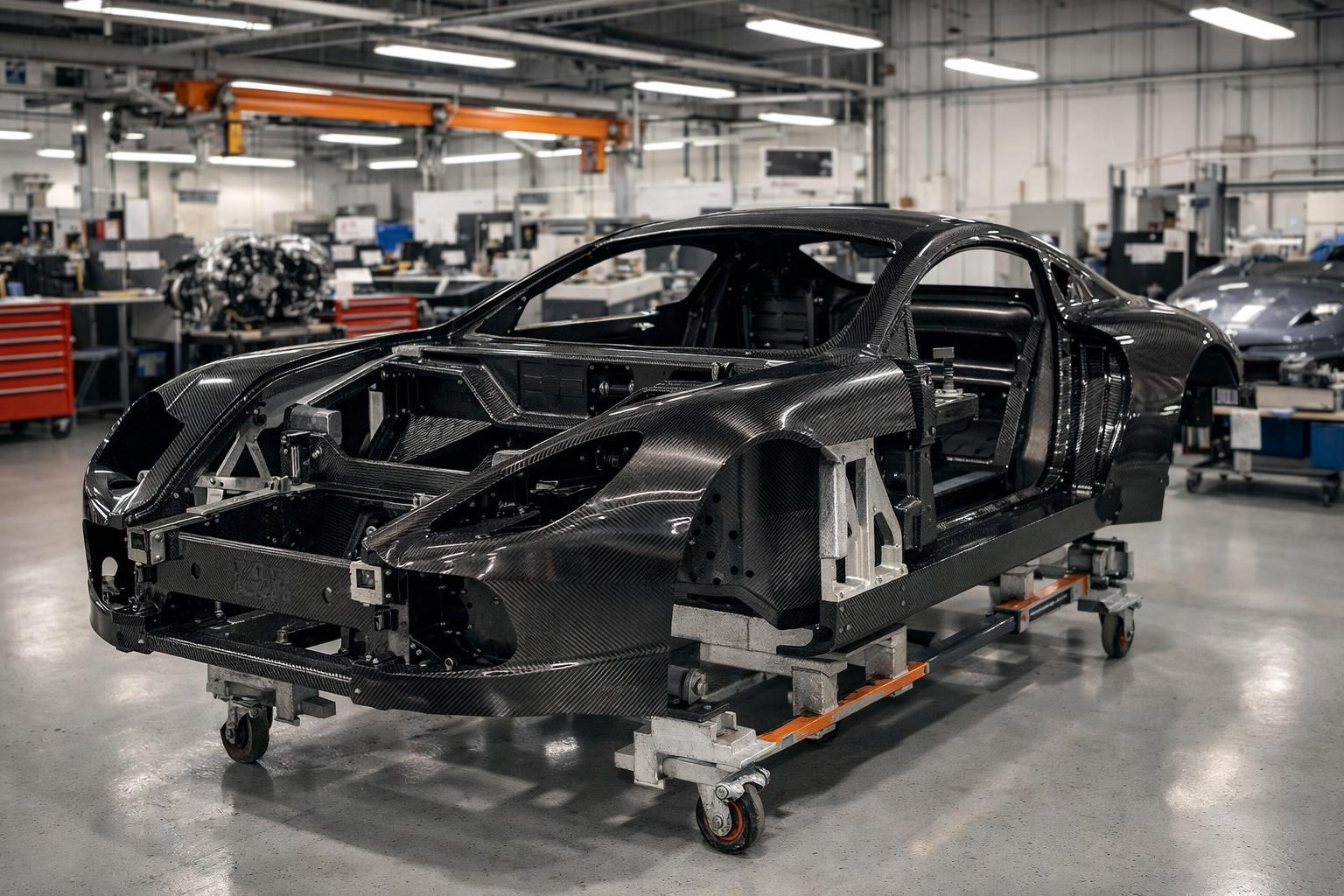
Carbon monocoque and aluminium body: the paradox that creates lightness
The One-77 introduces an inversion of the usual scheme by combining a carbon monocoque chassis with a hand-formed aluminium body. This combination is documented both on Wikipedia and on 24h-lemans.com.
The paradox is suggestive: carbon for rigidity and structural safety, aluminium for artisanal finish and manual shaping. This technical choice allowed for a compromise between dynamic performance and a handcrafted aesthetic identity.
In practice, this architecture has served as a model for design practices at Aston: prioritising carbon for the structural core while retaining shaped panels for visual impact and customisation.
The Q-Series programme and one-offs: beyond the 77 units
The production of the One-77 was strictly limited to 77 units. Beyond that, Aston Martin produced 7 additional Q-Series units, according to Wikipedia and garagevoltaire.fr.
A development chassis identified (chassis #10711) has covered over 25,000 miles in testing, according to garagevoltaire.fr. This mileage attests to an intensive development programme before delivery to customers.
The combination of the limited series and one-offs demonstrates a clear strategy: exclusivity of institutional production, coupled with special variants through the Q department to meet the demands of the most discerning clients.
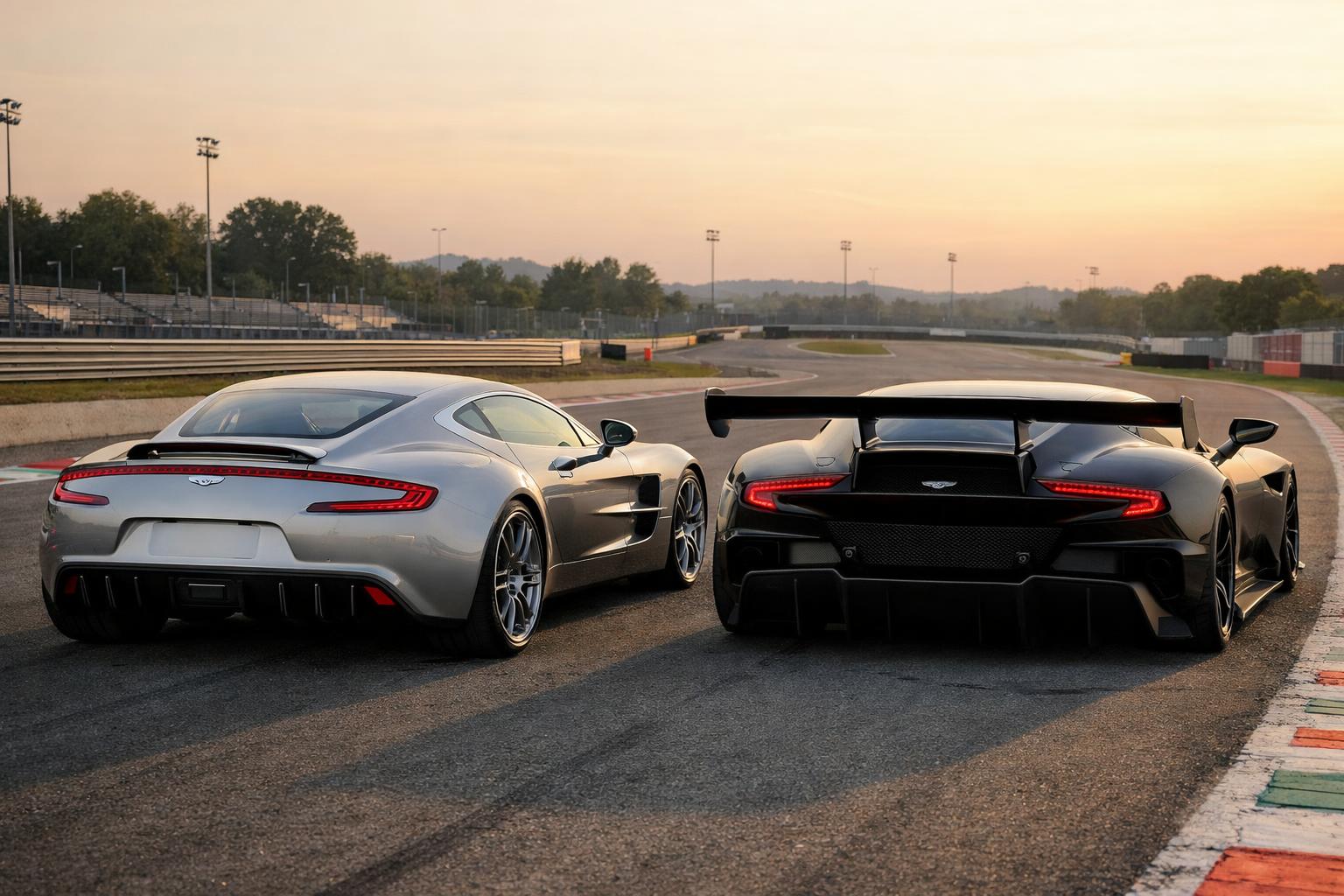
Direct heritage: One-77, Vulcan, Victor and the DNA of Aston hypercars
The One-77 occupies a pivotal place in Aston Martin’s recent history: Marek Reichman stated that the One-77 ensured the re-foundation of Aston Martin’s image and served as a genetic basis for subsequent hypercars, according to i-m-magazine.com.
This genetic link is visible in the trajectory leading from the One-77 to more extreme projects like the Vulcan and the Valkyrie: a philosophy of pure performance and refined craftsmanship. The One-77 thus embodied the transition from a GT brand to a house capable of producing top-tier hypercars.
In commercial and collectible terms, the One-77 has demonstrated its value: original sale price set at £1,150,000 excluding tax (sources Wikipedia, carjager.com, garagevoltaire.fr), and substantial resales, with one example sold at RM Sotheby’s for between $1.5 and $2 million in 2019 according to vintagecarmagazine.ch.
Conclusion: why the One-77 remains the pivot of Aston hypercars
The One-77 reads today as a technical and stylistic manifesto: the choice of the Cosworth V12, carbon monocoque, hand-shaped aluminium body, limited production, and Q-Series programme have set standards. These elements have directly influenced the Vulcan, Victor, and Valkyrie, reinforcing Marek Reichman’s thesis on its role in re-foundation.
Faced with discrepancies in figures — power claimed at 750 PS or 700 PS according to sources, top speeds measured differently — the One-77 remains a benchmark whose impact transcends mere numerical data. Its technical and aesthetic legacy continues to fuel Aston’s strategy towards hypercars.
For further details on the technical specifications and historical tests, consult the following resources: encyclopaedic entry on One-77 on Wikipedia, the technical and historical dossier on Garage Voltaire, and the summary of tests and speeds on 24h-lemans.com.
Detailed presentation of the One-77 model on AstonLegacy
Model sheet: Aston Martin Vulcan
Model sheet: Aston Martin Valkyrie