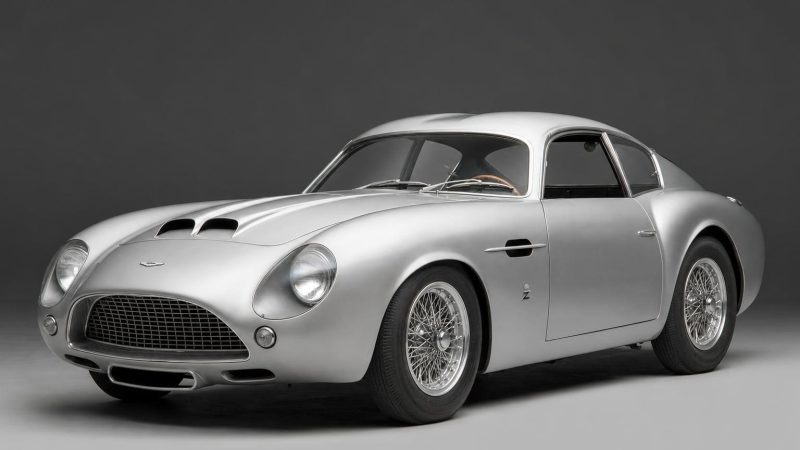
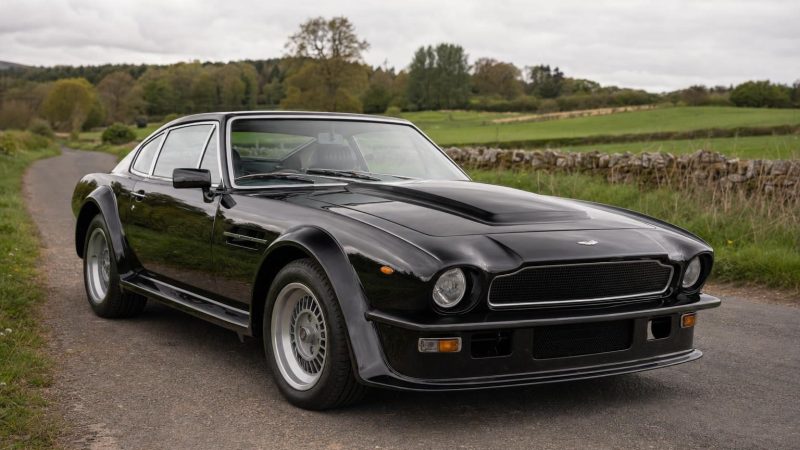
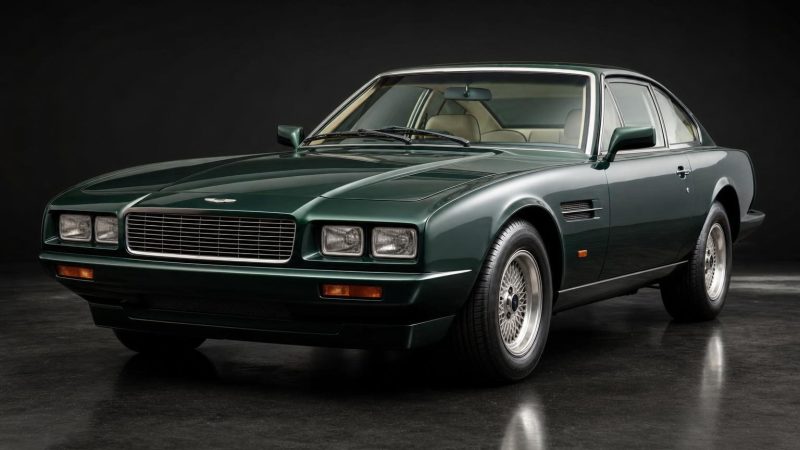
DB2: unveiled at the New York Auto Show in April 1950, this two-seater GT lays the groundwork for all DB models. Lagonda engine, Feeley design, Le Mans accolades.
DB2: from its name, the DB2 embodies the decisive shift made by David Brown after acquiring Lagonda in 1947. This strategic change, centred on the appropriation of an engine designed by W.O. Bentley, transformed the technical and commercial trajectory of Aston Martin and gave birth to a grand tourer that would define the brand for decades to come.
The Acquisition of Lagonda: The Engine Strategy
David Brown’s acquisition of Lagonda in 1947 was motivated by a specific technical reason: to acquire the 2.6-litre six-cylinder twin cam engine designed by W.O. Bentley. This engine would become the mechanical heart of the DB2 and dictate Aston Martin’s industrial choices after the Second World War.
David Brown did not just buy a body or a range; he bought an engine block and expertise. This acquisition allowed for the immediate integration of a high-performance engine into the catalogue and the industrialisation of a grand tourer designed around this engine.
The W.O. Bentley Six-Cylinder: The Technical DNA of the DB2
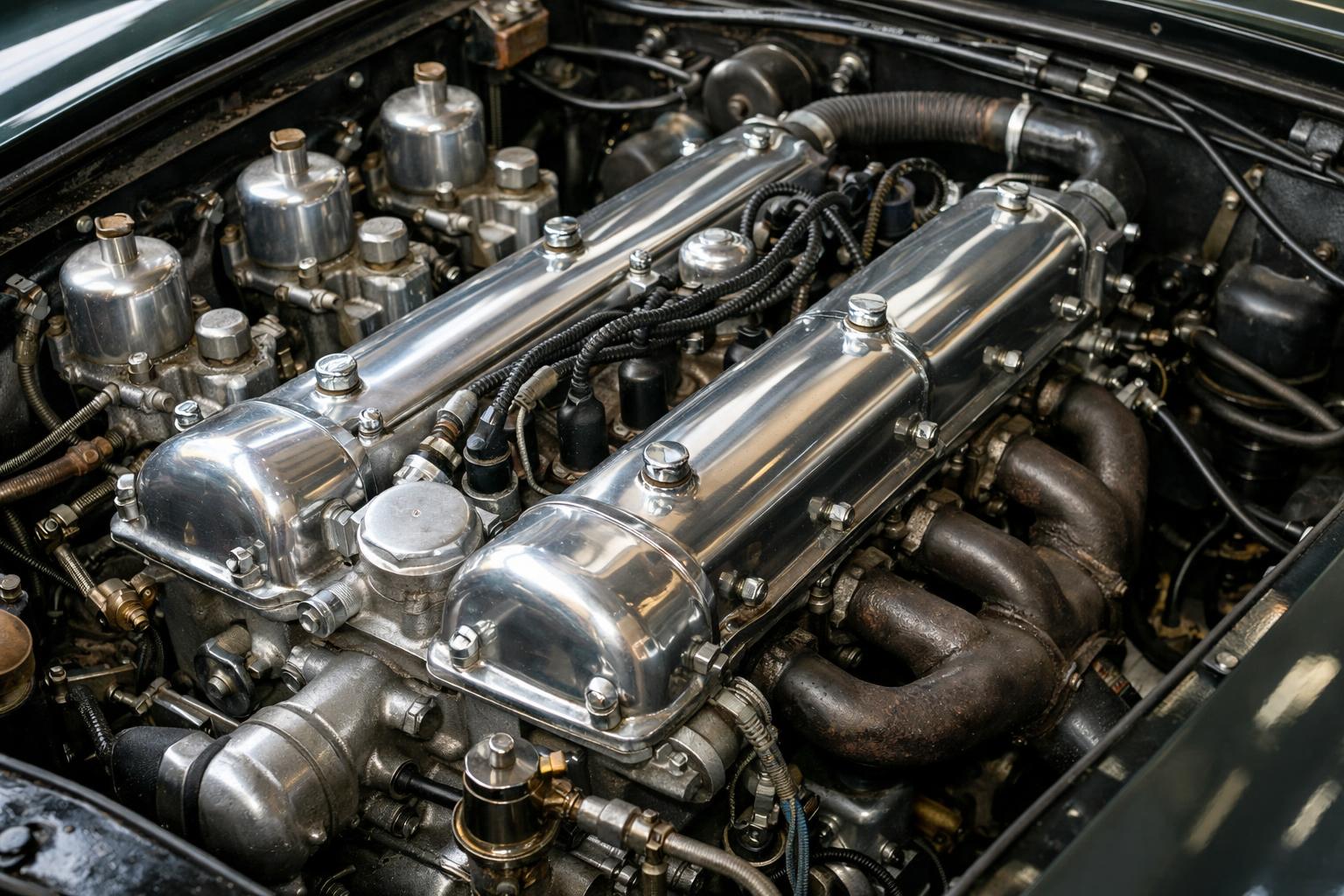
The heart of the DB2 is the 2.6-litre W.O. Bentley six-cylinder engine. In its standard version, this engine develops 105 bhp, but sources differ on the revs at which this power is measured: according to aston.co.uk, the figure is 105 bhp at 4,500 rpm, while Motorlegend cites 105 bhp at 5,000 rpm — a marginal difference attributed to measurement conditions.
The engine established the foundations of a clear offering: reliability, flexibility, and potential for competition and more powerful variants. It is on this same block that the Vantage version will be built, which raises the power to meet performance and image demands.
The Vantage version launched in 1950 raises the power to around 125 bhp, according to classicdriver.com, a figure also confirmed by Wikipedia which states 125 hp. This increase in power illustrates the flexibility of the W.O. Bentley engine and justifies David Brown’s strategic interest in Lagonda.
Frank Feeley’s Design: The Birth of DB Style
The silhouette of the DB2 owes much to Frank Feeley, who designed the aluminium body. Its lines combine British elegance with proportions designed for grand touring: long bonnet, compact cabin, understated yet assertive aerodynamics.
Feeley’s work on the DB2 lays the aesthetic foundations that will be seen in subsequent generations. The use of aluminium in body elements also contributes to weight reduction and efficiency, two qualities sought after in a car aimed at both the road and competition.
The DB2, through its design, shows how industrialisation and craftsmanship can coexist: a mechanical legacy from Lagonda, a refined body by Feeley, and a clear positioning in the post-war GT market.
Le Mans 1950 and Competition: Early Successes
The DB2 does not settle for commercial presence: it asserts itself on the racing scene as early as 1950. At the 24 Hours of Le Mans 1950, the factory cars achieved remarkable performance by securing 1st and 2nd place in their category, tangible proof of the reliability and competitiveness of the chassis and engine.
These results enhance the DB2’s aura and demonstrate that David Brown’s ambition — to use competition as a lever for image and technical development — quickly bore fruit. The endurance presence validates the choices of engine and highlights the design work done around the W.O. Bentley block.
Competition thus becomes a central element of the communication and technical evolution of the DB2, justifying variants like the Vantage and consolidating Aston Martin’s sporting legitimacy.
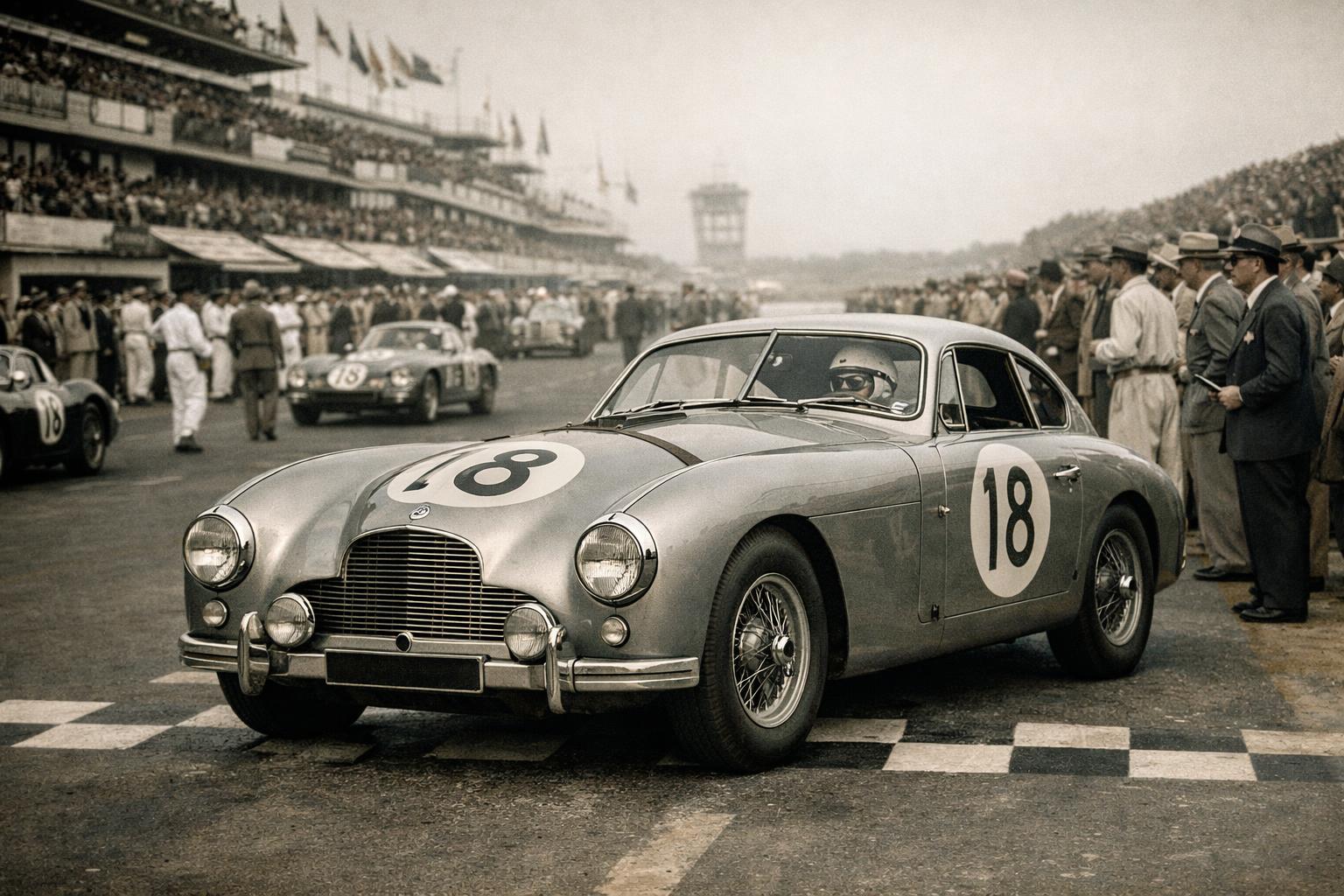
DB2 in Numbers and Heritage: 411 Units, A Legend
The total production of the DB2 remained limited: 411 units in total, according to classicdriver.com and Wikipedia. This low volume contributes to the rarity and legend of the DB2 name among enthusiasts and collectors.
In detail, the number of convertibles shows a slight discrepancy in counting: classicdriver.com mentions 98 convertibles, while Wikipedia states 102 convertibles. This minor divergence illustrates the difficulties of archiving and counting for post-war productions but does not detract from the exceptional status of the whole.
Some key figures summarise the impact of the DB2:
- Series Presentation: New York Auto Show, April 1950, production from May 1950.
- Engine: 2.6 L six-cylinder from W.O. Bentley, 105 bhp in standard version, approximately 125 bhp in Vantage.
- Production: 411 units, convertibles ~98–102 according to sources.
- Competition: 1st and 2nd place in category at Le Mans 1950 for factory cars.
The DB2 leaves a lasting legacy: through its engine adopted after the acquisition of Lagonda, its design by Frank Feeley, and early successes in competition. These elements have shaped Aston Martin’s trajectory and paved the way for subsequent models.
Conclusion: Why the DB2 Foundationally Defines Aston Martin Grand Touring
The DB2 is much more than an inaugural model: it symbolises David Brown’s winning strategy, who bought Lagonda in 1947 to acquire a W.O. Bentley engine capable of establishing a new technical identity. The marriage of the 2.6-litre block, Feeley’s style, and early competition victories laid the foundations for Aston Martin’s grand touring.
To delve deeper into the history and see official documents on the DB2, consult the formal presentation from the manufacturer: DB2 dossier on Aston Martin Media and the encyclopaedic summary: Wikipedia page for the Aston Martin DB2. For technical perspectives and variations in power measurements, the historical article from Motorlegend provides useful clarifications: technical history on Motorlegend.
To learn more about related models and the aesthetic and technical lineage, find our detailed dossiers on the pages dedicated to related models: DB2: model sheet and history, DB4 and the continuation of the DB lineage, and the broader historical context on the history of Aston Martin. The DB2 remains a foundational piece: engine, style, and competition converge to make it a lasting legend.