DB7: unveiled in Geneva in March 1993, produced in over 7,000 units between 1994 and 2004, it saved Aston Martin. History, technology, and legacy of an underrated GT.
The DB7, often caricatured for its Jaguar genes, deserves a solid rehabilitation: behind the anecdotes, the facts show a car designed intelligently, presented on time, and produced in the right place, which initiated an unprecedented dynamic for Aston Martin. Through seven sourced truths, we recall how the DB7 was conceived as part of Project XX by Ford and TWR, revealed in Geneva in 1993, powered by a credible supercharged six-cylinder engine, and then elevated in 1999 by the DB7 Vantage V12, before becoming, with over 7,000 units, the bridge between two eras. For more in-depth specifications and variants, also check our dedicated page on the DB7 in detail.
1. Project XX: How Ford and TWR Designed an Aston Martin from a Jaguar
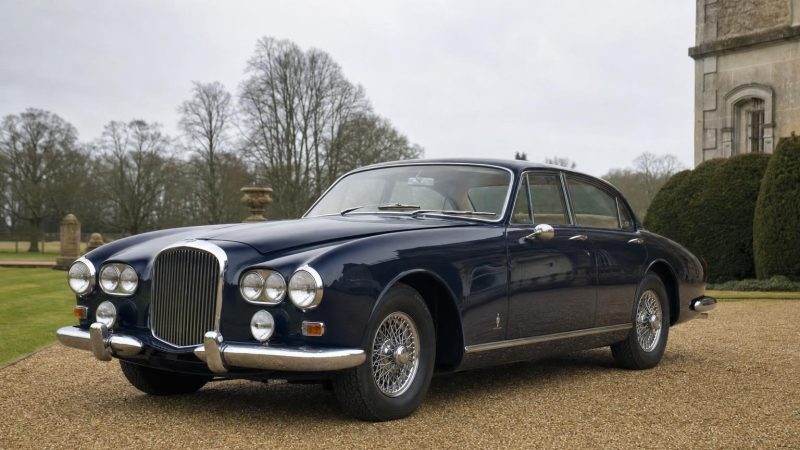
At the heart of the DB7’s story is the internal “XX” project, led under Ford’s aegis with the support of TWR. According to sources (Wikipedia and autoencyclopedie.com), the car was built by TWR at the Bloxham factory (Oxfordshire), a site previously mobilised for the Jaguar XJ220. The DB7 thus embodies a pragmatic approach: using available resources and proven expertise to create a credible Aston Martin, while managing the timeline and industrial tool.
This pragmatic lineage with Jaguar is also expressed in the architecture: the DB7 is the only Aston Martin with a semi-monocoque steel structure inherited from Jaguar, while all subsequent models will adopt aluminium (Wikipedia). Far from being a mere compromise, this structural choice allowed the Project XX to be realised within realistic timelines and with immediately mobilisable know-how from TWR, benefiting a DB7 ready for series production.
To place these elements in the timeline and reference data, one can consult the Wikipedia page (en) dedicated to the Aston Martin DB7 as well as the official Aston Martin page dedicated to the DB7. Both highlight the key role of Bloxham and TWR in the industrialisation, a cardinal point for understanding what the DB7 brought to the brand.
2. Geneva 1993: The Revelation and Immediate Success of Orders
The prototype of the DB7 was completed in November 1992, then unveiled at the Geneva Motor Show in March 1993 (Wikipedia DB7). This narrow and effective window allowed Aston Martin to quickly showcase the results of Project XX. The reception generated by this revelation paved the way for a commercial dynamic that would materialise into a solid industrial start.
Production of the DB7 began in September 1994 and ended in December 2004 (Wikipedia DB7). Between these two milestones, the DB7 played a leading role in the Bloxham workshop managed by TWR, confirming that the Geneva presentation in 1993 was not a flash in the pan but the starting point of an unprecedented production cycle for the brand.
The coherence between the public appearance of the DB7 in Geneva and the rapid production launch illustrates a controlled execution: prototype, revelation, then industrialisation in the TWR factory in Bloxham. This continuum reflects the relevance of Project XX, both in terms of product and organisation, and explains why the DB7 has firmly established itself in the range.
3. Technology: The Supercharged Six-Cylinder and Manual or Auto Gearbox
At launch, the DB7 adopts a 3.2-litre supercharged six-cylinder engine by Eaton. The exact power figures vary according to sources: motorsdb.com indicates 335 PS at 5,750 rpm, while autoencyclopedie.com mentions 340 PS. This divergence highlights the importance of citing references; in any case, the DB7 relies on a powertrain consistent with its positioning, with supercharging providing the expected enjoyment and availability.
This engine finds a unique technical setting: the semi-monocoque steel structure inherited from Jaguar, a unique feature of the DB7 in Aston Martin’s history (Wikipedia). In fact, all subsequent Aston Martins will switch to aluminium, but the DB7 demonstrates that the steel solution, well exploited by TWR at Bloxham, allowed for a level of manufacturing maturity that mattered more than the nobility of materials at this stage.
In practice, this combination of Eaton supercharger + steel semi-monocoque gave the DB7 a distinct technical identity, capable of appealing to a broad audience. Regardless of the transmission considered by buyers, the signature of the supercharged six-cylinder remains the heart of the experience and represents the initial DNA that the DB7 inscribed in the decade following the Geneva revelation in 1993.
4. 1999: The DB7 Vantage V12, Aston Martin’s First Series Twelve-Cylinder
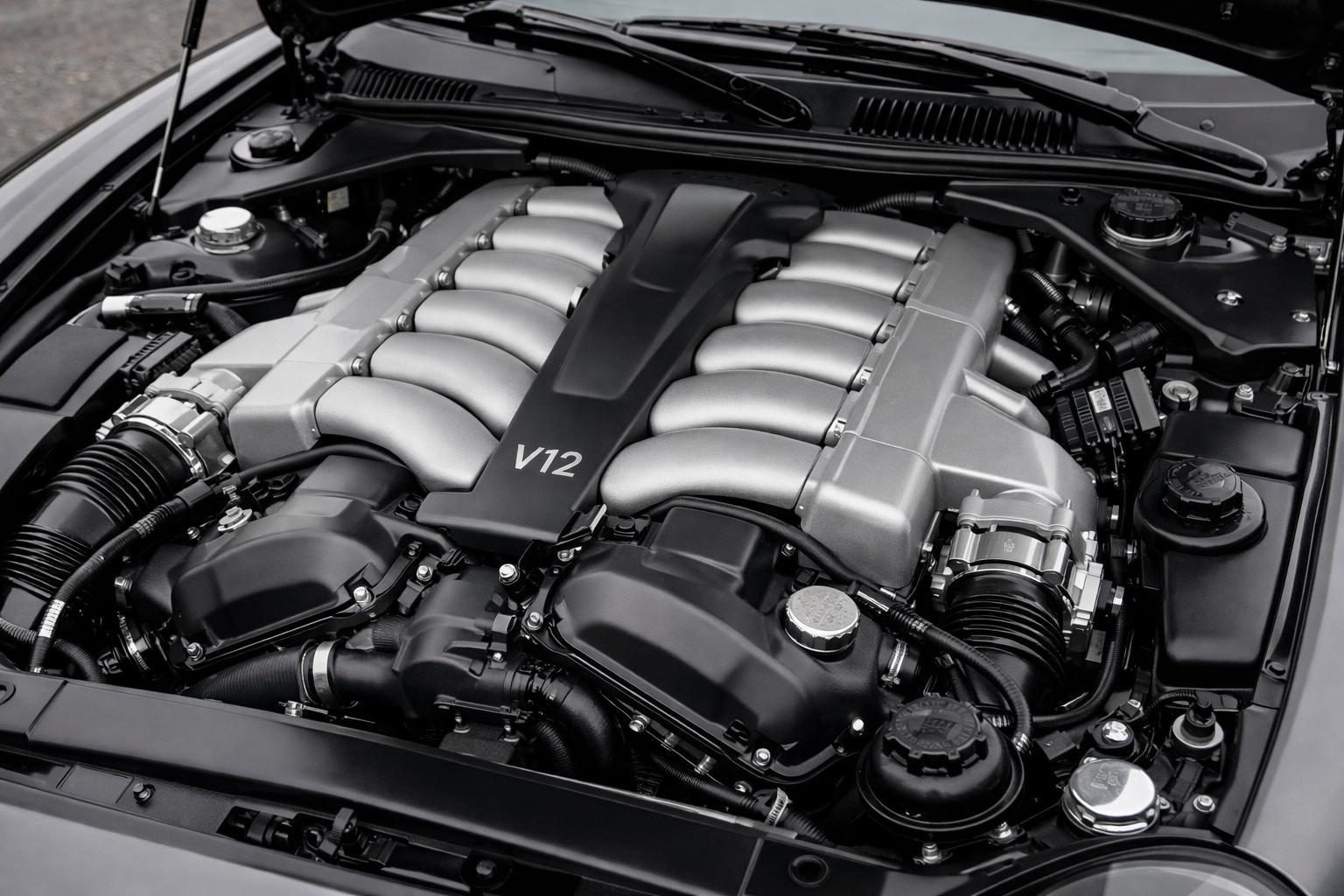
In 1999, the DB7 Vantage V12 marks a decisive milestone: it is the first series Aston Martin equipped with a V12. According to Motorlegend, this 6.0-litre was developed in cooperation with Ford Research and Cosworth, by combining two Ford Duratec V6 engines. The DB7 thus anchors, at the turn of 1999, a new mechanical ambition in the brand’s lineage.
This upgrade fully fits within the trajectory of the DB7: starting from a precise and well-calibrated supercharged six-cylinder, the range rises to the V12 with the DB7 Vantage, offering a strong technical symbol for Aston Martin. The transition illustrates a clear strategy: to capitalise on the foundations of Project XX and on the Bloxham tool to bring an exceptional engine to series production.
The transition to the V12 does not deny the initial DNA of the DB7; it amplifies it. By placing itself at the intersection of Ford/Cosworth engineering (Motorlegend) and TWR’s assembly experience, the DB7 Vantage V12 sealed the model’s relevance as a vector of innovation, paving the way for subsequent generations of Aston Martin.
5. 7,092 Units: The DB7 as a Bridge Between Two Eras
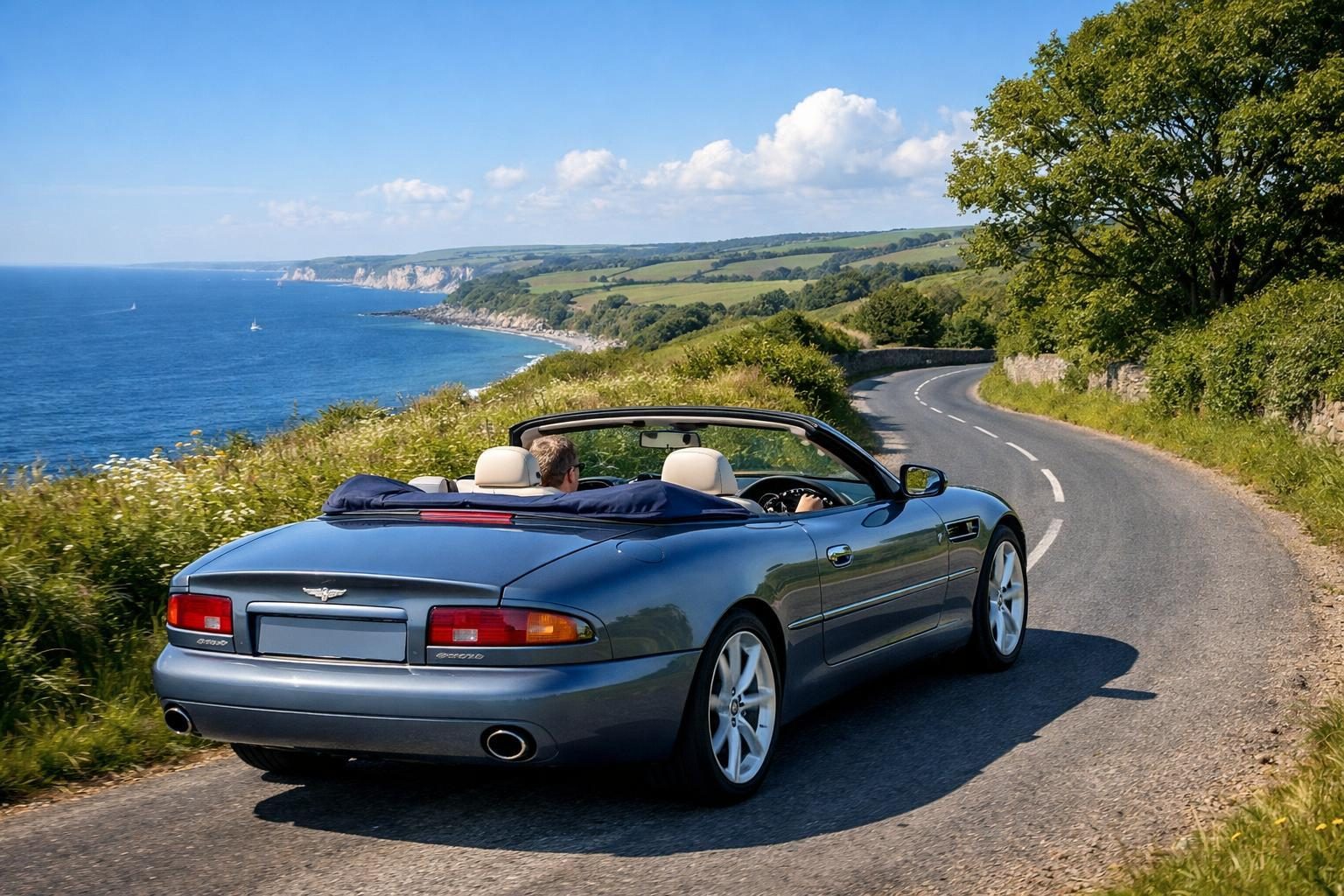
The DB7 was, in its time, the most produced model in Aston Martin’s history. On this point, the published figures differ slightly: Wikipedia mentions “over 7,000 units” while autoencyclopedie.com specifies 7,092 units. Regardless of the source chosen, the order of magnitude is clear and historic for the brand, a tangible sign of the impact the DB7 left on the 1994–2004 decade.
This longevity spans from September 1994 (start of production) to December 2004 (end of production), giving the DB7 a role as an industrial and technical bridge. The only Aston Martin with a semi-monocoque steel structure inherited from Jaguar (Wikipedia), the DB7 prepared the shift to aluminium for all subsequent models. It thus served as a concrete bridge: a steel base to initiate momentum, then aluminium to deploy it.
This bridging status is also measured by the influence exerted on the subsequent range. To understand the continuity of the product narrative beyond the DB7, you can explore our file dedicated to the DB9, which illustrates the next era, and more broadly, the recent evolution of the Gaydon sports car via our analysis of the Vantage/DB12 2025. The DB7 thus occupies a central place, both as the culmination of a pragmatic project and as a springboard for contemporary platforms.
Conclusion: Why the DB7 Matters Beyond the Clichés
Returning to the facts places the DB7 at the centre of the game. Designed as part of the Project XX, industrialised by TWR at Bloxham (former site of the Jaguar XJ220), revealed in Geneva in March 1993 after a prototype completed in November 1992, the DB7 followed with continuous production from September 1994 to December 2004. Its 3.2-litre supercharged six-cylinder engine by Eaton laid solid mechanical foundations (335 PS according to motorsdb.com, 340 PS according to autoencyclopedie.com), before the DB7 Vantage V12 (1999) inscribed the first series V12 of Aston Martin, the result of a Ford Research/Cosworth collaboration (Motorlegend).
In total, with over 7,000 units (Wikipedia) and a specified figure of 7,092 units (autoencyclopedie.com), the DB7 achieved unprecedented distribution for the brand. The only Aston with a semi-monocoque steel structure inherited from Jaguar while all subsequent models adopted aluminium, the DB7 played a role as a bridge whose importance is measurable in duration and volume. This bundle of factual elements rehabilitates the DB7: beyond the clichés, it provided Aston Martin with an industrial and technical base that paved the way for subsequent generations.
To continue the discovery, find our DB7 file and the official presentation of the DB7 by Aston Martin, complemented by the encyclopaedic summary (en). In tracing these seven truths, it appears that the DB7 is much more than a “hybrid” Aston of influences: it is a foundational DB7, which opened — and embraced — the transition to the modern era.