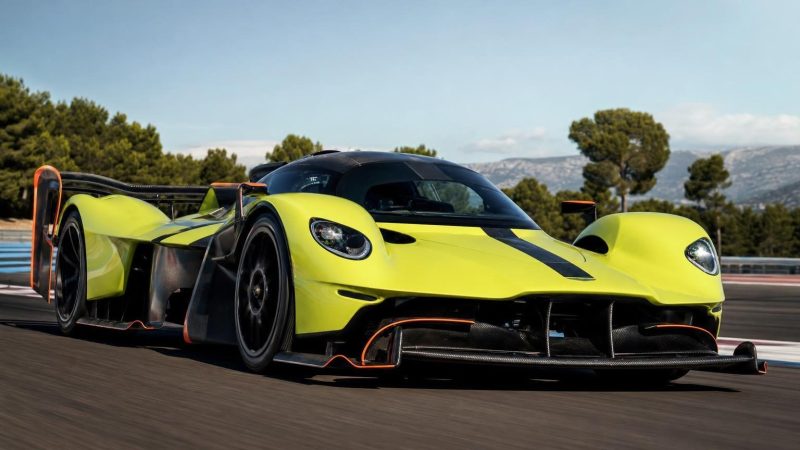
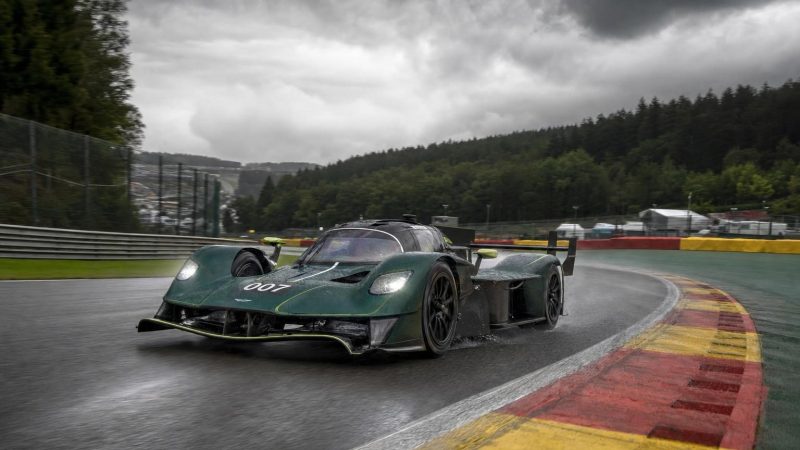
Vulcan, l’Aston Martin de piste extrême: origines, V12 7,0 l à 820 ch, carbone de One-77, 24 exemplaires, prix, pack AMR Pro et unique version routière.
The Vulcan is not just a legendary name at Aston Martin: it is the most radical creation from Gaydon, a machine exclusively dedicated to the track that combines the DNA of the One-77 and the V12 GT3. In this article, we reveal seven keys to understanding this extreme coupe: its name, its gestation, its atmospheric V12 increased to 7.0 litres, its carbon structure, its limited production of 24 units, the AMR Pro pack, and the unique road-legal version. Cited sources and acknowledged numerical discrepancies aim to enlighten the most demanding enthusiasts.
Where the name Vulcan comes from and the project’s genesis at Gaydon
The name Vulcan pays homage to the British strategic bomber Avro Vulcan, an icon of the Royal Air Force’s aeronautics. This lineage, highlighted by Autoevolution and the enthusiast registry astonmartins, sheds light on the project’s intention: to express spectacular power, a unique visual presence, and a bold technical aura. By adopting it, Aston Martin places its track car in a lineage of exceptional machines, leaving no ambiguity about its purpose.
The revelation took place at the Geneva Motor Show in March 2015, according to several consistent sources (astondriving, evo, and Gran Turismo wiki). The context is clear: to offer a no-compromise Aston Martin, designed for the track, above the road supercars of the time. The Vulcan arrives as a technological showcase and a stylistic manifesto, aimed at collector-drivers capable of exploiting a machine with a resolutely track-focused manual.
Part of the halo car strategy, the vehicle combines technical elements already proven by the brand, but taken further. The choice of a carbon chassis and body, along with a highly tuned atmospheric V12, illustrates this approach. The Vulcan thus becomes a rolling laboratory, leveraging Gaydon’s experience in hypercars and GT racing.
A 7.0-litre atmospheric V12 developed with Aston Martin Racing
At the heart of the Vulcan, a 7.0-litre atmospheric V12 delivers 820 PS (611 kW) at 7,750 rpm and 780 Nm at 6,500 rpm. These figures, reported by Wikipedia and Top Gear, place it in the exclusive club of high-powered front-engine track cars, with a rev range and throttle response typical of a naturally aspirated block.
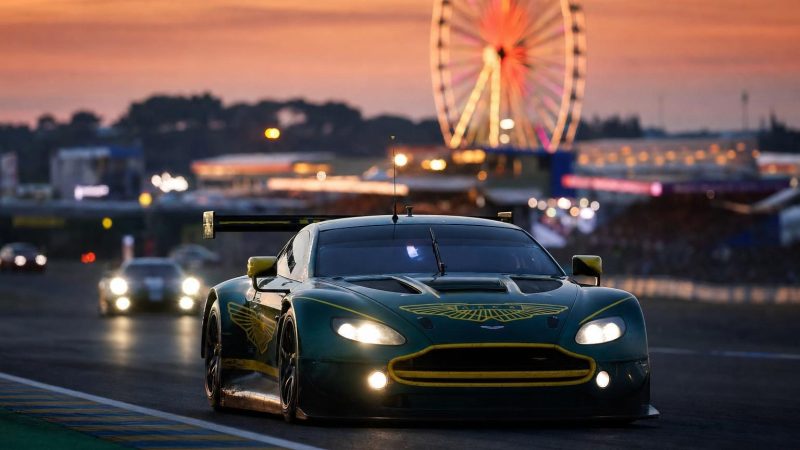
The origin of this engine reinforces the project’s coherence: it comes from the Aston Martin Racing V12 GT3, bored and prepared to achieve the announced displacement and power (Top Gear, supervettura). The collaboration with AMR ensures a direct lineage with GT competition, where mechanical robustness, cooling, and endurance are as important as maximum power.
This technical choice explains the very “track” personality of the Vulcan: thermal management designed for sustained laps, a torque curve exploited over a wide range, and the sound of a naturally aspirated V12. The mechanics become an essential part of the experience, both for performance and the emotional engagement sought by owner-drivers.
Carbon chassis derived from the One-77 and extreme aerodynamic downforce
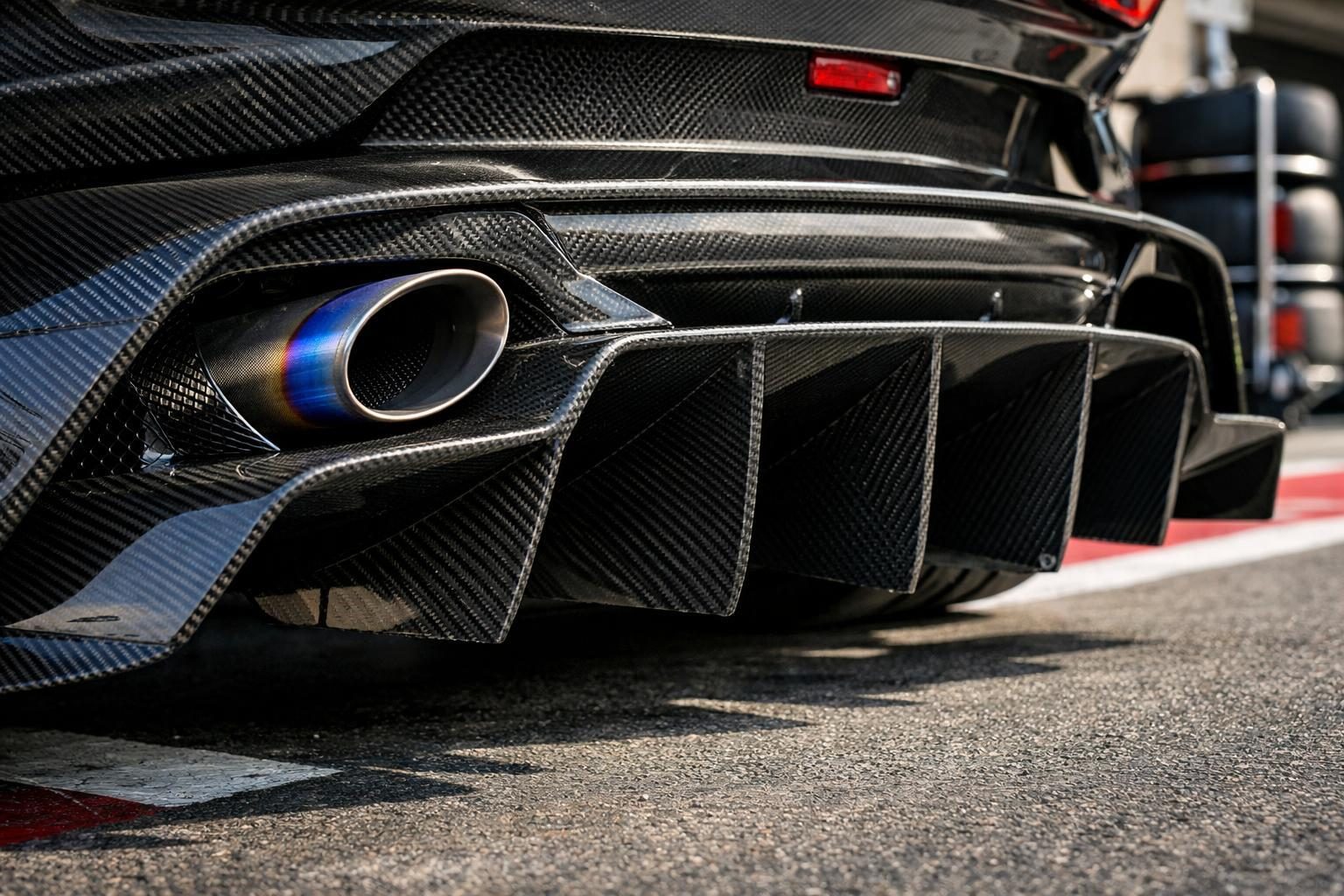
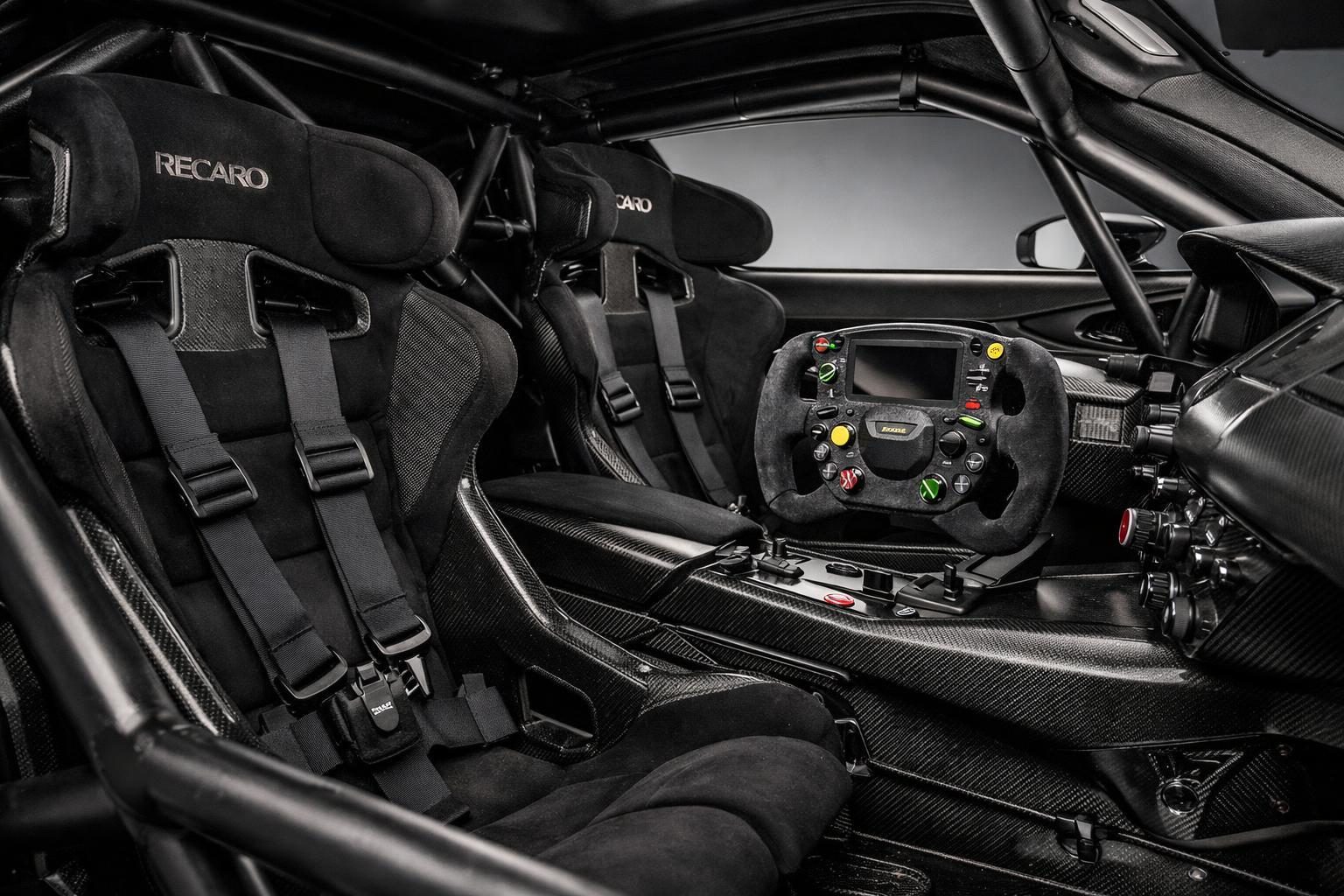
The carbon fibre chassis and body are derived from the One-77, as indicated by Top Gear and the specialist dealer Supervettura. This structural heritage brings rigidity, mass reduction, and freedom of form to optimise airflow. The chosen architecture echoes the expertise developed for the road-going hypercar, transposed here for pure track use.
Visually, the car displays marked downforce elements, reflecting its exclusive brief. While no confirmed downforce values are provided, the intention is clear: to maximise stability at high speeds and consistency over long laps. The connection to the One-77 is not merely aesthetic; it reflects a carbon platform strategy serving aggressive aerodynamics.
This technical foundation clarifies the purpose of the Vulcan: to offer an Aston Martin that pushes the dynamic envelope further than any road car. The vehicle exploits the rigidity of the carbon monocoque to withstand aerodynamic loads and harmonise the racing V12 civilised for the occasion. The result is a finely tuned track car, consistent with its ambition.
Only 24 units: price, driver programme, and exclusivity
The series is strictly limited to 24 units, a number chosen in homage to Aston Martin’s commitments in 24-hour races, according to evo. This explicit reference to the double clock round anchors the Vulcan in the endurance imagination and highlights the importance of competition in the model’s identity.
The announced price varied according to sources: evo mentions £1.5 million, while Top Gear talks about £1.8 million. This range reflects the specifics of configuration and, above all, the extreme exclusivity of the project. At this level of investment, the clientele seeks a rare experience, aligned with the “track-only” spirit and the technical lineage with the V12 GT3.
As for the programme surrounding the car, public information mainly converges on its non-homologated track car vocation, supplied in a very limited batch to carefully selected owners. Exclusivity is evident both in the volume produced and in access to an Aston Martin whose use is, by definition, confined to circuits.
The AMR Pro pack and the unique Vulcan made road-legal
The career of the Vulcan has been marked by the introduction of an AMR Pro pack, highlighting Aston Martin Racing’s involvement in the evolution of this track car. While it follows the competition-client logic, its interest is to further enhance the track dimension of the car, in line with the engine derived from the V12 GT3 and the carbon base inherited from the One-77. The existence of this pack, as reported by specialised media, illustrates the ongoing support for the car within the AMR ecosystem.
Notably, only one Vulcan has been made road-legal after 18 months of modifications carried out by the British group RML, according to Wikipedia. This exception confirms the rule: the car was born for the track. The homologation of this unique road-legal Vulcan should not overshadow the original intention, but it demonstrates the adaptability of an ultra-serious technical base when entrusted to a capable preparer.
This singular transformation provides interesting insight: even though the car was designed for the paddock arsenal, its structural and mechanical DNA can, with thorough work, cross the boundary of homologation. A curiosity that does not detract from the rarity of the model and the heritage value of the units that remained in strict track configuration.
Conclusion – why the Vulcan still matters
The Vulcan remains an essential milestone in Aston Martin’s chronology: a manifesto of carbon technology and high-performance atmospheric engine, presented in Geneva in 2015, limited to 24 units in homage to the 24 hours, and rooted in AMR expertise. Between power figures validated by Wikipedia and Top Gear, structural heritage from the One-77, and an engine derived from the V12 GT3, it synthesises Gaydon’s obsession with unfiltered performance.
The contrast between the AMR Pro pack and the unique example homologated by RML illustrates its duality: a car designed for the track, with a margin adaptable to the road, without ever renouncing its identity. For the collector as well as the motorsport enthusiast, the Vulcan embodies a clear and rare proposition, whose exclusivity and technical coherence explain the lasting fascination it exerts.
To continue exploring, visit the dedicated page on the Aston Martin Vulcan on Wikipedia and the Top Gear analysis of the Vulcan. Also discover our focus on the Vulcan and its key features, as well as the technical legacy of the One-77 via its detailed model sheet and our dossier Aston Martin One-77, hypercar, history and technique.