Vanquish Mk1, coulisses et faits méconnus d’une GT charnière entre Newport Pagnell et Gaydon, du design d’Ian Callum à Bond, en chiffres et sources.
The Vanquish Mk1 represents a major transition for Aston Martin: an iconic GT that connects the workshop in Newport Pagnell to the industrial era of Gaydon. Here are five sourced and sometimes surprising anecdotes to understand how this V12 has shaped the modern identity of the brand, from style to technology, and even Hollywood.
Geneva Motor Show 2001: an Ian Callum design inspired by the DB4 GT Zagato
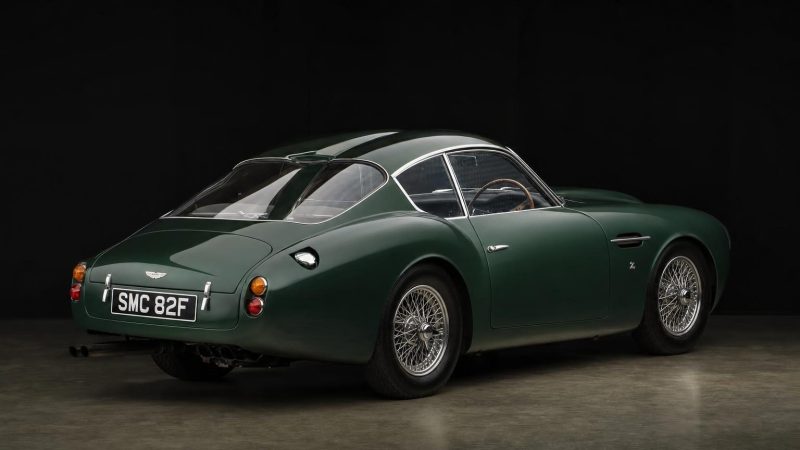
The unveiling of the V12 Vanquish at the Geneva Motor Show in March 2001 marked a turning point. According to Aston Martin and Wikipedia, it was at this moment that the taut silhouette, muscular haunches, and fastback coupe profile designed by Ian Callum established themselves as the new formal language of Aston Martin. The homage to the DB4 GT Zagato is explicit in the proportions and certain curves, while modernising the brand’s codes.
Callum’s design, devoid of superfluous ornamentation, serves both performance and presence. Aluminium body, precise fittings, endless bonnet, and compact rear: the goal is clear, to reconnect with the aura of historic GTs while embracing contemporary execution. This stylistic coherence would help solidify Aston Martin’s image in the 2000s, preparing the shift to Gaydon without renouncing Newport Pagnell.
To place this design in the genealogy of the brand’s icons, one can revisit the brand’s dossier dedicated to the Vanquish lineage, rich in visuals and historical context. It shows how the barrier between tradition and modernity was crossed as early as 2001 by this pivotal model.
Also discover our dedicated page for the model, with benchmarks, variants, and notable examples: all our resources on the Vanquish Mk1.
A V12 born from two Ford Duratec V6s: unpretentious mechanics
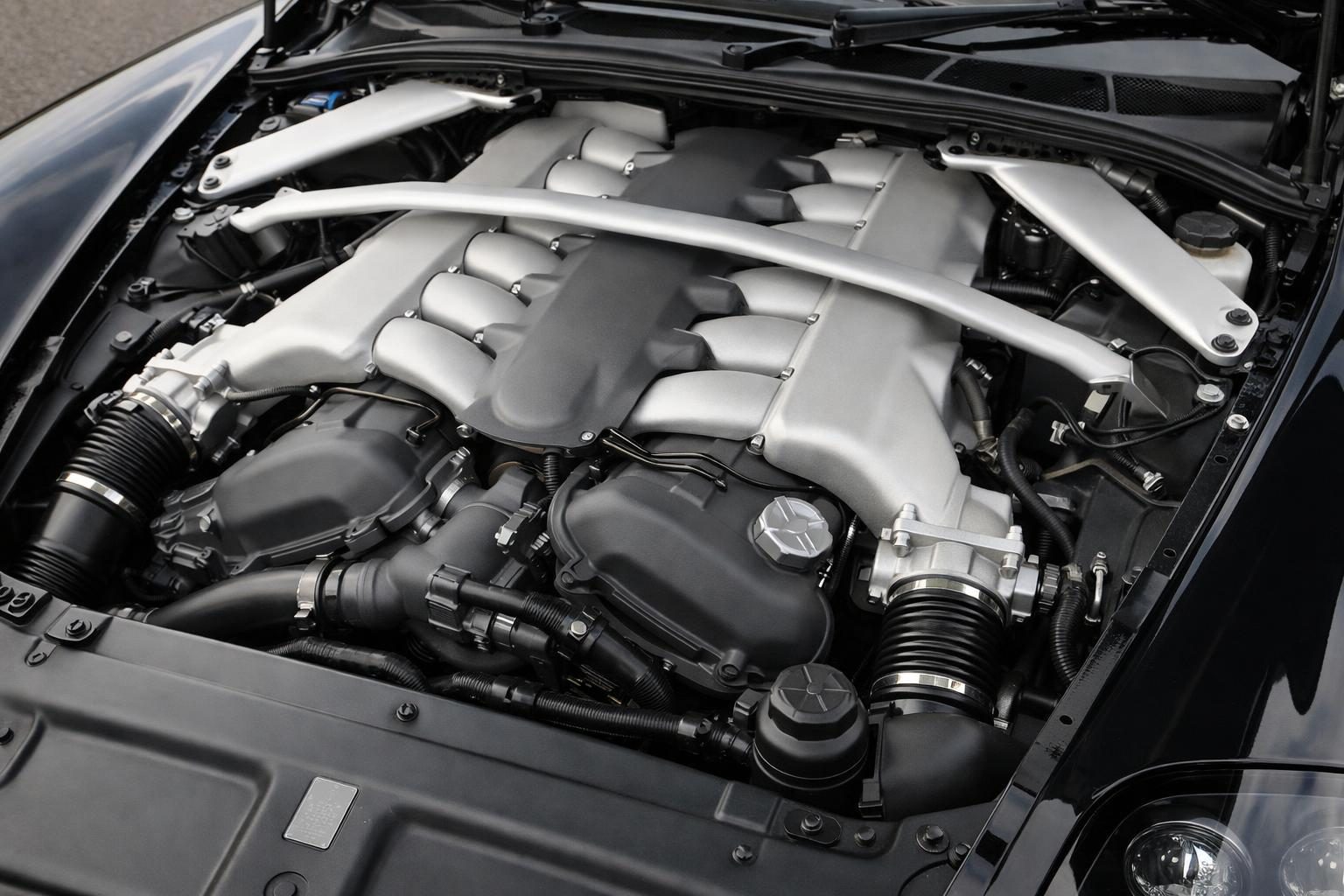
The heart of the Vanquish Mk1 is a 5.9-litre V12 designed without taboos: Motorlegend explains that it derives from the assembly of two Ford Duratec V6s. This industrial lineage does not detract from its character. On the contrary, it allowed for robust development and a relevant compromise between smoothness and power delivery, with an immediately recognisable tone.
Figures vary according to sources: astonmartin.com states 460 PS, Wikipedia details 460 hp (343 kW) at 6,500 rpm, while Motorlegend cites 456 PS. This slight divergence illustrates the discrepancies in homologation and communication, without altering the essence: a GT that is both powerful and usable, built on a rational technical foundation.
This mechanical choice fits into Aston Martin’s strategy at the time: to capitalise on proven technological blocks to accelerate product revival. It is precisely this hybrid approach – artisanal in assembly, methodical in engineering – that makes the Vanquish Mk1 a major milestone of the post-DB7 era.
For an official perspective on the specifications and evolution of the engine within the family, consult the Vanquish timeline on Aston Martin’s website as well as the concise technical sheet of the Vanquish on Wikipedia.
The Magneti-Marelli robotic gearbox: the acknowledged Achilles’ heel
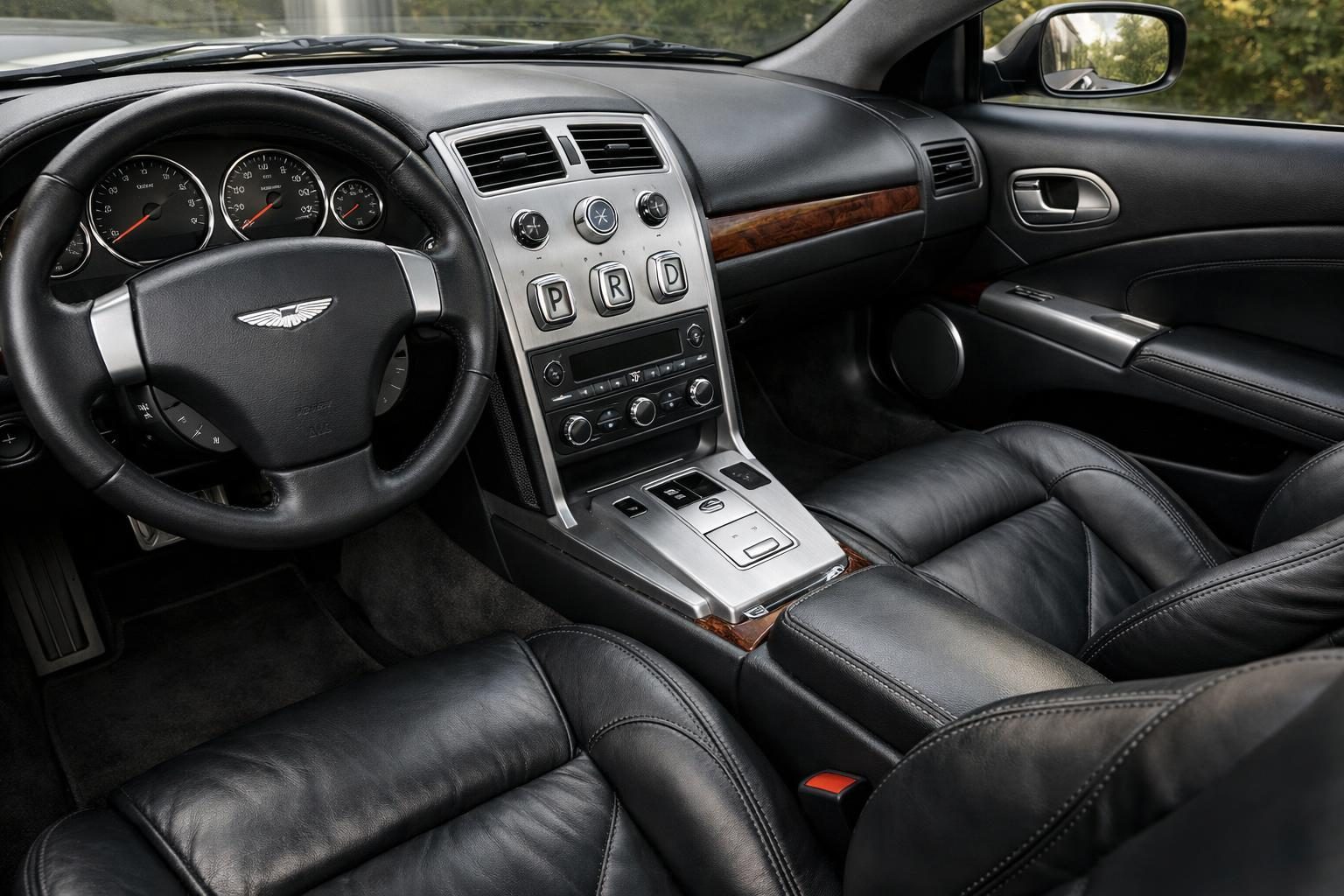
While the V12 is enticing, the transmission divides opinion. The Vanquish Mk1 adopts a 6-speed manual gearbox with a robotic actuation developed with Magneti-Marelli and Ford. According to powerracing.fr, gear shifts occur in about 250 ms: quick for the time, but not always smooth at low speeds, with noticeable jolts during manoeuvres or urban driving.
This calibration has long embodied its perceived weak point: brilliant in spirited driving, more demanding in daily use. Criticism crystallised further as competitors refined their sequential gearboxes, while traditional automatics gained responsiveness. In Aston Martin’s history, this compromise reminds us that the Vanquish Mk1 is a pioneer, ahead in some aspects and improvable in others.
For enthusiasts, this is part of the charm and authenticity of the model: a GT that demands engaged and anticipatory driving, and whose technology reflects the ambitions of a brand in transition. In this sense, the Vanquish Mk1 remains a time capsule of early 2000s innovation.
To place this in our brand panorama: 5 unusual anecdotes about Aston Martin, where one can measure how these technical choices shape the perception of an entire generation.
Die Another Day and Pierce Brosnan: the Vanquish enters Bond legend
Pop culture recognition came in November 2002, when the Vanquish appeared in Die Another Day. This placement sealed its status as a public icon: menacing silhouette, nobility of the V12, British spy allure. According to largus.fr, Pierce Brosnan even acquired a personal example, further proof of his attachment to this totem role.
In the 007 saga, the lineage with the DB5 is acknowledged: an Aston becomes a character in its own right. The Bond-Aston Martin association, recounted in our archives, illuminates how the Vanquish Mk1 reconnects with the imagery of the DB5 while imposing a contemporary vocabulary.
To delve deeper into the cinematic legacy, one can compare the codes of the DB5 and their modern reinterpretation through this useful resource on the mythical 1964 car. It helps explain why the Vanquish so quickly established itself on screen and in memory.
Also explore our thematic dossier Aston Martin and James Bond, 60 years of history to situate this role in the chronology of screen appearances.
Newport Pagnell closes in July 2007: 2,578 units and the end of an era
The production of the V12 ceased on 19 July 2007, a symbolic date that coincides with the closure of the Newport Pagnell factory after 49 years of operation, according to Wikipedia. The historic workshop gave way to modern facilities in Gaydon: a logistical and cultural break embraced by the brand to support increased production rates and quality standards.
On a quantitative level, carjager.com and Wikipedia converge: 2,578 units produced between 2001 and 2007. A volume that preserves rarity without slipping into obscurity, and which today contributes to the stability of the market value, while allowing for specialised maintenance thanks to a sufficient base of parts and expertise.
This transition seals the mission of the Vanquish Mk1: to gracefully close the Newport Pagnell chapter while preparing for the next era. It embodies the culmination of controlled craftsmanship and the outline of managed industrialisation, a precious link in the continuity of style and brand image.
To place this milestone in the overall history of Aston Martin, one can cross-reference the brand’s institutional data and available historical summaries, starting with the official presentation of Aston Martin and the reference page on the DB5 for the heritage aspect.
Conclusion — Vanquish Mk1, the acknowledged bridge between craftsmanship and the modern era
Through its style signed by Ian Callum, its V12 derived from two Duratec V6s, its imperfect yet pioneering Magneti-Marelli robotic gearbox, and its recognition in Bond, the Vanquish Mk1 encapsulates the paradoxes of a brand in transformation. The key figures – unveiling in Geneva 2001, 2,578 units until 19 July 2007, closure of Newport Pagnell – precisely situate this transition. For those interested in the genealogy of Aston Martin, the Vanquish Mk1 remains the most eloquent bridge between heritage and modernity.