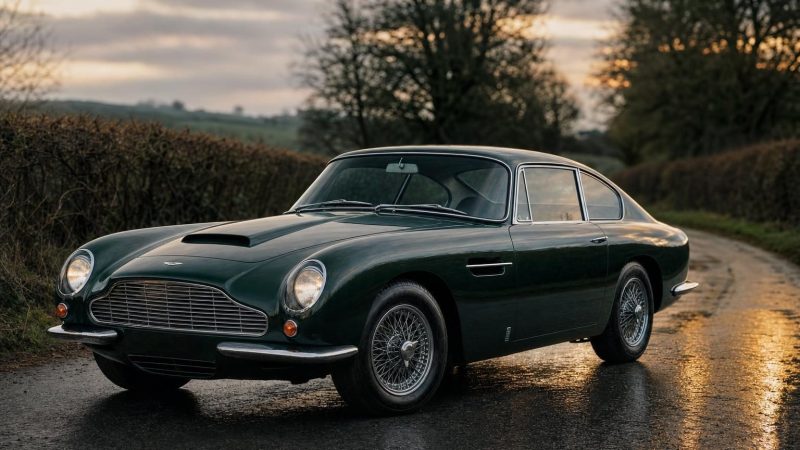
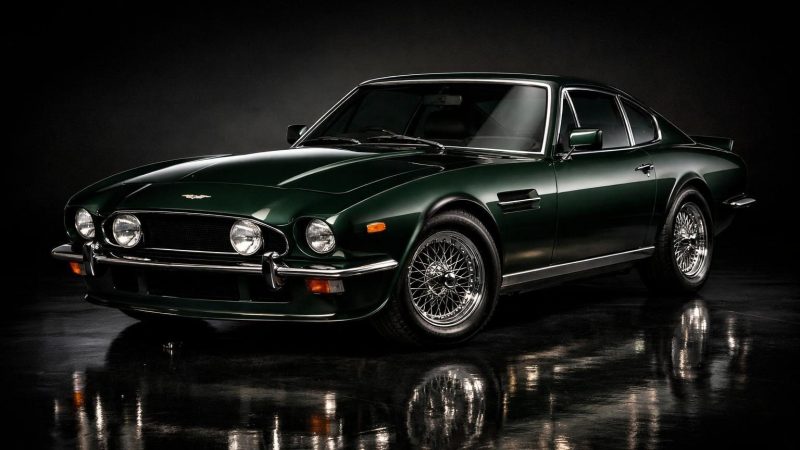
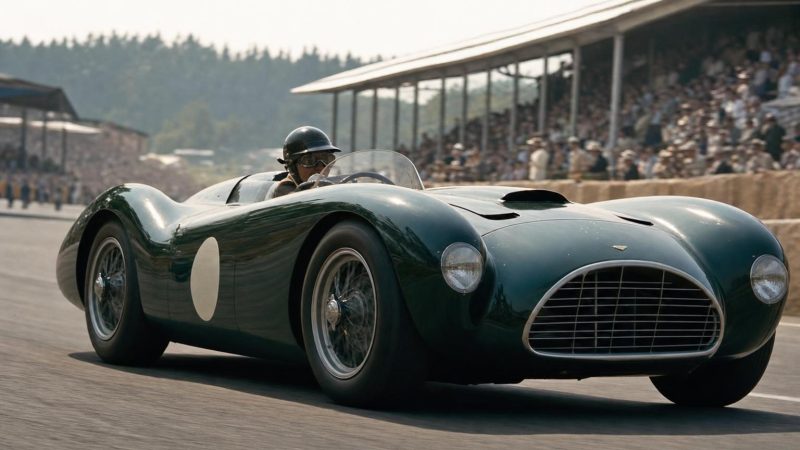
VH Platform, the glued-riveted aluminium structure born under Ulrich Bez built the DB9 and structured the entire range from 2003 to 2016. Here’s how it saved Aston Martin.
The VH platform is the foundational innovation that revitalised Aston Martin in the early 2000s by offering a common, lightweight, and rigid base for the entire range born in Gaydon. In this article, we explain why the company needed a new architecture, how the Vertical/Horizontal principle worked in practice, and how the DB9 validated this strategy before it was adapted from the Vantage to the Rapide. Finally, we review the evolution through generations up to 2016, relying exclusively on identified sources.
Why Aston Martin Needed a New Architecture in 2000
At the turn of the 2000s, Aston Martin emerged from a period where the DB7 played the saviour, but on heterogeneous and outdated technical bases. The arrival of Ulrich Bez as CEO in July 2000 (source cited: Wikipedia VH) marked a strategic turning point. The stated goal was clear: to create a unique structure for several cars, capable of reducing costs, accelerating development, and ensuring high-level dynamic quality.
To succeed, it was necessary to break away from the stacking of specific platforms and favour a modular solution. According to sources compiled in the FACTS (Wikipedia VH, supercars.net), the answer was the glued and riveted aluminium VH platform. This choice of materials and processes aimed to reconcile rigidity, lightness, and industrialisation, three prerequisites for sustainably reviving the brand.
The promised gains were decisive. According to Silodrome and Grokipedia, the new structure offered torsional rigidity about twice that of the DB7 while reducing the weight of the shell by approximately 25%. Such a margin for improvement changes the game for road behaviour, refinement, and performance, while helping to contain emissions and consumption.
In the background, there was also the desire to build a strong product identity. A unique architecture allows for a coherent design language, controlled proportions, and a clear positioning, without sacrificing the necessary variations (coupé, convertible, grand tourer 2+2, sports, etc.). The VH platform was to be this foundation.
Vertical and Horizontal: The Principle of the VH Platform
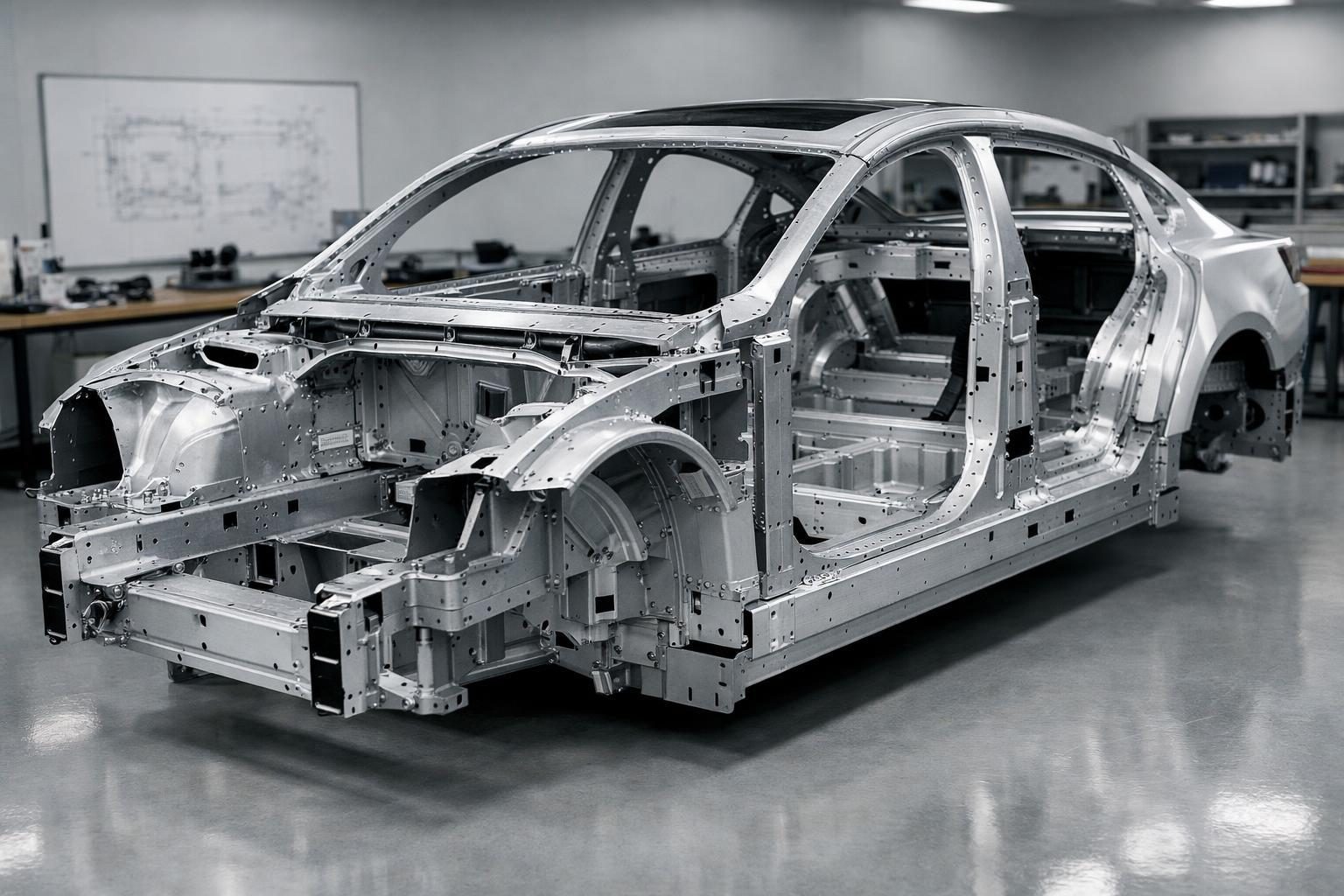
The acronym VH, for Vertical/Horizontal, describes a principle of modularity. According to Wikipedia VH, the VH platform relies on “vertical” modules (by range segments) and “horizontal” modules (by cross-functional roles) that combine to create different models. In practice, glued-riveted aluminium sub-assemblies — side members, cross members, floors, cradles — are combined with common stacks of suspensions, electronics, and powertrains.
This modular mesh offered several benefits. First, the standardisation of critical components (fixing points, electrical architectures) reduced development times. Next, the flexibility of the sub-assemblies allowed for variable wheelbases and tracks. Finally, the use of glued and riveted aluminium guaranteed, according to Silodrome and Grokipedia, a rare combination of rigidity and contained mass, superior to what Aston Martin had previously offered.
The VH platform thus served as the basis for most Aston Martins produced between 2003 and 2016 (Wikipedia VH, supercars.net). It enabled a modern range “at scale”: a single structure, calibrated variations, and the ability to evolve through iterations without reinventing everything. Ulrich Bez’s gamble was precisely to engrave this method into the DNA of Gaydon.
It is worth noting that the VH platform does not mean uniformity. Chassis settings, power, aerodynamics, and body styles vary significantly between a 2+2 GT and a more extreme sports model. The strength of the approach is to preserve the individuality of each model while capitalising on a common technical base.
The DB9, First Car Built on the VH at Gaydon
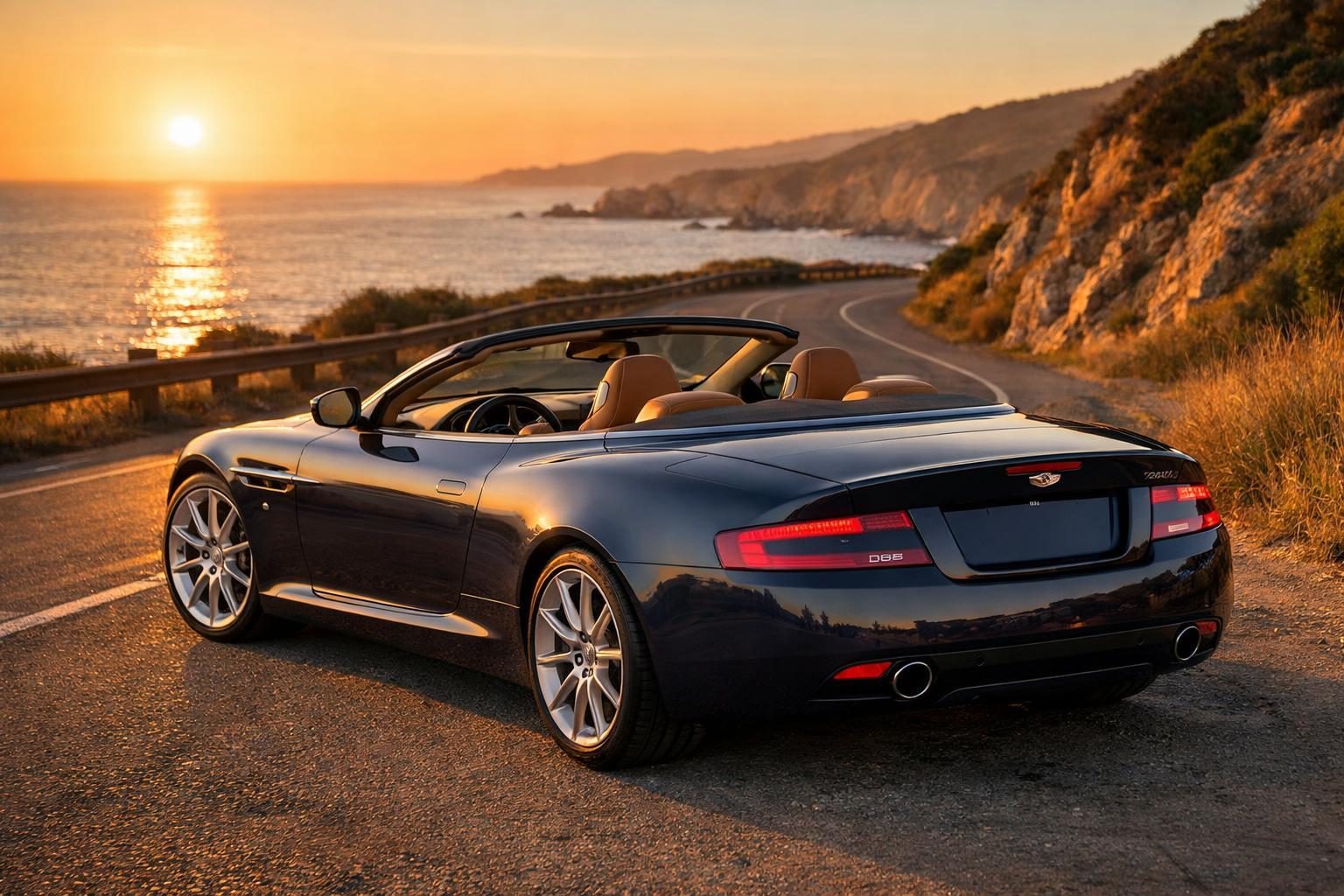
Unveiled at the Frankfurt Motor Show in 2003 and produced from 2004, the DB9 is the first Aston Martin built on the VH platform (astonmartin.com, supercars.net, Silodrome). It inaugurates a new industrial era at Gaydon. The philosophy is clear: an elegant, high-performing 2+2 GT that is more refined dynamically than the DB7 it indirectly replaces.
The DB9 was powered by a 6.0-litre V12 derived from the Vanquish, announced at 450 PS at launch (aston-martin-club, Silodrome). This engine pairs perfectly with a lighter and significantly stiffer shell. The result is a GT with more precise reactions, superior filtering, and enhanced performance — everything a modern glued-riveted aluminium architecture promised.
The commercial success validates the strategy of a common base. Over approximately twelve years of production, about 16,500 units of the DB9 were produced, making it the best-selling model of Aston Martin at the time (aston-martin-club, Silodrome). This longevity and volume can be attributed to the scalability of the VH platform, which allowed for technical and stylistic updates without disruption.
To delve deeper into the technical and commercial history of this pillar, see our detailed file on the complete genealogy of the DB9. From launch to special editions, the career of the DB9 illustrates what modularity makes possible when executed well.
From Vantage to Rapide: All Models Derived from the VH
According to Wikipedia VH, the architecture has underpinned a wide family: Vantage, DBS, Rapide, Vanquish, but also Virage, DB10, and the rare Lagonda Taraf. Each exploits the same base with different ambitions, from the more compact and sporty coupé to the large GTs and the 4-door saloon.
This range has been the true demonstration of strength of the VH platform. Once the DB9 was established, Aston Martin was able to quickly expand its range, capitalising on the shared engineering. To take an emblematic example, the Rapide transposes the GT philosophy into a four-door silhouette, proof of the dimensional flexibility of the aluminium chassis.
Dynamically, the intrinsic rigidity reported by Silodrome and Grokipedia serves as the basis for contrasting settings. A Vantage prioritises agility and the power-to-weight ratio, while a DBS or Vanquish aims for very high-speed grand touring. The shared benefit lies in the precision of the running gear, vibration filtering, and passive safety, aspects supported by the VH skeleton.
Finally, the common structure has allowed for ambitious limited series, such as the DB10, while preserving the identity of each silhouette. To place these models in the chronology of the brand, our dedicated page on the DB7, the matrix of the 1990s, sheds light on the transition to Gaydon and the rise of the VH platform.
Four Generations of Evolution up to 2016
The period covered by the VH platform extends from 2003 to 2016 (Wikipedia VH, supercars.net). According to Wikipedia VH, the architecture evolved through successive generations until the end of its cycle, to accommodate performance increases, the integration of more complex electronics, and growing regulatory demands. The basic principle — glued and riveted aluminium, vertical and horizontal modularity — remained constant, but the modules were refined.
This incremental progression illustrates the value of a common base: each iteration benefits current and future models. Whether adjusting the wheelbase, reinforcing anchor points, or optimising unsprung masses, the VH platform has constituted a field for continuous improvement without compromising the personality of the cars.
The 2016 milestone marks the end of the platform’s central role in the range, paving the way for a new generation. However, the technical and industrial legacy of the approach remains intact: it allowed for the assembly of a complete family of GTs and sports cars sharing a common DNA, without falling into uniformity. It is this continuity that has anchored Gaydon’s credibility on a global scale.
For an overview of the architecture and its context in the brand’s history, one can consult the reference page dedicated to the VH platform and the official presentation of the DB9 on the Aston Martin website, which served as the basis for the cited facts.
Conclusion – Why the VH Platform Saved Aston Martin
At the turn of the 2000s, the VH platform offered Aston Martin a backbone: a lightweight structure twice as rigid as the DB7, unified for almost the entire 2003-2016 range, and validated by the success of the DB9. By centralising engineering and intelligently multiplying derivatives, the VH platform aligned the Vantage, DBS, Rapide, Vanquish, Virage, DB10, and Lagonda Taraf without dispersing. Thus, a unique architecture secured the growth of Gaydon and consolidated the brand’s image.
To measure the impact of this strategy, rediscover the career of the DB9, a commercial and technical pivot of the era, and the transition from the DB7 to a range entirely built on the VH platform — even to singular derivatives like the four-door Rapide. The lesson is clear: with the VH platform, Aston Martin built a lasting foundation that simply saved the company.