DBR9, la GT1 qui a ramené Aston Martin au sommet au Mans : hommage à la DBR1 de 1959, genèse Prodrive depuis la DB9, rivalité Corvette et succès 2007-2008.
DBR9 is the name that brought Aston Martin back to glory at Le Mans in the mid-2000s. This article traces the homage paid to the victorious DBR1 of 1959, explains how a road-going GT was transformed for the GT1 category by Prodrive, and places the rivalry against Corvette in the context of the 2005-2008 campaigns. We revisit the two class victories at the 24 Hours of Le Mans in 2007 and 2008, focusing on the numbers 007 and 009 carried by the factory cars, and the sometimes divergent production figures according to sources.
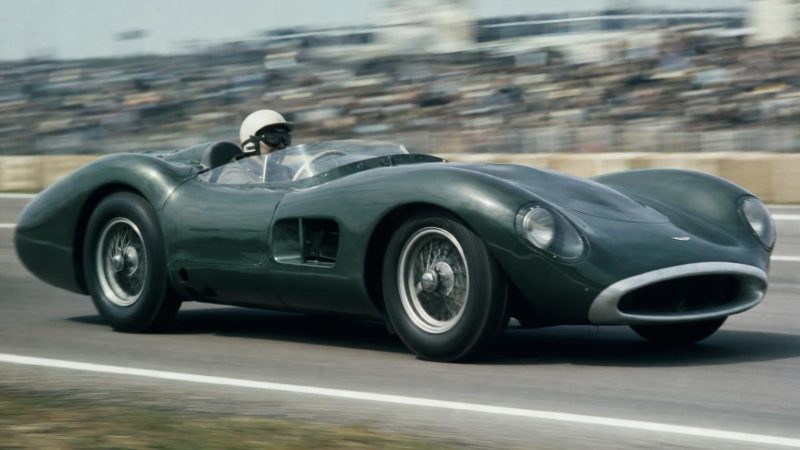
Why the DBR9 Pays Tribute to the Victorious DBR1 of 1959
The choice of name is not trivial: according to Wikipedia and prestigeandperformancecar, the name DBR9 explicitly pays homage to the DBR1, which won the 24 Hours of Le Mans and the world title in 1959. By bringing the three letters DBR to the forefront, Aston Martin recalls the lineage of victorious prototypes from the late 1950s and reaffirms a clear sporting ambition.
Symbolically, this echo to 1959 serves as a common thread. In 2007, the factory team triumphed in GT1 and secured a 5th place overall, Aston’s first top 5 at Le Mans in 48 years, as indicated by ROFGO, prestigeandperformancecar, and Gran Turismo wiki. The time gap highlights the significance of the nod: the modern car extends a legacy left hanging since the achievement of the victorious DBR1 of 1959.
Beyond the badge, the endurance DNA flows through this coupe derived from the series. The strategy of entering a production-based GT—while deeply transforming it—fits within the house tradition: to let the road shine through racing, and vice versa, in the category that matters for the brand’s international image.
A GT1 Based on the DB9 but Completely Re-engineered by Prodrive
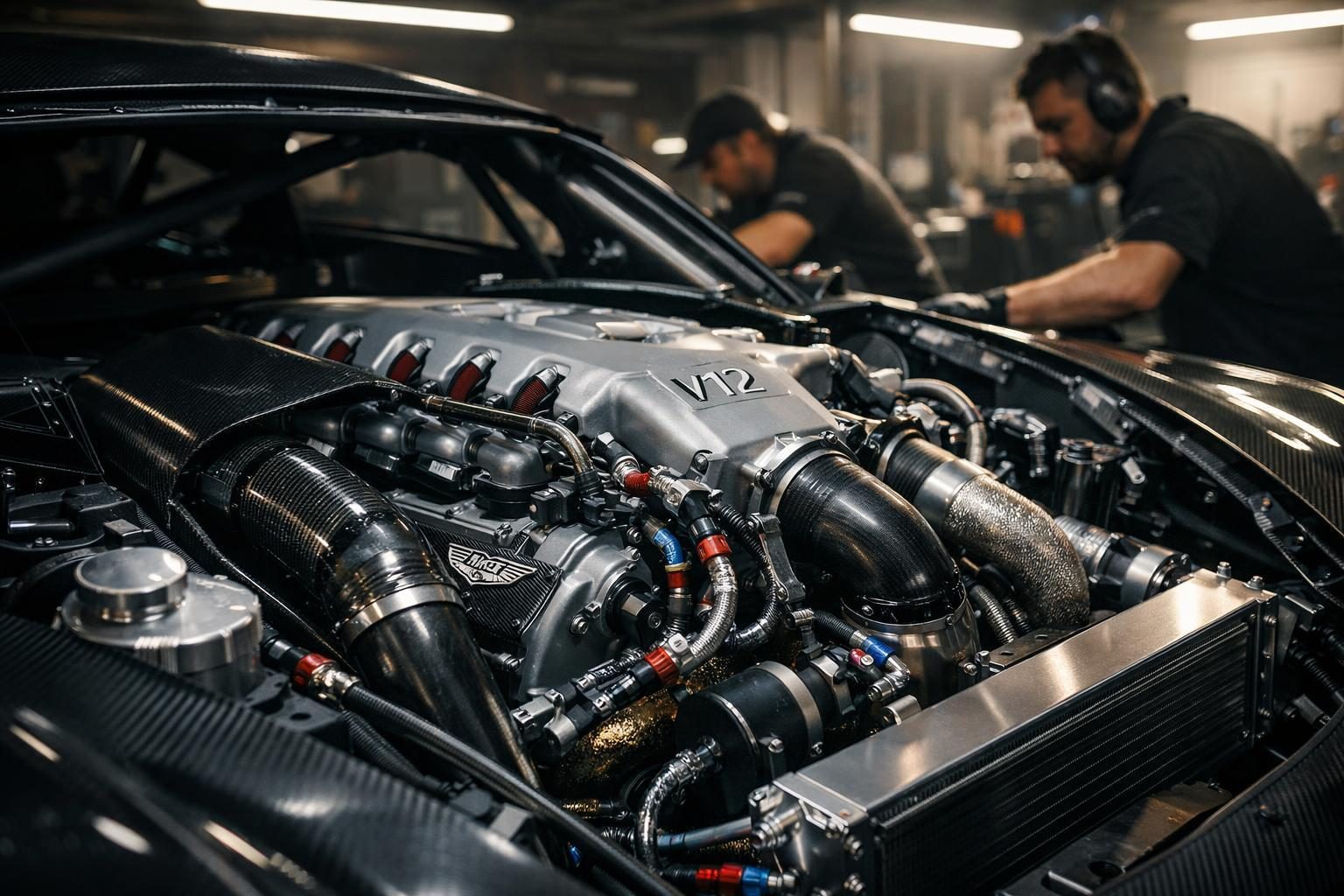
The technical recipe is precisely documented by Wikipedia and ROFGO: the car takes the chassis from the DB9, as well as the block and cylinder heads from its road-going V12, while the rest is re-engineered for competition by Prodrive. This involves extensive work on aerodynamics, structure, transmission, braking, and engine management, transforming a grand tourer into a true GT1 category weapon.
This hybrid approach—series base, race execution—maximises mechanical familiarity while meeting endurance requirements. The original DB9 V12, prepared, benefits from proven robustness and performance potential usable over 12 or 24 hours. Specific body and downforce elements, combined with significant weight reduction, provide the sports car with the balance and consistency essential over time.
From an industrial and sporting perspective, Prodrive’s involvement is central. The British partner, recognised for its mastery of customer and factory programmes, ensured the design and development of the GT1. As for the number of chassis produced, sources diverge: Wikipedia states 16 units, while RM Sotheby’s and Classic Driver mention around 18 cars (10 factory and 8 customer). This discrepancy illustrates the complexity of tracking constructions and updates in endurance programmes.
To measure the gap with the base car, one only needs to revisit the road-going DB9, its platform, and its V12, before their track transformation. Our dossier on the road-going DB9 and its architecture provides a useful counterpoint to the transformation by Prodrive.
From Sebring 2005 to Defeat Against Corvette in 2006
The baptism of fire took place at the 12 Hours of Sebring 2005, a notoriously engine-breaking event that reveals weaknesses. Right from the start, the car triumphed in GT1 in its first race, according to ROFGO and Gran Turismo wiki. This inaugural success speaks volumes about the quality of the development and the immediate competitiveness of the chassis-engine package against the benchmarks of the time.
The mid-2000s saw factory and customer GT1s of exceptional calibre face off. The rival American brand then constituted the benchmark of the category, and each confrontation highlighted the stakes of reliability, pure speed, and tyre management. In this context, the Aston Martin Racing programme refined its endurance procedures and relay management, capitalising on the experience gained race after race.
Over the 2005-2006 seasons, the team built the foundations for its future successes at Le Mans. The increasing power was reflected in a better rhythm consistency and a fine understanding of the operating windows of the V12 and aerodynamics during long night stints. This methodical progression, a cornerstone of endurance, directly prepared the campaigns of 2007 and 2008.
Class Victories at Le Mans 2007 and 2008 Against Corvette
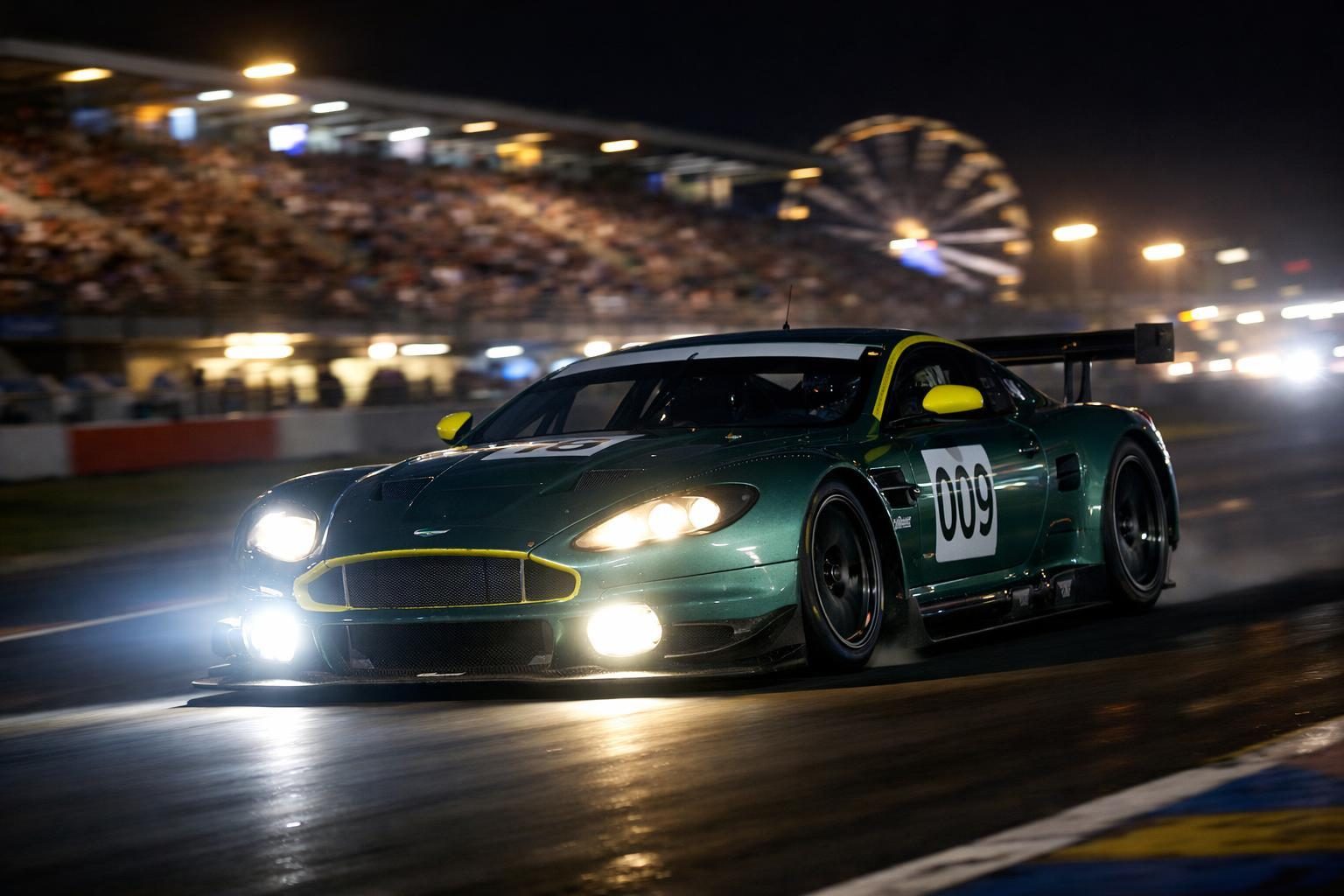
The climax occurred at Le Mans, with two LMGT1 class victories in 2007 and 2008 for the Aston Martin Racing factory team, as reported by Wikipedia, ROFGO, and prestigeandperformancecar. In 2007, the trio of David Brabham, Darren Turner, and Rickard Rydell triumphed in GT1 and finished 5th overall. According to ROFGO, prestigeandperformancecar, and Gran Turismo wiki, this was Aston’s first top 5 at the 24 Hours of Le Mans in 48 years—a symbolic milestone in light of 1959.
These successes were forged after a sustained rivalry with the American competitor, particularly robust in reliability and neutralisation management. The British sports car, with its series-derived V12 and optimised aerodynamics, found at Le Mans the ideal ground to convert its potential into results. The efficiency of pit stops, the discipline of relays, and the night/day strategy made the difference in a category where mistakes are costly.
The ultimate validation of an endurance GT lies in its ability to repeat performance. By doing so again in 2008, the team confirmed that the window of competitiveness and reliability was not merely circumstantial. This continuity credibly solidifies Aston Martin Racing’s endurance lineage and prepares the brand for the next era in GTE.
To extend the analysis, the dedicated page on the official 24 Hours website revisits the career of the 2007 class-winning example, with details of its engagement and achievements. Read more via the profile of the 2007 class winner, and complement it with the technical sheet and history in English on the Wikipedia page dedicated to the DBR9.
Numbers 007 and 009: The James Bond Legacy on the Grid
According to Wikipedia, the factory cars bore the numbers 007 and 009 in homage to James Bond. Beyond the nod, these numbers contribute to forging an immediately recognisable visual identity in the hustle of major endurance races, while cultivating a powerful cultural link between the brand and the most famous agent in cinema.
In communication as in sport, the consistency of symbols matters. The numbers 007 and 009, associated with a striking livery, a distinctive V12 sound, and top results create a memorable narrative. In a particularly competitive GT1 grid, this signature enhances the media visibility of the factory programme without compromising performance demands.
This symbolic capital is part of the continuity of Aston Martin’s endurance commitments. It also flows into the post-GT1 era, as seen in subsequent campaigns in GTE. For a broader perspective, our retrospective on the history of the Vantage GTE in WEC and Le Mans shows how the brand has capitalised on the experience and notoriety built during the GT1 era.
Conclusion — DBR9, the Milestone That Revived Aston at Le Mans
The DBR9 checked all the boxes of a successful GT1 programme: a name that connects to the glory of 1959, a road-going DB9 transformed by Prodrive, an immediate victory at Sebring 2005, and, most importantly, two class triumphs at Le Mans in 2007 and 2008. The sources—Wikipedia, ROFGO, prestigeandperformancecar, and Gran Turismo wiki—converge on these milestones, while the volume of chassis produced remains a subject of divergence (16 according to Wikipedia, around 18 according to RM Sotheby’s and Classic Driver).
In a GT1 era dominated by intense transatlantic rivalry, the DBR9 placed Aston Martin back at the centre of the game, even achieving a historic top 5 overall in 2007 after 48 years of waiting. Heir to the DBR1 in spirit and letter, the factory car with numbers 007 and 009 sealed Aston’s return to Le Mans and paved the way for future campaigns. To delve deeper into the brand’s universe and technology, the official Aston Martin website and specialised documentation provide useful insights to complete this overview.