Cygnet V8: the genesis of a 2018 one-off born at Q, key figures, 4.7‑litre 430 PS engine, and a mirror of the production Cygnet’s failure. An elegant deep-dive.
The Cygnet V8 encapsulates a very British contradiction: turning a micro city car into a road‑legal projectile, while recalling the raison d’être – and the failure – of the production Cygnet. Here, in five figures and some context, is how a one‑off order at Q by Aston Martin flipped from regulatory compliance to a bespoke engineering showcase.
The production Cygnet: a city car born of an EU emissions obligation
At the outset, the Cygnet wasn’t a whim, but a calculation. Its primary aim: to help the marque meet the European Union’s average emissions standards from 2012. According to Wikipedia, this city car was designed to lower the range’s average CO₂ without touching the DNA of the front‑engined GTs.
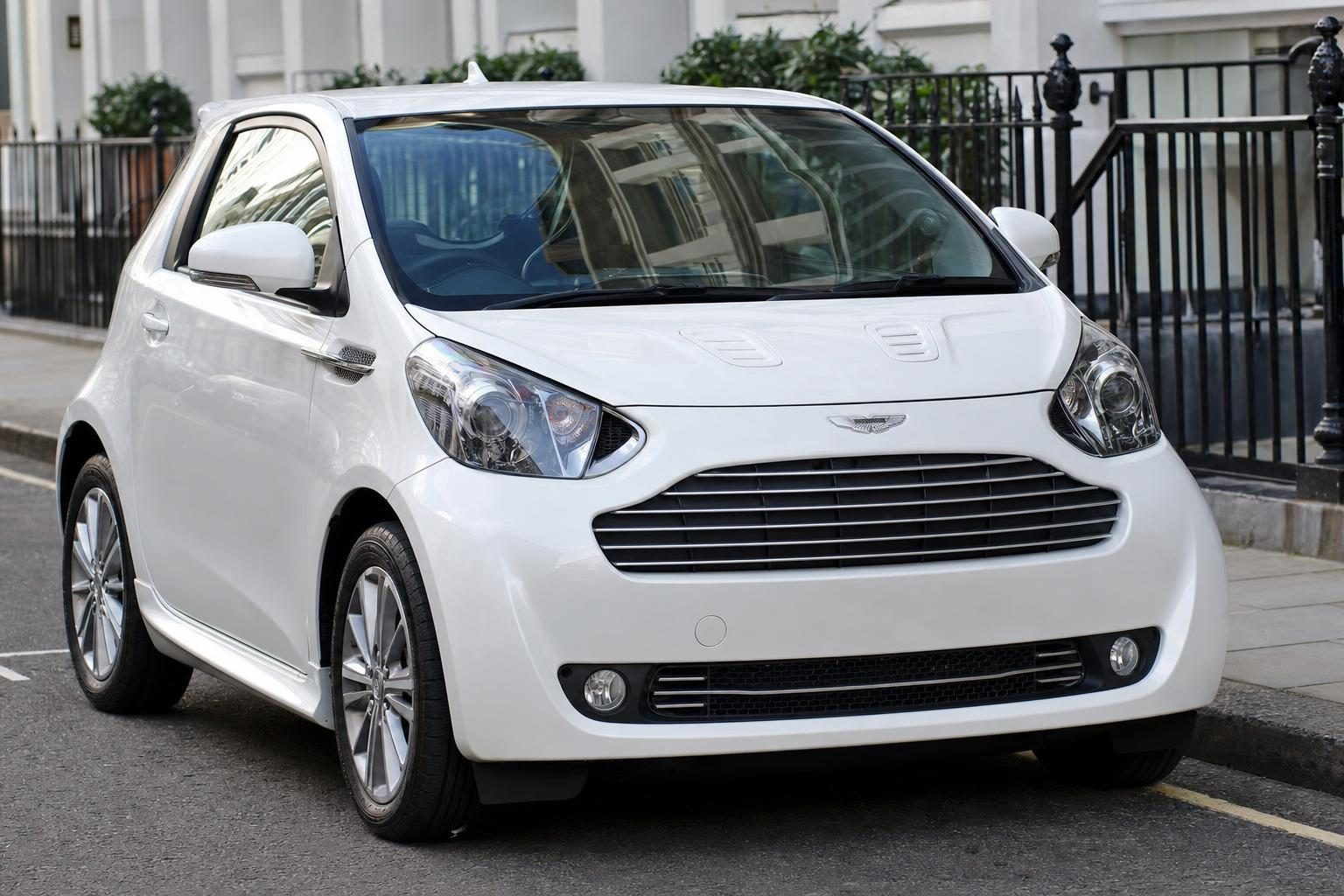
Built at Gaydon from 2011 to 2013, the production Cygnet is based on a Toyota iQ, deftly reinterpreted: bespoke grille, LED headlights and a cabin to the brand’s standards. Aston Martin presents it as a micro city car with meticulous bespoke finish on its “Past Models” page (astonmartin.com), in the spirit of an urban “accessory” for DBS or Vantage owners.
Production stopped in September 2013, after barely two years. Again, it’s Wikipedia that marks the point: the regulatory experiment was brief, but memorable enough to enter the marque’s folklore.
600 units sold for 4,000 expected: why the outcome disappointed
Ulrich Bez, then CEO, targeted 4,000 units per year. Reality was far more modest: fewer than 600 units in Europe, of which only 150 in the UK, according to the Toyota iQ page on Wikipedia (Toyota iQ). A striking gulf between aim and market that raises questions about positioning.
Why such a gap? The proposition was rational on emissions, less so on desirability. An iQ base, however richly trimmed, remained a pragmatic city car in a universe of sensory GTs. The post‑crisis context and short life didn’t help, nor did the struggle to create a dreamscape around an urban object, however useful, at Aston Martin.
The result reads between the lines: the Cygnet fulfilled its role as a regulatory corrective, without ever becoming a volume seller. The sequel, unexpected, would come from a single client set on flipping the script.
2018: a client commissions the Cygnet V8 via Q by Aston Martin Commission
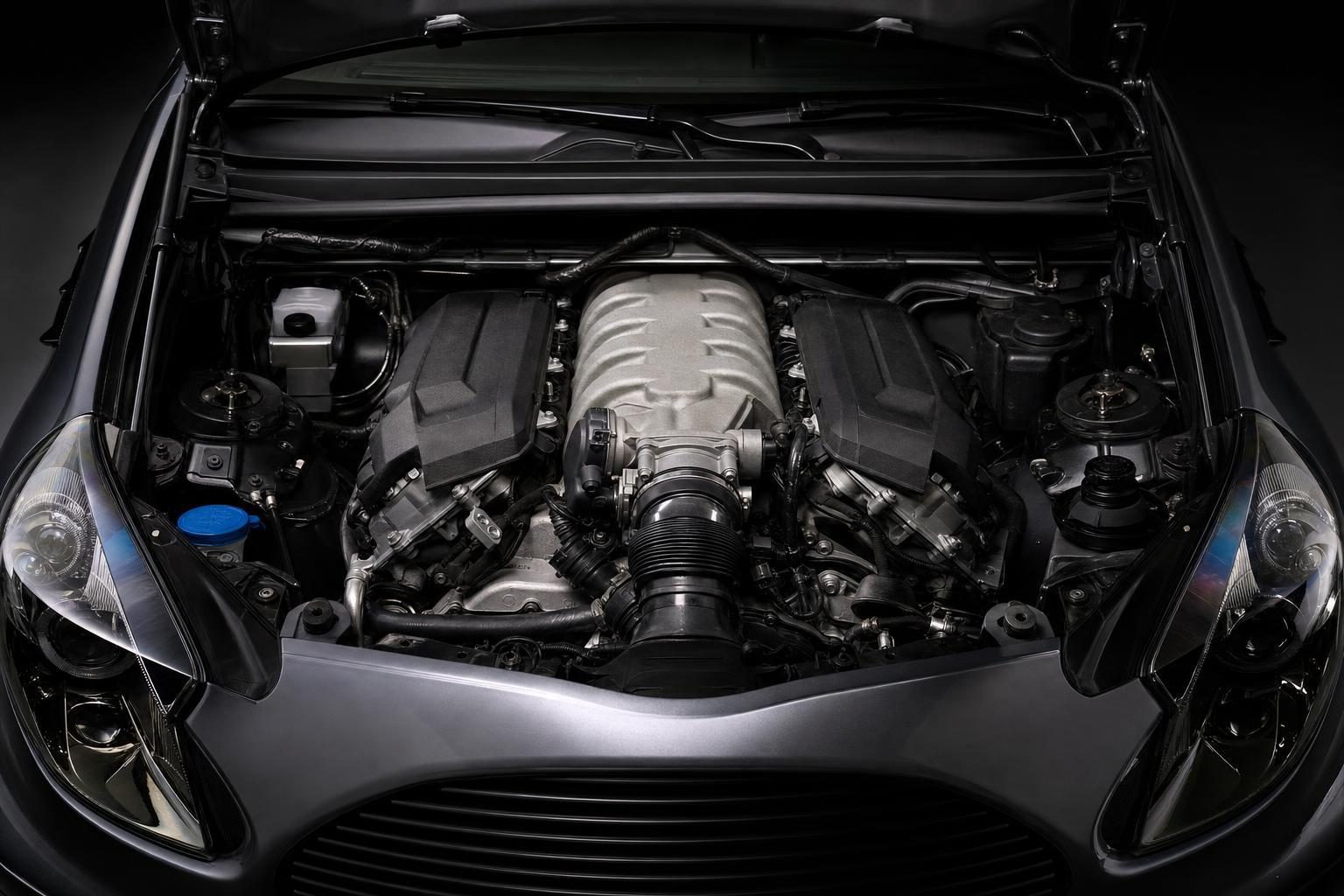
In 2018, a Q by Aston Martin – Commission order changed everything. Revealed at the 2018 Goodwood Festival of Speed, the Cygnet V8 is a one‑off. Aston Martin’s official release details the spec: the Vantage S’s 4.7‑litre V8, 430 PS, 0–60 mph in 4.2 s and 170 mph flat out.
The most astonishing part is the size and weight: roughly 3 metres of bodywork and 1,375 kg on the scales. Power‑to‑weight hits 313 PS/tonne, as confirmed by the same source. The micro city car turned grand‑touring battering ram, almost, but with a wink.
The transformation wasn’t limited to the engine. According to Aston Martin, the production Cygnet chassis was retained, paired with a new integrated safety cage and a widened carbon body. UK dealer Nicholas Mee also revisits these key technical points in its retrospective (nicholasmee.co.uk), echoing the press kit.
4.7 litres and 430 PS in 3 metres of bodywork: what the engineering demanded
Squeezing a 4.7‑litre V8 and its 430 horses into such a tiny volume required a thorough rework. Without listing every part, the elements published by Aston Martin convey the scale of the challenge: integrated safety cage, widened carbon shell and adaptation of the original chassis to handle the extra power and torque. It’s the grammar of “bespoke” pushed to the absurd, yet carried through.
The outcome, quoted at 4.2 seconds for 0–60 mph and 170 mph top speed, puts this minute coupé on par with far larger sports cars. At 1,375 kg and 313 PS/tonne, the Cygnet V8 becomes a spec sheet on wheels, demonstrating the plasticity of engineering know‑how normally reserved for GTs and special programmes.
Beyond the numbers, the point lies elsewhere: this one‑off proves the marque’s ability to answer a singular brief with industrial execution, not a mere show stand special. Hence the interest in reading the V8 in light of the original Cygnet: one born of constraint, the other of whim. Both tell of the same robustness of tooling and method.
Production Cygnet today: prices rising and future classic status
What remains today of the production Cygnet? First, rarity: fewer than 600 units in Europe, built between 2011 and September 2013. Then, a charming paradox: an urban Aston Martin, from a Toyota iQ base, but finished in earnest, as the official Aston Martin pages remind us.
Rarity and a short career are enough to stoke enthusiasts’ curiosity. The Cygnet has found its place in the brand’s “oddities” album, alongside other uncommon projects. For a concise view of the production model, our dedicated file gathers the key markers: history, production and specifics of the Cygnet.
In this mirror, the Cygnet V8 remains an absolute exception: a singular, Q‑signed commission, unveiled at Goodwood in 2018 and built on a reinforced original chassis. It isn’t meant to set market values; it rather reminds us that an inspired client and a well‑equipped house can move mountains… or a V8, in a space this small.
Conclusion: what the Cygnet V8 says about Aston Martin’s bespoke engineering
It starts with a city car born of a European obligation and a goal of 4,000/year that would never be met. It ends with the Cygnet V8, a one‑off with 430 PS and 4.2 s 0–60 mph, revealed at Goodwood 2018, a discreet symbol of Q by Aston Martin’s potential. Two sides of the same story: constraint and freedom.
To put these figures in perspective, revisit the V8 Vantage that donated the engine via our reference profile: the V8 Vantage (2005), genesis of a modern V8. And to extend the curiosities chapter, our in‑house selection: five unusual Aston Martin anecdotes. In short, the Cygnet V8 is more than a wink: it’s a demonstration, at micro city car scale, of what “bespoke” engineering can do when a client asks.
Useful sources: Aston Martin V8 Cygnet press kit and Aston Martin Cygnet entry. For an overview of the marque: discover the production Cygnet.