DB4 Vantage 1961: 136 coupés and 32 convertibles with GT-grade mechanics, a frequently overlooked option for collectors seeking the affordable high-performance variant.
The DB4 Vantage is the other high-performance model of 1961: a discreet road-going variant, wedged between the “standard” DB4 and the formidable GT, which today merits close scrutiny from informed collectors. We review its technical specification, its sometimes puzzling production figures, its visual markers and its positioning against the GT, not forgetting what its Superleggera architecture implies in the workshop.
The DB4 Series IV and the arrival of the Vantage option: what three SU carburettors and special cylinder heads changed
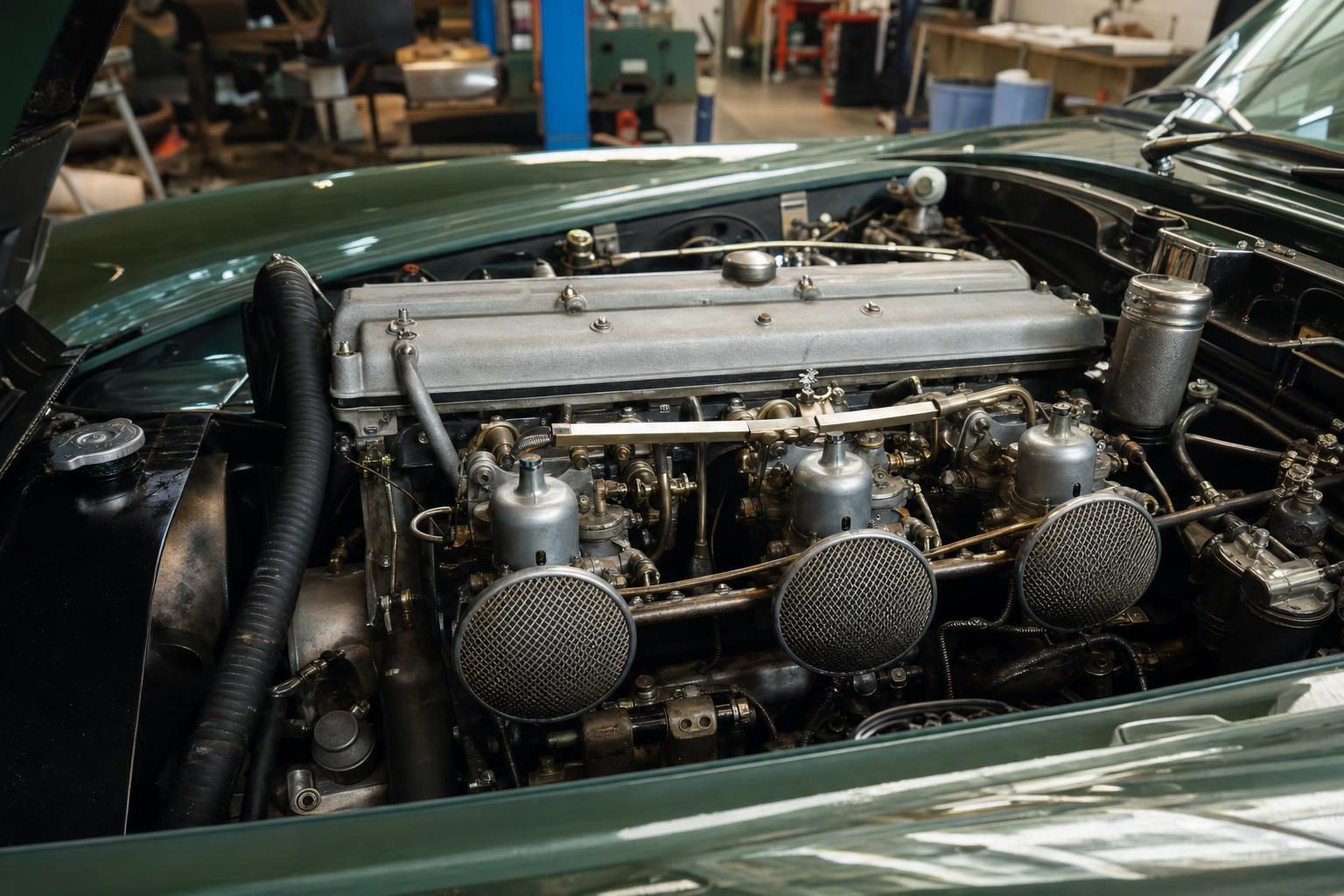
Introduced with Series IV in 1961, the DB4 Vantage received a specific engine tune: three SU carburettors and special cylinder heads lifted power to 266 PS (198 kW). According to Wikipedia (Aston Martin DB4), this configuration put the Vantage on a par with the GT for power, while retaining the dimensions and manners of a civilised grand tourer.
The basis remained the DB4, the first model produced at Newport Pagnell, clothed in a Superleggera body by Touring of Milan. This combination of a light tubular framework and aluminium panels, documented by Wikipedia and the official Aston Martin site, gives the Vantage a liveliness that contrasts with pre-war GTs while preserving acceptable comfort on the road.
The essential difference with the DB4 GT is not outright horsepower, but architecture. Per Aston Martin and Wikipedia, the GT adopts a shorter chassis and sheds around 85 kg, as well as twin-plug ignition and Weber 45 DCOE carburettors. The Vantage, by contrast, shares the power but remains a road-going DB4 in its framework. Hence a distinct personality: performance without the asceticism of the track.
136 coupés and 32 convertibles: why these numbers are hard to pin down in the archives
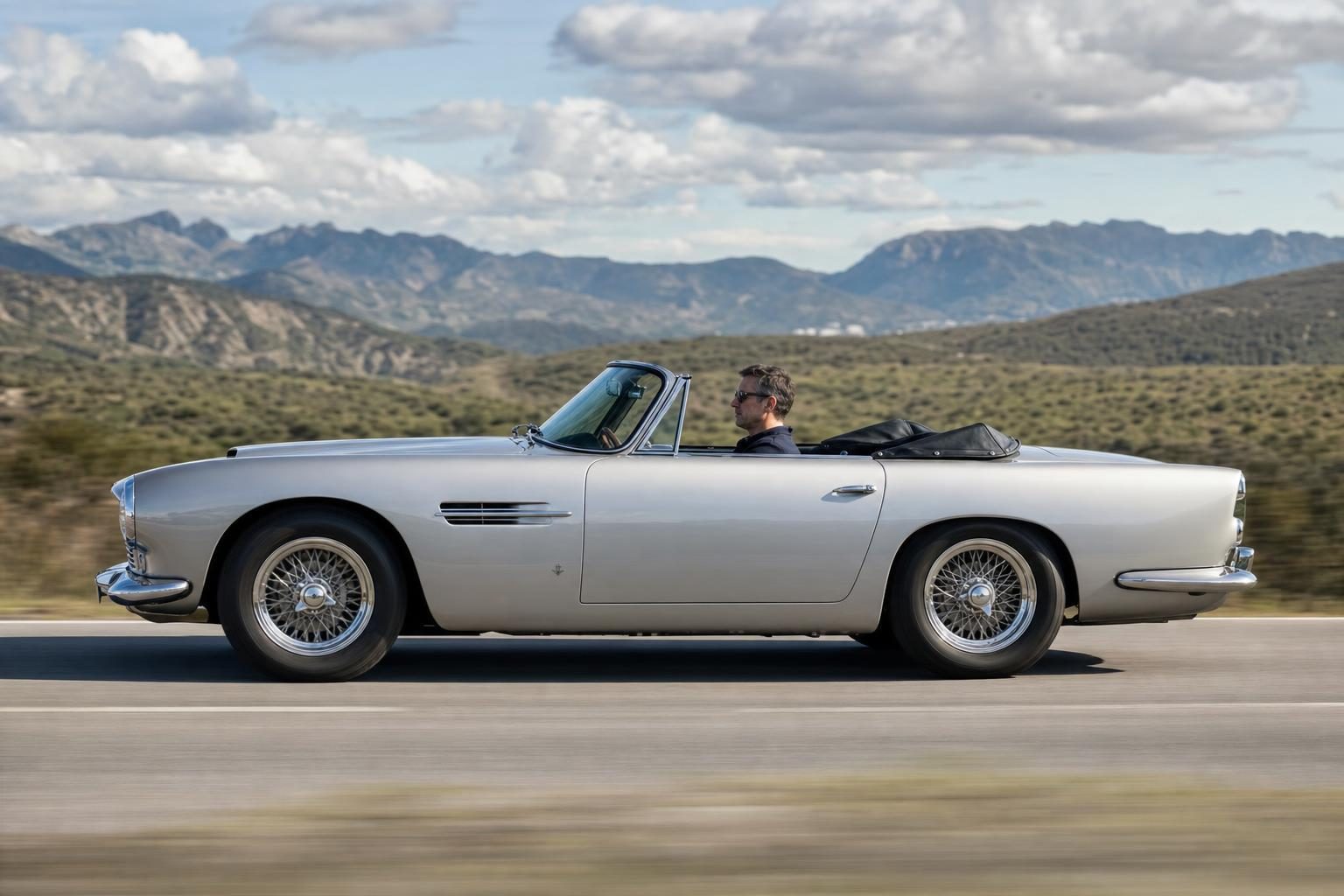
Production volumes add to the mystery. Wikipedia attributes 136 coupés and 32 convertibles to the DB4 Vantage. The latter figure aligns with another official datum: of 1,110 DB4s built, only 70 were convertibles, “about half of which with Vantage specification,” notes Aston Martin’s media site dedicated to the DB4 Convertible. The order of magnitude tallies, but the precise history by chassis number can be tricky to consolidate.
Why the perception gaps? Vantage was an option on Series IV, and period documentation, scattered across customer orders, running production changes and late updates, can explain minor aggregation discrepancies between public sources. For today’s buyer, the practical conclusion is clear: chassis-by-chassis traceability outweighs global estimates.
With that in mind, consulting official resources and historical summaries helps cross-check the information. In particular, compare the figures given by the reference page on the DB4 and by Aston Martin’s media dossier dedicated to the DB4 Convertible before embarking on deeper due diligence.
Faired headlamps inherited from the GT: the visual difference few buying guides mention
Most DB4 Vantages adopted the faired-in headlamps introduced by the DB4 GT, Wikipedia notes. This detail matters: beyond the Touring lines, this visual signature places the Vantage in the GT’s wake without straying into the latter’s technical radicalism. It’s an aesthetic marker some guides skim over, yet it shapes perception — and sometimes the value — of an example.
In a market where body authenticity and detail correctness count, these faired headlamps are a natural checkpoint. They sit among the visible clues — alongside air intakes, wheels and interior finish — to verify the coherence of a matching character car with its original build sheet.
Remember the whole rests on the Superleggera structure, whose panel/chassis interaction demanded precision and craft at Newport Pagnell. In this context, integrating the faired lights reinforces the kinship with the GT while preserving the road-going vocation of the DB4 Vantage.
DB4 Vantage versus GT: the question of power and price in today’s collectors’ market
On paper, the comparison tempts: the DB4 Vantage reaches 266 PS, like the GT. But the kinship stops there. The GT stands apart with its Weber 45 DCOE carburettors, twin-plug ignition and, above all, a shorter, lighter chassis by roughly 85 kg, according to Aston Martin and Wikipedia. On the road, that yields a livelier, louder, more focused machine, born for circuits. The Vantage, by contrast, preserves grand touring versatility, with SU carburettors and a tune aimed at daily use.
In collecting terms, this philosophical split naturally influences the entry ticket. The DB4 GT, haloed by pedigree and rarity, sets the peaks. The DB4 Vantage, less high-profile and built in numbers limited yet higher than the GT, remains a gateway to 1961 high performance without the price of a track icon. That is precisely its appeal: period mechanical flavour, Touring lines and first-rate power, in a more accommodating and, often, more accessible package.
Before any decision, dive back into the DB lineage. Our dossier on the DB4 model, its versions and markers highlights the key differences, while this overview of the five technical breakaways inaugurated at Newport Pagnell in 1958 explains why the DB4 is a major industrial milestone for Aston Martin.
Maintenance and parts availability: what Newport Pagnell specialists recommend
Without resorting to one-size-fits-all recipes, one principle prevails: know what you have in your hands. The DB4, the first model assembled at Newport Pagnell and built to Touring’s Superleggera method (sources: Wikipedia and Aston Martin site), marries a tubular framework to aluminium panels. This refined yet specific architecture naturally directs restoration and maintenance to workshops familiar with the method and its tolerances.
The DB4 Vantage adds management of its three SU carburettors and specific heads, as documented by Wikipedia. Before purchase, verifying coherence between original specification and current configuration is worth a meticulous check. The relatively low volumes (136 coupés, 32 convertibles) and the total of 1,110 examples produced reinforce the case for inspecting technical history piece by piece.
To round out your model knowledge and plan sourcing, the official archives summarise the architecture and variants of the DB4 and its convertible counterpart. See the page dedicated to DB4 and DB4 Convertible models on the Aston Martin site, as well as our focus on the DB5 and its design evolutions which extend the Newport Pagnell era.
Conclusion – why the DB4 Vantage deserves full spotlight
In short, the DB4 Vantage brings together 266 PS, Touring elegance and visual cues borrowed from the GT, while retaining the usability and balance of a road car. Its production figures remain modest, its characteristics are well established by official sources, and its place in history — first Newport Pagnell generation — is indisputable. For those seeking the high-performance DB4 experience without chasing the ultra-rare GT, the DB4 Vantage offers a compelling sweet spot and, often, keener pricing.
To delve deeper, explore the reference documentation on the DB4 and its variants and Aston Martin’s heritage pages devoted to the DB4. And from our side, our guides to the DB4’s variants and to the 1958 technical breakaways at Newport Pagnell provide a useful thread before any inspection of an example.