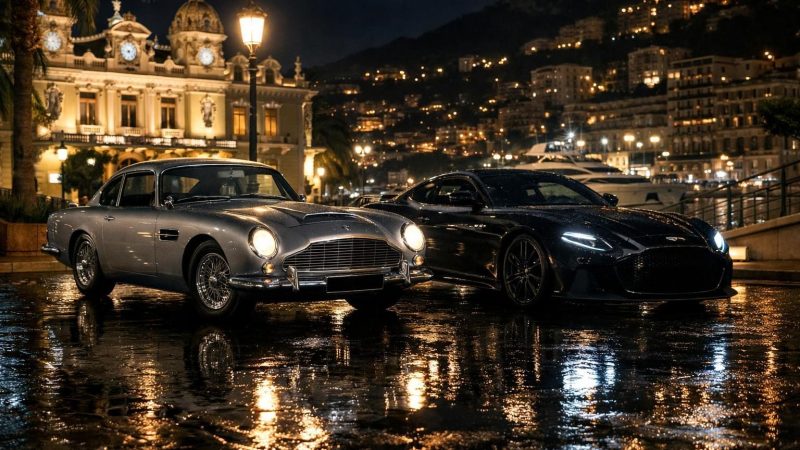
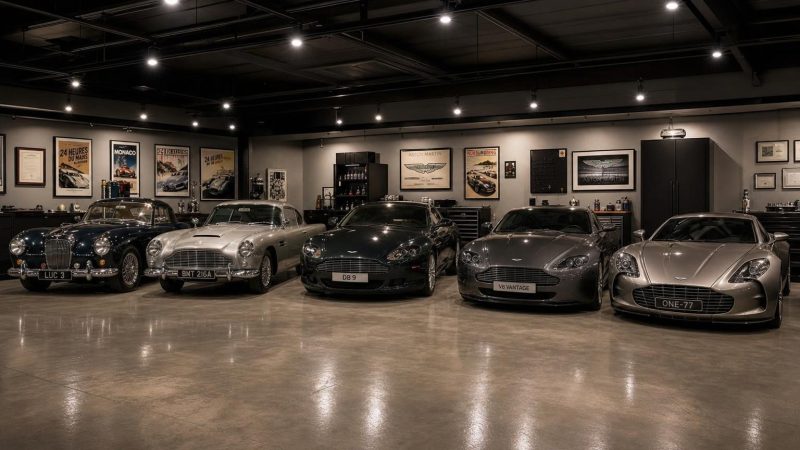
DBS V12, variantes, éditions limitées et conseils de contrôle après 80 000 km : notre guide précis pour choisir un exemplaire 2007-2012 avec discernement.
DBS V12, or how to combine grand touring and discernment: here is a highly practical guide to steer a 2007–2012 purchase, from which variants to favour and which limited editions to seek out, to the inspection points after high mileage. No hyperbole, just the necessary precision and sources to help a collector select the right example — and understand why some deserve a premium.
DBS 2007: how it replaced the Vanquish S and what the VH platform really changes
The handover is clear: according to Wikipedia, the DBS took over in 2007 as the flagship model of the range, succeeding the Vanquish S assembled at Newport Pagnell. The official debut came on 16 August 2007 at the Pebble Beach Concours d’Elegance, marking a symbolic transition between two eras for the brand. The styling sharpens the DB9’s silhouette, but the intent is clearly more sporting, without losing the propriety of a grand tourer.
Behind the bodywork, the structure follows the VH (Vertical/Horizontal) logic already proven on the DB9. Nicholas Mee notes that the DBS is an evolution of this platform, a guarantee of a modernised and rationalised technical base. In short: the VH’s strengths in rigidity and industrialisation, with chassis and powertrain tuning aimed at greater involvement. The result is that blend of elegance and precision Aston aficionados seek.
Aston Martin’s official site now classifies the model under “past models”, confirming its place in the contemporary Gaydon lineage. Positioned above the DB9 as heir to the Vanquish S, the DBS V12 serves as a technical showcase and a distillation of the house style in the late 2000s.
The 5.9-litre AM08 V12 with 510 PS: mechanical watchpoints after 80,000 km
The heart of the DBS V12 is the AM08: a 60° 5.9-litre V12 rated at 517 PS (510 hp) at 6,500 rpm, per Wikipedia. The 6-speed manual from Graziano was standard at launch; ZF’s Touchtronic 2 automatic arrived in 2008. With the latter, the stated weight reaches 1,765 kg, again according to Wikipedia. These facts frame the grand tourer’s road use and expected endurance.
Beyond 80,000 km, a savvy collector first checks the coherence of the service history and routine replacements, point by point. Without speculating, a useful reminder: a naturally aspirated V12 and a sporting transmission, manual or automatic, demand consistent maintenance with invoices to match. On a DBS V12, this traceability is a powerful indicator of prior owners’ care.
The sources available here do not detail recurring weaknesses specific to the model. Best practice is therefore to have the AM08 engine, the gearbox (Graziano or ZF depending on the car) and ancillary systems inspected by an Aston Martin specialist, complemented by an extended road test. The goal is simple: confirm mechanical health in real-world conditions and verify crisp gear engagement or the logic of the automatic management.
One last point: gearbox choice affects dynamic feel and stated mass. A buyer seeking a particularly involving DBS V12 will often prioritise the manual configuration, while a long-distance driver may prefer the Touchtronic 2 for its ease. Two philosophies, one V12: at this level, condition and set-up take precedence.
Coupé, Volante and manual gearbox: why the value gap is wider than it seems
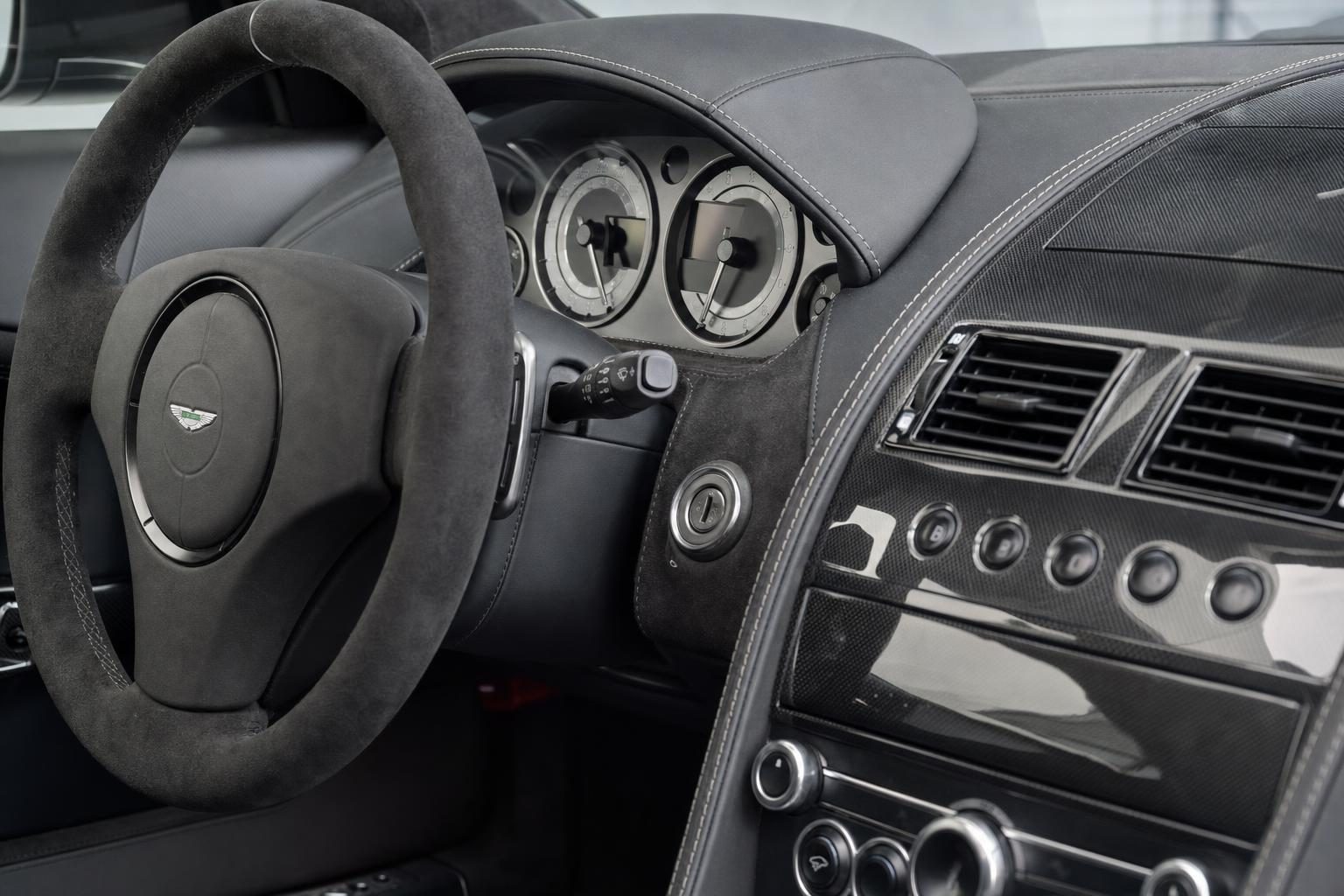
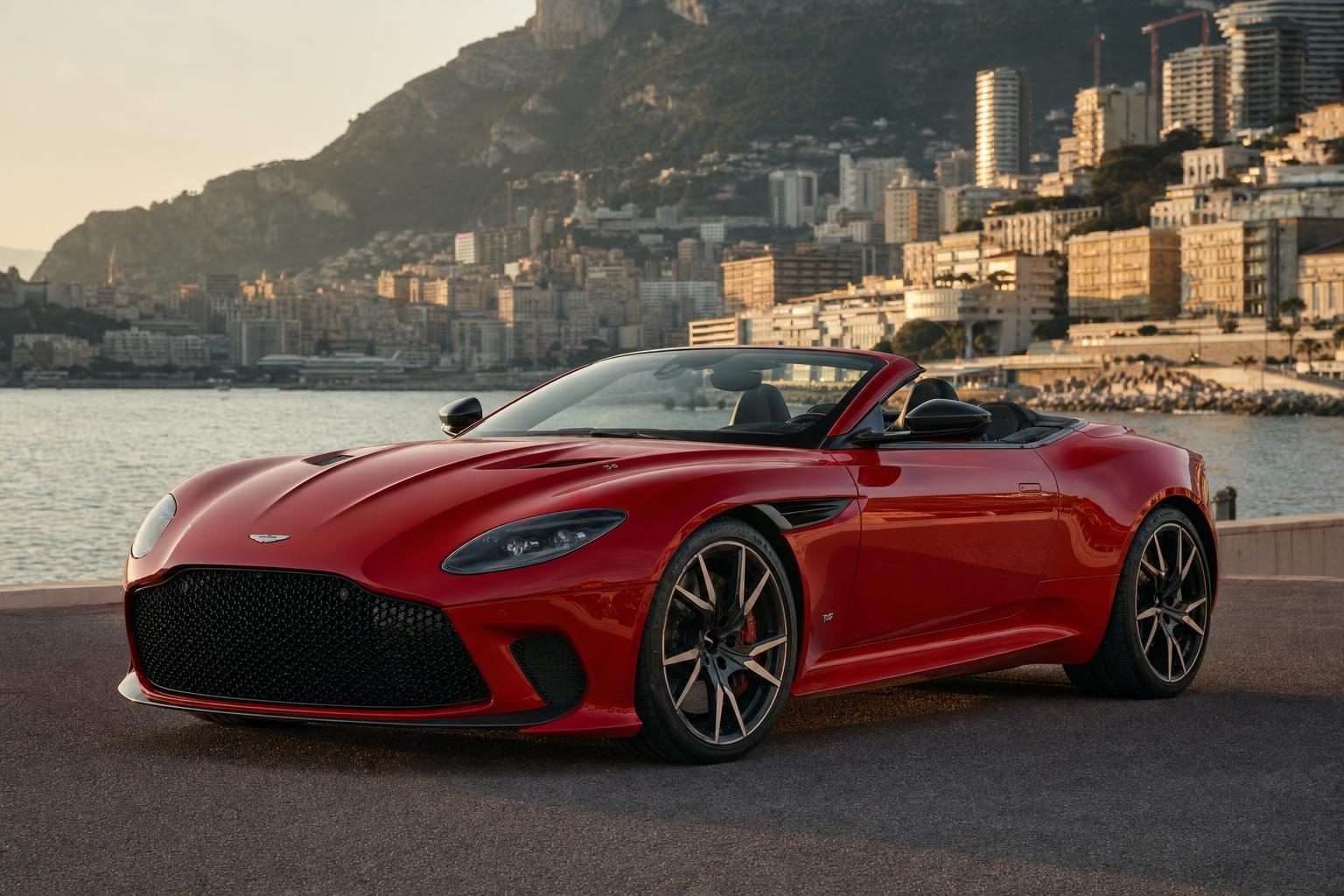
On the market, disparities come down to relative rarity and collector appetite. According to Nicholas Mee, a Volante with the manual gearbox is the most desirable configuration, with an estimated c.10% premium over an equivalent coupé. This preference reflects the uncommon pairing, at the time, of a Grand Tourer convertible and a manual shift — a rare combination at Aston in the mid-2000s.
Even so, the coupé retains favour with purists of the line and more regular use, not least because the DBS V12 inherits the DB9’s VH platform, appreciated for its balance. The two body styles address distinct briefs. The buyer will arbitrate between the engagement of the manual, the calm versatility of the automatic, the purity of a fixed roof or the charm of a Volante.
This value gap can widen further when you add low mileage, a spotless history and a restrained yet sought-after interior specification. In other words, the premium is not only about body style and gearbox: it adds up across a set of criteria, where each detail makes a (small) difference when discussing a DBS V12.
UB-2010, Carbon Black and Dragon 88 limited editions: the 3 series that deserve a premium
Special series are a collector’s favourite hunting ground. The UB-2010, per Wikipedia, is limited to 20 coupés and 20 Volante. The Dragon 88 Volante, unveiled in Beijing in 2012 and limited to 88 units, is also mentioned by Wikipedia. These restricted runs create intrinsic rarity, which the market generally translates into higher valuations than for a standard DBS V12.
Carbon Black often features in enthusiast conversations, but the facts available here do not detail its presentation or production. Lacking cross-checked figures, let’s stick to a golden rule: for a “collectable” series, the authenticity of the original specifications and the presence of distinctive elements (colours, veneers, dedicated finishes) must be documented in the car’s file. That is what underpins a legitimate premium.
UB-2010 or Dragon 88, the common thread is traceability. A file of invoices and services, backed by official documents, supports value. The Aston Martin page for the DBS and DBS Volante and Nicholas Mee’s dedicated DBS 2007–2012 guide are good starting points to verify a configuration.
In practice, a well-preserved limited-edition DBS V12 in an attractive colour, with few owners and a tidy history, will tick most boxes to justify a premium. It’s understated, but effective.
What Casino Royale did to values and how to spot a car in a rare colour
Image matters. In Casino Royale (2006), prototypes based on the DB9 played the on-screen role, as production of the DBS V12 predated its official release, Wikipedia notes. The famous barrel roll — a Guinness record with seven rolls, according to Nicholas Mee — etched the future flagship’s sharpened silhouette into the collective imagination.
Inevitable halo effect: the whole lineage benefitted. Even so, the value of a given example remains a matter of specification and quality more than cinema. On this point, Nicholas Mee notes that certain rare colours — Toro Red, Midnight Blue, Chiltern Green — can command a 5–10% premium. A nuance that helps separate two otherwise identical DBS V12s.
Spotting a desirable hue is not enough: ensure it matches the original order. Plates, service books and configuration records will help. Our file on the 2007 DBS, like our pages on its elders and technical cousins — Vanquish Mk1 and DB9 — offer the context you need to read a listing properly and place a specification.
In short, the 007 shockwave exists, but it never exempts you from rigour: provenance, options, condition, history and colour coherence remain the arbiters of lasting value for a DBS V12.
Conclusion — choosing your DBS V12 with eyes open
Declared replacement for the Vanquish S and an evolution of the DB9’s VH platform, the DBS V12 should be bought methodically. Clear spec sheet (AM08 5.9 litres with 510 PS, Graziano manual as standard, ZF Touchtronic 2 from 2008, 1,765 kg for the automatic per Wikipedia), serenity in use and complete traceability: this trio should guide selection.
On values, a manual Volante generally commands about 10% more than a comparable coupé, per Nicholas Mee. Rare colours can add a further 5–10%. The UB-2010 (20 coupés, 20 Volante) and Dragon 88 Volante (88 units), both referenced by Wikipedia, deserve priority attention; Carbon Black requires careful documentary verification on a case-by-case basis.
To dig deeper, cross-check the Wikipedia dossier on the 2007 DBS with the official page for the DBS and DBS Volante. With these markers, you’ll buy your DBS V12 with the blend of elegance and sang-froid that befits an Aston.