DB5 Vantage: expert guide to the three key mechanical changes, identification methods, ZF gearbox and impact on values versus the standard DB5.
The DB5 Vantage is often reduced to a flattering power figure, but its specifics deserve more than a shrug. Here is a clear, sourced guide to identify this 1964–1965 variant, understand its three major mechanical changes and place its impact on values against the standard DB5.
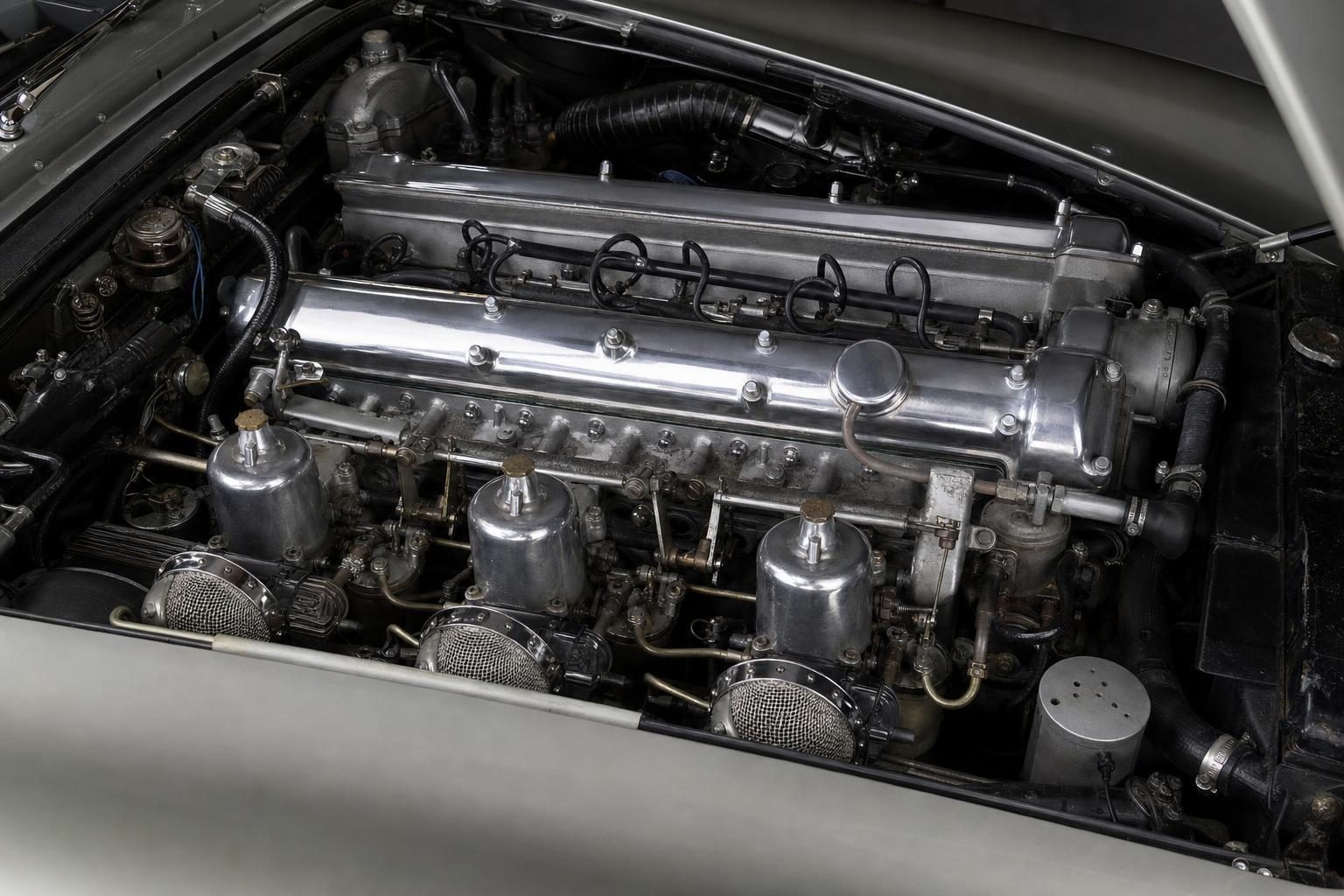
The triple SU HD8 carburettor setup: the change that defines the Vantage without altering displacement
First indisputable marker: the DB5 Vantage adopts three SU HD8 carburettors instead of the two units on the standard model. According to Wikipedia (Aston Martin DB5), this setup distinguishes the variant without touching displacement. The approach is typically British: don’t rewrite the whole score, enrich the orchestration. The result is a richer fuel mixture supply, the sine qua non for a fuller engine at high revs.
This configuration, combined with the other Vantage changes, lifts output to around 314 PS (235 kW), versus 282 PS for the standard DB5 (source: Wikipedia). The gap is far from trivial in real-world use. That helps explain why this limited-production version draws the attention of methodical collectors rather than merely gadget lovers.
To the eye, the presence of three SU HD8s may seem obvious. In practice, specialists check the overall coherence: installation, manifolds, and correspondence with period documentation. AMOC registers, cited by Wikipedia, note that about 65 examples were assembled, which makes any inconsistency particularly suspect on a claimed Vantage.
For general model context, our detailed DB5 profile quickly reframes production changes from August 1963 to September 1965 (1,021 examples in total, per Wikipedia).
More aggressive camshafts and higher compression ratio: what the official spec sheet didn’t spell out
Beyond the carburettors, the Vantage spec includes sportier-profile camshafts and a compression ratio raised to 9:1 (source: Wikipedia). Aston Martin did not always make much of this in period communications, but these are precisely the two changes that explain the freer-revving character and the “liberated” engine feel sought by the most discerning clients.
For authentication, these points are less visible than the trio of SU HD8s. They require either solid technical documentation, or disassembly and measurement. Hence the importance of cross-checking: coherence between carburettors, cam profiles and stated compression strengthens the likelihood you’re looking at a genuine DB5 Vantage rather than a later conversion.
The jump to around 314 PS does not come from a single magic “trick”, but from a coherent ensemble where intake, timing and compression work in concert. The subtlety lies in spotting whether the factory balance has been respected. Again, the rarity of Vantages (about 65 per AMOC registers cited by Wikipedia) calls for thorough due diligence.
To revisit the technical heritage leading to this calibration, it’s useful to compare these choices with the DB Mark III technical decisions, a pivot in the inline-six’s evolution.
The optional ZF 5-speed gearbox: why 1964 buyers did or didn’t choose this transmission
Another key element of the 1964 brief: the ZF 5-speed gearbox appears as an option, an alternative to the David Brown 4-speed (source: Wikipedia, Aston Martin DB5). This availability applies to the DB5 as a whole and naturally interests the more potent variant. The period choice was not just a brochure line; it reflected intended use.
Public archives do not settle the precise motivations of each buyer. Still, the very offer of this ZF 5-speed signals an expectation of greater refinement and finer ratios, in step with the Vantage’s added verve. Conversely, keeping the 4-speed reflected a different logic, equally respectable at the time.
When assessing a DB5 Vantage, an expert will note the transmission fitted, its documentary concordance, and whether it credibly fits the car’s overall configuration. The point is not to dogmatically rank the two gearboxes, but to verify the car’s historical and technical coherence.
To place the question within the model’s genealogy, the official page for past models is useful: Aston Martin – DB5 past models.
About 65 examples: how to identify an authentic Vantage and what specialists check
The rarity is documented: around 65 DB5 Vantages appear in AMOC registers, according to Wikipedia. This statistic serves as a quiet warning: every car claimed as such deserves a methodical examination. The first step is simple to state, harder to execute: verify the triple SU HD8 intake and the associated mechanical coherence (camshafts, compression).
Second step, traceability. Specialists cross-check the history against public sources, including AMOC registers relayed by the specialist press via Wikipedia. Contradictions between visible configuration and stated history are red flags. Conversely, the convergence of clues — mechanicals, period documents, continuity of ownership — is reassuring.
Third step, the quoted power. The 314 PS vs 282 PS gap is not just a slogan: during recommissioning or careful tuning, the engine’s behaviour should reflect the specification. Without chasing tenths of a horsepower, the intake/cams/compression ensemble should speak with one voice.
For a broader historical panorama (production August 1963 to September 1965, 1,021 units), our article on the complete history of the DB5 resets the markers, far from the sole cinematic limelight.
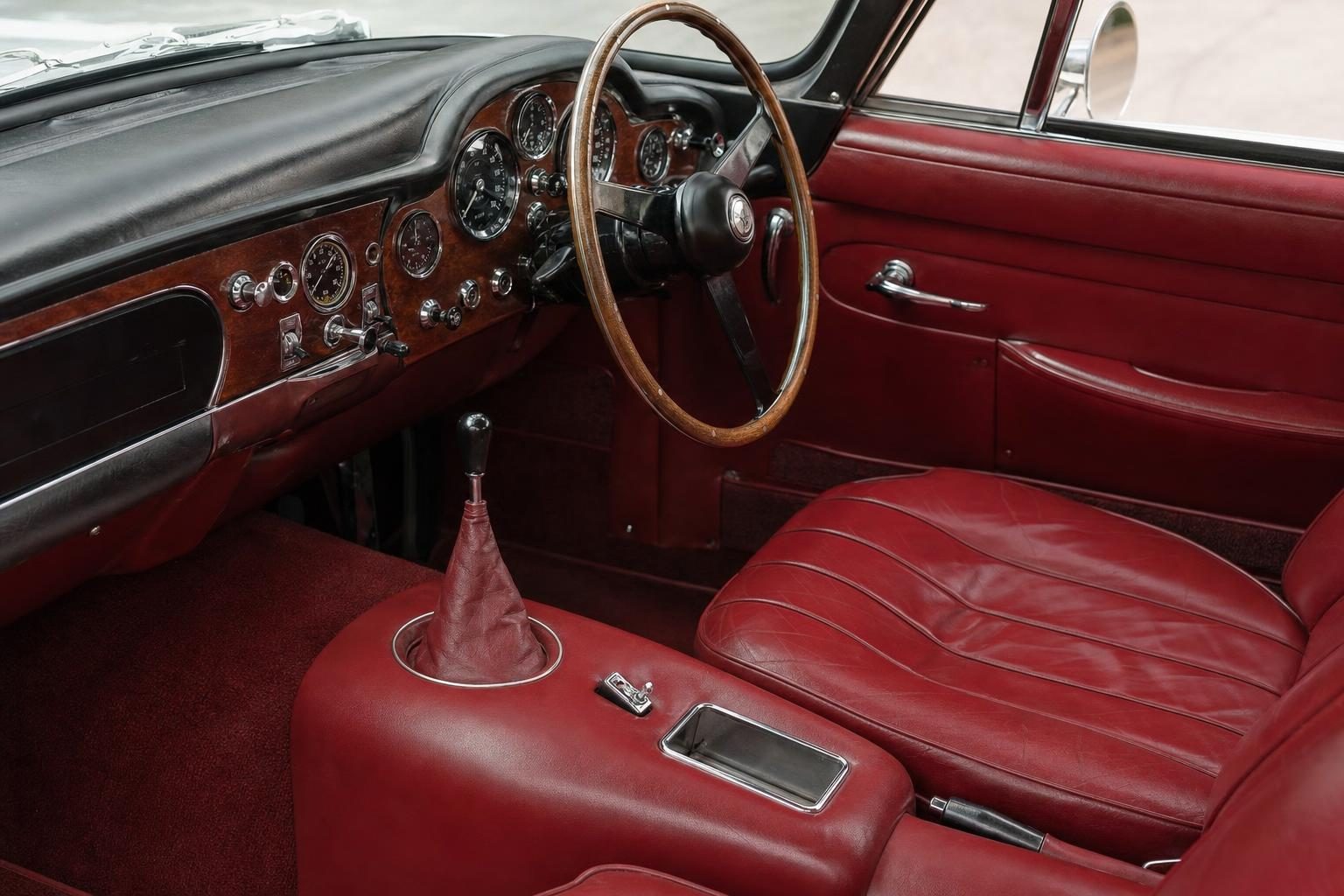
Current values of a DB5 Vantage versus a standard DB5: divergence among auction houses
On the market, recent public sales confirm a significant premium for the DB5 Vantage over the standard, while reaffirming an immutable principle: condition and provenance come first. Results published by RM Sotheby’s and Bonhams between 2022 and 2024, cited in the FACTS, show marked differences depending on restoration quality, specification authenticity and the clarity of the file.
There is no immutable “list price”. Auction houses prioritise exemplary cars: a well-documented Vantage, in a configuration consistent with its status, will draw more competitive bidding than a hazy example. Valuation disparities therefore mirror the diversity of individual histories.
To follow hammer prices and spot trends, RM Sotheby’s dedicated search for DB5 Vantages offers a useful starting point. For technical history and overall DB5 production, the Wikipedia (Aston Martin DB5) article quickly recontextualises the baseline data.
In short, values follow rigour: the more solidly attested and mechanically homogeneous the Vantage definition, the more favourable the auction curve. That’s a constant confirmed by observed sales, without need for theatrics.
Conclusion — DB5 Vantage: the three points that make the difference, and the value that follows
Three elements define the DB5 Vantage and guide its evaluation: three SU HD8s instead of two, more aggressive camshafts and 9:1 compression. Together, they raise output to around 314 PS (versus 282 PS for the standard) and underpin current market appetite for this rare configuration — about 65 examples per AMOC registers cited by Wikipedia. The optional ZF 5-speed, offered from 1964, completes the set of technical choices to document.
For those seeking correctness rather than folklore, identifying a genuine DB5 Vantage rests on mechanical coherence and traceability. It is precisely this duo that, at auction, explains the premium over a standard DB5. In a world where every detail counts, the Vantage reminds us that good tuning — and good sources — beat a long tirade.