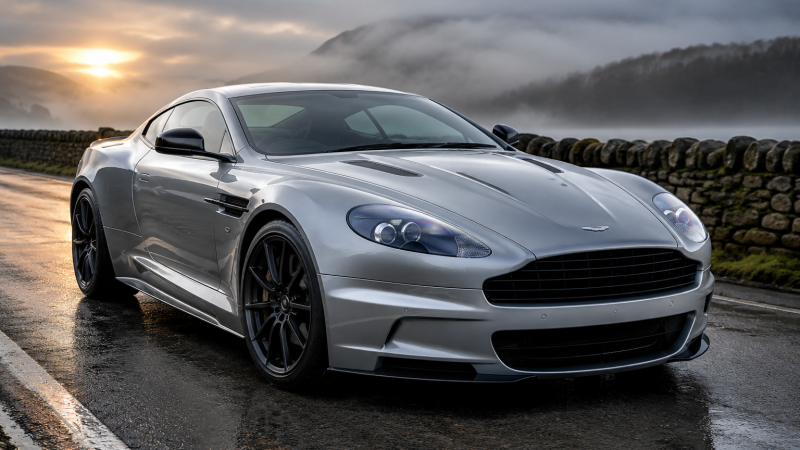
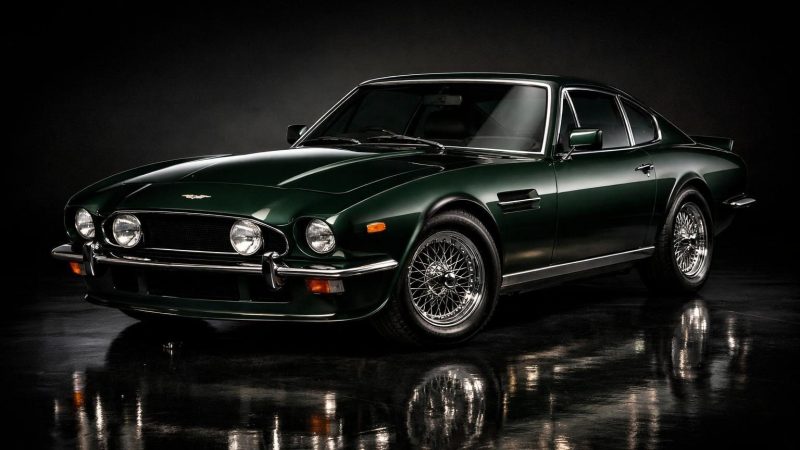
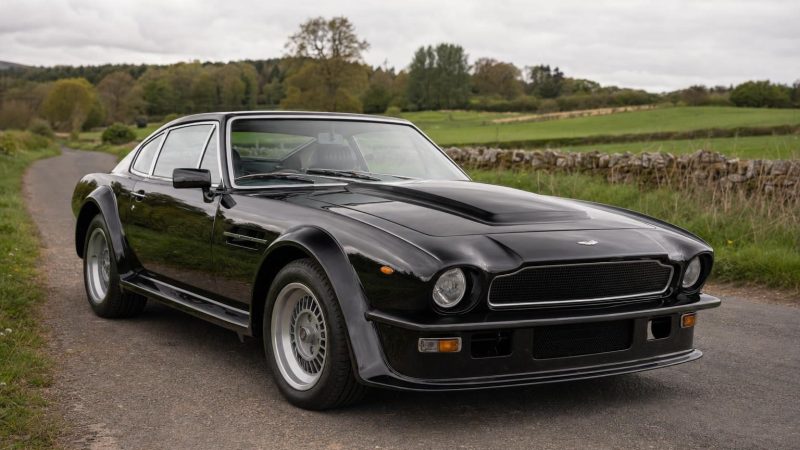
V8 Vantage V600, ultime dérivation du V8 5,3 l à compresseurs, 40 exemplaires environ et 200 mph revendiqués : un jalon discret et capital de Newport Pagnell.
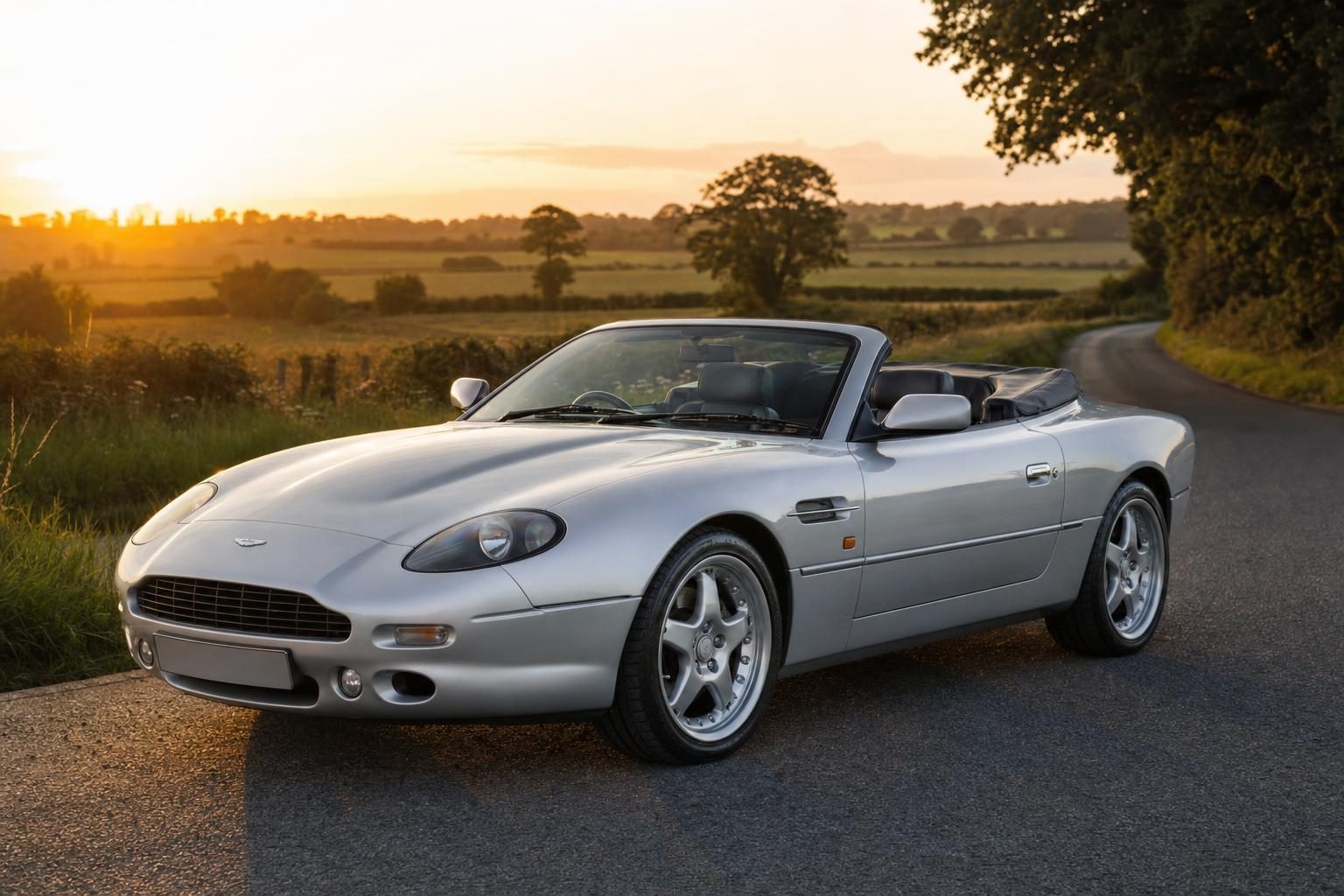
V8 Vantage V600: behind these three words lies a distillation of Newport Pagnell in 1998, when the Works shop pushed the 5.3-litre V8 to 600 PS (bhp) and claimed 200 mph. Here’s why this very particular model year, built in just a few dozen units, matters more than it’s given credit for in the marque’s history.
The 5.3-litre twin‑supercharged V8: how Newport Pagnell extracted 600 PS from a 1960s block
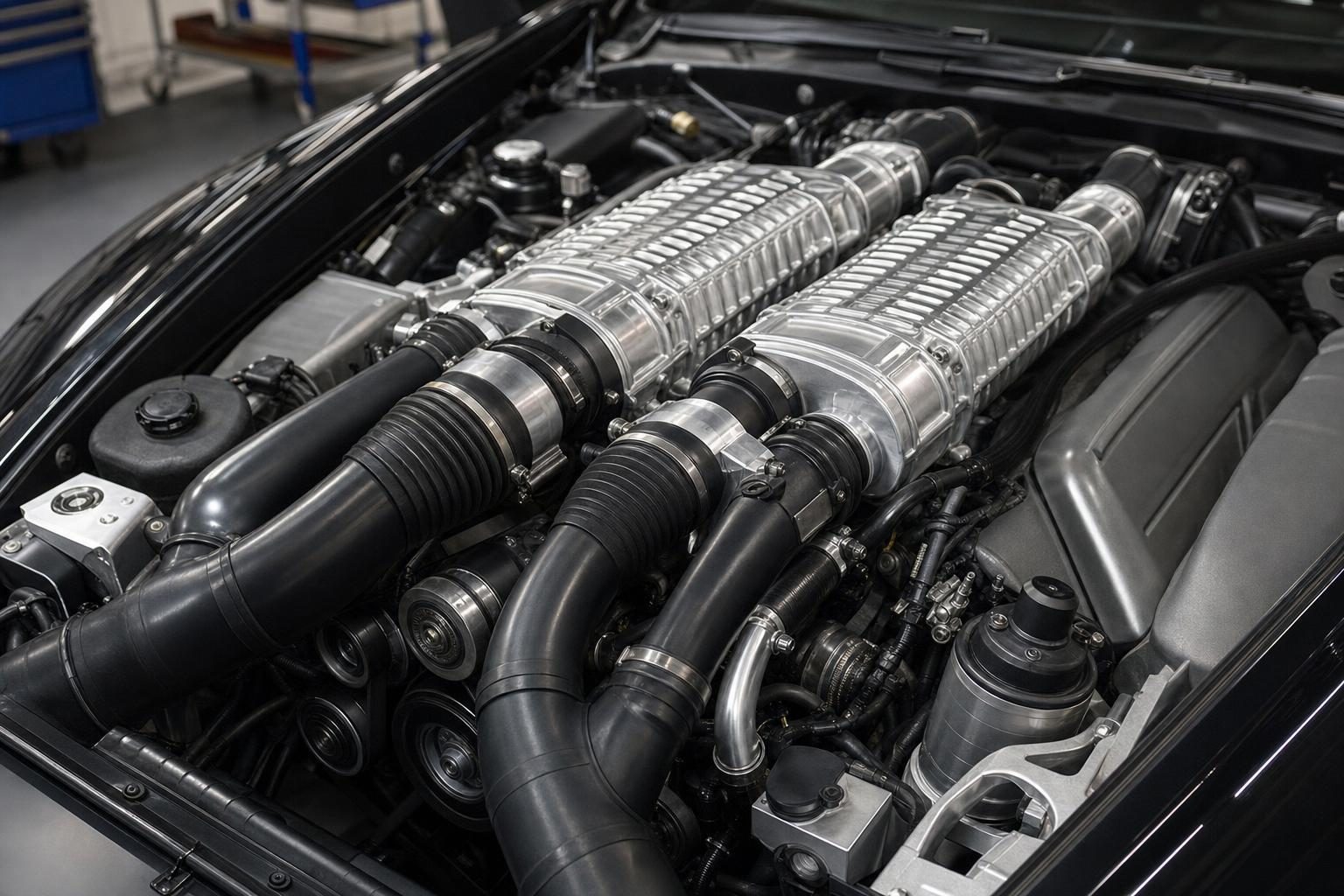
At the heart of it is a 5.3-litre V8 whose architecture dates back to the 1960s, derived from the lineage conceived by Tadek Marek’s team. In the late 1990s, Aston Martin Works at Newport Pagnell fitted it with two Roots superchargers and claimed 600 PS (bhp). This figure, commonly reported by the specialist press, can vary depending on the cited standard: some sources mention 600 PS DIN, which is not strictly equivalent. The essence, however, lies elsewhere: a “family” V8 taken to a level of boost rarely reached by an engine of such early origin.
The choice of Roots superchargers is no accident. It prioritises immediate torque and low‑end response, making the big coupé surprisingly lively despite its heft. The whole approach fits a house tradition: improve, refine, supercharge if necessary, rather than reinvent everything. In 1998, this pragmatism made Newport Pagnell’s blown V8 a brilliant final derivation of the line begun three decades earlier.
This technical turn didn’t come out of nowhere. It extends the long thread of the AM V8, whose history, evolutions and refinements merit a look at our dedicated feature on the genesis of the first roadgoing V8. The V600 stands as the peak in boost pressure and power, within a logic of cumulative engineering that’s typically Newport Pagnell.
About forty examples and two body styles: what the production numbers reveal
Production of the V8 Vantage V600 remains discreet. According to Aston Martin Works, you should count around forty cars assembled between 1998 and 2000. Other tallies published in the specialist press vary, mentioning between 38 and 45 examples. Such uncertainty is nothing unusual at Newport Pagnell, where personalisation and short runs readily blur the line between variant and standalone model.
Two silhouettes coexist: the coupé and the Volante. The former embodies the archetype of the fast GT of the time, while the latter transposes mechanical excess into a more hedonistic reading. The small volume explains the V600’s documentary discretion, a “quiet classic” par excellence: rare enough to be little known, striking enough to fascinate those who encounter one.
Beyond the counting, these figures express the philosophy of the place. Newport Pagnell operates more like a workshop than a factory: small series, bespoke finishes, and a direct relationship with clients. This modus operandi, later seen in the Continuation Series, is already evident here. For those wishing to place this production within the broader AM V8 family and its relatives, our guide to the AMV8 versions clarifies the timeline and body specifics.
322 km/h: what this top speed meant in 1998 against the competition
The official figure comes in at two hundred miles an hour, or about 322 km/h. In 1998, that placed the V8 Vantage V600 among the fastest production cars in the world. The symbolism is powerful: a GT built around an engine architecture born in the 1960s reaching speeds then reserved for a handful of more radical icons.
This claim is more than a data‑sheet curiosity. It speaks to the effectiveness of the twin‑supercharger + big V8 pairing, and Newport Pagnell’s ambition to remain in the very‑high‑performance conversation on the threshold of the 2000s. In other words, the historic house proves that, in its own way, it can hold its own against a rising generation of contemporary supercars.
Context matters too. The late 1990s saw new design philosophies taking shape, lighter and more digital. Here, the traditional method triumphs: boost and torque, a chassis sharpened by iterations, and pragmatic aerodynamics. Top speed, more than 0–100, embodies this very British vision of rapid grand touring.
The V600 as a tipping point between Newport Pagnell and the Gaydon era
The V600 appears as the last interpretation of the large “big block” V8 before the shift to the powertrains and platforms of the Gaydon era. It was assembled at Newport Pagnell, the historic site later set to focus on restorations, heritage cars and Continuation programmes. In this sense, it marks a handover: a technical swansong, but also a reaffirmation of the craftsmanship that would define the site’s future singularity.
This transition illuminates the V600’s place in the in‑house chronology. It does not oppose the modernity to come; it synthesises tradition to better pass it on. When the new Gaydon‑aligned generation arrived, starting with the V8 Vantage of the 2000s, another chapter opened. To gauge this shift, our presentation of the 2005 V8 Vantage sets the changes in concept and engineering in perspective.
In retrospect, Newport Pagnell’s role becomes clearer: a workshop of excellence which, after the V600, would refocus on heritage care and special series. You can read a coherent brand strategy here, confirmed by official heritage activity and product announcements. The news published by the manufacturer on its site and the prominent presence of Aston Martin Works (dedicated site) attest to this.
Conclusion — why the V8 Vantage V600 remains a discreet yet essential milestone
In the end, the V8 Vantage V600 brings together three simple, telling truths. An engine designed in the 1960s lifted to 600 PS thanks to two Roots superchargers; a top speed of around 322 km/h which, in 1998, placed it among the front‑runners of production cars; and production of about forty examples, coupés and Volantes combined, rare enough to fuel some discrepancies in the tally.
If this model had to be defined in a single sentence, it would be this: the ultimate, high‑throughput Newport Pagnell—both a technical summit and a handover to Gaydon. In a marque where continuity counts, it links yesterday’s engine craftsmanship to tomorrow’s measured industrialisation. To broaden the historical context, the model’s dedicated page on Wikipedia (Aston Martin V8) offers a useful panorama of generations and evolutions.
Enough to justify its status as a classic less documented than it deserves. And a reminder, quietly but surely, that at Newport Pagnell they knew how to bring a score to a close with panache. The V8 Vantage V600 is the rolling proof.