DB9 Volante, three key engineering choices between 2004 and 2016: rigidity, transmission and performance. A clear guide to distinguish the best years.
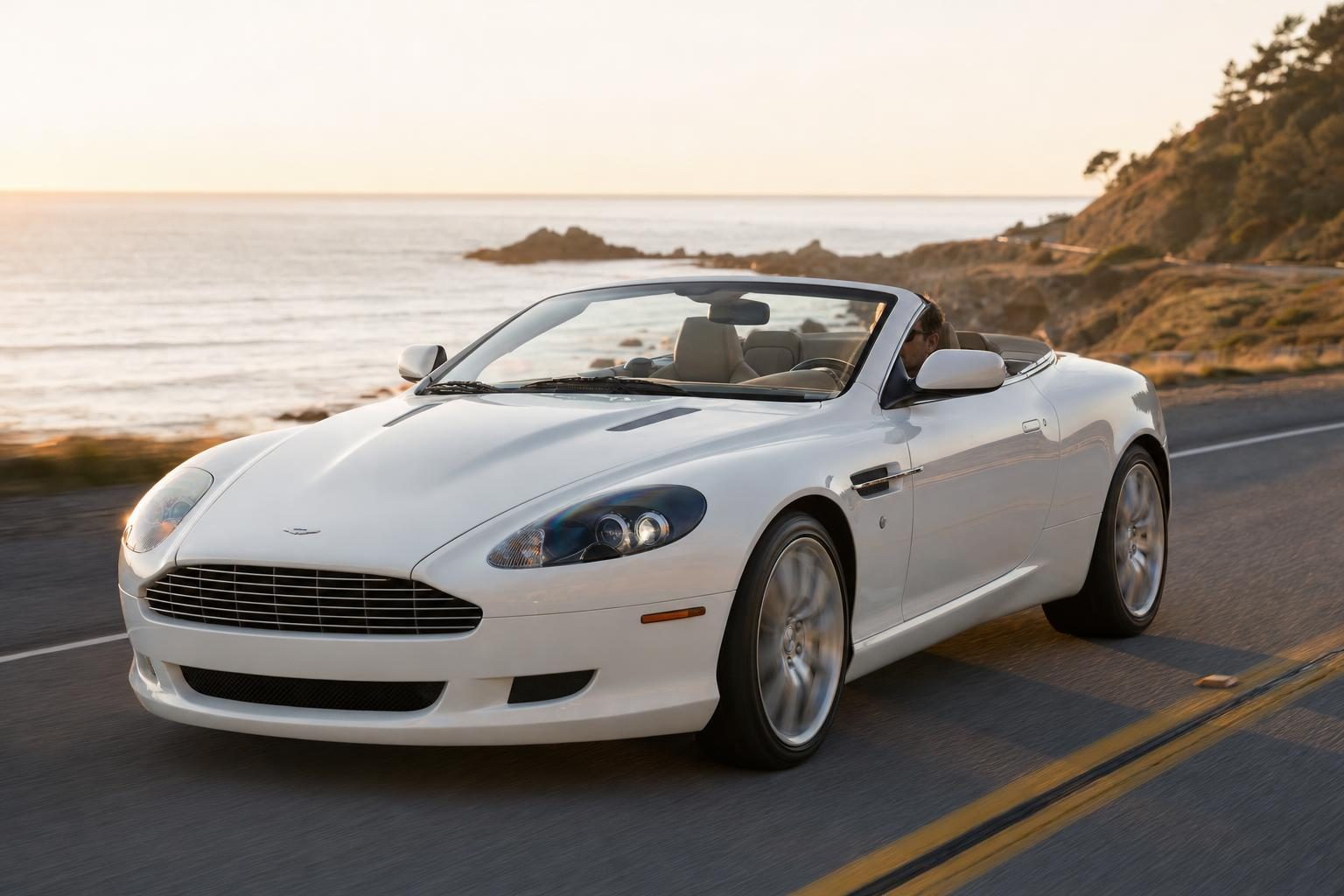
DB9 Volante: three technical compromises and unaltered elegance. Removing the roof from the GT born of the VH platform required precise engineering choices, from structural reinforcement to dynamic tuning, with a measured impact on the spec sheet and industrial timeline. Here, in context, is what sets the Volante apart from the coupé, from its reveal in early 2004 to the last mechanical updates.
The VH platform without a roof: what losing 120 kg of bodywork does to torsional rigidity
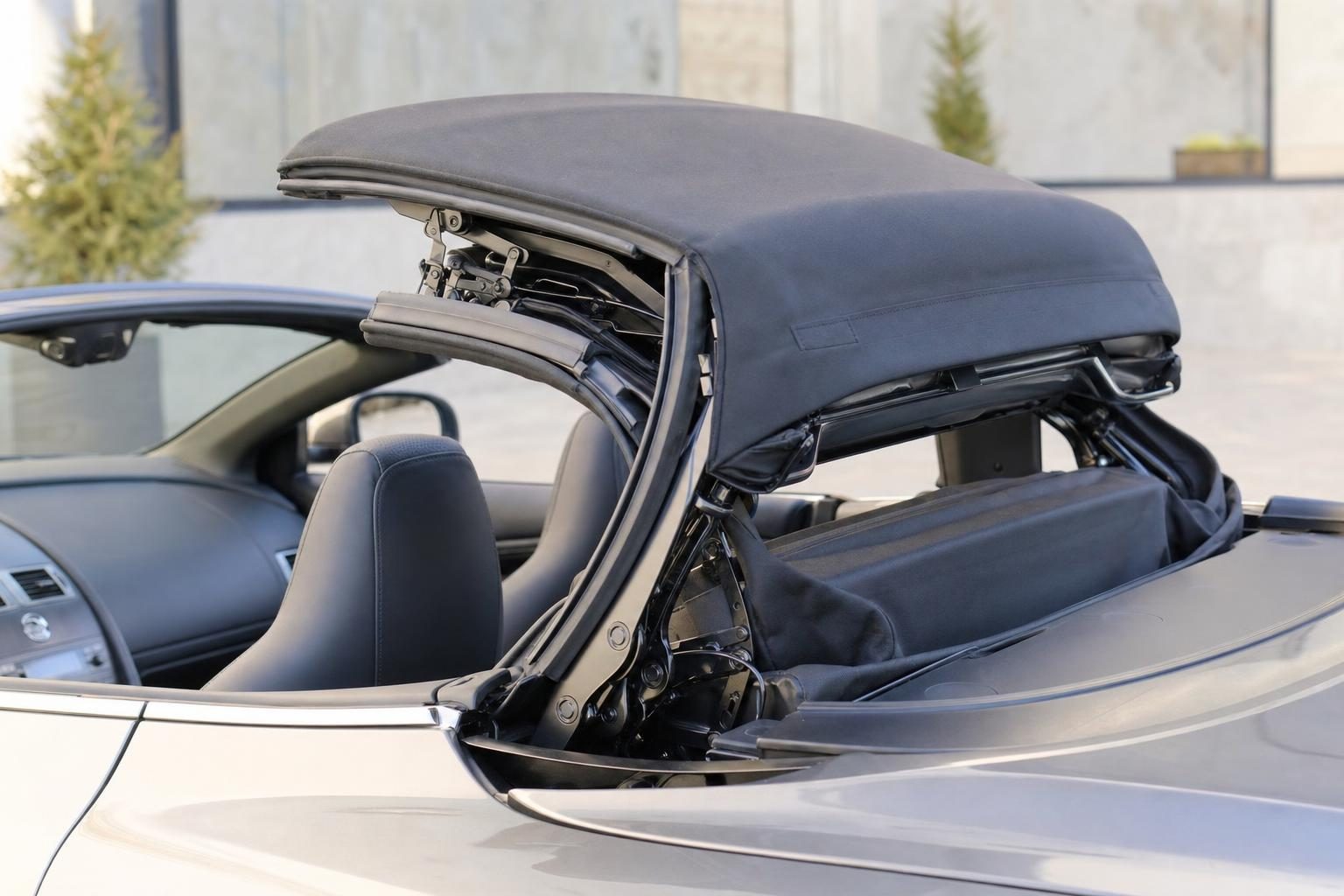
The loss of a fixed roof mechanically weakens a bodyshell, as torsional rigidity depends largely on the continuity of the roof. In the case of the DB9 Volante, available sources do not quantify the exact mass “saved” by removing the roof, and no official rigidity figure is published here. What is documented, however, is the addition of around 120 kg of reinforcements specific to the convertible to compensate for the lack of a roof (source: Nicholas Mee).
This point is essential to understand the model’s DNA: the aluminium VH platform, designed for modularity, gave the coupé a light and rigid base. On the Volante, the aim was to preserve straight-line stability and refinement in line with an Aston Martin GT, accepting targeted extra weight rather than compromising steering precision.
The result, according to Nicholas Mee, is a car that retains “a lot” of structural rigidity despite the open architecture. In other words, the Aston loses the roof but not its composure.
Reinforcing the Volante chassis: the structural elements added that the brochure didn’t mention
The key figure, again, is this addition of around 120 kg dedicated to DB9 Volante reinforcements (source: Nicholas Mee). While the part-by-part detail is not listed in the brochure, the usual engineering for this type of conversion implies reinforced sills, additional crossmembers and specific mounting points for the roof mechanism. The intention was not to “hide” the lack of a roof: it was to strengthen the load paths to keep behaviour consistent with the coupé.
This technical choice is reflected in the performance and, more subtly, in the quality of vibration isolation. The heavier Volante filters differently but remains a high-speed GT. The aluminium architecture of the VH platform across two decades and six models proved its adaptability, and the Volante is a well-judged demonstration.
Recall the context: revealed at the Detroit Auto Show in January 2004 and put into production in February 2005 (source: Wikipedia DB9), the DB9 Volante was integrated into a dense industrial cycle, with perceived quality required to match the coupé.
The Touchtronic transmission and gearbox choice: why the Volante long shunned the manual
The data available here do not detail gearbox split on the DB9 Volante or commercial preferences, and do not allow manual volumes to be stated. What we do know, however, is the engine character: a naturally aspirated 5.9-litre V12 with 450 hp and 570 Nm at the outset (source: Nicholas Mee). This generous torque naturally suits a grand touring approach, prioritising progressiveness and smoothness.
In that spirit, the DB9 Volante embraced the role of a GT convertible rather than a track tool. The more supple chassis calibration and the additional inertia linked to structural reinforcements favour ratios and shift logic tuned for smoothness, without, on the basis of the sources here, quantifying the presence of a manual gearbox in Volante production.
Over its career, the power increase with the AM11 to 517 PS and 620 Nm (source: Aston Martin – DB9) reinforced that effortless torque-led character. Again, the positioning is clear: prioritise ease, reserve of shove and overall coherence rather than overt radicalism.
Coupé versus convertible performance: 0–60 mph and top speed, what weight does to the numbers
According to Nicholas Mee, the DB9 Volante achieves 0–60 mph in about 4.9 s, a tenth or two more than a like-for-like coupé, and retains a top speed north of 180 mph. The difference is chiefly down to mass: the reinforcements added to compensate for the lack of a roof explain these measured gaps, more noticeable from a standstill than at high speed.
In real driving, the hierarchy remains the same: the coupé benefits from lower inertia and a naturally stiffer chassis, while the Volante offers a different sensory experience, where the V12 soundtrack counts as much as the stopwatch. It is, in short, a deliberately different philosophy rather than a technical penalty.
The DB9’s long career – 2004 to 2016, for a total of 16,500 units across all versions (source: Wikipedia DB11) – allowed continued fine-tuning. Later mechanical updates, notably the move to 517 PS and 620 Nm (source: Aston Martin), also benefit the DB9 Volante, which gains in reach and ease on long journeys.
DB9 Volante values today: 3-point buying guide to pick the right year
First point: model year and engine. Later versions with the AM11 517 PS/620 Nm engine (source: Aston Martin) offer a welcome extra response without changing the car’s purpose. If you seek the most mechanically resolved DB9 Volante, that’s the most tempting option.
Second point: structural condition and build quality. The Volante carries about 120 kg of reinforcements (source: Nicholas Mee); check the integrity of stressed areas and geometry, and carefully compare dynamic feel with an equivalent coupé to ensure the car keeps its original touch and feel. A cross-check with our DB9 model guide helps place each update.
Third point: fitness for purpose. The convertible’s key numbers – 0–60 mph ~ 4.9 s and >180 mph (source: Nicholas Mee) – say it all: the DB9 Volante is a GT first and foremost. If outright effectiveness is your priority, the coupé keeps the edge; if you want open-air pleasure with the V12 centre stage, the Volante delivers exactly that.
For a full historical overview of the architecture, our feature on the history of the DB9 and the aluminium VH platform puts each version in perspective. Official publications, such as the DB9 media centre, and the page Aston Martin – DB9 allow precise identification of years and specifications.
Conclusion: what the DB9 Volante changed, without renouncing anything
In short, the DB9 Volante traded a roof for around 120 kg of reinforcements and GT-oriented tuning. Performance remains high, rigidity preserved in spirit, and the style… unchanged in its rightness. DB9 Volante: a compromise in the best sense, where engineering makes you forget the lack of a roof without masking the V12’s character.
To place your example and verify specifications, round off your reading with the Wikipedia DB9 entry and official resources Aston Martin – DB9. The VH platform didn’t invent everything, but it handled the art of the convertible rather well.