DBR9 : décryptage des choix techniques et des courses qui ont valu deux victoires GT1 au Mans en 2007 et 2008, du V12 aux carrosseries carbone.
DBR9: here is the technical story rather than the potted legend. From the roadgoing DB9 coupé, Aston Martin Racing built a radical GT1 that took back-to-back class wins at Le Mans in 2007 and 2008. We revisit what was retained, what was completely rebuilt, how the V12’s output was managed, and why the flat floor–diffuser–carbon combination made the difference, not forgetting race strategy and the commercial echo.
From road DB9 to racing DBR9: what remains and what is entirely rebuilt
The lineage is clear but selective: the DBR9 keeps from the production DB9 its architecture and mechanical heart, namely the V12’s engine block, sump and cylinder heads. Everything else is rethought to meet GT1 regulations and endurance constraints. This mechanical continuity ensures shared DNA, but the ancillaries, intake, exhaust, suspension, aerodynamics, electronics and interior all switch to competition mode.
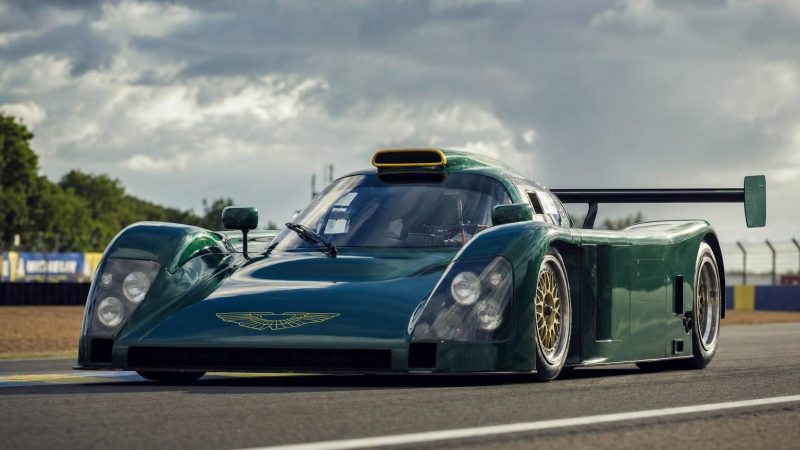
The bodywork moves entirely to carbon fibre — the notable exception being the roof — which cuts weight and offers precious freedom of form to manage airflow. The underbody is flat from the nose to the rear diffuser, a decisive aerodynamic base in GT1 to stabilise the car at high speed and generate downforce without needless drag on the straights. This package turns the civilised coupé into a honed endurance machine.
The approach is anything but anecdotal: keeping the V12 as the backbone is about reliability and torque, while the carbon skin and optimised floor bring the consistency required over 24 hours. It’s GT1 the European way: a chassis born on the road, but executed as a thoroughbred racer, calibrated for endurance.
The Gaydon V12 at a restricted 625 PS, over 750 PS unrestricted: how power is metered in racing
The DBR9’s “Gaydon” V12 is a textbook case in regulatory power management. With two 31.2 mm restrictors, it delivers 625 PS and 746 Nm; without restriction, it exceeds 750 PS. At Le Mans, the game is less about absolute output than the art of delivering it cleanly, for a long time, without overheating the rest of the package. Mapping, intake and exhaust are harmonised to provide usable torque and controlled consumption.
In practice, the V12’s operating window is calibrated to spare the transmission and tyres while allowing crisp acceleration through traffic. Endurance demands steady stints and contained temperatures: the DBR9 prefers a regular breathing pattern over a power spike. This metering, coupled with the grip generated by the flat floor and diffuser, secures the fast Mulsanne phases and high-speed loadings without compromising the hardware.
This framework explains the disciplined driving seen in the two winning editions: exploiting the performance window permitted by the restrictors, avoiding jolts, preserving the cooling system and brakes. The horsepower is there, but domesticated by regulation and endurance.
2007, victory under numbers 007 and 009: the race detail few accounts mention
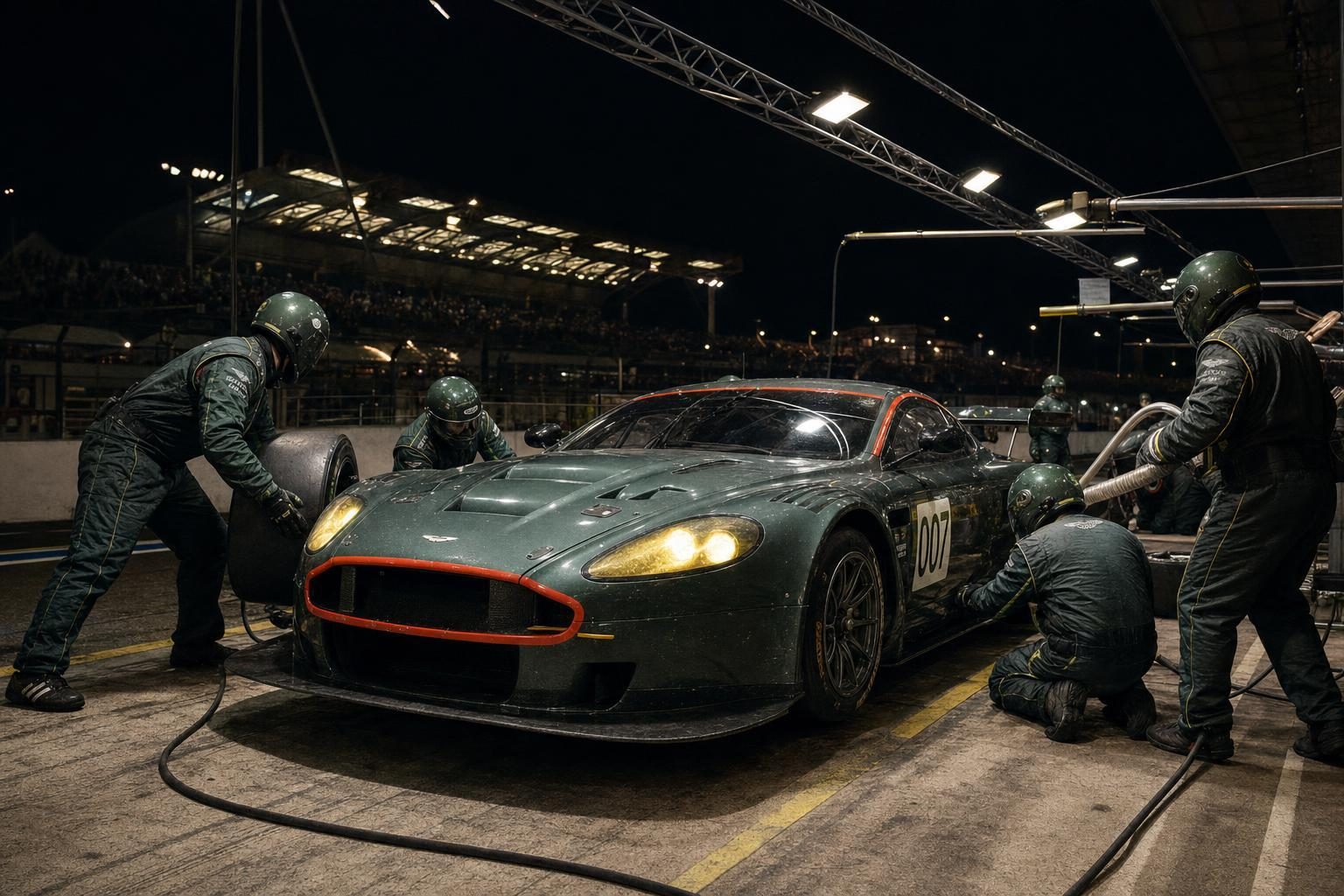
In 2007, Aston Martin Racing entered two DBR9s wearing numbers 007 and 009, an explicit nod to James Bond. Number 009 won GT1, while Larbre Compétition placed another example third in class. Beyond the anecdote of the numbers, the key was consistent pace over 24 hours: the winning car capitalised on measured management, clean pitstops and engine reliability.
The structural technical elements — carbon bodywork, continuous flat floor and rear diffuser — promoted aerodynamic stability that reduced sensitivity to tyre wear. It’s a discreet but cumulative advantage at night and at the end of stints. The V12, capped at 625 PS by the restrictors, delivers linear thrust that simplifies life for the drivers on low-grip patches, especially as the track evolves.
People often remember the 007/009 symbolism; they sometimes overlook the rigour of the operation. The team leveraged a complete package rather than a flash of brilliance. It’s the triumph of a coherent whole, precisely what the chosen architecture — robust V12, carbon everywhere bar the roof, flat floor to the diffuser — was meant to provide. According to Wikipedia, number 009 took the class win, a clear validation of this approach.
2008 with Gulf Oil, winners again: Turner, Garcia, Brabham and strategic continuity
In 2008, number 009 returned, this time in Gulf Oil colours. Darren Turner, Antonio Garcia and David Brabham again took GT1 honours. The story can be summed up in one word: continuity. Continuity of the technical approach — same V12 base, same aerodynamic pillars — and continuity in operation, with assured pace, balanced stints and scrupulous attention to temperatures and brake integrity.
The blue-and-orange livery catches the eye, but it’s mechanical discipline that makes the difference. The flat floor and diffuser generate clean downforce with no major drag penalty. The carbon body soaks up punishment and eases any repairs. In this framework, the restrictor-governed V12 remains a faithful partner for the drivers, able to reel off the kilometres without fading.
The 2008 win wasn’t a random reprise; it crowned a method. The DBR9 confirmed that a GT1 derived from the DB9, lightened and aero-optimised, could dominate its class when the operation stayed calm and clinical. According to the dedicated page, Turner, Garcia and Brabham delivered an unfussy performance entirely in keeping with the car.
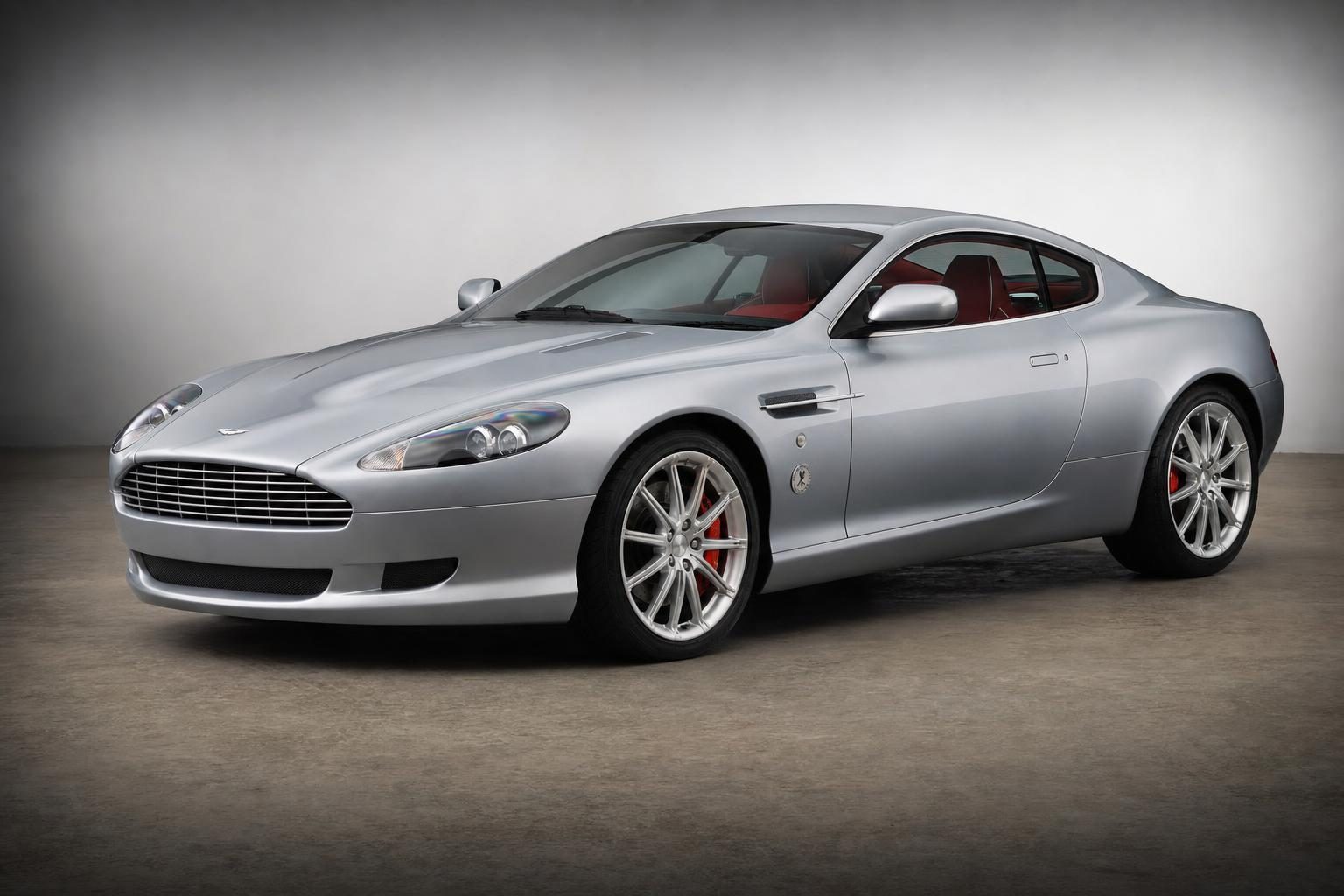
The commercial legacy: the 60-off DB9 LM and the DBS that followed in the same season
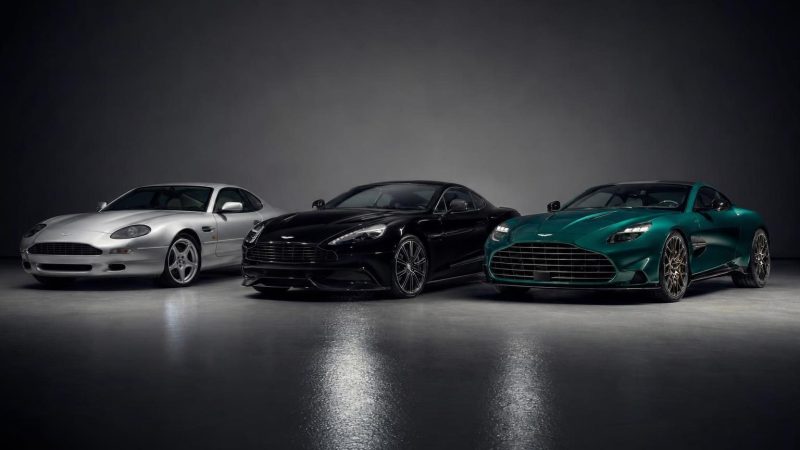
The trophy didn’t remain just ink on a results sheet. To celebrate the 2007 victory, Aston Martin produced the DB9 LM, in Sarthe Silver, limited to 60 individually numbered examples. It’s a direct bridge between endurance and road, a nod to enthusiasts who wanted a homologated memento. This special series underscores the acknowledged kinship between the DBR9 and the road coupé.
The same season saw the arrival of the roadgoing DBS, another take on British grand touring, more oriented towards road performance. While its specifications are beyond this article’s scope, the DB9 LM then DBS sequence illustrates a product strategy that carefully capitalises on sporting momentum. Fans can explore the official model page to place the DBS in the brand’s recent timeline.
These derivatives confirm a simple truth: a Le Mans win, even a class one, creates lasting resonance. It validates the engineering and feeds a brand story that limited editions can translate without bombast. With its short run and dedicated paint, the DB9 LM captures the moment with elegance.
Four technical decisions, one clear result: what the DBR9 really brought
Pulling the thread, four axes dominate. First, the choice to keep the DB9’s V12 as a foundation, then manage it via restrictors to favour 24-hour consistency. Second, the carbon bodywork — roof excepted — to cut weight, add stiffness and sculpt the air. Third, the flat floor–rear diffuser pairing, cornerstone of high-speed downforce. Finally, temperature control, an endurance essential: while public sources detail this less, the package’s coherence — contained power, efficient aero, controlled drag — naturally contributes.
The double GT1 success in 2007 and 2008 wasn’t down to a mere handful of horses or a favourable balance of performance. It flowed from a sum of rational choices built around one principle: making mechanicals, aerodynamics and operations work together. The DBR9, born of the DB9 but rebuilt for racing, is the quiet demonstration.
For enthusiasts wanting to return to reference sheets, the summary of the model’s characteristics and the reminder of the two Le Mans wins confirm these key points without theatrics. The DBR9 didn’t need to overdo it; it simply did the right thing, twice, in the right place.
Conclusion: why the DBR9 remains an endurance lesson
In two editions, the DBR9 proved that a well-conceived GT1, faithful to a robust V12 and carefully honed aerodynamics, can dominate its class without needless fireworks. The restrictors, the carbon bodywork (roof excluded), the flat floor extending to an effective diffuser and constant attention to mechanical health form a coherent whole. It’s that whole which carried the day in 2007 and 2008, then filtered through to the road via the DB9 LM and, more broadly, the range.
To dig deeper into the model and its variants, browse our dedicated presentation of the DBR9 and its racing specifics, as well as the page for the roadgoing DB9 that served as its template, and our feature on the two Le Mans class wins. For external references, the model’s detailed page on Wikipedia in English and its French version provide a useful recap, while the official DBS presentation sheds light on the adjacent product timeline.