Lagonda Taraf, limited run of 200, Arabic name, hand-made aluminium body and Middle East strategy: here are its key paradoxes.
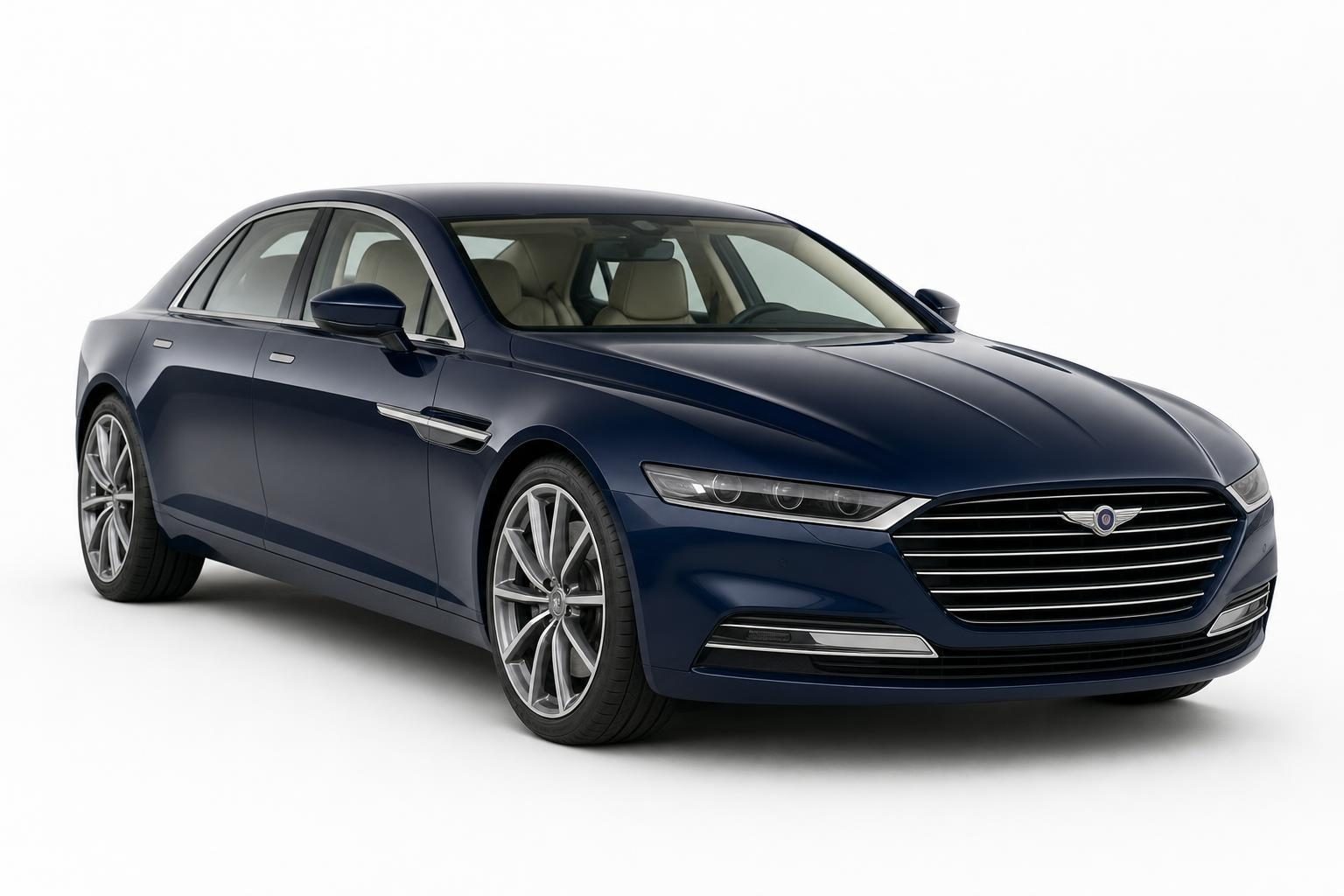
Lagonda Taraf, five paradoxes and as many truths to interest exacting collectors: here is Gaydon’s most discreet saloon, announced at Geneva in 2014, hand-assembled in aluminium, derived from the Rapide and initially reserved for the Middle East before broadening its clientele. We revisit, with official and encyclopaedic sources in support, this return of the Lagonda badge—muted yet anticipated—limited to 200 examples.
The name Taraf: why Aston Martin chose an Arabic word to relaunch Lagonda
First paradox, the christening. According to the specialist press cited by available sources, Taraf is an Arabic word meaning “luxury” or “extravagance”. A deliberate choice that points directly to the initial target market. In the marque’s history, rarely has a name so clearly announced its commercial destination while departing from Aston Martin’s Anglo-Saxon naming tradition.
This stance works as a nod to a clientele fond of rare, bespoke limousines. In parallel, it reactivates the Lagonda lineage by setting it apart from the parent company’s GTs. The dedicated encyclopaedic page recalls this etymological sense and the geographical context of the launch.
In image terms, the Lagonda Taraf underscores a micro-series strategy, distinct from the more visible volumes of the Aston Martin range. For readers curious about Lagonda’s genealogy, our feature on the 1976 Lagonda Series 2 helpfully situates the previous major return of the name.
Rapide platform, hand-made aluminium bodywork: the engineering hidden by 200 examples
Second paradox, the engineering’s discretion. Derived from the Rapide, the saloon relies on the proven VH platform, with a wheelbase and architecture adapted to the Lagonda brief. According to Wikipedia, the Rapide inaugurated this base in 2010, and the Taraf project is an extended variant, designed as much for rear-seat comfort as for handling.
The fully aluminium body, shaped by hand, is worth a closer look. In an age rich in composites, the Lagonda Taraf bets on traditional forming, guaranteeing surface finish and British-style fit and finish. The figure of 200 units, confirmed by official and encyclopaedic sources, explains the artisanal approach and the latitude afforded to personalisation.
This recipe makes the Lagonda Taraf as much a technical as an industrial rarity. The purity of the lines masks familiar kinematics, carefully adapted. To understand the starting point, our Rapide dossier places this pivotal model within the VH strategy.
Originally sold only in the Middle East: the commercial strategy and its revision
Third paradox, the geographical calling card. Unveiled at the 2014 Geneva show, the Lagonda Taraf was initially offered exclusively in the Middle East. According to Aston Martin’s official page, this initial orientation met local expectations for saloons with cosseting rear cabins, produced in small series and highly customisable.
The strategy later evolved, with an opening to other markets. Wikipedia confirms this commercial sidestep without detailing its extent, signalling a pragmatic response to demand. Here again, the Lagonda Taraf moves discreetly: distribution remains ultra-limited and communication, measured.
This sequence illustrates Lagonda’s positioning—neither fully experimental nor truly global. A very British way of gauging market appetite without committing to heavy volumes. The Lagonda Taraf thus fits a connoisseur-object logic, initially regional, then marginally global.
The V12 and Q personalisation: what buyers received for their million euros
Fourth paradox, received ideas. Despite what some headings might suggest, the Lagonda Taraf’s engine is the naturally aspirated 5.9-litre V12 from Gaydon’s range at the time, not a twin-turbo, as Wikipedia indicates. The choice of a naturally aspirated unit accords with the Rapide base and the spirit of hushed grand touring.
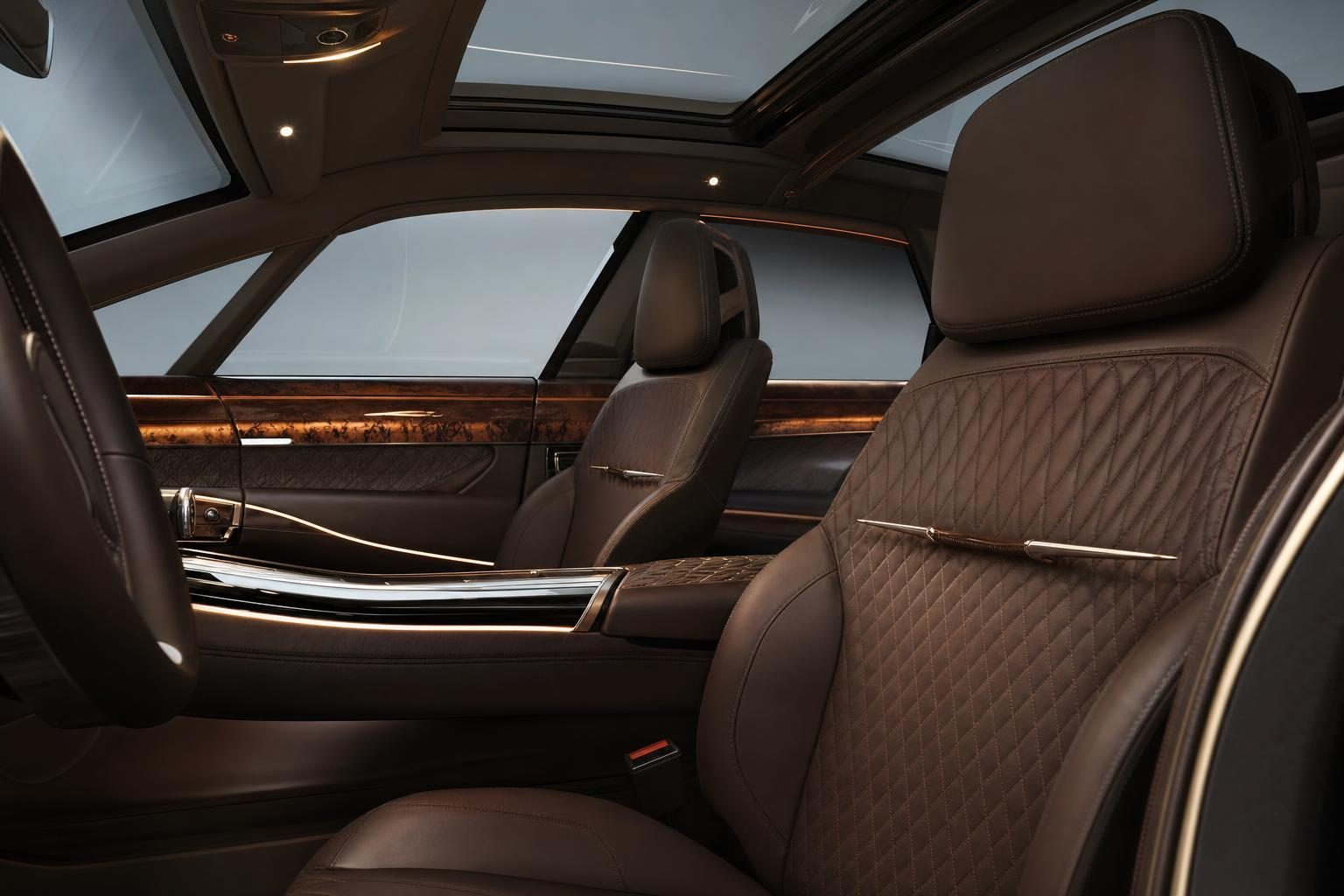
For the cabin and finishes, the company offered a very high degree of personalisation, typical of bespoke programmes. While the official page does not detail an exhaustive catalogue, the “Q by Aston Martin” orientation stands as the reference framework for noble materials, dedicated colours and à la carte rear-seat configurations. This is where the Lagonda Taraf sharpens its difference: no showboating, but patient refinement.
As for the “million euros” floated in the collective imagination, note that the authorised sources here do not publish a list price. Let us therefore stick to the verifiable essentials: a series limited to 200 examples, a hand-formed aluminium body and a naturally aspirated V12, in a jewel case tailored to the client’s taste. The rest belongs to the market and its confidentiality.
Lagonda after the Taraf: what this model did (or did not) herald for the brand’s future
Fifth paradox, posterity. After the Taraf, the relaunch of a fully fledged Lagonda range did not materialise into high-volume models. The badge remains associated with occasional, highly exclusive attempts separated by decades: the 1976 Lagonda was the most striking illustration before this very limited return.
Even so, this model remains a strategic marker. Building on the VH platform and Rapide base, the Lagonda Taraf shows how Aston Martin can develop distinct bodywork, refine the rear-seat experience and test a specific clientele without creating an architecture ex nihilo. A well-mannered laboratory, in short.
To place the Taraf within the marque’s history, one may usefully consult the encyclopaedic synthesis in French, alongside the manufacturer’s notice. Both converge on the essentials: Geneva 2014, Middle East first, 200 examples, hand-made aluminium and a naturally aspirated V12.
Conclusion – Lagonda Taraf, five paradoxes for a discreet icon
The Lagonda Taraf thus cultivated rarity methodically: an Arabic name for a targeted launch, a proven Rapide base, a hand-shaped aluminium body and 200 examples that say it all. Shown at Geneva 2014 and discreetly opened to other markets, it marks Lagonda’s most muted return since 1976. To go further, our portrait of the Lagonda Taraf and the historical angle on the Lagonda Series 2 usefully complete the perspective. In an era of carefully curated limited runs, the Lagonda Taraf remains a singular, precise and—dare we say—paradoxical proposition.
- Also worth reading, to place the technical base within the range: our dossier on the Rapide and its VH architecture.
- For external reference sheets, see the detailed article in English and the synthesis in French.