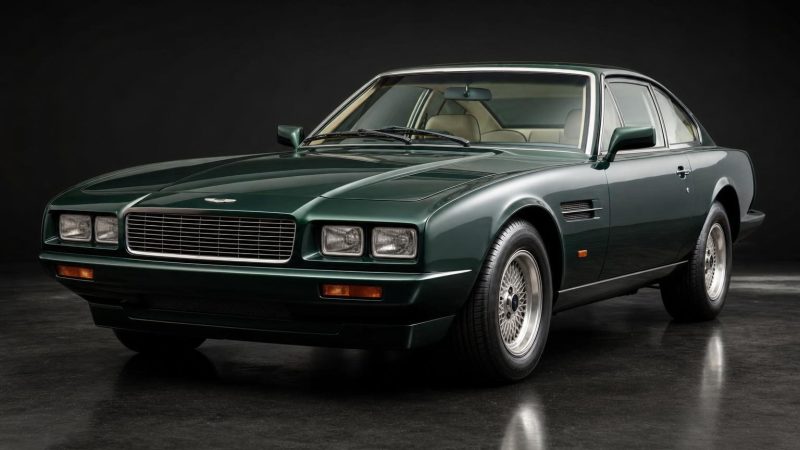
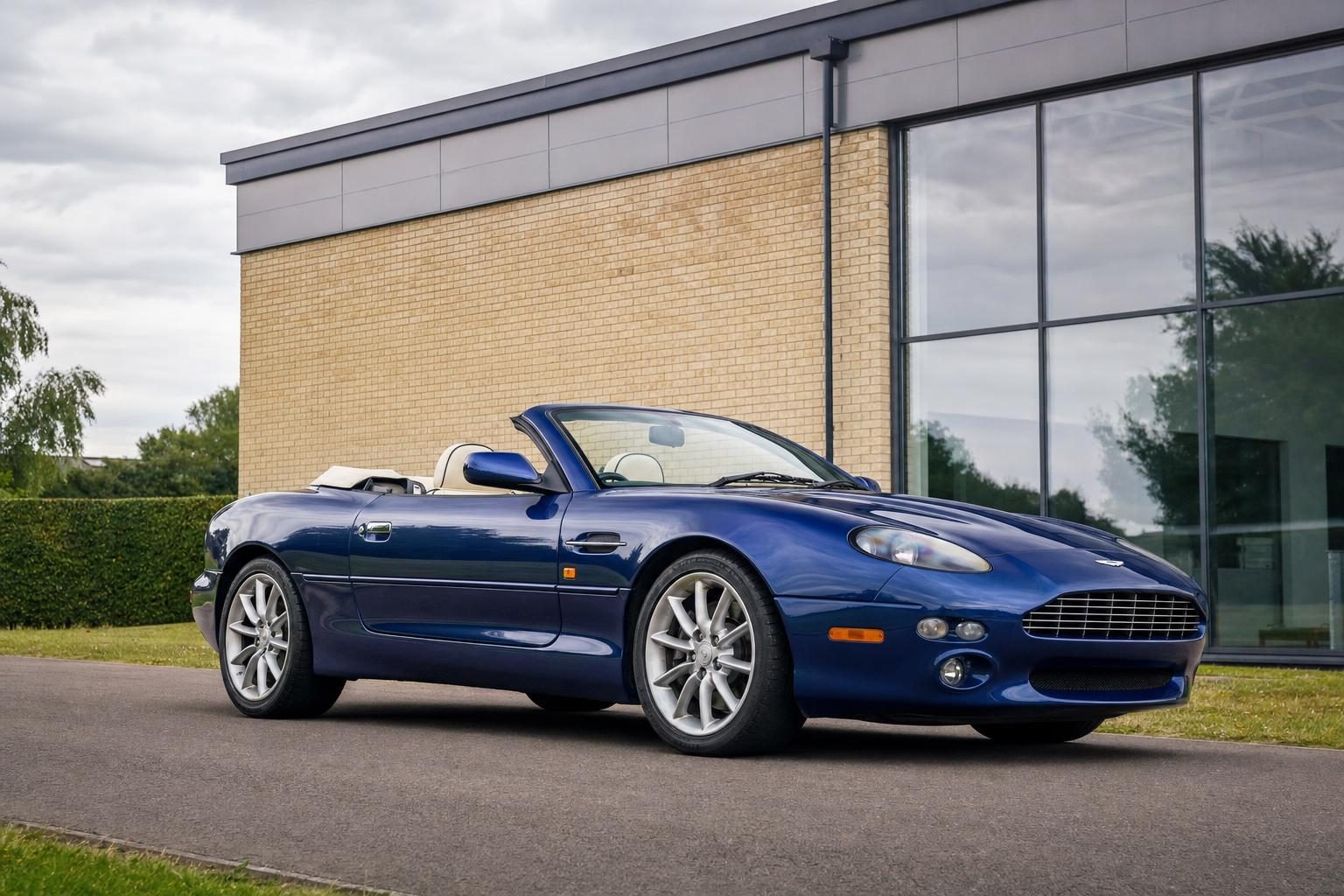
DB7, a beneficial anomaly: how Ford, TWR and the Bloxham plant, a Jaguar steel structure and a supercharged straight-six relaunched Aston Martin.
DB7, the fertile paradox of Aston Martin: a grand tourer born from a Jaguar base, assembled at Bloxham with Tom Walkinshaw Racing under the Ford era, and becoming the lever of a true revival. This article dissects, from an industry and economics angle, four key decisions taken between 1993 and 1994 that turned this “anomaly” into the most effective tool to save the marque and prepare for what followed. On the agenda: factory, chassis, engine, volumes — and how this still changes the way we read Aston Martin’s history today.
Ford, TWR and Bloxham: how a Jaguar plant became the cradle of the DB7
After a challenging 1980–1990 decade, Aston Martin came under Ford’s wing (owner since 1987) and sought a fast track to profitability. The first structuring decision concerned the assembly site: Bloxham, a former Jaguar facility operated by Tom Walkinshaw Racing (TWR). According to reference data, the DB7 and its variants are the only models of the marque produced at Bloxham, a singular place in the Aston galaxy. This “enlightened” outsourcing combined TWR’s engineering know-how with an already operational industrial tool — a way to gain years and contain industrialisation costs.
This Ford–TWR–Bloxham setup had an immediate virtue: turning a technically mature project into a viable industrial programme. TWR, seasoned in special projects and high-performance small series, knew how to turn an existing platform into a desirable coupé. Bloxham, already calibrated for complex bodywork, thus became the cradle of a model set to surpass the marque’s historical volumes. The DB7 moved away from Newport Pagnell’s artisanal template without betraying the level of finish expected of an Aston.
This decision contrasts with Gaydon’s habits in later years, but it is precisely this break that made the shift possible. It anchored the project in a contemporary industrial reality, while preserving the object’s exclusivity, far removed from mass production.
The steel structure inherited from the XJ-S: what it changed for production and weight
The second, equally decisive bet: adopting steel monocoque construction inherited from the Jaguar XJ-S. The DB7 is thus the only Aston to rely on such a base, while all subsequent Astons would move to aluminium for their chassis. This architecture rationalised tooling, simplified sourcing and fitted Bloxham’s logic: capitalise on a robust existing base rather than develop a dedicated platform from scratch.
Steel brought obvious industrial advantages — contained costs, compressed lead times — but also a specific dynamic compromise. The XJ-S structure, heavier than a future aluminium chassis, required fine management of weight distribution, suspension and soundproofing. For a grand tourer, the goal is not absolute lightness, but the balance between rigidity, comfort and performance. This choice allowed production to start in 1994 with coherent development maturity and perceived quality to match, while maintaining an ambitious yet plausible price positioning.
Strategically, this Jaguar inheritance epitomised the discipline imposed by Ford: do better, faster, with proven building blocks. The technical “anomaly” thus became an economic virtue, and steel the key to a controlled industrialisation.
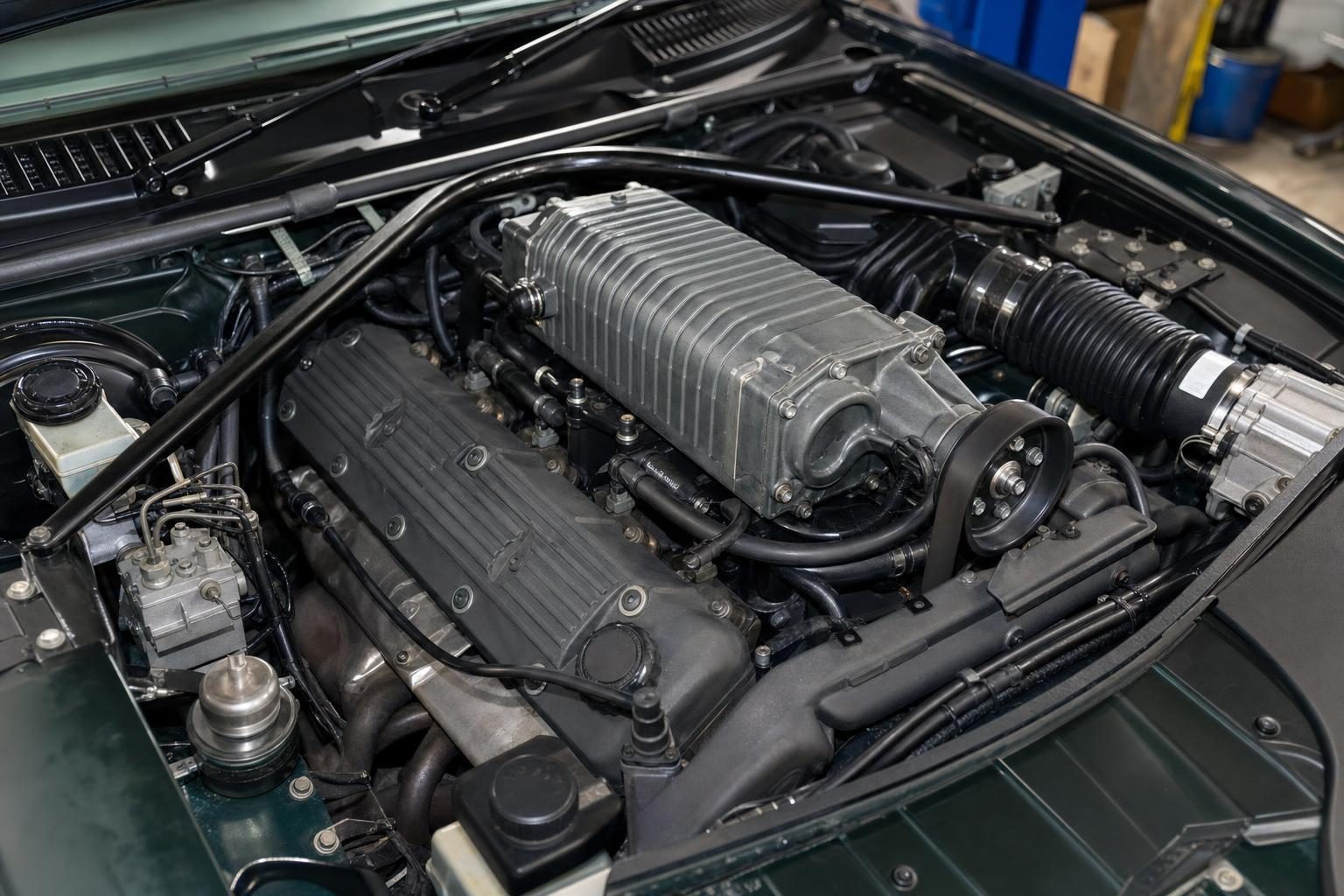
The 340 PS supercharged straight-six: Jaguar power tailored for Aston Martin
Third key decision: the engine. The DB7 adopted a supercharged inline six of Jaguar origin, rated at 340 PS (335 hp) and 489 Nm. The pairing of a supercharger and an L6 delivered supple, progressive power, perfectly aligned with the marque’s grand touring DNA. Above all, it avoided the astronomical costs of a dedicated engine development while ensuring credible performance against mid-1990s rivals.
This “parent company” powerplant was no simple copy-and-paste. Adapting to Aston standards meant reworking intake, cooling and exhaust for a more hushed than thunderous acoustic signature. The coupé thus embraced an elegant, pressurised character, distinct from the sometimes brutal image of big V8s of the time. The Volante unveiled in Detroit in January 1996 confirmed the direction: torque, velvet and easily accessible reserves of power.
By mid-1999, the straight-six base was dropped in favour of the DB7 Vantage V12, the natural evolution of a range gaining in power. But it was that first chapter, the supercharged straight-six, that opened the door: an available, competitive engine able to carry Aston’s image at a realistic price and pace.
The most-produced model in the marque’s history: the numbers behind the 1994–2004 revival
The fourth decision concerned the combination of price/rate/range evolution. Launched in 1994, the DB7 was priced in the United States at $140,000 for the coupé and $150,000 for the Volante. This positioning embraced rarity without deterring a broadened clientele, drawn by the badge’s aura and design signed in the purest British tradition. Result: between 1994 and 2004, the DB7 became, at the time of its release, the most-produced model in Aston Martin’s history, a milestone confirmed by the marque itself. The strategy of steady throughput, rather than fleeting series, paid off.
The move upmarket with the Vantage V12 from the late 1990s extended this momentum. It offered a second commercial wind without denying the foundations laid by the six-cylinder. In 2003, a DB7 GT series limited to 99 units (one reserved for the marque’s museum) added a collector’s touch while elegantly closing a ten-year cycle.
In this context, production at Bloxham, the steel backbone, the supercharged L6 and range management formed a coherent quartet. The industrial “anomaly” proved a spur to growth: by capitalising on Jaguar assets and the Ford ecosystem, the DB7 established a financial and technical base that would allow the next aluminium generation to blossom.
Conclusion: why the DB7 remains Aston Martin’s beneficial anomaly
The DB7 broke with habit without betraying the marque. Producing at Bloxham with TWR, choosing a steel structure inherited from the XJ-S, adopting a 335 hp supercharged straight-six and orchestrating a controlled ramp-up between 1994 and 2004: four sober, effective decisions that gave Gaydon fresh air. As all subsequent Astons moved to aluminium, this model remains proof that a well-judged detour can save a company.
To go further, our feature retraces the complete DNA of the DB7, design, engine and range evolution, while the DB7 Zagato, a chapter apart, illustrates another facet of this lineage. And for the key figures, revisit the story of Aston Martin’s most-produced model. For sources, see the official DB bloodline chronology, the technical overview on Wikipedia on the DB7, and the focus on the limited DB7 GT series (99 units).