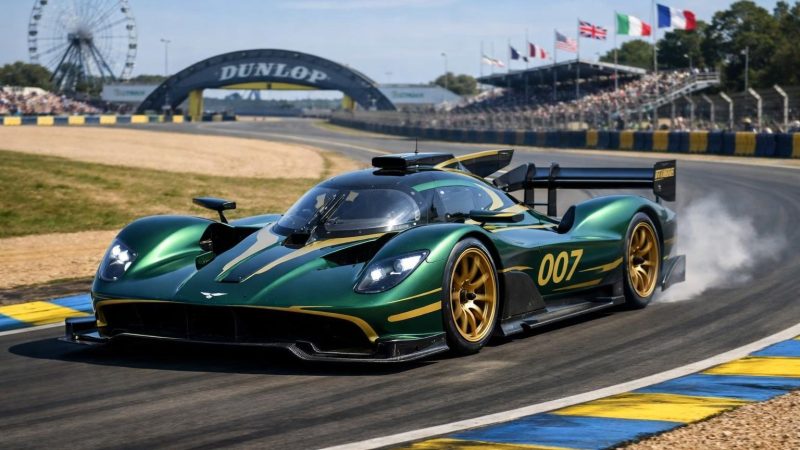
Valhalla track at Spielberg’s Red Bull Ring: 5 numbers and facts that explain why Aston Martin’s PHEV supercar is there in June 2026.
Valhalla track: the phrase sums up what we will see at Spielberg in late June 2026, and why it isn’t a quirk of the calendar. This mid-engined coupé, Aston Martin’s first production PHEV, was conceived for the ribbon of asphalt above all. We trace its technical roots and local ties to understand in five points how the supercar’s presence at the Red Bull Ring is about logic, not hype.
AM-RB 003 at Red Bull Racing: the Styrian roots of a supercar
From its codename, AM-RB 003, the project made its intentions clear: a close collaboration with Red Bull. According to Wikipedia EN (Aston Martin Valhalla), the aerodynamic body panels of the production version are produced at Red Bull Racing. In other words, a tangible part of the car is born in the shadow of the same single-seaters that prowl Styria. When we talk about Valhalla track, Spielberg isn’t neutral ground; it is almost a return to the workshop.
This industrial link partly explains the Austrian staging. The Red Bull Ring is not only a 4.326 km layout known for its succession of accelerations and braking zones; it is also the “home” of the project’s historic partner. Presenting the car there ties the technology to its ecosystem, without drumrolls. The setting speaks for itself.
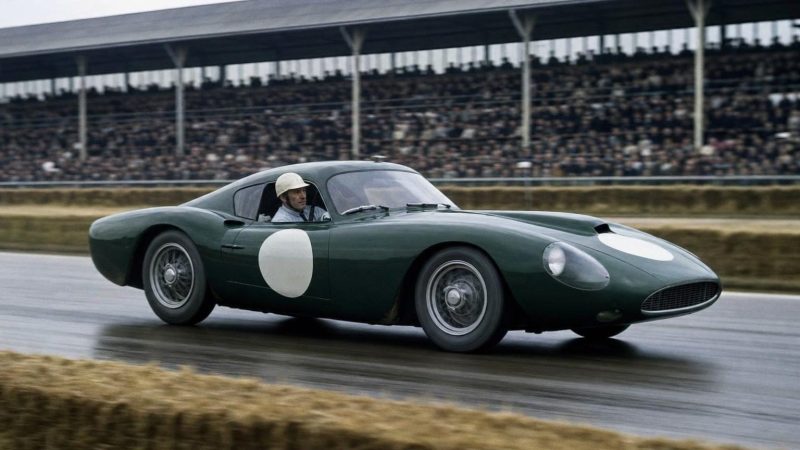
To place the lineage, let’s recall that the extreme sister, the Valkyrie, paved the way by imposing an endurance and F1 reading on grand touring. To understand this continuum, our feature dedicated to the Valkyrie and its aerodynamic heritage sheds light on the technical and philosophical bridges between the two models.
A 1,079 PS PHEV powertrain designed to stay the course
The strength of a Valhalla track doesn’t rest on a single figure, but it must be said that 1,079 PS and 1,100 Nm don’t hurt the case. According to media.astonmartin.com, the hybrid system combines a 4.0-litre twin-turbo flat-plane-crank V8 with 828 PS and three electric motors totalling 251 PS. This V8 reaches 207 PS per litre, the highest specific output ever signed by an Aston Martin engine. Circuit translation: availability, reach and responsiveness, without flat spots between corners.
In practice, the figures quoted by astonmartin.com are clear: 0–100 km/h in 2.5 s and an electronically limited top speed of 350 km/h. It’s not just a straight-line affair; on a stop-and-go layout like Spielberg, the way the PHEV system splits the effort between combustion and electric drives the precision on corner exit. Here, hybridisation isn’t green gloss, but a tool for rhythm.
That leaves the question of mechanical endurance. The triple electric architecture allows, on paper, smoothing of pick-up and an extra hit of torque where the V8 breathes. It’s exactly the kind of integration expected of a “track-first” car, and in line with the Valhalla track promise as the marque set out in its 11 December 2024 release.
Active aerodynamics: when the Valkyrie becomes Valhalla’s teacher
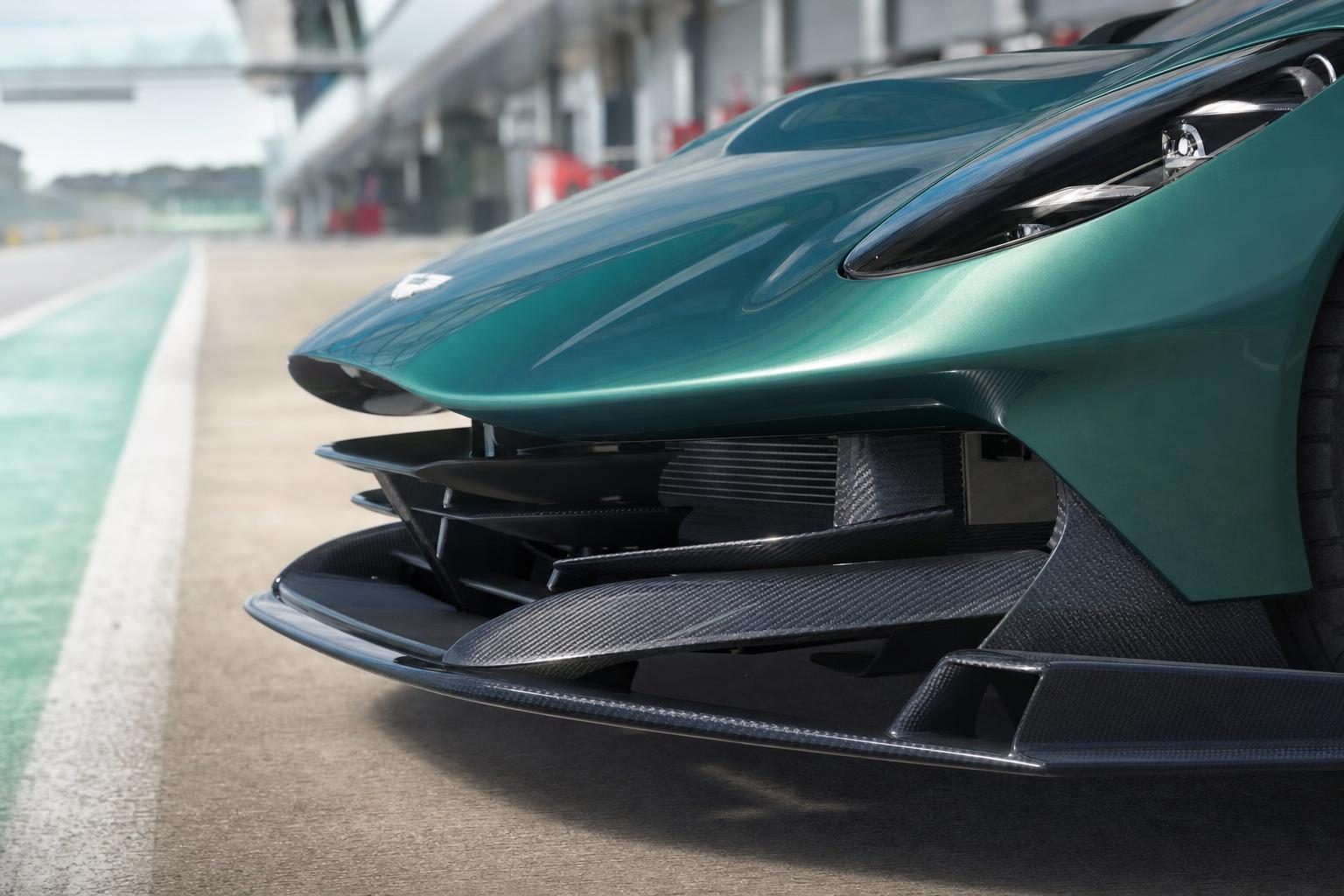
According to astonmartin.com, the car’s active aerodynamics generate more than 600 kg of downforce at 150 mph. The rear wing deploys up to 255 mm in Race mode. These aren’t show-stand numbers; they are answers to circuit constraints. Downforce, stability under braking, traction in fast bends: all arguments that make perfect sense on a short yet demanding track like the Red Bull Ring.
The kinship with the more radical Valkyrie is explicit. The principles – management of underbody flow, active surfaces, front/rear balance – are adapted here to a road-going supercar. In short, the Valhalla track promises a less intimidating temperament but nourished by the same flow science. At Spielberg, where compressions and load changes abound, this aerodynamic language has very concrete utility.
For readers wishing to dig into the model’s specifications and its place in the range, our page dedicated to the Valhalla, mid-engined hybrid supercar gathers the key elements, from the aero package to the drive modes.
Spielberg 2026: Valhalla on the fringes of the Austrian Grand Prix, a calculated placement
The Red Bull Ring hosts the 2026 Austrian Grand Prix, the 8th round of the championship, from 26 to 28 June (Wikipedia EN, 2026 Austrian Grand Prix). Releasing a video the same week and running a Valhalla track at Spielberg aligns the planets: the place where its aero panels are produced, an F1 calendar with a large audience, and circuit topography suited to a short, intense demonstration. There is more rationality than showmanship.
The brand has already honed this format. In May 2025, Fernando Alonso, Aston Martin Aramco F1 driver, drove the car during its first public dynamic demonstration in Monaco (media.astonmartin.com). Same recipe: flagship event, emblematic circuit, calibrated sequence. At Spielberg, the logic repeats with an extra dimension: Red Bull Racing’s anchoring in the model’s genesis.
To take the measure of the context and imagery, the official video published on YouTube serves as a direct illustration, while the media.astonmartin.com release on Valhalla sets the product strategy and technical data in context. A useful duo for understanding the Spielberg choice without over-interpretation.
Limited to 999 units and already delivered: the track as definitive sales argument
Limiting production to 999 units creates rarity; starting deliveries from the second half of 2025 – with a first customer car handed over in December 2025 in the UK according to Wikipedia EN – keeps the timetable. Between the two, usage must be anchored. Nothing does that better than a Valhalla track shown where promises are validated: on a Grand Prix circuit.
The strategy is crystal clear: cement technical competence and validate road/track versatility before an expert audience. The acceleration and top-speed numbers set the tone, the active aero adds nuance, and the Spielberg demonstration seals the message. For collectors, it’s the last box to tick before deciding. For owners, it’s the assurance of an object designed to be driven, not merely looked at.
Our analysis of late 2025 deliveries and their meaning puts this schedule in perspective with Aston Martin’s broader commercial momentum. Again, coherence prevails over hype: presenting a Valhalla track at Spielberg is part of a controlled product sequence.
Conclusion – Valhalla track, the demonstration that ends doubt
Roots at Red Bull Racing, a 1,079 PS PHEV powertrain, active aerodynamics inherited from Valkyrie, the F1 calendar at the Red Bull Ring and assumed rarity: the Valhalla track does not appear at Spielberg by chance; it is, in a way, returning home. In an age of snap verdicts, this public demonstration serves a simple cause: to confirm, without fanfare, that Aston Martin designed this model for the track from the outset, and that the road is only the other half of its territory.
To place the supercar within the marque’s history and contemporary ambitions, the Wikipedia EN page on the Valhalla and the official Aston Martin site usefully complement this reading, between sourced data and range context.