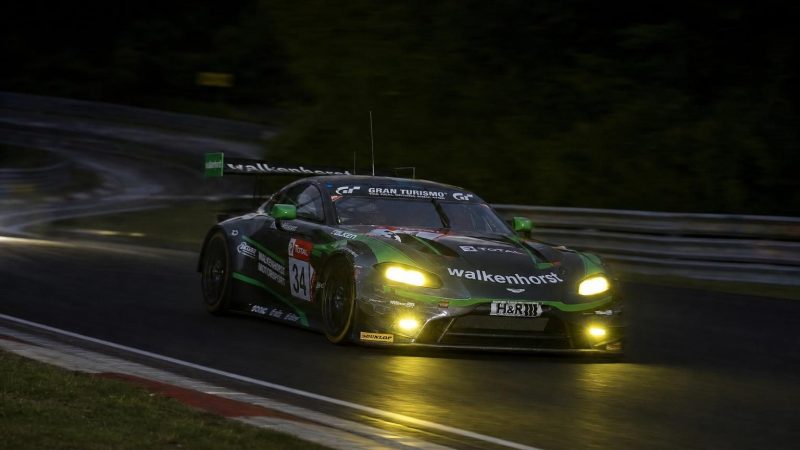
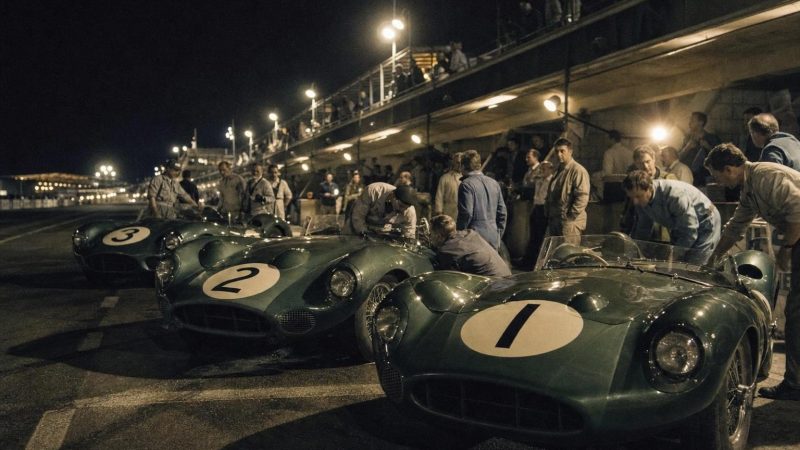
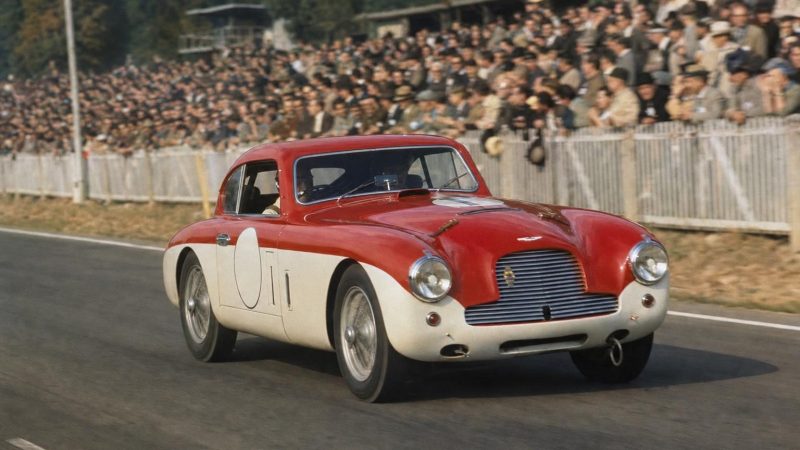
DBR9, from roadgoing DB9 to Le Mans-winning GT1: modifications, power, differences from DBRS9 and production. A clear, precise guide.
DBR9: here is the guide to understand, technically and without folklore, what separates Aston Martin’s GT1 from the roadgoing DB9 and the customer DBRS9. Developed by Aston Martin Racing from the DB9 platform and introduced in 2005, the car built its record at Le Mans while staying true to the naturally aspirated 6.0‑litre V12. We review GT1 homologation, power figures (and why they diverge), the differences with the DBRS9, as well as production and the value of these rare chassis.
From DB9 to DBR9: what GT1 homologation required to change in depth
Starting from the DB9 base, GT1 homologation mandated a major transformation to arrive at the DBR9. According to Wikipedia (Aston Martin DBR9), the body becomes entirely carbon fibre: a decisive leap for mass, rigidity and aerodynamics compared with the production DB9 in aluminium and steel. This structural shift places the DBR9 among the leading GT1s of the mid‑2000s, with visual volumes close to the road car but executed for competition.
The running gear was no afterthought. Again per Wikipedia, the suspension was completely reworked versus the road car. In practice, that means geometry, kinematics and components adapted to endurance demands. Braking moved to AP Racing competition parts, while forged BBS wheels were fitted. Together they form a chassis‑brakes‑wheels package tailored to the rigours of a twice‑round‑the‑clock race.
The spirit of the DBR9 remains faithful to the 6.0‑litre V12, but the resulting car is an Aston Martin racer designed by Aston Martin Racing for the GT1 class, introduced in 2005. It is no longer an optimised DB9: it is a DBR9, with a brief and attention to detail typical of works programmes. For an overview, see the programme page on Aston Martin’s official site via the brand’s Racing presentation.
Tuned 6.0‑litre V12: power figures and why sources don’t agree
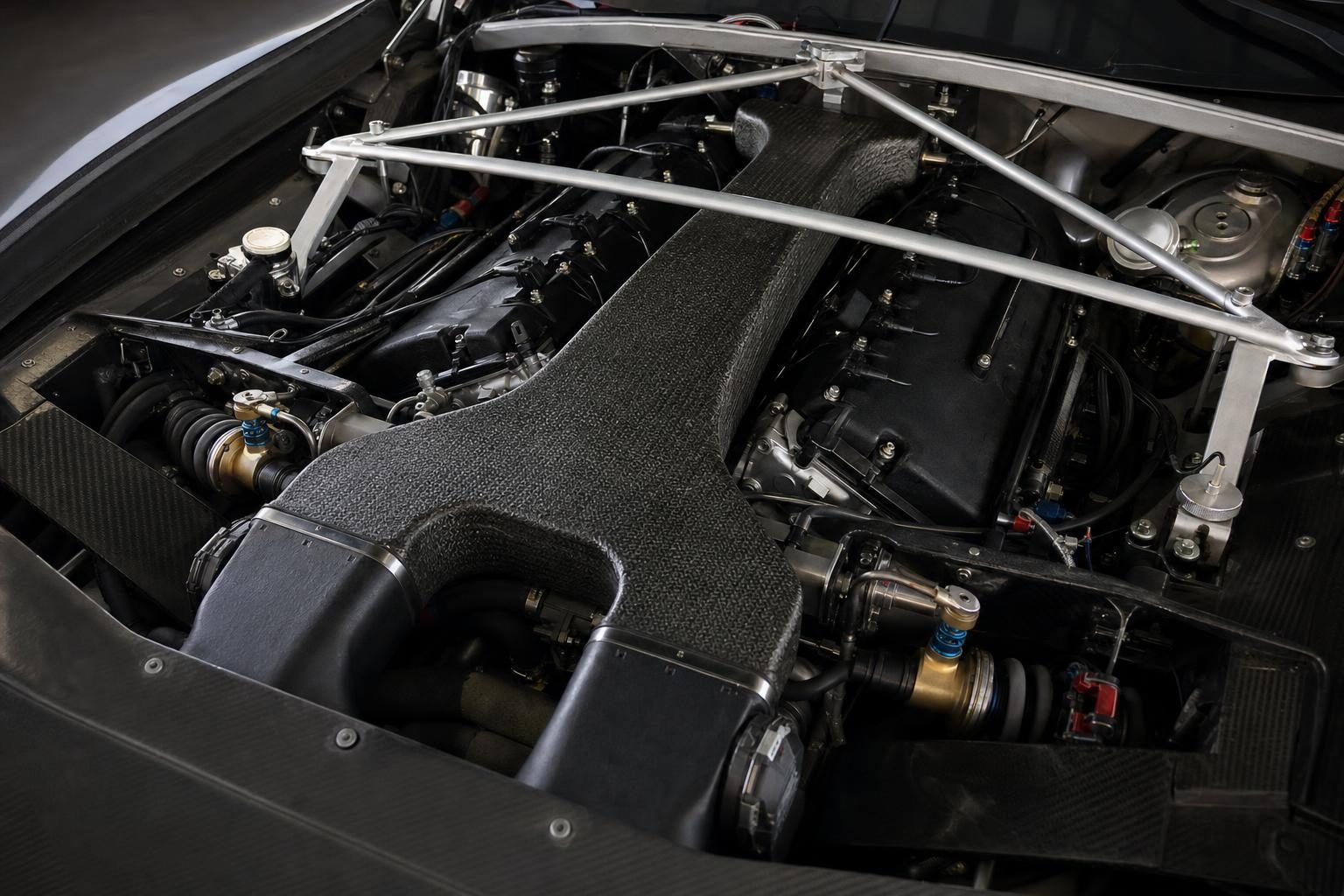
At the heart of the DBR9, the naturally aspirated 6.0‑litre V12 remains. Wikipedia states a claimed output between 550 and 600 PS, depending on source. This vagueness is no artifice: it reflects the difficulty of fixing a single value for a racing engine, by nature evolutionary and dependent on multiple parameters that teams seldom publish precisely.
Practically, and still according to Wikipedia, the DBR9’s figures vary within this band. Readers should note that published values depend on the sources consulted; no unequivocal, publicly validated and universal figure prevails. Absent a numeric consensus, the 550–600 PS range should be retained as the documented state of the art for this V12 in GT1 configuration.
This caution applies to any attempt to rank model years or exact DBR9 specifications. The most reasonable approach, in light of available information, is to adopt the reported power band and consider it effectively frames the expected performance of this Aston Martin racing car. For further reading, see also the detailed English article and the French page on DBR9.
DBR9 vs DBRS9: the 4 technical differences between the works car and the GT3 customer version
The DBRS9, introduced in 2005 as well, is presented by Wikipedia as the GT3/GTE customer version derived from the DBR9. First key point: homologation. The DBR9 falls under the GT1 class, while the DBRS9 is entered in GT3/GTE under customer regulations. This distinct regulatory framework shapes freedom (or constraints) in aero, mass, engine and chassis components.
Second difference: the engine. According to Wikipedia (Aston Martin DBRS9), it is a 6.0‑litre V12 “slightly different” from that of the DBR9. The wording matters: the architecture is shared, but the tune is not identical. This leads to the third point: the level of preparation. The DBRS9 adopts a “less extreme” preparation, characteristic of customer cars intended for more accessible competition use, with costs and maintenance requirements to match.
Fourth difference: works vs customer focus. The DBR9 is a racing car designed by Aston Martin Racing for GT1, the highest level of the time in Grand Touring, whereas the DBRS9 is conceived for customer teams. This reality is reflected in the sophistication and intensity of development, technical support and, ultimately, in the competitive positioning of the two models.
To delve deeper into this historical face‑off on AstonLegacy, consult our reference dossier on the DBR9 spec sheet and key characteristics as well as our analysis dedicated to the DBRS9 engineering choices versus the works DBR9.
Le Mans 2007 and 2008: two class wins and what AMR strategy explains
The DBR9 made its mark at Le Mans with two GT1 class victories. According to Wikipedia, in 2007 the trio Brabham/Turner/Makowiecki won the category. In 2008, it was the turn of Charouz/Enge/Kox. Two successes that count in Aston Martin Racing’s DNA and confirm the relevance of the DBR9 project, from conception to execution.
This double in two editions speaks to a coherent package: transformed chassis, a V12 reliable within its documented power band, and race execution. The “AMR strategy” in the background? A sober reading from public information: GT1‑specific development, preparation adapted to endurance, and consistent execution over time. Without over‑interpreting, these milestones frame what the DBR9 showed over 24 hours.
To place these results in their seasonal and competitive context, read our recap here: three seasons, two Le Mans class wins. You’ll find the timeline and crews that forged the DBR9’s reputation at the top of GT1.
How many were built and what one is worth today
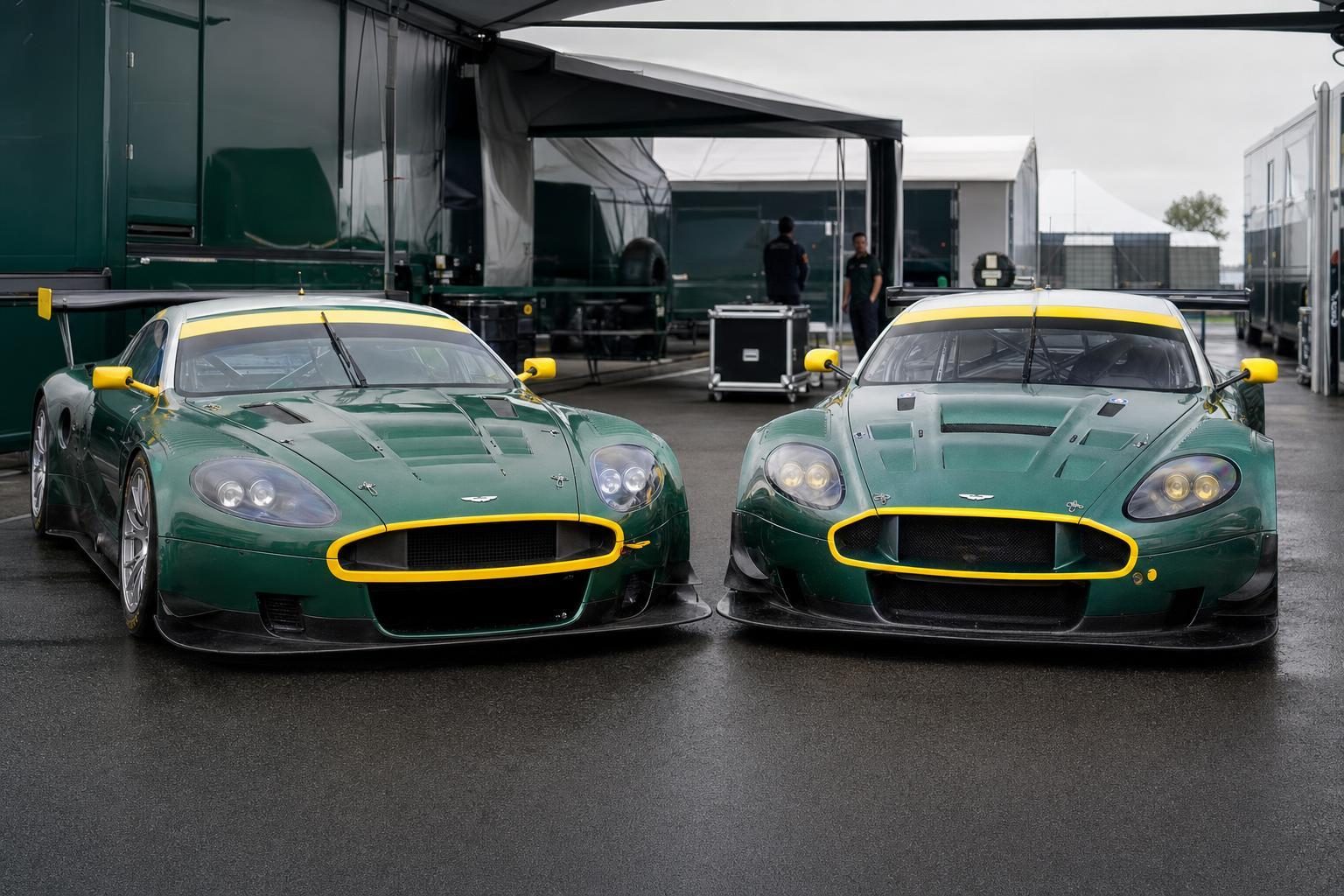
Production of the DBR9 remains confidential. Per Wikipedia, around 10 examples were built between 2005 and 2012, combining works cars and customer units. This low volume partly explains collectors’ interest in this Aston Martin racer, also backed by two Le Mans class wins.
The question of current value calls for caution. The sources provided here do not indicate transaction figures or consolidated estimates. Consequently, we advance no amount. What can be stated, based on documented facts, is that rarity (around ten examples), the record (Le Mans 2007 and 2008 in GT1 class) and the aura of Aston Martin Racing weigh structurally in the equation.
To frame the DBR9’s place in the marque’s history, it is useful to consult Aston Martin’s institutional presentation and its sporting commitments via the official page dedicated to the Racing programme, as well as the encyclopaedic summary available on Wikipedia in French.
Conclusion — why the DBR9 remains essential reading for the Aston enthusiast
Born in 2005 from the DB9 and shaped by GT1 homologation, the DBR9 changed everything without denying the essentials: naturally aspirated V12, balance and endurance. The Wikipedia pages devoted to the model place its output between 550 and 600 PS which, even without a single number, says enough about this V12’s health. Versus the DBRS9, the difference lies in category (GT1 vs GT3/GTE), distinct engine and preparation, and a works programme aimed at the summit.
Twice a class winner at Le Mans (2007 and 2008), produced in around ten examples, the DBR9 ticks the boxes that matter for the Aston Martin aficionado: engineering, history, rarity. To continue reading, find our sheet dedicated to the model on AstonLegacy and, for competition details, our focus on the 2005 to 2008 seasons. In the end, the DBR9 remains one of the clearest entry points to understand what “racing” means at Aston Martin.