Valiant 2024, born of a commission from Fernando Alonso and limited to 38 allocated units, details four novel technical choices versus the Valour.
Valiant, or how a very personal desire of Fernando Alonso smoothly evolved, by the book, into a limited series manufactured by Q by Aston Martin. Unveiled at the 2024 Goodwood Festival of Speed, this radical offshoot of the Valour showcases a sharpened V12, a refined chassis and several technical choices that the “base” car did not offer. A measured, precise look back at its genesis and its four tangible divergences.
Alonso’s commission: how a personal request became an official programme
The starting point is crystal clear: according to Aston Martin, the Valiant stems from a personal commission by Fernando Alonso, Aston Martin Aramco F1 driver. The initial idea was a workshop brief: craft an analogue coupé, V12-powered, with a manual gearbox, for high-intensity road use. Q by Aston Martin, the entity in charge of special series, then took over to transform this one-off desired by a double world champion into an approved programme.
The public roll-out followed swiftly. Still according to Aston Martin (news of 26 June 2024), the reveal was staged at Goodwood 2024, an ideal setting to spotlight the project’s unapologetically mechanical approach. The link to the Valour, already celebrated for its manual gearbox, is claimed; the Valiant’s ambition is to go further on a few key points.
This shift from private request to official programme highlights the role of Q by Aston Martin: channelling a driver’s brief into a finished series, with the requisite engineering and production validations. The line is clear: no philosophical rupture, but a further notch in performance and development.
38 units, all allocated before announcement: the commercial logic of a private series
Production is strictly limited to 38 units, and all were allocated upon announcement, according to the Aston Martin pressroom. This upstream allocation is no footnote: it confirms that the Valiant belongs to those “private series” where demand precedes public offer, securing the project’s viability while preserving its exclusivity.
As for price, HiConsumption (June 2024) mentions a figure around £2 million (about 2.5 million dollars). This is not an official Aston Martin price, but a market indication consistent with the positioning, given the volume, specific engineering and the Q by Aston Martin pathway.
Within the recent limited-series line-up, the approach recalls that of the Valour, while standing apart through the depth of its modifications. To place this chapter within the marque’s culture, see our analysis of the 110 Valour units and its manual gearbox, or, for the brand’s track DNA, the retrospective on the Vulcan, a track hypercar produced in 24 units.
745 PS, Multimatic dampers and carbon-ceramic brakes: the figures and what they mean
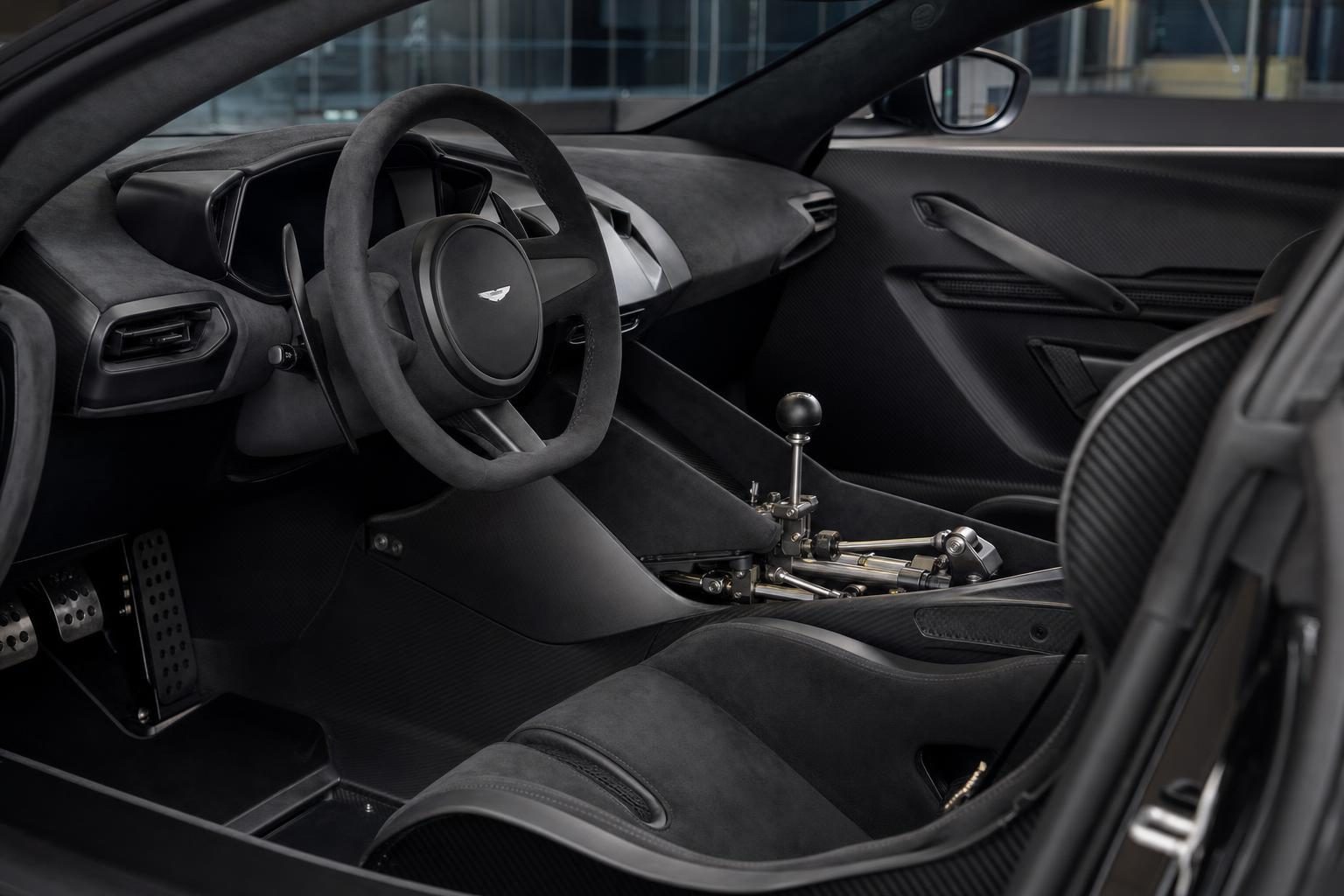
The Valiant retains the 5.2-litre twin-turbo V12 per Aston Martin’s official designation, lifted to 745 PS and 753 Nm (source: Aston Martin pressroom). HiConsumption mentions 5.3 litres, a discrepancy to note; the specification sheet issued by the marque remains the reference. The decision to keep the Graziano 6-speed manual gearbox anchors the project in the mechanical purity dear to the original brief.
On the chassis side, the specific Multimatic ASV dampers underscore this technology’s contribution in fine calibration and consistency of response, a clear advantage on fast roads as well as a Goodwood hillclimb. For braking, the carbon-ceramic system (410 mm front, 360 mm rear) asserts itself through thermal endurance and pedal consistency—parameters that inspire confidence over long sequences.
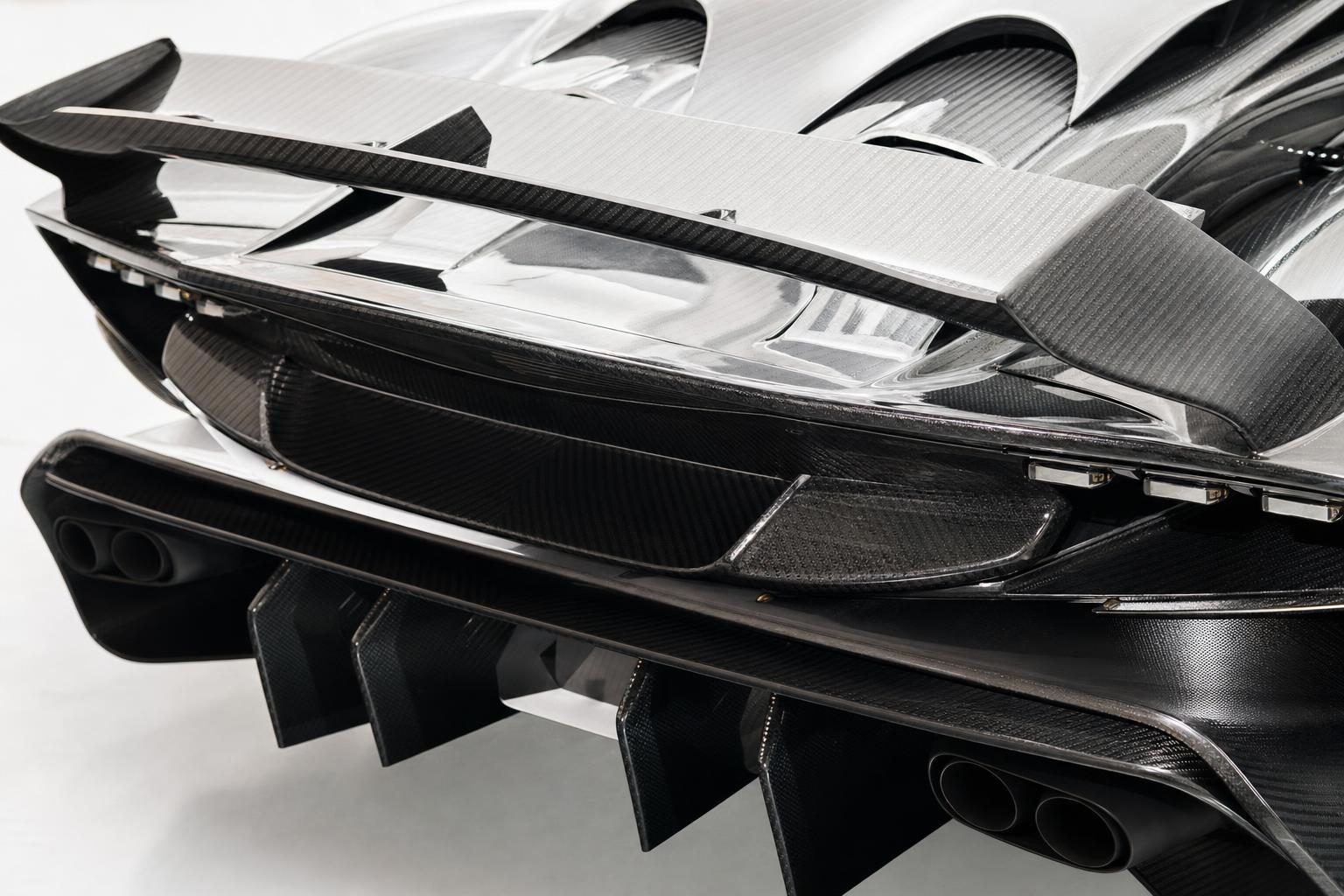
Finally, the aerodynamics claim up to 383 kg of downforce, according to Aston Martin. At this level, it’s not cosmetic effect: ultra-high-speed stability and on-throttle traction in loaded corners directly benefit from this extra vertical load, which also enables fuller exploitation of tyres and damper settings.
Magnesium, titanium and 3D printing: four measurable weight savings over the Valour
Versus the Valour, the Valiant stacks targeted mass reductions. Aston Martin cites a 3D-printed rear subframe trimming roughly 3 kg; additive technology here allows optimised geometries and ribs without overbuilding.
The magnesium torque tube saves about 8.6 kg, a reduction located at the heart of the driveline, thus favourable to overall inertia. Added to this is the full carbon-fibre bodywork, a structural element to maintain rigidity while containing weight. The use of fasteners and components in titanium follows the same logic: shaving grams where they matter.
These four levers—3D printing, magnesium, titanium, carbon—are anything but ornamental. They materialise the strategic gap with the Valour: a selective weight-hunt serving front-end response, body control and steering precision. For an overview of the marque’s product strategy around architectures and materials, the official site remains the reference: Aston Martin – international site.
The 1977 “Muncher” as a stylistic reference: what the carbon wheel covers recall
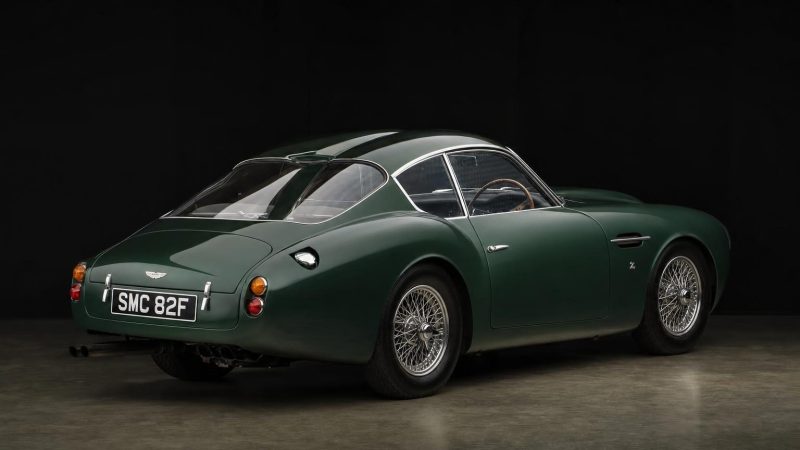
The Valiant’s aero carbon-fibre wheel covers show an avowed kinship with the RHAM/1 nicknamed “Muncher”. According to Aston Martin, the inspiration points to the RHAM/1 of 1980 entered at Le Mans. The nod is less pastiche than technical wink: channelling air to cut drag and turbulence around the wheels, where energy is quickly lost.
Beyond the visual effect, these covers recall a period when aerodynamic optimisation leaned on pragmatic solutions. A workshop culture that suits the Valiant’s spirit: a car designed to run hard and long without sacrificing driving ergonomics—manual lever, crisp responses, legible controls.
To place these choices in the recent Aston Martin lineage and its models of technological transition, revisit our breakdown of the Valhalla and its hybrid approach, which occupies another side of the performance spectrum.
Conclusion: what the Valiant says about Aston Martin in 2024
With the Valiant, Aston Martin shows that a driver’s commission can yield a coherent industrial project: 38 allocated units, a V12 lifted to 745 PS, a retained manual gearbox, Multimatic tuning and carbon-ceramic brakes, plus targeted weight savings via 3D printing, magnesium, titanium and carbon.
Versus the Valour, the difference is not posture but substance: a bit more downforce, a bit less mass, a bit more tool. From Goodwood to the road, the technical balance serves the driver, in line with the original brief signed by Fernando Alonso. For official details and timeline, see the Aston Martin pressroom and the Valour Wikipedia page which illuminates the family tree. In short, the Valiant ticks the mandate: an analogue coupé, sharpened, and rare enough to remain memorable.