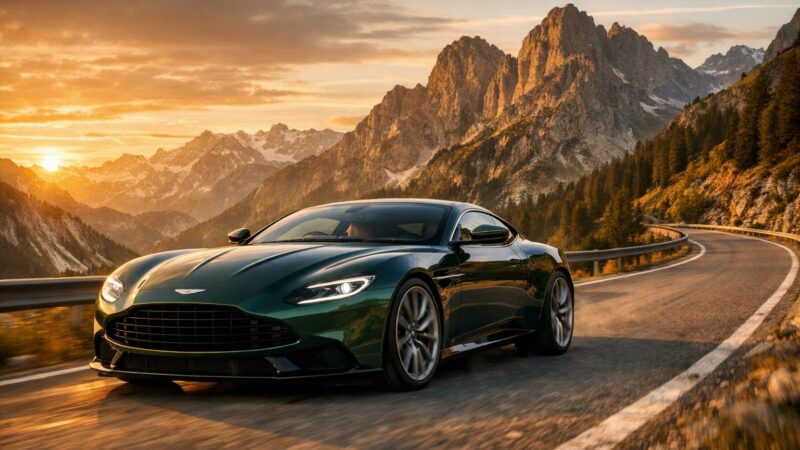
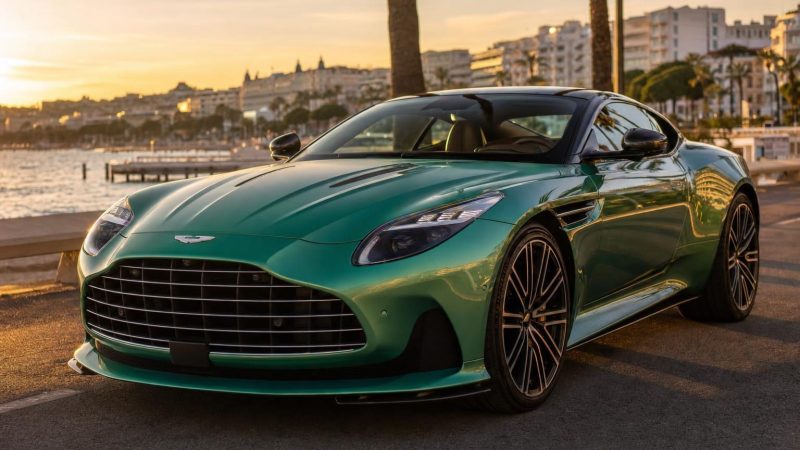
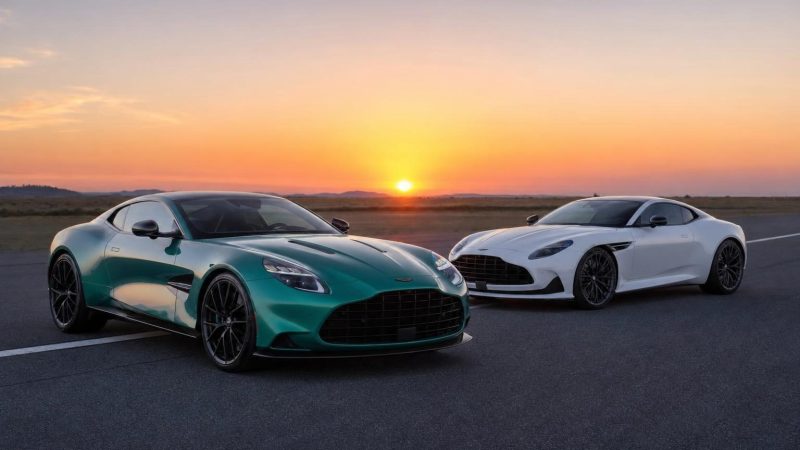
DBX707, V8 biturbo de 697 ch, mise à jour 2025 (habitacle et infotainment), dynamique peaufinée et arrivée du DBX S 2026 : guide et comparatif.
The DBX707 is Aston Martin’s muscular response to the luxury high-performance SUV segment. In this news guide, we highlight what makes this model unique, detail the 2025 overhaul (new interior and in-house infotainment system), position the car against its direct rivals, and open the perspective with the anticipated arrival of the DBX S in 2026. A factual overview, sourced, to understand why this SUV has become one of the flagships of Gaydon.
DBX707: a 4.0-litre V8 biturbo from Mercedes-AMG
At the heart of the DBX707, Aston Martin installs a 4.0-litre biturbo V8 sourced from Mercedes-AMG. The brand presents it as the most powerful engine ever fitted to a luxury production SUV, with 697 PS (707 PS), as confirmed by official presentations (Aston Martin site) and analysis from MotorAuthority. This block, known for its availability and rev range, anchors the technical specifications at the very top of the market.
According to Aston Martin, the SUV accelerates from 0 to 100 km/h in about 3.3 seconds, a figure that places the DBX707 at the level of the category benchmarks. Some tests mention 3.1 seconds to 60 mph (TopSpeed), a complementary North American measurement that illustrates the launch efficiency. In any case, the promise is clear: straight-line performance is not an option but a foundational attribute.
For 2025, the range has been clarified: the 542 PS version is disappearing in favour of the sole DBX707, according to GuideautoWeb and Cars.com. This refocusing underscores the role of this model as the spearhead and avoids any ambiguity regarding the internal hierarchy. It effectively becomes the Aston Martin SUV, the one considered when seeking the full mechanical intensity of the brand.
The 2025 overhaul: new interior and in-house infotainment
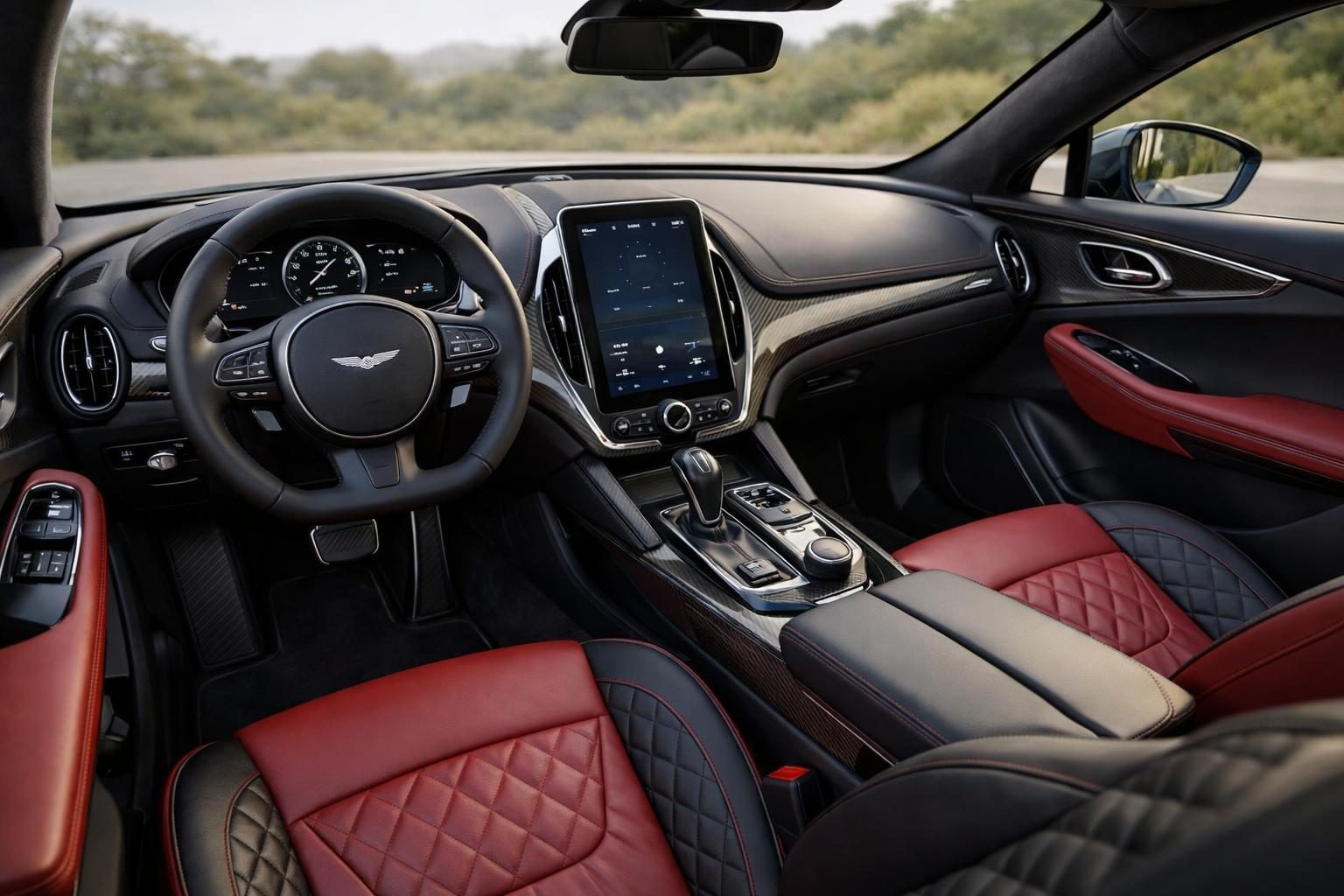
The 2025 update is not limited to cosmetic adjustments: it introduces a new interior and an infotainment system developed in-house by Aston Martin, according to J.D. Power and Autoblog. The objective is twofold: to enhance the perception of quality and regain control over ergonomics and software updates. On this point, the DBX707 aligns with the latest standards from Gaydon, featuring an interface designed by and for the brand.
In addition to the screen and menu logic, the revision touches on controls, materials, and connectivity, for a more coherent experience with the manufacturer’s DNA. Owners expect seamless integration of key functions from an SUV of this rank: navigation, audio, driving aids. This is precisely what this evolution of the DBX707’s interior aims for, prioritising clarity and responsiveness.
The 2025 overhaul also comes with revised suspension settings (according to J.D. Power and Autoblog). Without disrupting the chassis architecture, Aston Martin refines the damping and motion control to better reconcile ride comfort and dynamic precision. The expected benefit: a car that is more readable on the road and more resistant to fatigue on long journeys.
Aluminium chassis and electric anti-roll: the dynamics
Built on a dedicated aluminium structure, the SUV prioritises relative lightness and rigidity, two key qualities for a vehicle of this power. The DBX707, relying on an electrically actuated anti-roll system, seeks to contain body movements without sacrificing everyday ease. This approach sets a standard in the segment and helps maintain stance during high lateral loads.
Endurance is another trump card: the DBX707 comes standard with the largest carbon-ceramic brakes ever fitted to an Aston Martin, according to the brand and Cars.com. Besides reducing unsprung masses, these discs resist fading better and tolerate repeated intensive use. For an SUV exceeding 600 horsepower, consistent braking becomes an essential factor of confidence.
Validation in extreme conditions is not theoretical. A DBX707 has served as a medical car in Formula 1 (Aston Martin Brand Story and J.D. Power), a role that demands responsiveness, stability, and reliability. Without extrapolating beyond the facts, this exposure highlights the platform’s ability to withstand very high rhythms, which reflects on demanding road use.
Against the Purosangue, Urus, and Cayenne Turbo GT
The positioning of the DBX707 fits into a fiercely contested triangle alongside the Ferrari Purosangue, Lamborghini Urus, and Porsche Cayenne Turbo GT. Aston Martin highlights, with official sources backing it up, the title of “most powerful engine in any luxury production SUV,” a strategic claim to distinguish itself in this arena. In clear terms, power is not just a number: it is the competitive standard.
Beyond the specification sheets, the personality of this model lies in its tuning: electric anti-roll, carbon-ceramic brakes, and 2025 suspension calibration to marry precision and smoothness. While some rivals adopt a radical approach, the Aston claims a form of grand touring balance while delivering supercar acceleration. This unique blend is at the heart of the DBX707’s argument.
The comparison also plays out in the onboard experience: the in-house interface introduced in 2025 offers Aston Martin a digital coherence that meets the expectations of segment customers. For those hesitating between these exceptional machines, the British DNA — and how it translates into presentation and ergonomics — constitutes a differentiating criterion. Readers wishing to explore the range context can consult our dedicated DBX page, as well as the DB12 sheet to position the SUV against the brand’s grand tourer.
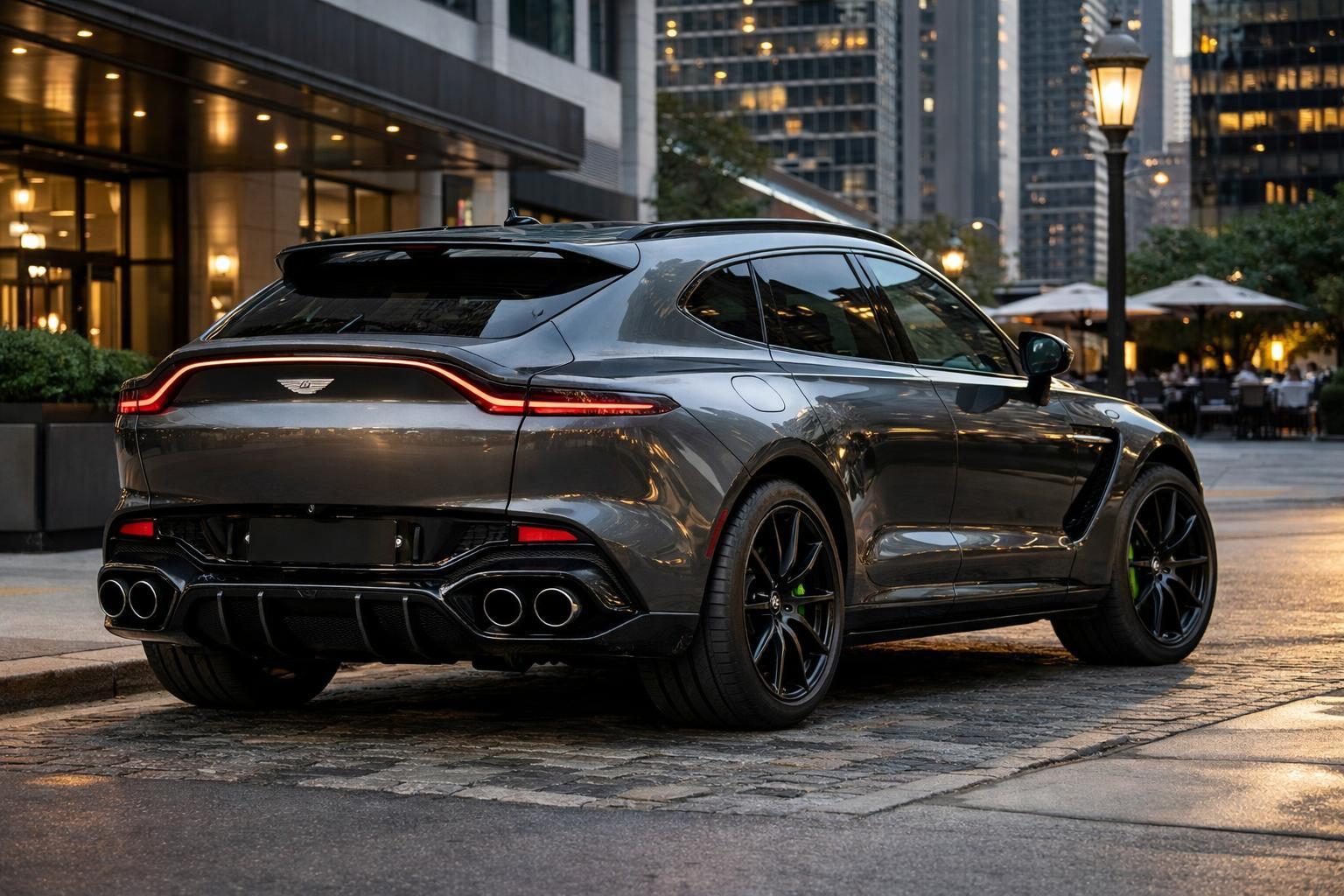
The arrival of the DBX S in 2026: even more power
Aston Martin has confirmed the expansion of the family with the DBX S for 2026: lighter and more powerful, it boasts 717 PS, according to GuideautoWeb. This evolution creates a new performance tier above the DBX707, without any other technical details officially developed in the cited sources. The message is nonetheless clear: the escalation continues.
This future model plays a strategic role. On one hand, it consolidates the attractiveness of the SUV range over an extended product cycle. On the other hand, it leaves the DBX707 with a logical space, that of the “core high-performance range,” while the DBX S pushes the envelope. Design enthusiasts can also place this trajectory within the brand’s culture via our portrait of Marek Reichman, to understand the aesthetic ambition underlying these evolutions.
In practice, the arrival of the DBX S offers an expanded choice: retain the already proven balance of the DBX707, rich with its 2025 overhaul, or aim for the maximum expression of performance with the S. In both cases, Aston Martin’s strategy aims to maintain a prominent presence against Italian and German rivals.
Conclusion: why the DBX707 stands out today
In summary, the DBX707 combines a 697 PS biturbo V8 validated by road and F1 (medical car), a 2025 overhaul that profoundly modernises the interior and infotainment, and a dynamic refined by an aluminium chassis assisted by an electric anti-roll system and very large carbon-ceramic brakes. Against the Purosangue, Urus, and Cayenne Turbo GT, it asserts itself through the power claimed by the brand and a grand touring temperament. For official specifications, consult the Aston Martin site, and for a test insight, the analysis from MotorAuthority. With the horizon of the DBX S announced for 2026, the trajectory of Aston Martin’s SUV remains clearly upward.