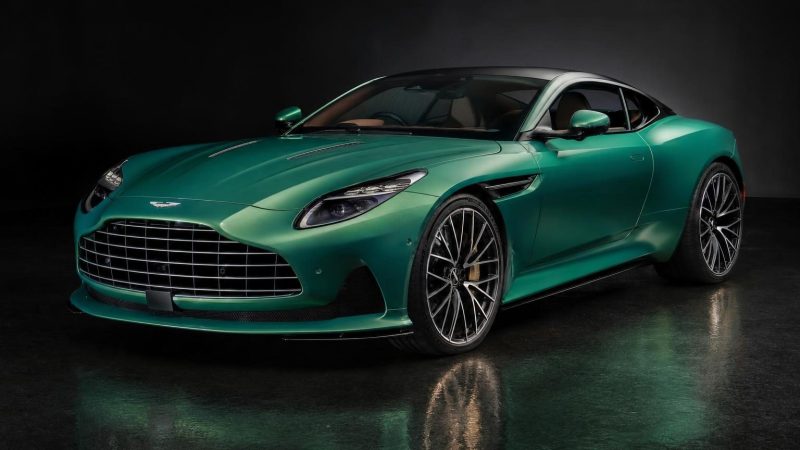
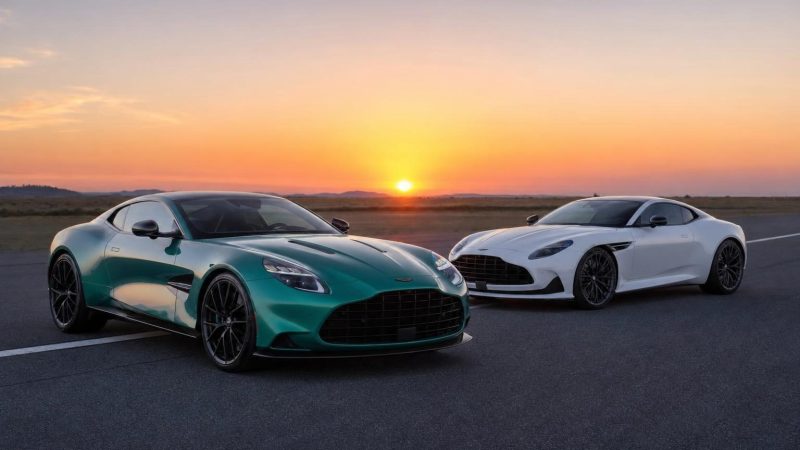
DBS Superleggera : comparatif avec la DBS V12 2007, Aeroblade II, double diffuseur, capot carbone et ZF8. 180 kg d’appui et gains mesurés à l’usage.
DBS Superleggera or the 2007 DBS V12? Here, we focus on aerodynamics and their real-world consequences. Compared with the earlier DBS, the DBS Superleggera introduced a series of major technical decisions: Aeroblade II, a twin diffuser, a carbon-fibre bonnet, and optimised mechanical gearing. The aim: to understand, point by point, what these choices change for a buyer on the used market.
From the DBS V12 to the DBS Superleggera: how twin-turbocharging changed aero constraints
Unveiled in June 2018 and produced until 2024, the DBS Superleggera succeeded the second-generation Vanquish and was based on the DB11 V12 platform. It adopted a 5.2‑litre twin‑turbo with 715 PS and 900 Nm, a package that immediately raised the bar for airflow management and high‑speed stability. These figures are established by Aston Martin for the production model and frame the aerodynamic brief: channel more energy and heat while delivering clear, measurable downforce.
The move to twin‑turbo brings greater intake and cooling needs than an earlier naturally aspirated V12. Gaydon’s response was to integrate “structural” aerodynamic solutions rather than add appendages. Result: an elegant silhouette maintained, but airflow sculpted in the body itself, from nose to diffuser. According to the maker’s dedicated page, the approach reprises the DB11 architecture while sharpening overall efficiency for a more radical purpose.
In this context, the DBS Superleggera goes beyond a tidy drag coefficient: it claims a quantified total downforce, the result of the combined Aeroblade II and twin diffuser system. According to information compiled by Wikipedia and Aston Martin releases, this downforce reaches 180 kg, a value the driver feels beyond legal speeds, and which also aids pitch consistency on fast roads.
Aeroblade II: how the C‑pillar generates downforce without a visible spoiler
Aeroblade II offers an elegant answer to an architect’s question: how to add rear downforce without breaking the line. Airflow is captured, channelled and then re‑injected to load the tail, exploiting the base of the C‑pillar and the rear panel design. The approach, outlined by Aston Martin at its 2018 presentation, emphasises visual purity and measured functionality.
Compared with a protruding wing or spoiler, the benefit is twofold: less additional drag and a stylistic integration that respects the brand’s GT grammar. Aeroblade II works mainly at higher speeds, when dynamic pressure rises and stability becomes critical. Combined with the diffuser, this device contributes a signature: “clean” downforce generated by the body itself.
For the buyer, this is a priority check: assembly quality at the C‑pillar junctions and cleanliness of the ducts, elements that condition real‑world system effectiveness over time. Aeroblade II is no gimmick; it sits at the heart of the DBS Superleggera’s design.
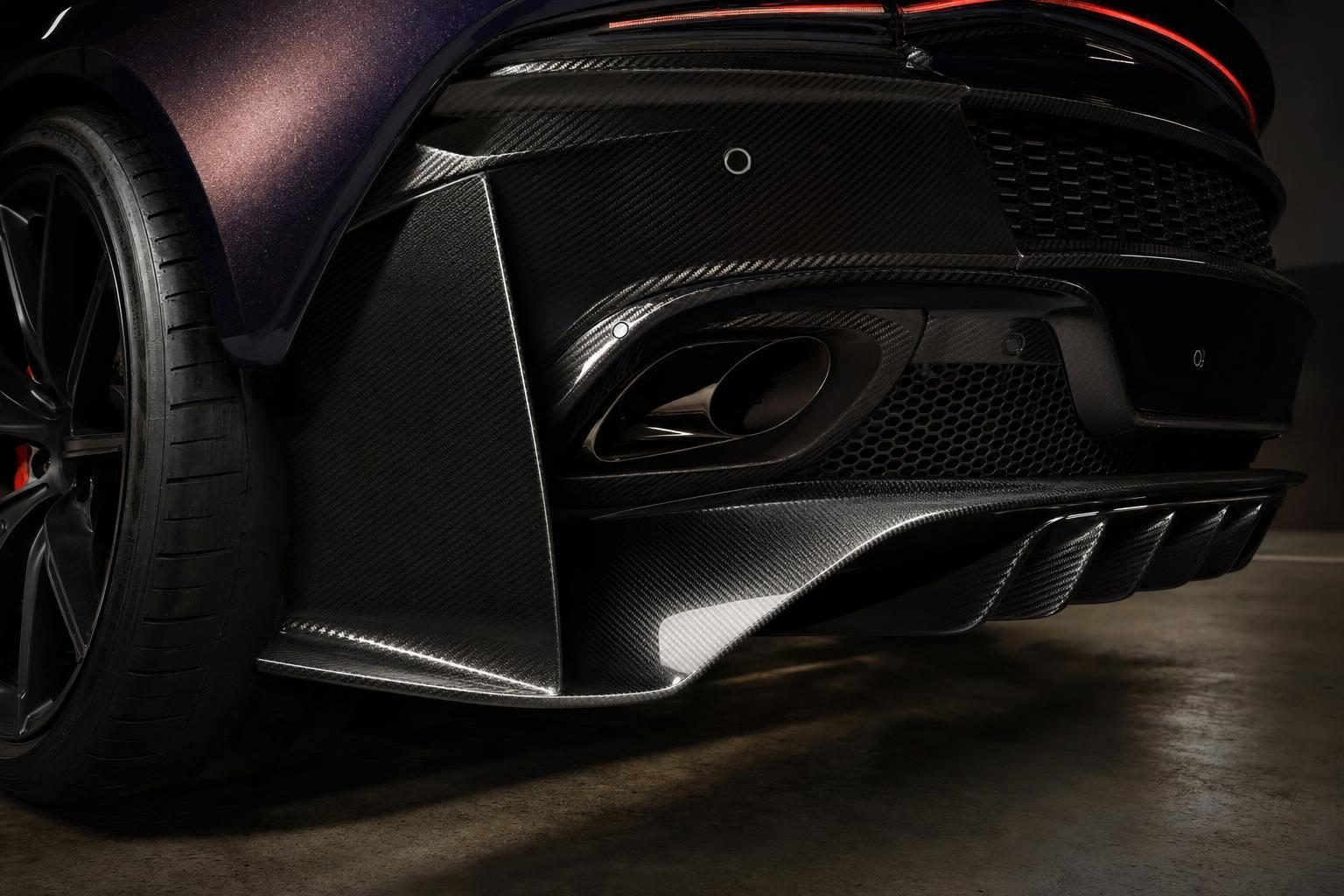
The F1‑inspired twin diffuser: 180 kg total downforce and its handling implications
The twin diffuser is the other pillar. Its job: accelerate air under the car to create a low‑pressure area and “pin” the rear to the road. On the DBS Superleggera, it works in tandem with Aeroblade II to reach around 180 kg of total downforce, per figures gathered by Wikipedia and the official launch release. This clearly positions the car in a high‑speed stability logic, aligned with its quoted 340 km/h top speed.
In practice, this downforce reads as clearer steering in fast compressions and more planted traction out of bends when the 900 Nm arrives. It also influences brake and tyre endurance: a chassis that breathes better under load works more cleanly, hence more consistently. The DBS Superleggera favours package coherence over showmanship.
For road use, the gain is felt chiefly in serenity through sweeping curves and consistent line‑holding. On track, it lets you lean more on the rear axle before aids step in. The nod to “F1 inspiration” refers here to a philosophy of flow management, not a single‑seater transplant into a 2+2 GT: a useful nuance, but the effect is tangible at the wheel.
The carbon‑fibre bonnet and ZF 8‑speed gearbox: two choices that lighten and quicken
The DBS Superleggera makes extensive use of carbon fibre, contributing to a quoted weight of 1,693 kg. The composite bonnet helps lighten the nose and vent heat, directly benefiting weight distribution and performance consistency. The goal is not to set scale records, but to reinforce overall efficiency without compromising perceived quality.
On transmission, the ZF 8HP95, paired with a shorter final drive (2.93:1 versus 2.70:1 on the DB11), intensifies response and access to torque. The tighter gearing exploits the twin‑turbo shove, hence a quoted 0–100 km/h in 3.4 s. The figures, as reported by Wikipedia, confirm the “Super GT” brief: rapid, but above all available across a wide speed range.
In use, this gearbox dovetails with aero‑generated downforce: crisper load changes demand a stable platform, precisely what Aeroblade II and the diffuser deliver. The carbon bonnet, ZF8 and measured downforce trio shapes a homogeneous experience, from bumpy tarmac to sweeping German autobahn curves.
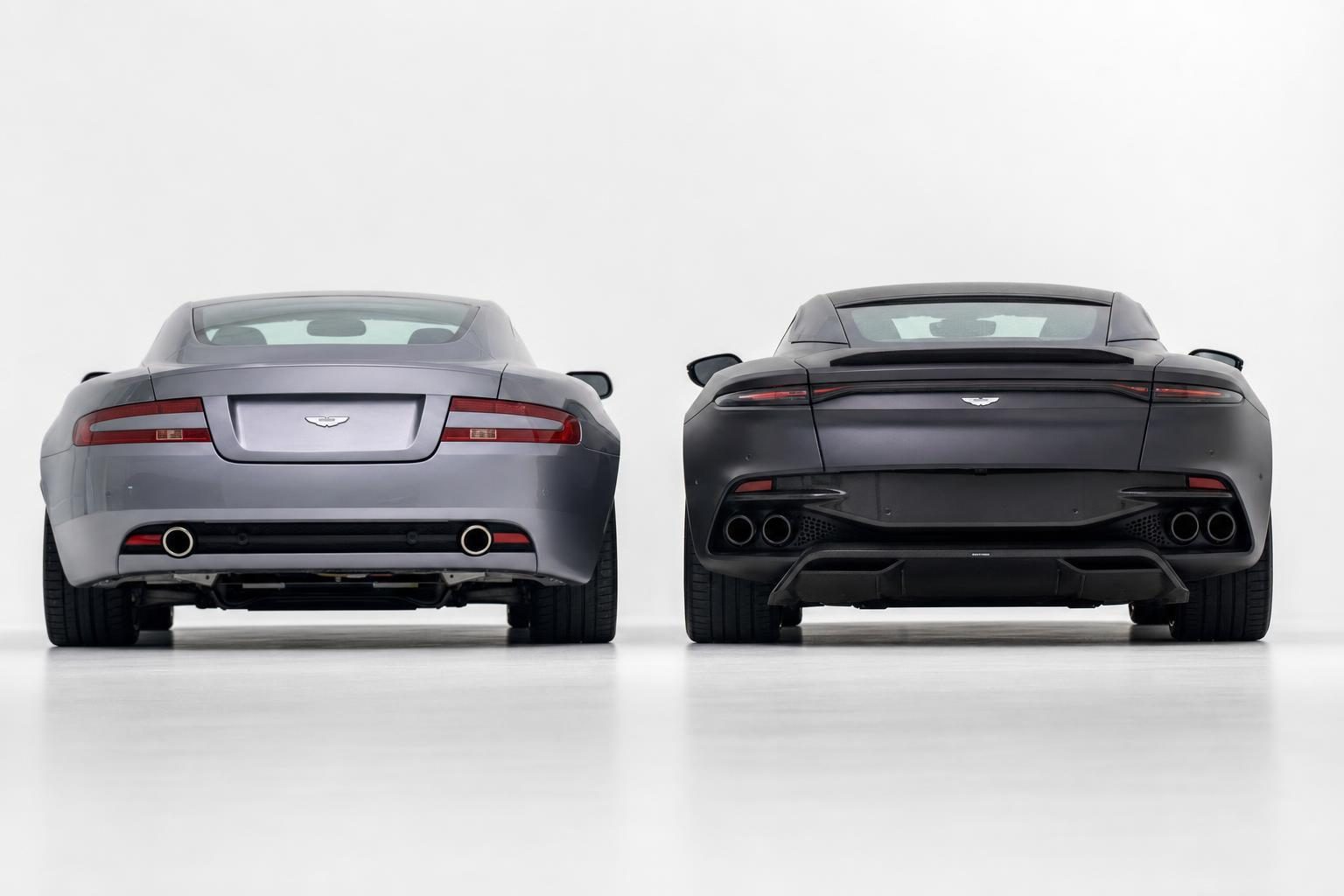
Comparative verdict: 2007 naturally aspirated DBS V12 versus 2018 turbo DBS Superleggera for a collector
Set against the DBS Superleggera, the 2007 DBS V12 embodies another era and mechanical philosophy. Here, we limit ourselves to what the 2018 generation documents: a 5.2‑litre twin‑turbo V12 with 715 PS, 900 Nm; integrated aero (Aeroblade II + twin diffuser) delivering around 180 kg of downforce; mass held to 1,693 kg thanks to carbon fibre; a ZF 8HP95; and a 340 km/h top speed. A bundle of rational arguments for efficiency.
For a savvy buyer, the choice then turns on usage and sensibility. The DBS Superleggera offers superior high‑speed stability, better‑contained traction and greater mechanical availability. According to Autocar’s five‑star launch verdict, as reported by Wikipedia, the execution convinces through its whole rather than any single number.
On the used market, examine the state of key elements: integrity of Aeroblade II ducting, alignment of carbon body panels, diffuser condition and ZF 8HP95 service history. These carry the model’s technical signature and largely justify the generational positioning gap.
Finally, model‑range context matters. The DBS Superleggera follows the brand’s line of “Super” GTs, succeeding the Vanquish and refining the DB11 V12 base. For broader lineage perspective, our dossier on the 2007 DBS helps to place the two generations, while DB12 “Super Tourer” news sheds light on recent strategy.
Conclusion: why the DBS Superleggera resets the aero agenda
In conclusion, the DBS Superleggera stands out for its integrated aero approach: Aeroblade II, twin diffuser, carbon bonnet and ZF8 form a coherent whole. The quoted 180 kg of downforce, supported by official sources and Wikipedia, translates into felt efficiency and rare serenity at speed. For anyone hesitating between the two generations, the DBS Superleggera brings clear technical answers without denying the marque’s elegance: a choice that speaks as much to reason as to the heart.
- Also read: our detailed 2007 DBS profile to place the lineage.
- Collector perspective: the ultimate DBS V12 and its farewell specifics.
- Range news: the DB12 “S”, an evolution of the Super Tourer.
Useful sources: figures and history of the DBS Superleggera; Aston Martin’s official 2018 presentation; French Wikipedia page for additional markers.