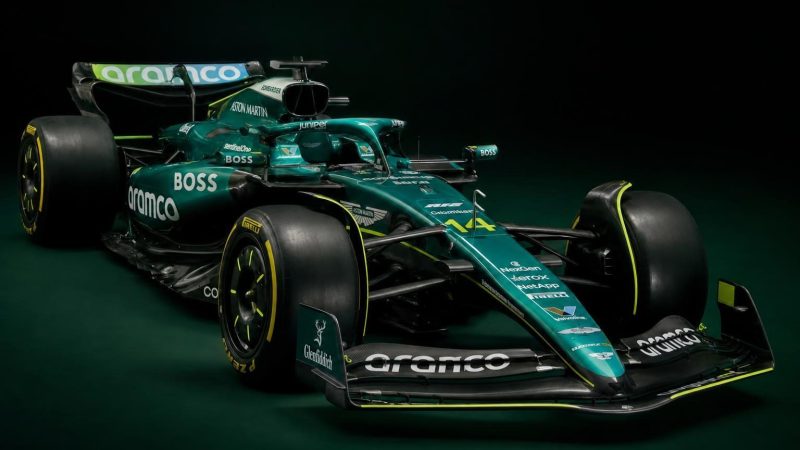
AMR26, décryptage des causes techniques du départ 2026 entre moteur Honda, batterie, vibrations et fiabilité, avec propos sourcés de Newey et des pilotes.
The AMR26 marks a new era for Aston Martin, and this article explains why its start to 2026 is so challenging. We review the technical factors — Honda engine, battery management, vibrations, and reliability — drawing on statements and specialist sources to distinguish between teething problems and genuine structural weaknesses.
The AMR26: Aston Martin’s First F1 Designed by Adrian Newey
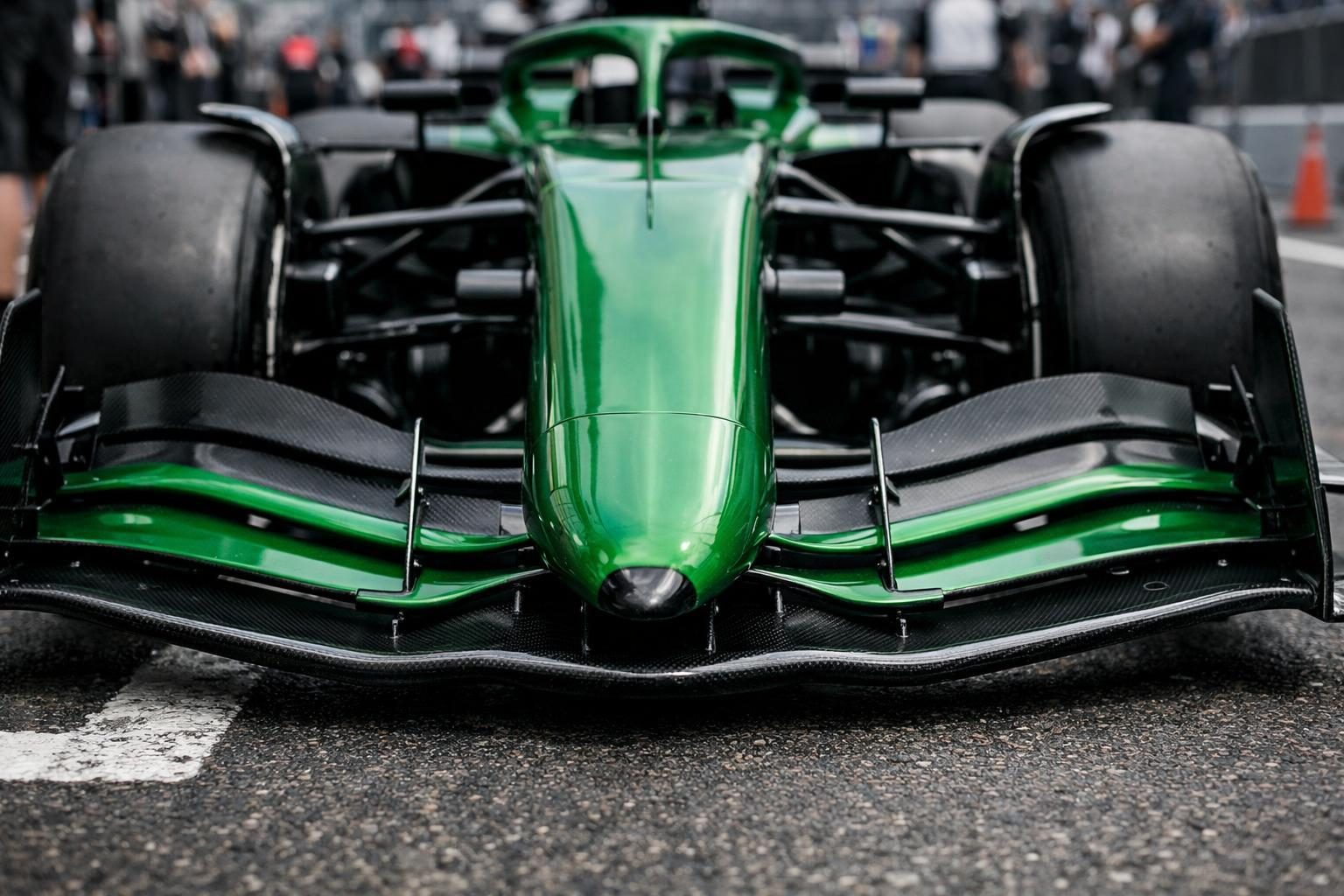
According to Wikipedia AMR26 and f1oversteer, the AMR26 is Aston Martin’s first Formula 1 designed by Adrian Newey, a significant arrival for a team looking to step up. The British designer brings his systemic approach to the chassis-aero coupling, but such a conceptual leap involves a learning curve, especially in a regulatory context that has been profoundly reshaped for 2026.
The car is entrusted to Fernando Alonso, a double world champion, and Lance Stroll (Wikipedia AMR26). Their combined experience aids in analysing the correlations between the track and the wind tunnel, but the initial runs have exposed glaring limitations. During the winter tests in Bahrain, f1oversteer and gpfans reported reliability and pace difficulties, revealing that the AMR26 is not yet expressing the expected potential.
At this stage, the priority has often been to understand the overall architecture rather than pursue raw performance. This is consistent with a chassis completely rethought around a new power unit. To measure the scope of this challenge, it is worth noting that Aston Martin had not fielded an F1 truly shaped by an aerodynamic guru for decades, a shift comparable to that which led to hypercars like the Valkyrie designed with Adrian Newey, in another category.
The Return of Honda as Exclusive Engine Supplier in 2026
The first Aston Martin powered by Honda, the AMR26 seals an exclusive partnership in a pivotal year. According to fr.motorsport, Adrian Newey indicated that Aston Martin overlooked a crucial element at the time of signing: the lack of experience of the newly reformed Honda engine department. This organisational reality partly explains the delicate tuning of the power unit, despite the historical pedigree of the Japanese manufacturer.
The 2026 regulations disrupt the balance of the powertrain: the removal of the MGU-H, 100% renewable fuels, and a distribution of around 50/50 between thermal and electric power (gpfans, fr.motorsport). This impacts aerodynamics, cooling, and battery-inverter integration. The AMR26 must navigate these trade-offs while discovering the unique dynamics of the Honda V6 and its revised hybrid system.
This new era imposes unprecedented compromises on gearbox ratios, energy recovery, and management of electric deployments. In short, even a quality chassis-aero base can be hampered if the power unit mappings and battery strategy are not perfectly harmonised. This is one of the recurring themes of the AMR26 at the start of the season.
To delve deeper into the engine angle, consult the analysis from fr.motorsport on the Aston Martin–Honda agreement and the missing information at the time of signing: a partnership under learning constraints. The main technical outlines of the car are also compiled on the dedicated Wikipedia page.
Vibrations, Battery, and Reliability: The Early Season Ailments
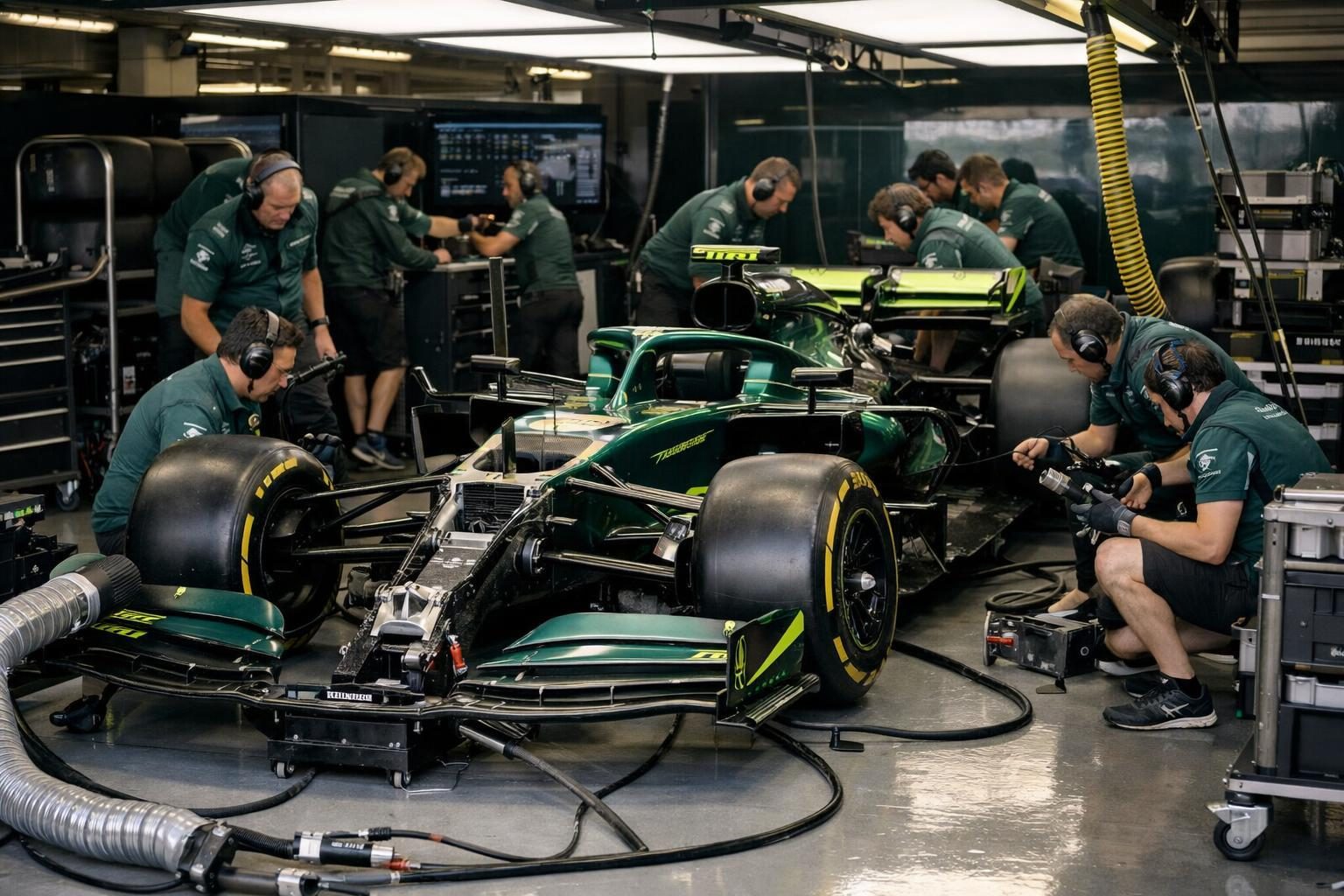
Engine vibrations have been a major issue. Wikipedia AMR26 and paddock-gp report that Fernando Alonso deemed them “unbearable”, to the point of being considered a risk for the drivers. The AMR26 had to reduce certain operating levels to preserve reliability and avoid excessive mechanical stress, which inevitably curtailed pure performance.
On the energy front, the 50/50 logic between thermal and electric requires a high-flow battery and very fine ERS calibrations. During the Bahrain tests, f1oversteer and gpfans pointed out reliability issues, while Lance Stroll mentioned a gap of about four seconds per lap. Such a margin cannot be explained solely by aerodynamics: energy management and limits on electric deployment are plausible suspects in the 2026 context.
The first corrective measures focused on mitigating vibrations and enhancing robustness, with tangible progress. Wikipedia AMR26 specifies that Alonso achieved the team’s first 2026 finish by placing 18th in the Japanese Grand Prix, after a reduction in these vibrations. This raw result does not satisfy anyone, but it validates a step in the right direction: running, collecting data, and ensuring reliability.
The challenge now is to eliminate survival compromises to unlock the car’s balance. Otherwise, the AMR26 will remain under-tuned, with a cumulative deficit between aerodynamic efficiency, traction, and electric deployment.
Alonso and Stroll Facing Performance Delays
The drivers have been candid. Lance Stroll, quoted by gpfans, spoke of a delta of about four seconds per lap during the winter tests. Such a gap immediately alters the roadmap: instead of polishing the details of the AMR26, the team had to secure the fundamentals and prioritise critical areas (vibrations, thermal stability, ERS mapping).
Fernando Alonso, a two-time champion, has brought a clear methodology to de-risk the technical base. His first chequered flag of 2026, 18th in Japan (Wikipedia AMR26), reflects pragmatic small steps rather than spectacular breakthroughs. The priority is to establish a healthy operating window before pushing the limits.
At this stage, the combined feedback from Alonso and Stroll offers a valuable reference to reconnect simulation and reality. Their experiences feed into the evolution plan for the AMR26 — not just in aero parts, but also in energy strategies and system rigidity to contain residual vibrations.
To situate these recent difficulties within the broader history of the brand, our dossier traces the DNA of Aston Martin and its cycles of rebirth, useful for putting a challenging period into perspective: history, brand, and legend of Aston Martin.
What Are the Prospects for Recovery for Aston Martin?
The first lever is reliability. As long as the AMR26 remains constrained by safeguards to contain vibrations and teething incidents, performance is capped. The Bahrain–Japan sequence has nonetheless shown a tangible improvement in vibrations (Wikipedia AMR26), signalling that the validation loops are beginning to pay off.
The second lever is energy optimisation. With the abolition of the MGU-H and the electric share raised to around 50%, the art lies in recovery and deployment without harming the chassis balance. This is an area where Honda and Aston Martin must accelerate their joint maturation. Newey’s initial observation regarding the lack of experience in the reformed engine department (fr.motorsport) highlights the importance of time and technical stability.
Finally, aerodynamics must converge with engine mapping. A car designed by Newey is meant to be efficient overall, but only if the powertrain allows it to exploit its promises. The insights gained by Alonso and Stroll should guide an iterative roadmap, from suspension to brake-by-wire and cooling, to broaden the operating window of the AMR26.
To follow the overall evolution of the road range and the in-house technical know-how, our analysis of recent product dynamics can shed light on Aston Martin’s engineering culture: Vantage and DB12, the return to the top.
Conclusion — Where Is the AMR26 Headed by Mid-Season?
The picture of the 2026 start is clear: the AMR26 is paying the price of a double gamble — new regulatory architecture and the first year with Honda — against a backdrop of vibrations, imperfect battery management, and developing reliability. However, the progress seen between the tests and Japan shows a credible recovery trajectory. If reliability locks in and the hybrid system reaches its optimal window, the car may finally reveal the benefits of the Newey touch. For further facts and references, consult the Wikipedia summary of AMR26 as well as the analysis from fr.motorsport on the Aston Martin–Honda relationship.