DBX S 2026: 23-inch magnesium wheels, Valhalla turbos and optional carbon roof. What truly changes versus the widely known DBX707.
DBX S: Aston Martin’s new combustion pinnacle, crowned Super SUV of the Year 2026 by Top Gear and presented as the most powerful combustion SUV on the market. Here is, in concrete and quantified terms, what sets it apart from the DBX707 it directly replaces: five technical and styling innovations validated by the manufacturer, and what they change both on the road and within the range.
Turbos borrowed from Valhalla: an unexpected tech transfer between SUV and supercar
The first difference lies within the V8: according to Aston Martin, the DBX S turbochargers come directly from the Valhalla programme. This is no mere detail. The brand claims a gain of 20 PS over the DBX707, with all else being equal. The message is clear: the in‑development supercar is now infusing the SUV’s powertrain.
This technology transfer confirms Aston Martin’s strategy to converge its performance platforms. In practice, sharper turbines mean a crisper response and a torque plateau that may be better sustained. Without additional figures disclosed here, the interest lies in the smoothness and consistency at high revs, attributes that are inevitably noticeable on a vehicle of this size.
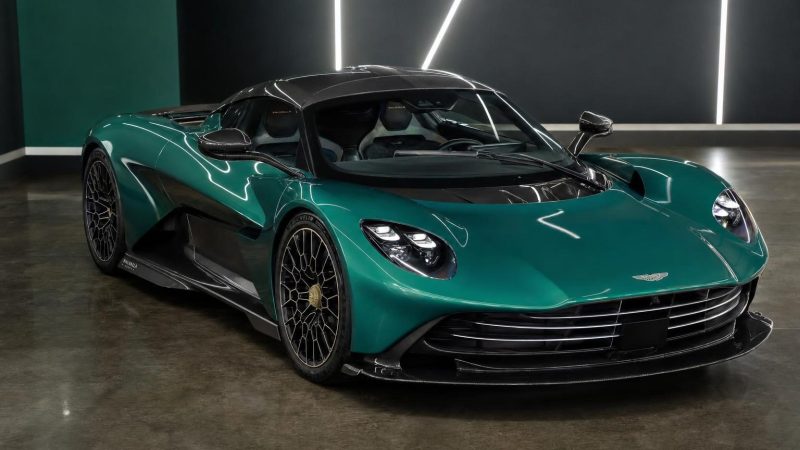
For the brand, it is also an industrialisation milestone. The manufacturer is standardising its technical building blocks between supercar and SUV, allowing development and reliability to be optimised. To place this movement within the family, you can follow the supercar’s evolution in our dedicated file on the Valhalla and its model sheet.
23-inch magnesium wheels: a first in the luxury SUV segment and mass reduction
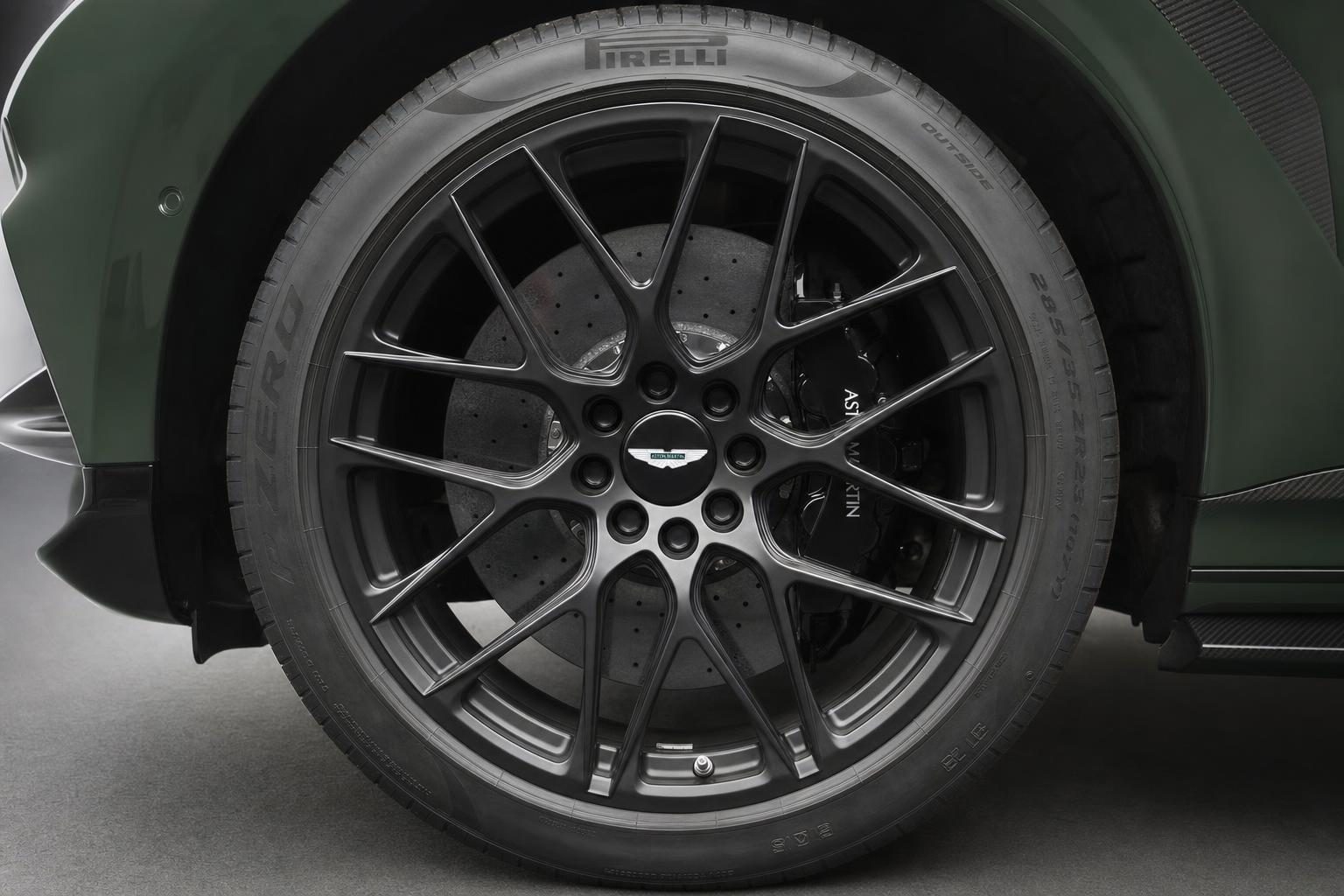
The second innovation, this time highly visible: 23-inch magnesium wheels, touted as a first in the luxury SUV segment. According to Aston Martin, they remove up to 42 pounds of unsprung mass. That is a rare figure at this level: reducing mass at all four corners has a direct effect on suspension agility, steering precision and ride comfort.
Magnesium is not just for show. It combines rigidity and lightness, two qualities that help the chassis follow the road’s profile more faithfully and preserve grip. On a SUV this quick, the reduction in rotational inertia translates into sharper wheel acceleration and deceleration, hence improved traction and more consistent braking.
To gauge the scope of this change versus the previous iteration, our benchmark road test of the earlier model remains accessible in the section dedicated to the DBX707 put to the test. The new DBX S wheels fit squarely within this programme to slim down unsprung mass.
Single-weave carbon roof: 40 pounds removed at the highest point
The third innovation, also focused on mass and dynamics: an optional single‑weave carbon roof, defined by Aston Martin as the largest carbon surface ever fitted to a roof by the brand. The claimed saving reaches 40 pounds, taken from the very highest point of the car. The centre of gravity is therefore directly lowered.
On the road, this reduction up high limits roll and improves responsiveness during rapid weight transfers. It is not just a matter of figures, but of balance. Moving a few dozen pounds in a high‑performance SUV from high to low is felt more keenly than removing them elsewhere. With equivalent equipment, the DBX S gains extra agility, discreet yet real.
This single‑imprint roof adds to the array of lightweight components, benefiting behaviour that is less constrained by mass. Within the range, the styling stroke remains true to Aston Martin’s DNA, which can be set within the lineage of the DBX and its various iterations.
Polycarbonate honeycomb grille and rear diffuser: aerodynamics thoroughly revised
The fourth major difference: a polycarbonate honeycomb grille with more than 25,000 individual facets. Beyond the visual effect, Aston Martin says it helps shift mass distribution rearwards. Aerodynamics here goes hand in hand with lightweight front‑end architecture, still with the aim of a sharper nose and increased stability.
The reworked rear diffuser follows the same pursuit of efficiency. Without quoted downforce figures, the intention stands out: stabilise the attitude, optimise flow extraction and ensure clean airflow. For a SUV at very high cruising speeds, these are cardinal points.
Aesthetically, the ensemble embodies the marque’s cherished “functional beauty”: elements designed to work first, ultimately lending a more assertive stance. The DBX S gains its own identity, distinguishable from the DBX707 without denying its lineage.
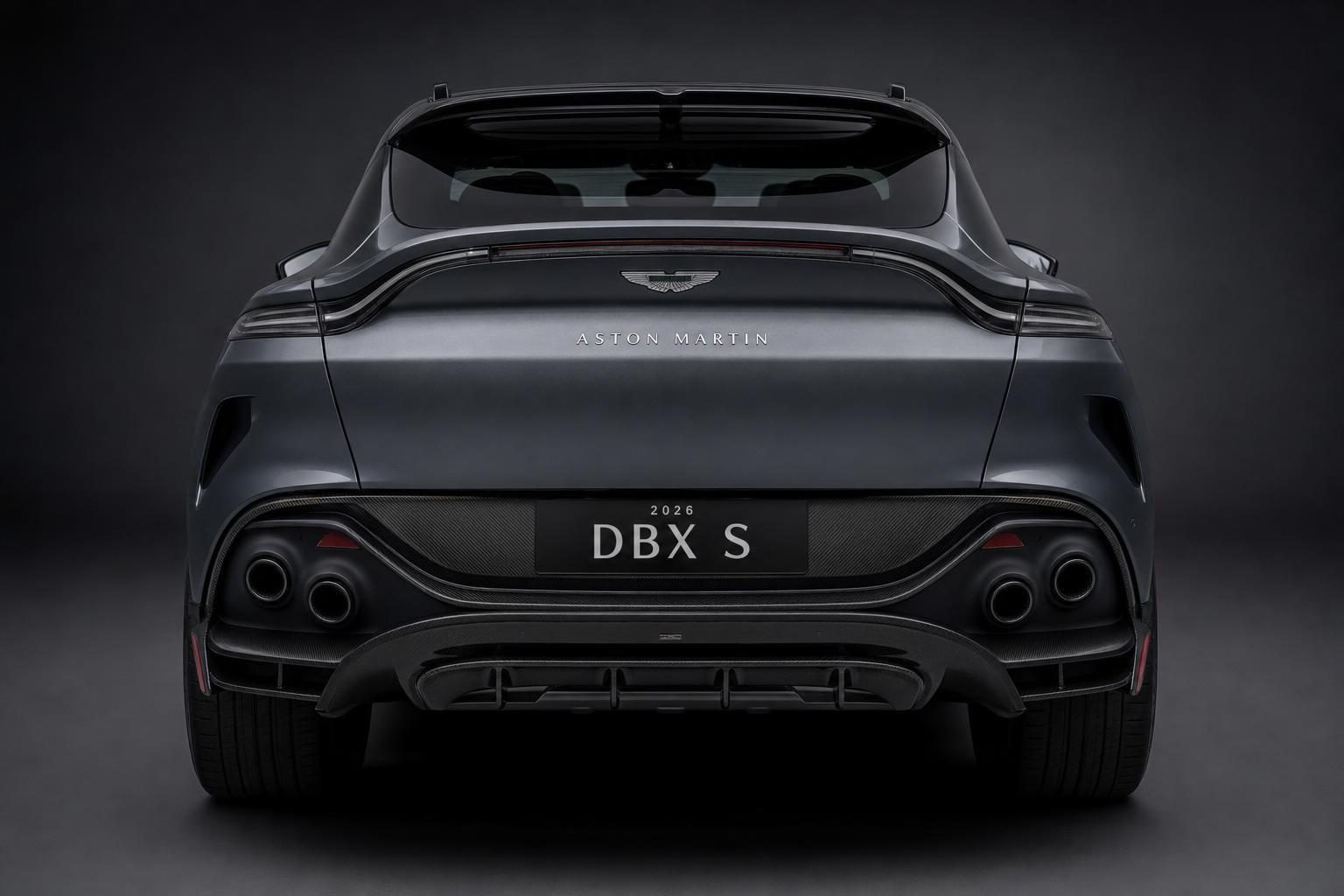
DBX S versus DBX707: power, weight and position in the 2026 range
The comparison opens with power. Aston Martin announces an extra 20 PS for the DBX S over the DBX707, enabling it to claim the title of the world’s most powerful combustion SUV. This point is reinforced by the “Super SUV of the Year 2026” distinction awarded by Top Gear, as relayed by the manufacturer.
On mass, the newcomer scores concrete points: up to 42 pounds saved with the magnesium wheels, a further 40 pounds via the carbon roof, and a redistribution effort with the polycarbonate grille. Without disclosing an official total weight here, the sum of these reductions and the lowered centre of gravity creates a dynamic advantage over the DBX707, with comparable equipment.
Within the 2026 line-up, the positioning aligns with the widening of the “S” family. After the DBX S tested in 2025 and the DB12 S, the Vantage S has joined the lineage according to the specialist press (Carjager, June 2026). The product message is clear: “S” embodies the sharpened performance tier, keener without tipping into extreme radicality, and is establishing itself as Aston Martin’s transversal reference.
For background and the founding model’s specs, our page dedicated to the first‑generation DBX and its evolutions remains the best entry point, while the DBX707 road and track review offers the yardstick for comparison. As for the turbos’ supercar origins, they make sense when reading the Valhalla sheet.
Conclusion: what the DBX S changes in 2026
At the end of this head‑to‑head, the DBX S stands apart from the DBX707 through targeted, measurable gains: Valhalla‑sourced turbos for an extra 20 PS, 23‑inch magnesium wheels shedding up to 42 pounds of unsprung mass, a unique carbon roof removing 40 pounds at the highest point, and revised aerodynamics/front‑end architecture via a polycarbonate grille with more than 25,000 facets. The result is a combustion SUV claimed to be the world’s most powerful and sharper in its responses.
Rather than escalation, Aston Martin opts for effective engineering levers that feed dynamic coherence. In this, the DBX S confirms the maturation of the “S” family within the 2026 range. A technically understated, decidedly British approach that speaks for itself.
To go further — Official model sheet: Aston Martin site (DBX S). Context and model history: DBX page on Wikipedia (en) and DBX page on Wikipedia (fr).