Lagonda Taraf, the carbon fibre sedan with a 533 hp V12, designed for the Middle East and priced at one million dollars. Production still debated.
The Lagonda Taraf is one of the most enigmatic Astons of the last decade, designed as an ultra-exclusive sedan for a select clientele. In this article of documented anecdotes, we revisit the reasons for its resurrection, its technical base, its stratospheric price, and the production figures that are up for debate. The aim: to understand the bold gamble behind the Lagonda Taraf and what this initiative has meant for the brand.
Why Aston Martin Resurrected the Lagonda Name in 2014
The rebirth of the Lagonda Taraf is part of an image strategy: to reactivate a dormant badge to address a micro-market of clients seeking a very high-end sedan, initially in the Middle East. Revealed privately to a few VIPs, the car was conceived as a highly customisable limited series, where exclusivity takes precedence over volume, according to presentations relayed by Motorlegend and auction house Bonhams.
The choice of name is not trivial: “taraf” means “side” in Turkish, a subtle evocation suggesting a distinctive look and a clear orientation towards a clientele from the Arabian Peninsula. In this light, the Lagonda Taraf is not a globally conquering sedan, but a business card affirming Gaydon’s expertise in ultra-luxury bespoke craftsmanship.
By reactivating Lagonda, Aston Martin capitalised on a lineage of prestigious sedans while giving itself the freedom to position the Lagonda Taraf above the fray. The choice of a confidential presentation and targeted distribution has maintained the aura of mystery that continues to surround this model.
A Sedan Derived from the Rapide on an Extended VH Platform
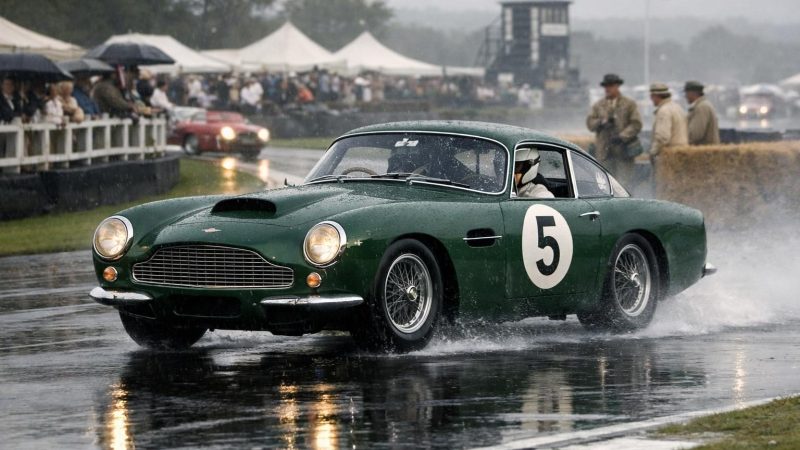
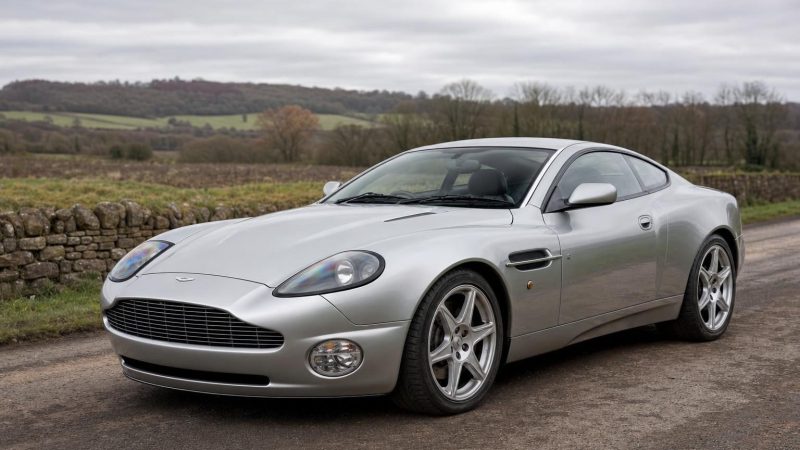
Technically, the Lagonda Taraf is based on an extended evolution of the VH platform, a modular aluminium architecture already shared with the DB9 and the Rapide. This base serves as a backbone while allowing for an increased wheelbase to provide the space and presence expected of a chauffeur-driven limousine. Sources Classic Trader and Motor1 describe this direct lineage with the Rapide, reinterpreted in a much more protocol-oriented manner.
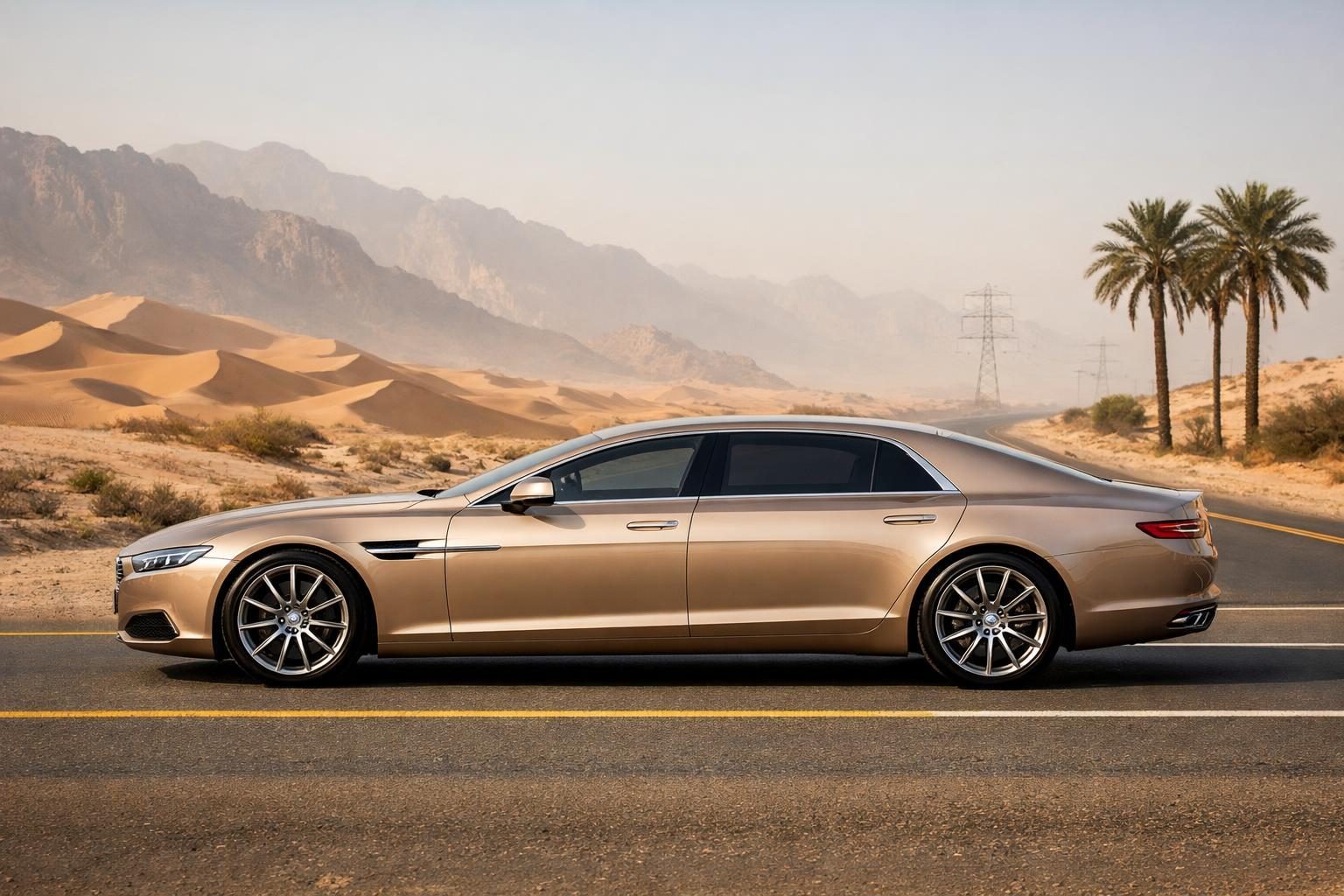
This kinship is strategic: it guarantees known dynamic fundamentals while allowing the Lagonda Taraf to stand out through its presentation and materials. In practice, the sedan adopts a very low and elongated three-volume silhouette, distancing itself from SUV codes or German limousines, to offer a resolutely “Aston” interpretation of the very high-end.
To place the lineage within the range, discover our dedicated sheet on the Rapide and its four-door coupe specifics in our guide to the Rapide, chassis and engine in detail, as well as the complete dossier on the Lagonda Taraf and its assembly particularities.
Carbon Body and V12: The Taraf’s Technology
The body of the Lagonda Taraf is made from carbon fibre, a rare choice for a sedan, which lightens the structure and allows for sculpted shapes. According to Classic Trader and Motor1, this composite skin covers the VH framework, combining rigidity with the demands of artisanal assembly. The design is by Marek Reichman, Aston Martin’s chief designer, whose taut lines and surface treatment give the whole a signature that is immediately recognisable.
Under the bonnet, the Lagonda Taraf features a 6.0-litre V12 with 48 valves, rated at 533 hp by Bonhams. It transmits its power to the rear wheels via an 8-speed ZF Touchtronic III automatic gearbox. Aston Martin claimed 0 to 100 km/h in 4.4 seconds and a top speed of 314 km/h (source Bonhams), figures that place the sedan on par with established sports cars, despite its limousine size.
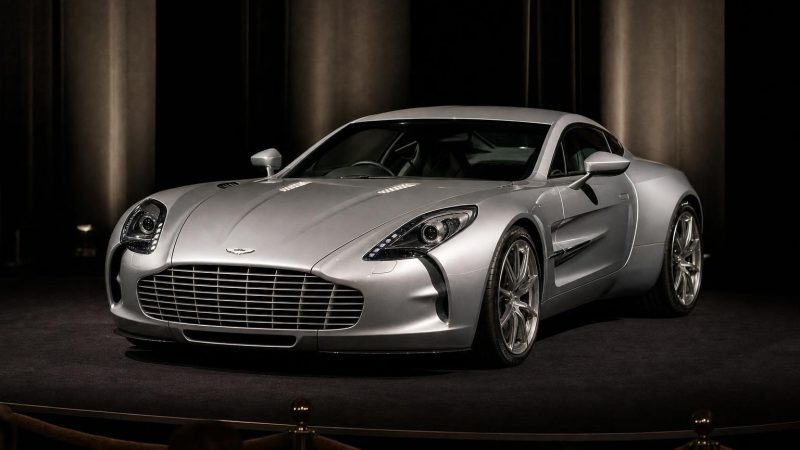
This technical contrast — carbon body, atmospheric V12, and rear-wheel architecture — illustrates the desire to embrace a unique positioning. For those curious about Aston’s craftsmanship, the hand assembly took place in the same workshop as the One-77, a lineage explicitly mentioned by Classic Trader and Motor1. On this subject, our dossier Aston Martin One-77, manufacturing and heritage sheds light on the role of this exceptional workshop.
One Million Dollars: The Price That Sparked Debate
The price of the Lagonda Taraf, unveiled in Geneva, sparked as much discussion as the car itself: around one million dollars, according to Bonhams. The gap was striking, with a price more than five times that of a Mercedes-Maybach S600, a benchmark in the segment. This pricing strategy aimed to sanctify the exclusivity of the project, well beyond the codes of traditional limousines.
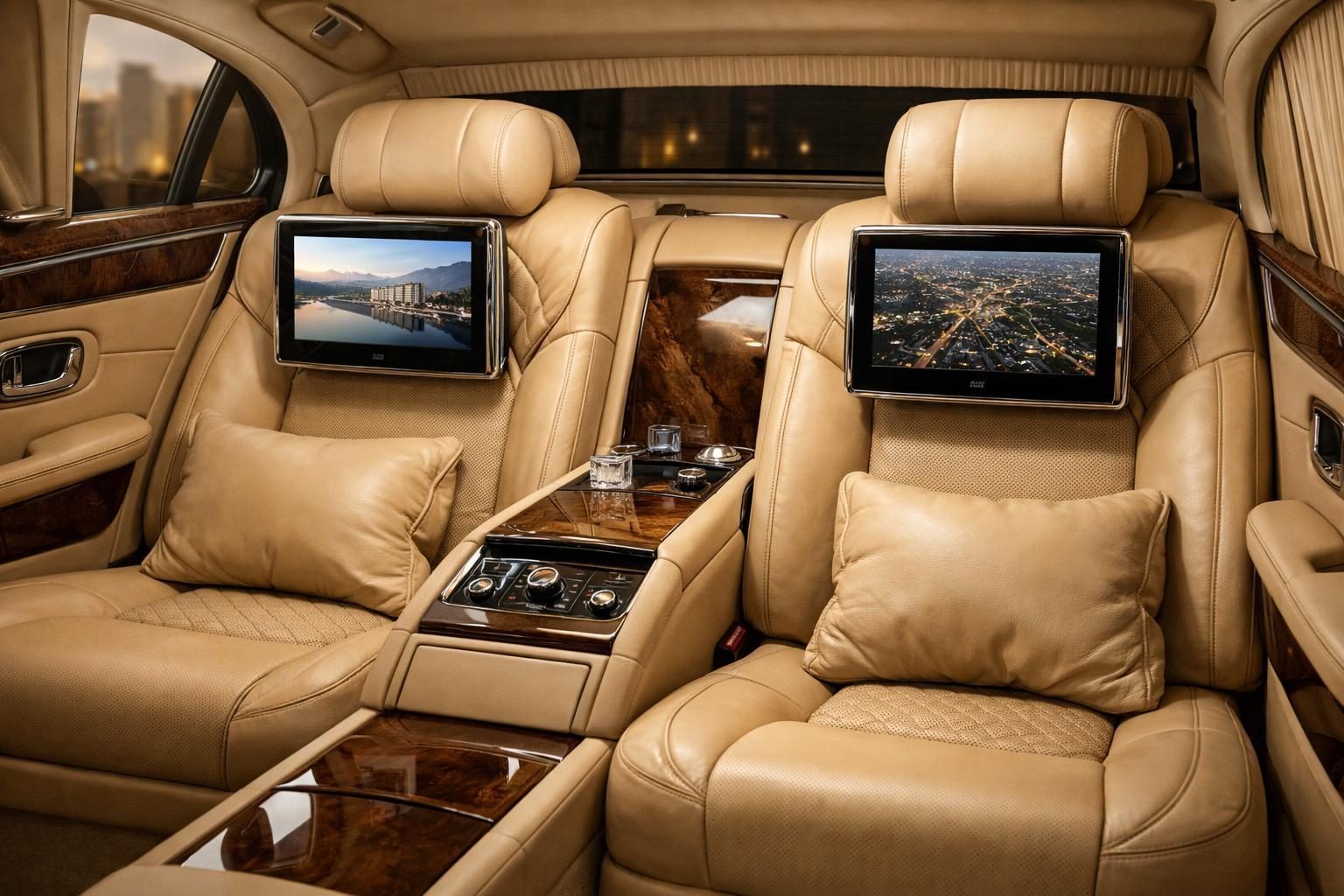
In reality, the entry ticket bought not only noble materials and performance but also an ultra-confidential programme, impeccable finishes, and a direct relationship with the workshop. The Lagonda Taraf thus embraced being a technological and artisanal showcase, whose price, alongside the technical specifications, served as a strong signal to the targeted clientele.
To put this price into perspective and consult auction and market data, see the detailed sheet published by Bonhams: description and figures of the Lagonda Taraf sold at auction, as well as the technical summary from Classic Trader: overview of the model and specifications.
How Many Taraf Were Really Produced
The exact production volume of the Lagonda Taraf remains one of its mysteries. Sources differ significantly, and it is essential to cite them. Classic Trader and Bonhams both mention a total of 120 units. Motor1, on the other hand, refers to 150 units. Finally, the media unefilleauvolant speaks of around 200 cars. These inconsistent figures contribute to the legend of the model.
Why such dispersion? Firstly, because the Lagonda Taraf was conceived as a made-to-order series, in a market that was initially regionalised. Secondly, because the artisanal assembly and measured communication around the project have maintained a degree of opacity. In the absence of an official consolidated figure from these sources, the range of 120–150, and possibly up to around 200 units according to unefilleauvolant, frames the exceptional rarity of this sedan.
For collectors, this uncertainty can influence the perception of value. It certainly reinforces the idea of a confidential production, and thus the status of a unique piece that each surviving Lagonda Taraf embodies in the secondary market.
Conclusion: What the Lagonda Taraf Tells Us About Aston Martin
By gathering these facts, the Lagonda Taraf emerges as a manifesto of craftsmanship and strategic boldness: VIP presentation in the Middle East, carbon body, 533 hp V12, and a price of around one million dollars. Sources such as Bonhams, Classic Trader, and Motor1 converge on the technical DNA and ultra-exclusivity approach, while diverging on the exact number of units, proof of the programme’s confidentiality.
Beyond curiosity, the Lagonda Taraf reminds us that Aston Martin knows how to shape extraordinary objects, backed by the VH platform and an exceptional workshop, that of the One-77. To delve deeper, explore our dossiers dedicated to the Lagonda Taraf, history and key data and the Rapide, technical base and heritage. In the Aston universe, the Lagonda Taraf remains a rare, fascinating, and debated milestone — and that is precisely what fuels its legend.