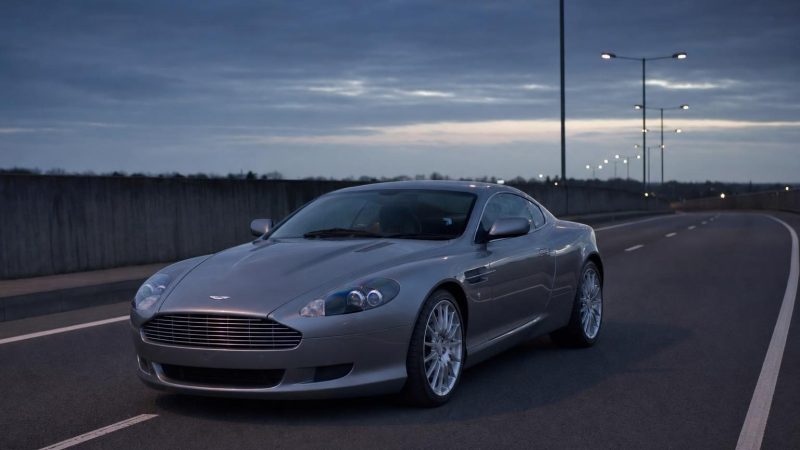
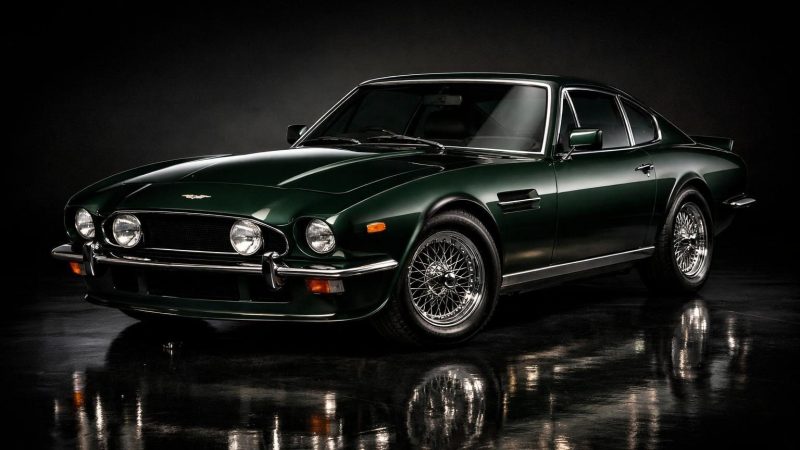
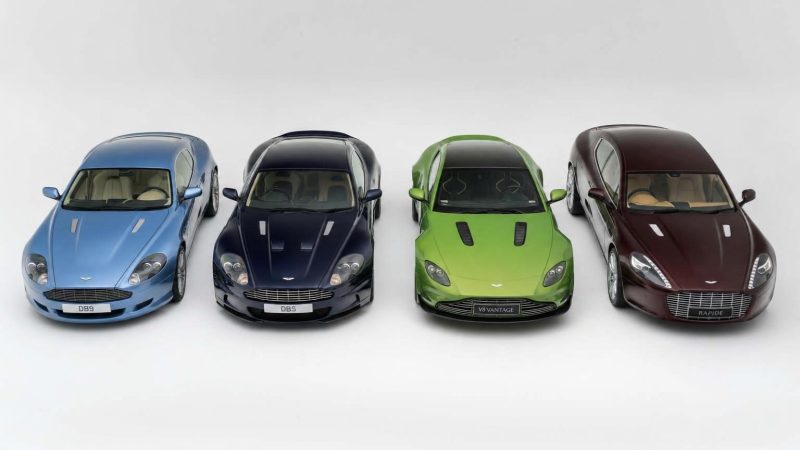
V12 Vantage 2009: fitting a 6.0‑litre V12 into Aston Martin’s shortest chassis was a simple idea. A look at 5 technical and cultural aspects that set it apart.
The V12 Vantage was born from a simple, stubborn idea: squeeze a 6.0-litre V12 into Aston Martin’s most compact chassis. This contrarian choice forged a car with a singular personality, praised by the contemporary press for its mechanical purity and unfiltered character. Here, in five points, is why this short coupé and its big naturally aspirated engine became a reference among modern Astons, balancing accepted technical constraints with preserved sensations.
A V12 in Aston Martin’s smallest chassis: the technical decision and its constraints
Planting the 48-valve V12 from the DB9/DBS family into the Vantage shell was British orthodoxy at its most daring. According to Aston Martin’s dedicated page, the V12 Vantage indeed belongs to the line of past models powered by this 6.0-litre, here adapted to the Vantage’s short format. The intention was clear: blend the GT DNA of the twelve-cylinder with a more compact footprint for a direct mechanical response and a denser road feel.
This decision immediately raised challenges of packaging, cooling and balance. The 2009 press, notably Autocar, documented the adaptations required to make the mass and volume of the block coexist with a front end originally designed for a V8. The result is as much surgical assembly as it is character tuning: more engine, less superfluous inertia, and a car that speaks plainly.
This intentional contrast — a large engine in a compact shell — explains the model’s special aura. This is not about absolute versatility, but a concentrated, “analogue” experience ahead of its time, whose singularity won over testers at evo and Autocar: the V12 Vantage puts the driver at the centre and lets the engine set the tempo.
510 PS, 6.0-litre naturally aspirated and manual gearbox: the figures that define the character
According to the Wikipedia page devoted to the model and echoed by the British reference press, the V12 Vantage produces 510 PS in its launch configuration. Several sources, however, mention a power divergence (510 PS vs 517 PS) depending on markets and measurement standards (DIN versus SAE): a minimal gap, yet significant for purists. The essence lies in the temperament of a 6.0-litre naturally aspirated V12 that breathes unfiltered and delivers progressive, readable, sonorous thrust.
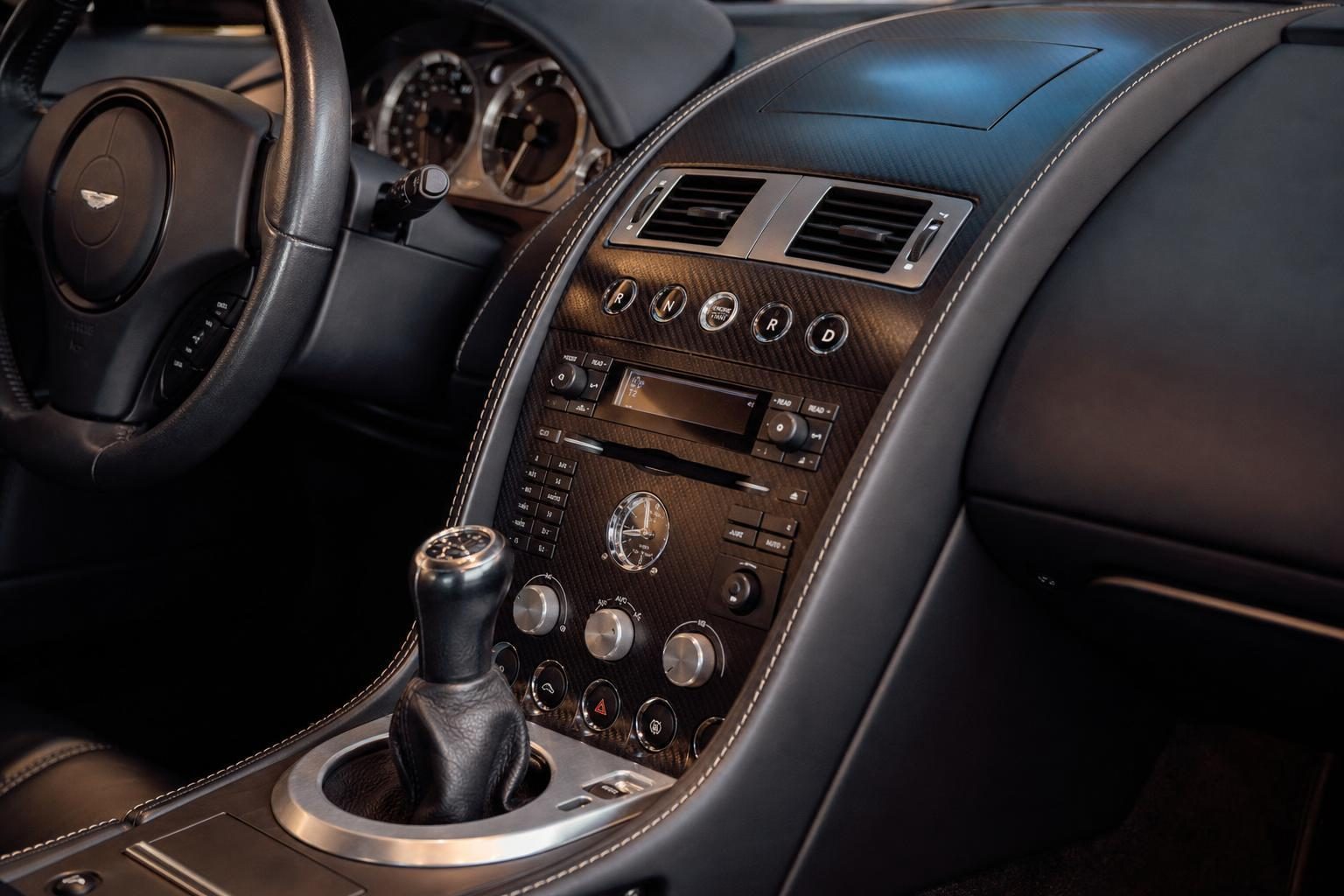
Another pillar of its identity: the 6-speed manual gearbox, offered from the outset. At the time, it was a rarity in the segment, noted by evo magazine, and a key component of the man–machine relationship. The choice of lever and clutch contributes to that analogue precision so sought after in an era already tipping towards automated transmissions.
Beyond the power figure, the “big engine/short format” mechanical pairing shapes a crisp throttle response and traction to be mastered. The V12 Vantage demands finesse, but rewards with a mechanical connection not yet smoothed by digital intermediaries.
The structural and aerodynamic changes imposed by the engine
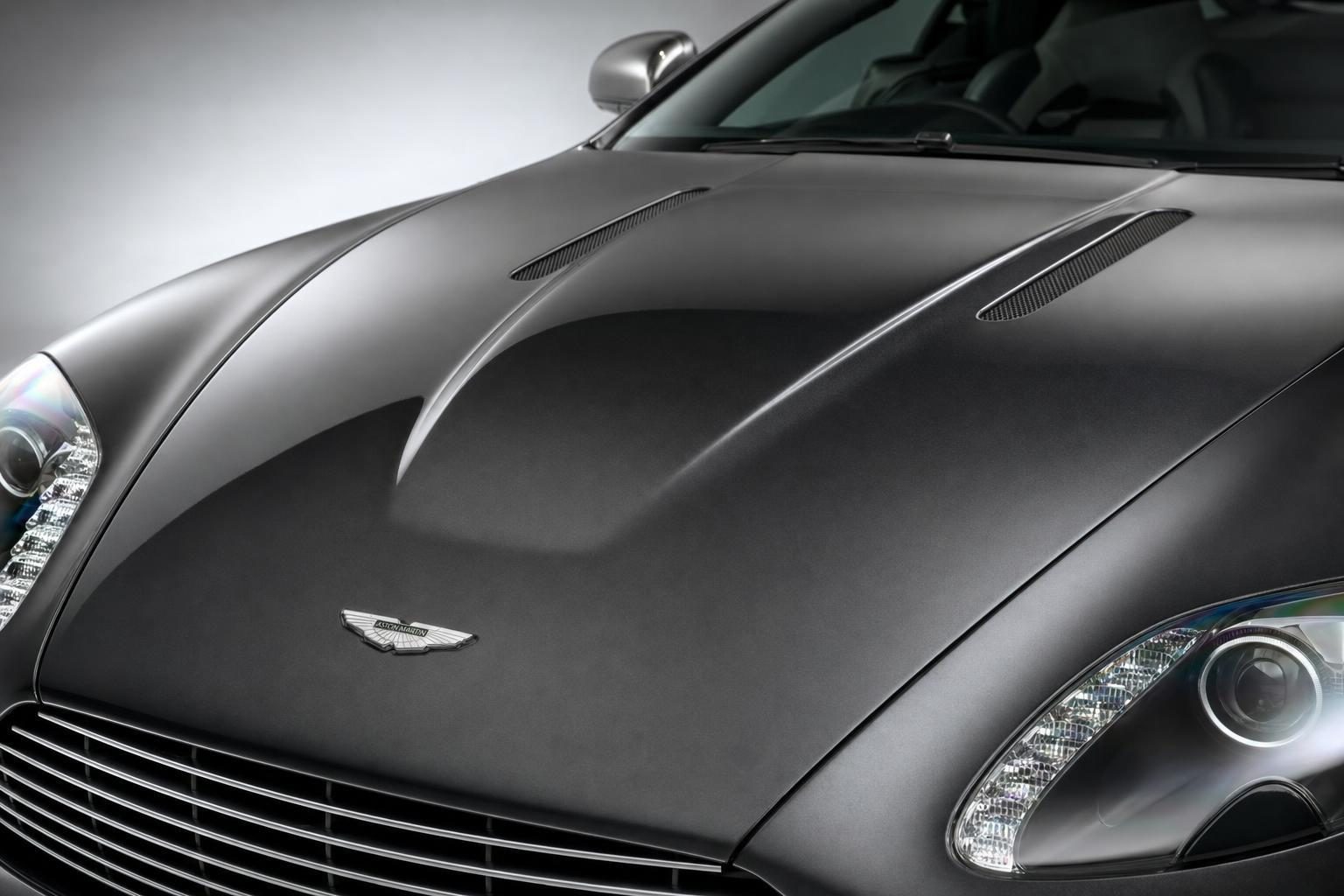
To house the 6.0-litre, Aston Martin revised structural and body elements. The 2009 press (Autocar) mentions a noticeably domed bonnet to accommodate the V12’s height and ancillaries, as well as a specific rear diffuser to stabilise the stance and manage airflow beneath the car. This two-pronged approach — volume up front, extraction at the rear — is not decorative: it answers packaging needs and high-speed stability.
The chassis was also adjusted to cope with the extra mass over the front axle. Without chasing the theoretical balance of a prototype, engineers worked on local distribution and rigidity to preserve the Vantage’s agility while channelling the V12’s potential. This compromise explains the sensation of a sports car more compact than long-wheelbase GTs, yet denser to handle than a standard V8 Vantage.
Finally, the addition of these aero and structural items defines the V12 Vantage’s highly functional aesthetic. The bonnet’s curves, the vents and that dedicated diffuser tell a technical constraint before they tell a style. It is precisely this engineering candour that fed its reputation.
Limited production and S versions: how many and what differences
The V12 Vantage remained a naturally limited proposition by its technical positioning and build cost, without the brand detailing, in accessible indexed releases, an exact production by model year. This vagueness fuels its perception as a rare object, more confidential than long-wheelbase V12 GTs.
In 2012, the V12 Vantage S broadened the brief. The specialist press indicates power raised to 565 PS and the introduction of the optional 7-speed Sportshift III gearbox, an evolution designed for quicker shifts and more versatile use. The S thus stands out with a sharper powertrain and a choice of transmission, while retaining the philosophy of a Vantage with a V12 heart.
Whether you favour the initial version with its manual gearbox or the more powerful S, the spirit remains the same: a compact Aston Martin driven by the naturally aspirated 6.0-litre from the DB9/DBS family, as recalled by official sheets and archives and evo’s analyses. The key differences lie in the extra power, the transmission and the refinement of the setup.
V12 Vantage in 2026: values, maintenance and standing in the recent-classics market
In 2026, the V12 Vantage stands as a recent classic with a clear pedigree: big naturally aspirated engine, compact format, manual gearbox available and an image of engineering worn on its sleeve. Its values reflect this singular equation and the model’s relative rarity, even if exact volumes by year are not published in accessible releases. The nominal power differences (510 versus 517 PS depending on standards and markets) interest specialists without altering the broader appeal.
From both usage and collecting perspectives, the core remains mechanical authenticity. The 6-speed manual gearbox of the initial V12 Vantage is a major asset for a discerning audience, while the V12 Vantage S attracts with its extra power and Sportshift III option. In both cases, buyers seek a car with proper history and servicing to factory prescriptions, with Aston Martin’s reputation for excellence a useful benchmark for the savvy purchaser.
On the youngtimer and “modern classic” market, the V12 Vantage occupies the niche of analogue, naturally aspirated sports cars — a species growing rarer amid paddle-shift transmissions and ubiquitous aids. It is precisely this tension — a big V12 in a small chassis — that gives it a singular place in 2026, between driving pleasure and heritage value.
Conclusion – what the V12 Vantage really changed
The V12 Vantage redefined, within Aston Martin, how to approach the modern sports car: a DB9/DBS V12 in the short Vantage, 510 PS quoted (with a reported gap up to 517 PS depending on standards), a 6-speed manual gearbox standard at launch, and visible structural and aerodynamic adjustments because they were necessary. Neither showy nor smoothed over, it cemented the idea that an Aston could remain mechanically forthright in the age of automation. In that sense, the V12 Vantage remains a beacon: a car of convictions, whose character is born of a mastered antagonism — and whose appeal, in 2026, shows no sign of fading.
- Consult the official past models page to place the V12 Vantage within the range on Aston Martin’s site: overview of its features and lineage.
- For a technical summary and the reported power discrepancies, see the dedicated encyclopaedic article and evo magazine road tests.
Also on AstonLegacy: