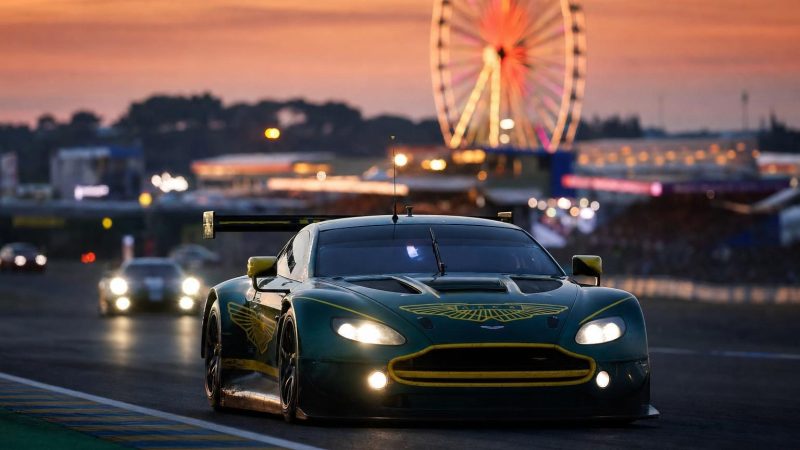
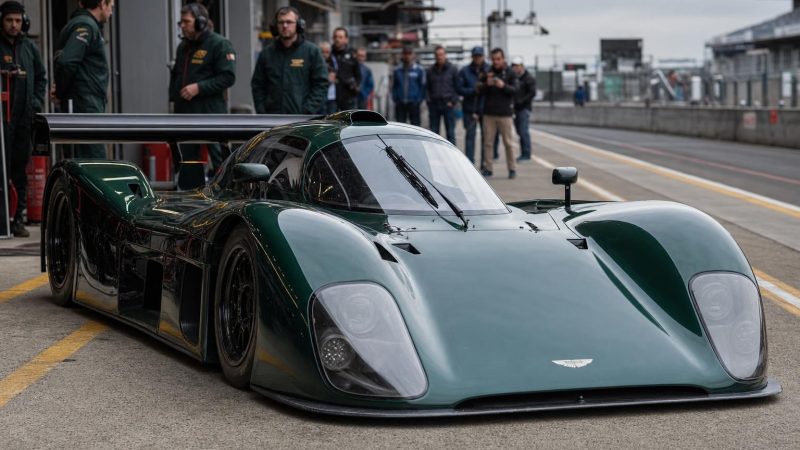
DBR9, from the road-going DB9 to the winning GT1: Prodrive origins, formative 2005 season, 2007 mandates (AC, white roof) and LMGT1 double 2007-2008.
DBR9: three letters and a number that tell the methodical translation of a road-going GT, the DB9, into an endurance machine capable of winning Le Mans in LMGT1. In these lines, we revisit what Prodrive kept, what it rebuilt, and how three key seasons — 2005, 2007 and 2008 — shaped Aston Martin Racing’s GT1 trajectory up to the end of the era in 2011.
From road-going DB9 to racing DBR9: what Prodrive preserved and what it rebuilt from scratch
The starting point is clear: the road-going DB9 provided the framework. According to Wikipedia DBR9, the programme retained the chassis, the V12 block and the cylinder heads from the DB9. This mechanical core formed a direct lineage between grand touring and competition, a deliberate choice to preserve the DNA while opening the door to the freedoms of GT1 regulations.
Almost everything else was rethought for international endurance. Still according to Wikipedia DBR9, the car was re-engineered for high performance and fitted with carbon-fibre body panels — with the notable exception of the roof. This composite skin lightens, stiffens and enables aerodynamics tailored for high-speed stability. The roof, however, remains specific, and would become a subject in its own right two years later.
The technical and sporting direction bears Prodrive’s signature, tasked by Aston Martin Racing with developing and managing the programme. The name itself, derived from the 1959 DBR1, reconnects with the marque’s Le Mans victory. This is very much a continuity of intent: turning an elegant GT into a credible endurance tool without betraying the signature or the in-house meticulousness.
To place this model alongside its road-going relative, see our feature on the genesis and role of the DB9 in the range, and the dedicated page for the DBR9 within our models.
2005: class win at Sebring, third at Le Mans — an instructive learning season
From its 2005 debut, the British Racing Green coupé marked its territory. The DBR9 won the LMGT1 category at the 12 Hours of Sebring straight out of the box, and with measured authority. For a car born from a DB9 and refined by Prodrive’s rigour, that was a sign: the base was sound, the method too.
Le Mans that same year told another endurance truth: management. The car finished third in the LMGT1 category, behind Corvette Racing, due to fuel issues. Lesson learned: beyond outright speed, race economy — consumption, pit stops, temperatures — yields positions. That third place, frustrating at the time, structured the season: they knew what to make reliable, and where to gain time.
This first campaign also validated the cooperation between Aston Martin Racing and Prodrive. Development priorities emerged on the process side: fine-tuning the aerodynamic balance afforded by the carbon body, and consolidating the endurance chain around the DB9-derived V12. Nothing spectacular, all surgical: adjust, simplify, secure.
To revisit the full winning thread at Le Mans, our feature on the two LMGT1 wins in 2007–2008 usefully complements this season-by-season technical analysis.
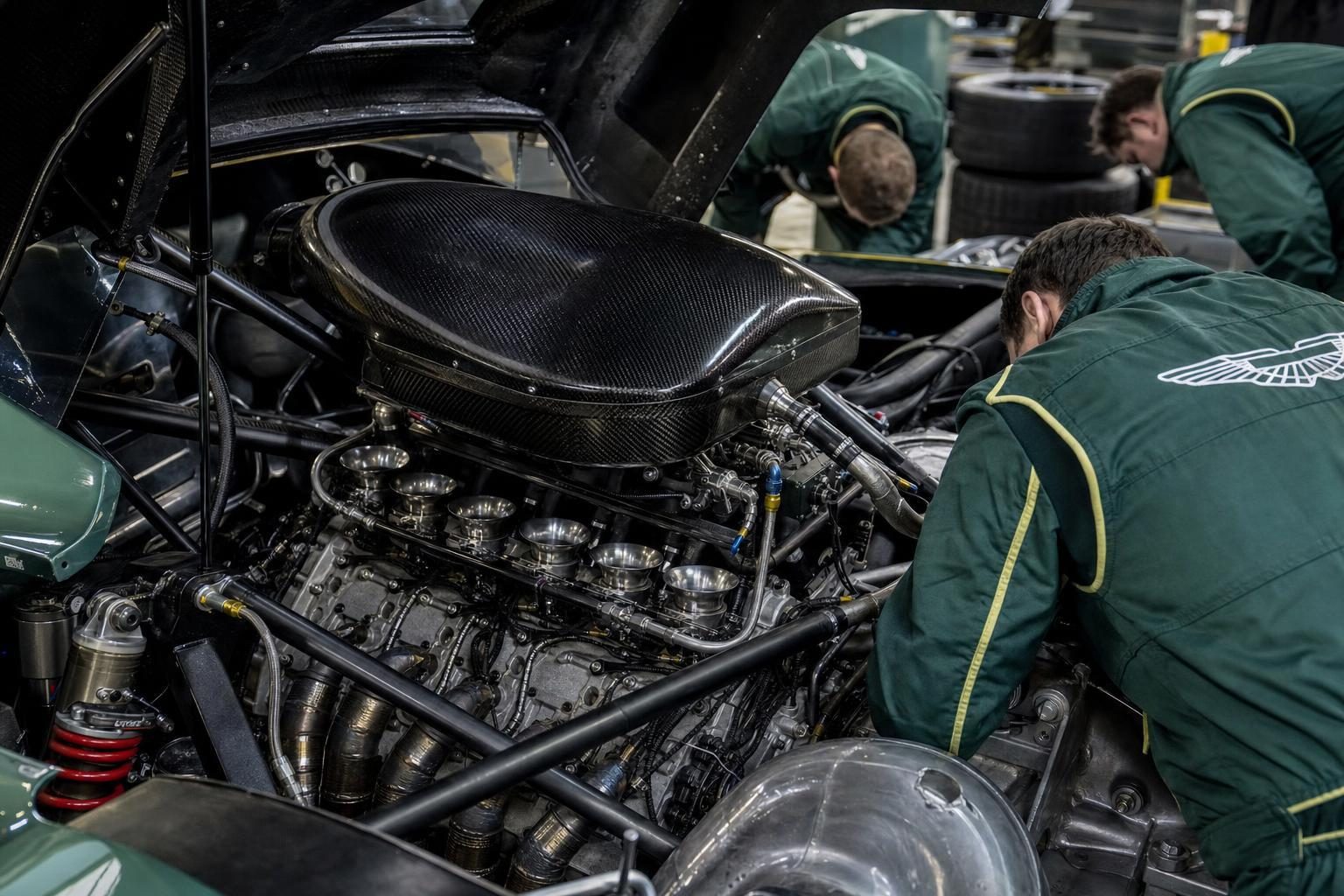
2007: first regulatory changes, mandatory air conditioning, white roof — how Prodrive turned constraint into advantage
In 2007, the ACO mandated air conditioning on board. On paper, that meant extra weight and complexity; on track, it was the opportunity to stabilise driver performance over long stints. Prodrive integrated the requirement and worked the entire thermal package: less heat, more consistency.
Another distinctive sign was the white roof, adopted to better resist heat and lower cockpit temperatures. Again, the team turned a constraint into a lever for durable performance. When endurance is played out to the nearest degree, that heat management is worth tenths per lap at the end of a stint.
This season also showcased the design’s benefits: carbon bodywork (apart from the roof), proven DB9 chassis and engine, and a powertrain reworked for consistency. The DBR9 didn’t chase theatrics; it capitalised on a reliable base and a nuanced exploitation of the rulebook. It’s discreet, and often decisive.
For an overall perspective on the car and its legacy, the DBR9 on Wikipedia entry and the Aston Martin Media page gather the programme’s key milestones.
2007 and 2008: two consecutive LMGT1 victories and what they cost in development
The outcome is well known: LMGT1 class victories at Le Mans in 2007 and 2008 for Aston Martin Racing. Two triumphs that validated an iterative approach: fortify the fundamentals, then claw back the details that add up to minutes saved over 24 hours.
This development “cost” isn’t read in numbers here but in technical trade-offs. Each evolution — integrating air conditioning, thermal management via the white roof, optimising the reworked components — demanded compromises between mass, cooling and mechanical accessibility. That’s the grammar of endurance: the best lap matters, but the best average wins.
In practice, the guiding line remained stubbornly clear: DB9 chassis, V12 and heads for lineage; carbon bodywork for efficiency; and a Prodrive-led programme that knew where to focus effort. That combination was paid for in testing, workshop hours and procedural rigour. And twice over, on the results sheet.
The nod to heritage is no accident: named in echo to the DBR1 that won Le Mans in 1959, the modern Aston wrote its own page without seeking grandiloquence. The method spoke for it.
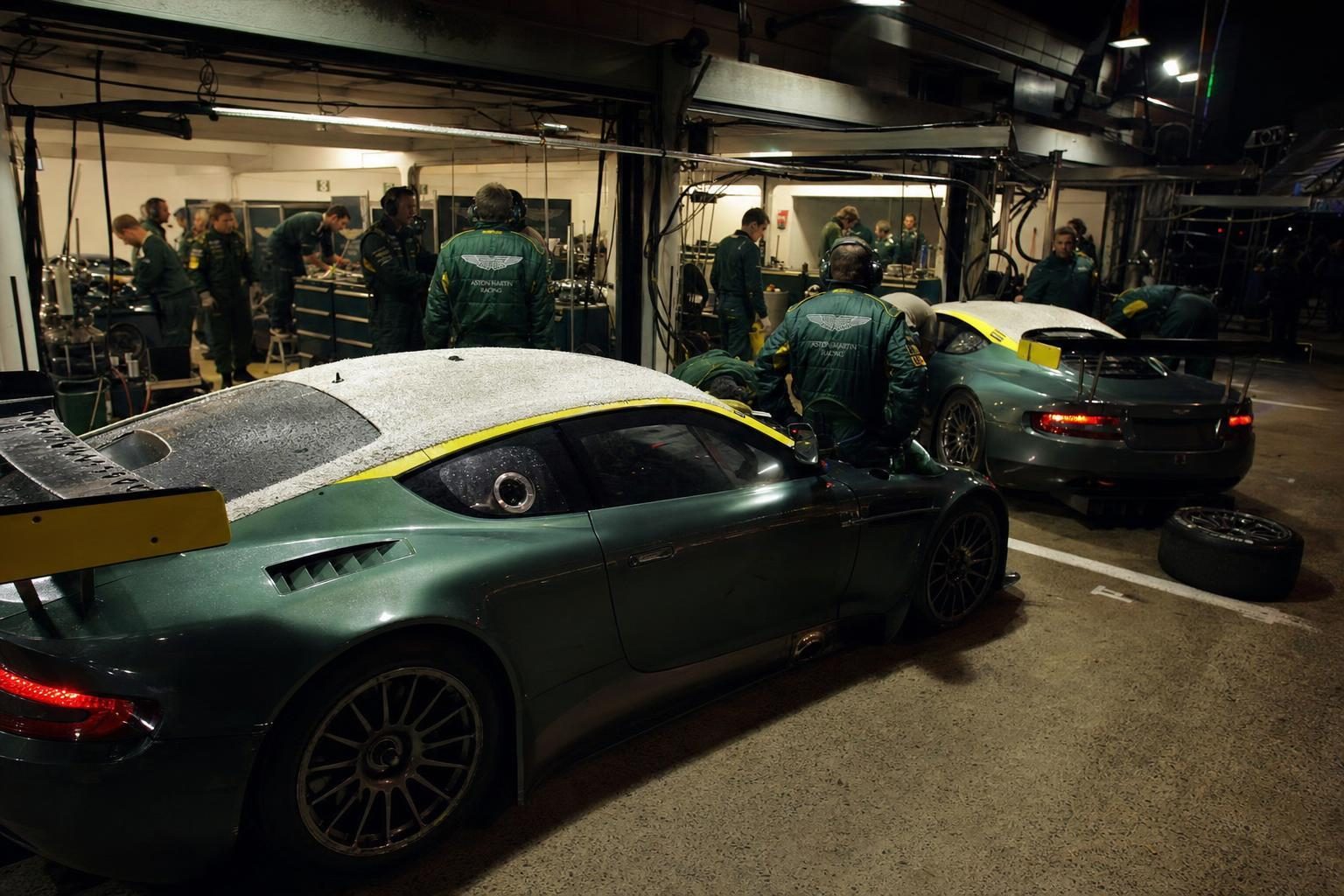
The DBR9 legacy: from GT1 to GTE, the continuity of a racing philosophy
The DBR9 raced actively until the extinction of the GT1 category in 2011. In the meantime, it defined a way of fielding a road-going GT in competition: start from an identifiable base, preserve the essentials (chassis, V12, heads), and rebuild around it an optimised endurance platform — carbon bodywork, thermal management, exploitation of the regulations. This philosophy flowed into what followed, notably in the GTE era, by continuity of intent if not of rules.
On the industrial side, the Aston Martin Racing–Prodrive alliance showed the effectiveness of a programme entrusted to a partner with endurance reflexes. According to Wikipedia DBR9, Prodrive led development and operational management: clear governance, a tightened development cycle, and transparent technical choices.
For those following the marque’s GT lineage, the legacy is also visible in the coherence of the range: the DB9 as matrix, the racing car as laboratory. Worth exploring: our analysis of the 2007–2008 Le Mans victories and the DBR9 model page, alongside the benchmarks of the road-going DB9.
In conclusion, the DBR9 embodies a British path to performance: little noise, lots of method. A path that delivered two LMGT1 wins at Le Mans and laid the foundations for an endurance discipline where the DBR9, quite simply, set the standard.