Valkyrie AMR Pro : piste pure, V12 Cosworth sans hybride, ventes closes avant Genève 2018 et programme client dédié. Décryptage technique et usage.
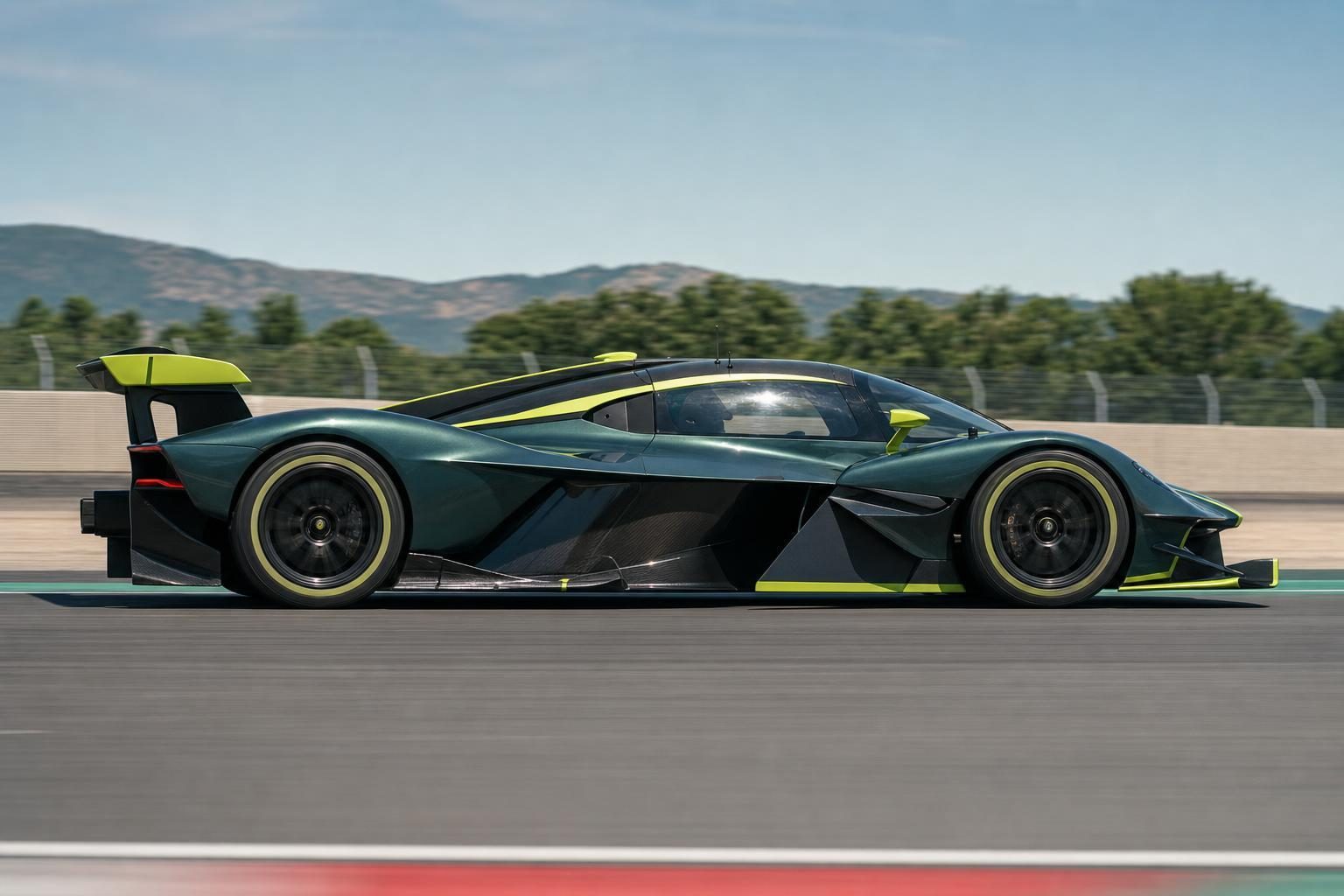
Valkyrie AMR Pro is the track-focused variant that pushes the Valkyrie philosophy beyond the road. The result: a 6.5-litre Cosworth V12 with no hybrid assistance, a customer programme inspired by the Vulcan and an uncompromising brief. Here, point by point, is what sets this customer racing version apart from the road car.
From road Valkyrie to Valkyrie AMR Pro: what Newey and Aston Martin removed and why
The clearest dividing line between the road-going Valkyrie and the AMR Pro is the removal of the KERS-style hybrid system. The AMR Pro retains the same naturally aspirated 6.5-litre V12 developed by Cosworth, but dispenses with electric assistance. Deleting KERS removes a source of instant torque and energy management, and simplifies both mechanical and software architecture. On track, this technical lightening serves a clear goal: repeatable performance and durability under prolonged load.
Aston Martin did not publish a definitive output for the non-homologated version, a choice consistent with a philosophy geared to feel and consistency rather than brochure numbers. For reference, the road Valkyrie claims 1,000 hp at 10,500 rpm with hybrid support, while the V12 alone reaches 1,014 PS according to Cosworth. The Valkyrie AMR Pro forgoes the hybrid layer and pivots development towards exclusive circuit use, freed from road-homologation compromises.
Unveiled at Geneva in 2018, the Valkyrie AMR Pro fits a path already familiar to the brand’s clients: an extreme base, then a track version conceived as a driving tool. It’s the natural extension of the approach inaugurated by the Vulcan, reinforced by the AMR label. The fundamentals remain identical — engine, architecture — but the AMR Pro embraces a new hierarchy of priorities: endurance, feedback and lap-to-lap consistency.
The 6.5-litre Cosworth V12 without hybrid: revs, output and soundtrack on circuit
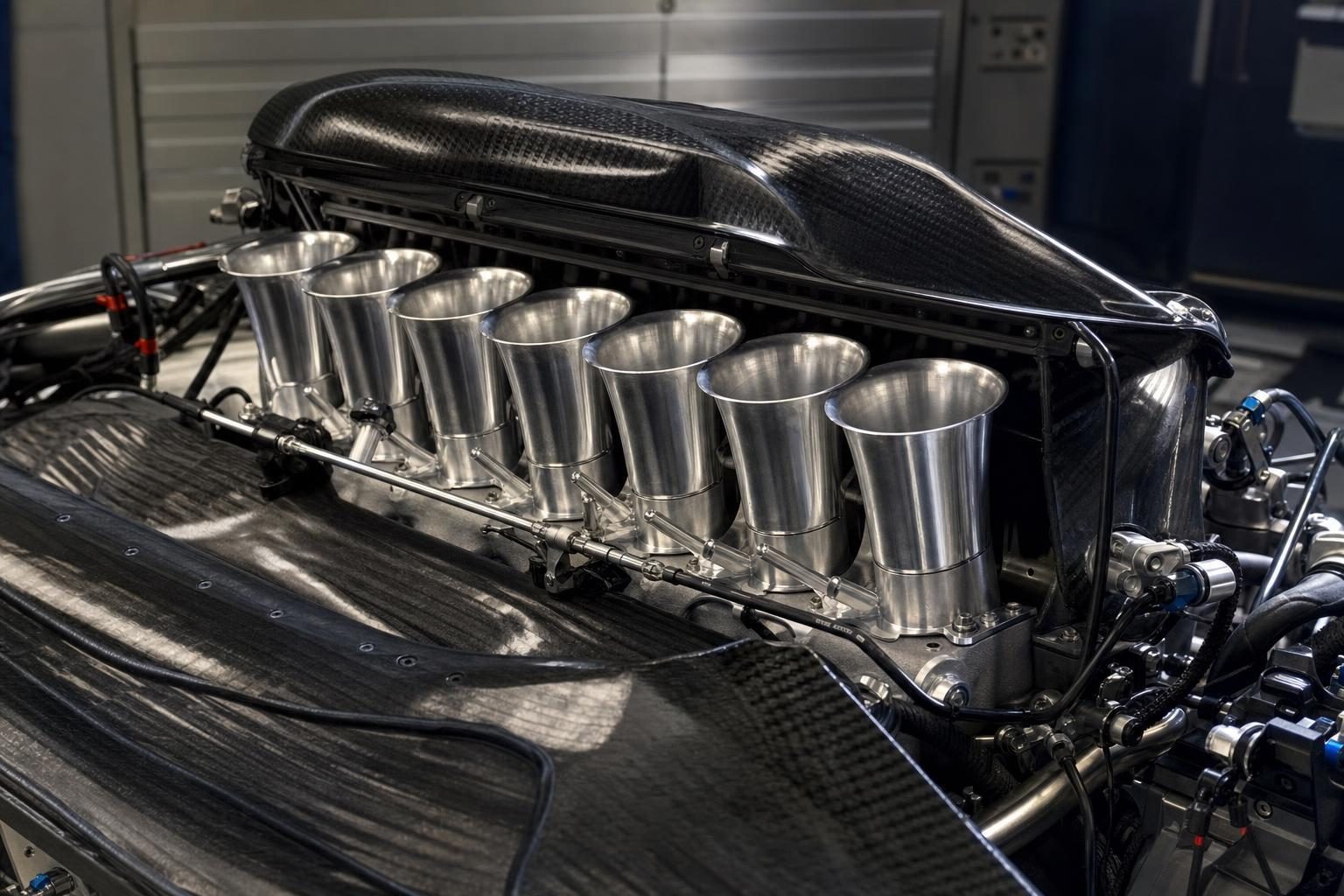
At the heart of the Valkyrie AMR Pro, the 6.5-litre Cosworth V12 breathes unaided. Without KERS, engine management can focus on the purity of its climb to the red line and linear response. The road-going reference frames the numbers: 1,000 hp at 10,500 rpm with hybrid assistance, and 1,014 PS for the engine alone according to Cosworth. But on the AMR Pro, Aston Martin has not communicated an official figure, a silence that leaves room for real-world track tuning, far from dyno sheets.
Without hybridisation, the V12’s mechanical character comes to the fore: textures, pulses and a theoretical stretch beyond 10,000 rpm as illustrated by the road version. In the absence of electric assistance, the slightest movement of the right foot has a direct, precise effect, potentially more readable for a trained driver. It’s accompanied by an unfiltered soundtrack: a purely mechanical score, tuned for kerbs rather than boulevards.
This relaxed stance on numbers also has a practical virtue: it recentres attention on warm-up, repeatability of loads and exploitability lap after lap. The Valkyrie AMR Pro prioritises driver’s tool over spec sheet, in the spirit of Aston Martin Racing’s customer programmes.
AMR Pro aerodynamics: the elements that deliver downforce unattainable for the road version
As a non-homologated track version, the Valkyrie AMR Pro is freed from the compromises inherent to public-road use. Without venturing into figures the manufacturer has not published, the essentials are clear: the AMR Pro is designed to prioritise downforce and stability under sustained load, where the road car must juggle usability and regulations. The target is more about the aerodynamics’ operating window than versatility.
Dropping KERS also feeds this logic. By freeing up the volume and mass associated with hybridisation, the Valkyrie AMR Pro concentrates its set-up on chassis balance and consistent downforce, in line with a stopwatch-focused brief. Here, calibration favours mechanical and aerodynamic endurance over extended stints, with behaviour that should remain stable lap after lap.
On this front, comparison with the road Valkyrie is mostly philosophical: the latter combines extreme performance with homologation tolerances, while the AMR Pro is optimised for pure track work. The downforce “unattainable” for the road version is not about a public number, but about the deliberate absence of road-going concessions in the track variant’s design.
25 examples, all sold before launch: how track use is organised
According to information compiled by Wikipedia, 25 examples of the Valkyrie AMR Pro were planned and all sold before its unveiling at the 2018 Geneva show. Subsequently, another tally, also attributed to Wikipedia, mentions a Valkyrie family totalling 275 units, including 40 AMR Pros. This discrepancy illustrates how announcements evolve and how confidentiality surrounds certain ultra-limited customer programmes.
The support structure is clear: the Valkyrie AMR Pro programme includes coaching and training by Aston Martin Racing’s factory drivers, following the proven Vulcan model. It amounts to a turnkey operating framework for owners, with driver coaching and set-up assistance modelled on the brand’s best practices for private track cars.
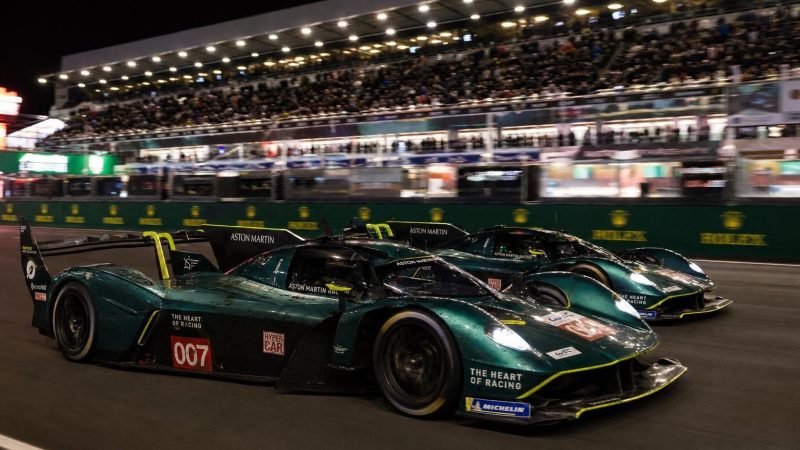
The production version of the Valkyrie AMR Pro appeared in public at Laguna Seca in 2022, a useful milestone to gauge the project’s maturity and its shift from show stands to asphalt. From Geneva to the Californian circuit, the thread remains the same: a machine conceived for orchestrated track days, within a programme where driver experience matters as much as outright performance.
Conclusion: how the Valkyrie AMR Pro changes the customer experience
After this breakdown, the Valkyrie AMR Pro stands out as a pure track car: the same Cosworth V12 as the road car but without KERS, no official output published, and a concept freed from road compromises. The point is not a record spec sheet, but the calm exploitation of a sky-high-revving V12 and a chassis optimised for sustained loads. For an owner already familiar with the Valkyrie, the AMR Pro changes the angle: less versatility, more consistency and a support programme that turns every outing into a personal development session.
In short, the Valkyrie AMR Pro doesn’t try to be better everywhere; it chooses its battlefield. And on that battlefield — the track, nothing else — the absence of hybrid, the dedicated set-up and the usage framework orchestrated by Aston Martin Racing make the difference.
Further reading
- Discover the origins and specifics of the road-going Valkyrie: our Valkyrie dossier.
- Compare it with the 100% track approach that inspired the customer programme: the page dedicated to the Aston Martin Vulcan.
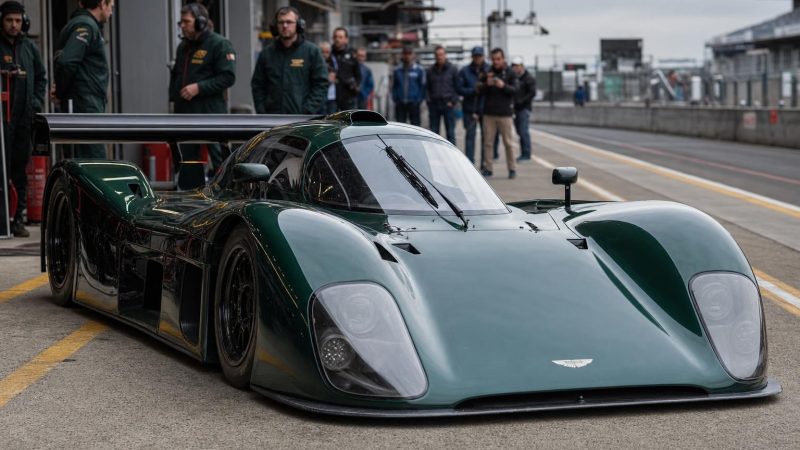
- Relive a shakedown on French tarmac: the Valkyrie AMR Pro at Paul Ricard.
- Context and timeline around the project: the reference page in English and its French version.
- About the AMR spirit at Aston Martin: presentation of the AMR label.