Valkyrie LMH 2026, beyond the Le Mans 2025 result: progress in WEC, technical choices and measured ambitions for 2026, laid out plainly.
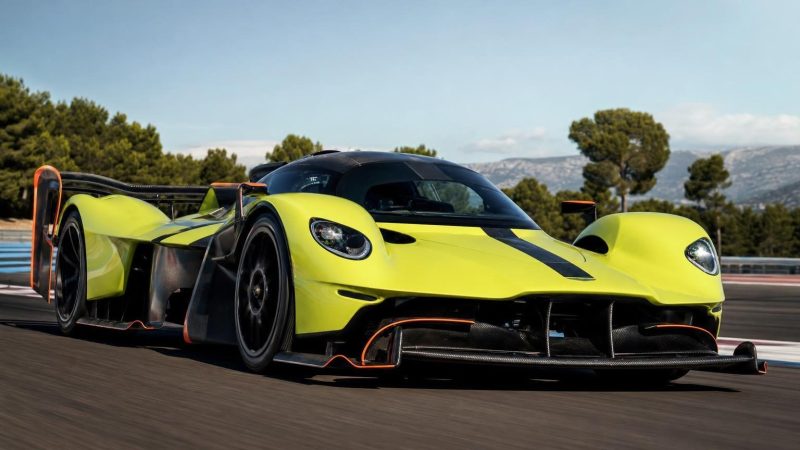
The Valkyrie LMH didn’t win Le Mans in 2025, but it opened a far more instructive chapter: a first double finish in the top 15, manufacturers’ points in the bag and, above all, a solid base for 2026 in both WEC and IMSA. Here are three facts the classification alone doesn’t tell you, which sketch the true trajectory of Aston Martin’s Hypercar programme.
Le Mans 2025: 12th and 14th, the bare numbers and their context
First, the numbers. According to astonmartin.com (December 2025), the Valkyries #007 and #009 finished 12th and 14th at the 93rd 24 Hours of Le Mans (14–15 June 2025). For a first Hypercar entry, it’s modest on paper, but enough to score the project’s first manufacturers’ points. In endurance racing, a classified double finish, straight out of the box, is anything but trivial.
The context casts these results differently. The 2025 Hypercar field is dense, reliability is unforgiving, and a new prototype must swallow a volume of development no simulator can replace. In that frame, the British coupé’s ability to hold pace, avoid incidents and see the flag with both cars validates fundamentals: a sound technical package, an operational team in place, disciplined drivers.
Another indicator of overall competitiveness at La Sarthe 2025: the #27 Vantage LMGT3 took LMGT3 pole (source: Wikipedia, 2025 24 Hours of Le Mans). Granted, not the same class, nor the same car, but it speaks to a technical and human environment capable of producing performance at Le Mans. At a manufacturer’s scale, cross-functionality matters.
Progress in the WEC: from Imola to Spa, three consecutive points finishes
The upward curve is better measured over time. After Le Mans, the season confirmed a ramp-up. Aston Martin reports that at Imola (19 April 2026), the #007 of Tincknell and Gamble finished 9th, marking its third consecutive result in the points (astonmartin.com, 5 May 2026). In other words, consistency is taking hold: the team isn’t snatching a one-off, it’s stacking paying finishes.
From “Imola to Spa” — to follow the calendar’s thread — the momentum announced by the marque reflects a step forward in operations and reliability. Without detailing every round, the fact the sequence reached three points finishes on the bounce means the car lives well over the distance, pitstops and tyre management are better timed, and setup choices offer a usable performance window.
This foundation is all the more notable as the Valkyrie LMH runs in both WEC and IMSA, a particularity highlighted by astonmartin.com (October 2025). Being the only road-homologated hypercar to race on both continents multiplies learning loops, data banks and use cases. Logistical complexity, yes, but an accelerator of maturity when feedback irrigates both programmes quickly.
Cosworth 6.5-litre naturally aspirated V12: why this technical choice
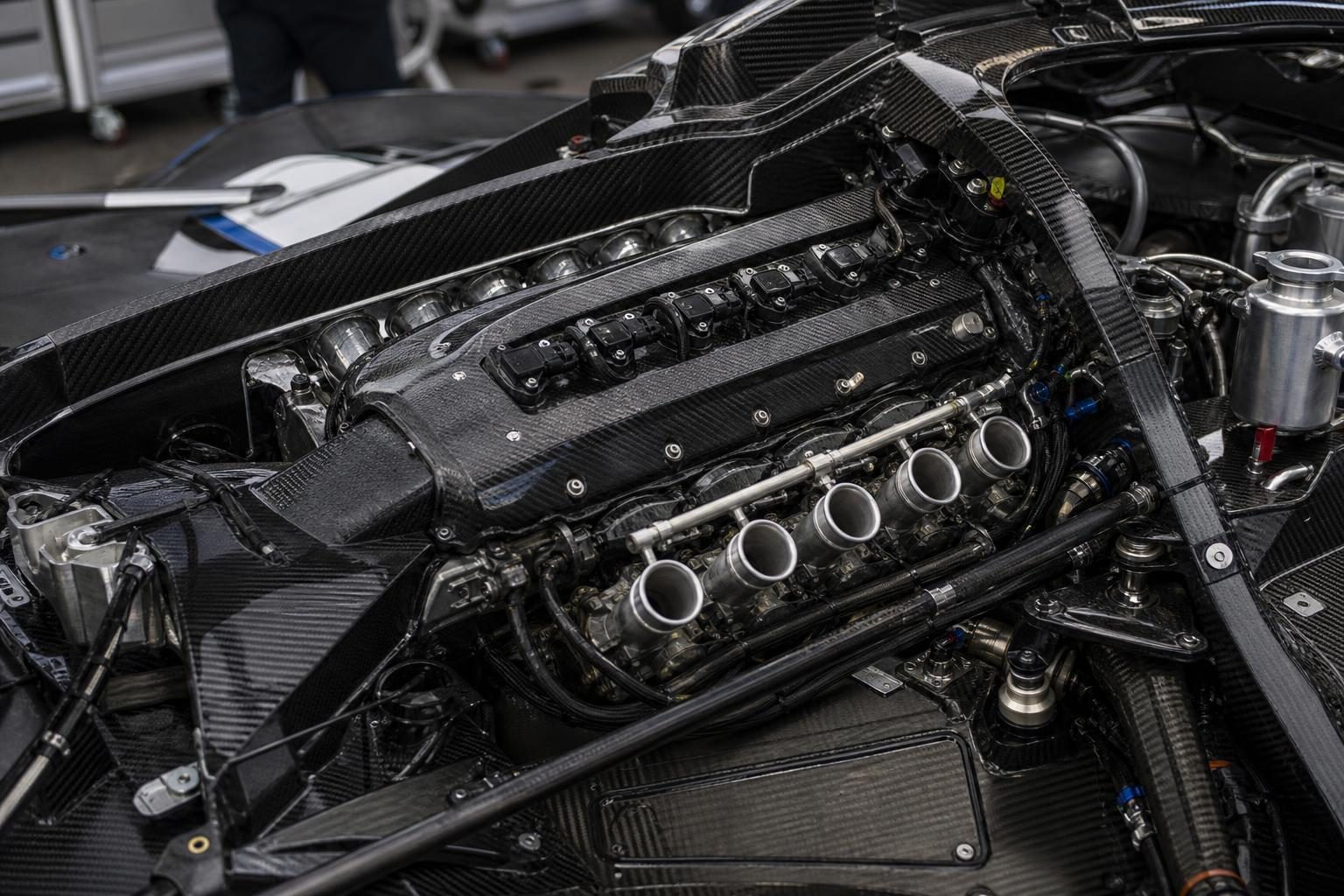
At the heart of the project, the engine. Aston Martin states the Valkyrie LMH is powered by a Cosworth 6.5-litre naturally aspirated V12, rated at 520 kW (697 PS) under the regulations (astonmartin.com, 9 June 2025). It’s not a nostalgic engineer’s whim: it’s a stance aligned with the road car’s DNA and the balances of the technical rulebook, which governs performance via the BoP.
A naturally aspirated V12 is a clear answer to the search for linearity and predictability over long stints. Torque delivery without forced induction simplifies simulator-to-track correlation and makes life easier for drivers in traffic. On reliability, a large, relatively unstressed engine can soak up 24 hours with a controlled thermal margin, provided it’s cooled and run in its optimal window.
This architecture also has a strategic virtue: alignment with the road-going Valkyrie, a cornerstone of Aston Martin’s product narrative. For readers wanting to place it within the range, our feature on the road-going Aston Martin Valkyrie sheds light on the technical and philosophical bridges between road and track. The Valkyrie LM derivative, a non-homologated customer version limited to 10 units (deliveries announced for Q2 2026, source: astonmartin.com, 9 June 2025), further extends this continuum.
Unchanged 2026 line-up: Tincknell, Gamble, Riberas, Sørensen, De Angelis
Stability, again. According to astonmartin.com (8 December 2025), the 2026 line-up remains unchanged from 2025, with the crews Gamble/Tincknell in the #007 and Riberas/Sørensen in the #009. In endurance racing, driver–engineer continuity is precious currency: it speeds up setup iteration, secures procedures, and reduces the “noise” in performance analysis from one race to the next.
The chapter title also cites De Angelis. As of the referenced release, only the above pairs are explicitly confirmed, however. Let’s retain the established core: two renewed duos, proven at Le Mans 2025 and drivers of the points-scoring run highlighted at Imola. It’s a reassuring snapshot of the programme’s sporting governance.
To follow the news race by race, the marque’s dedicated section centralises key releases and results. See in particular the Racing section of the Aston Martin media hub and the announcement of the unchanged 2026 entry published on 8 December 2025.
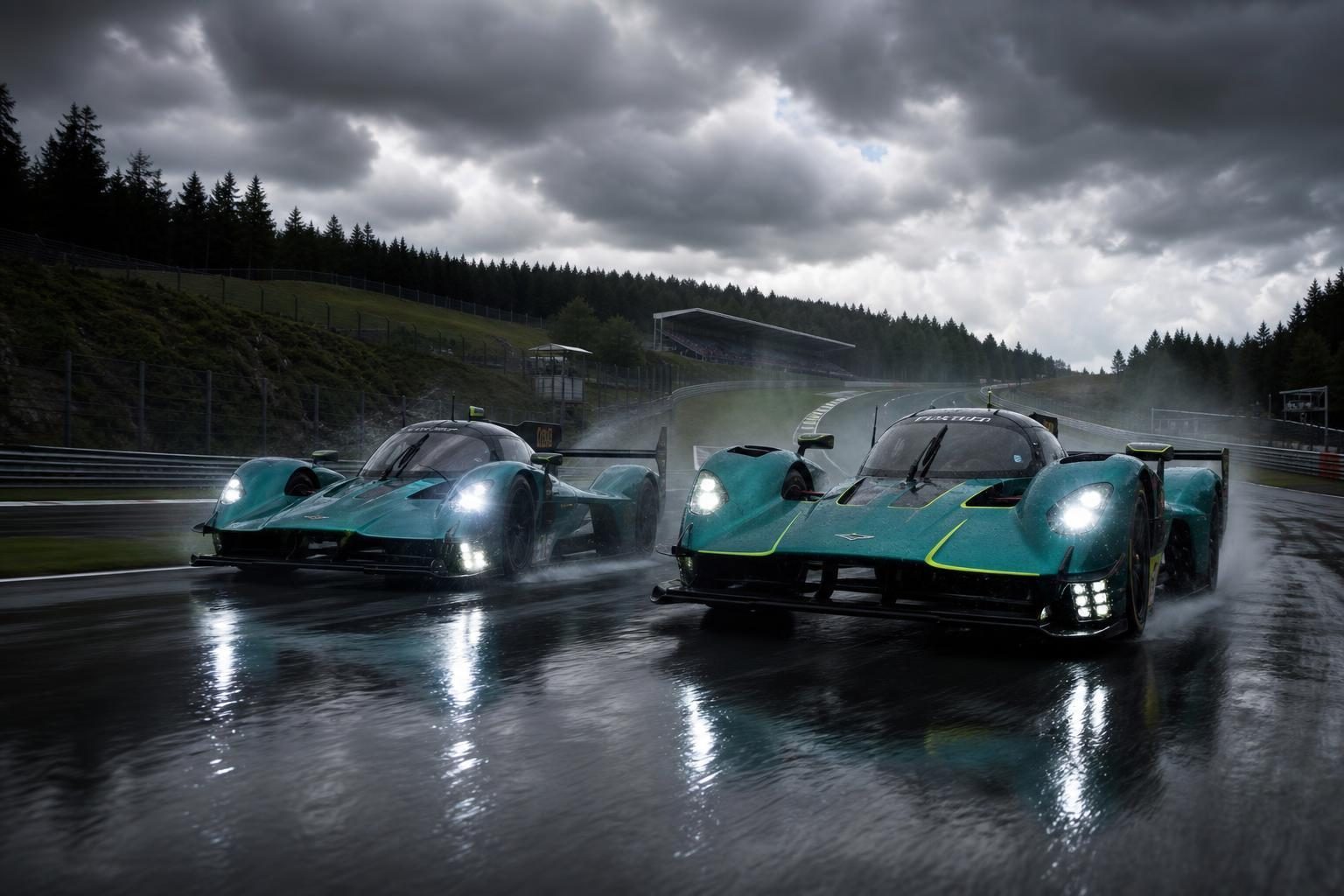
Realistic targets for the 94th Le Mans, 12–14 June 2026 (Valkyrie LMH)
What to aim for at Le Mans 2026 without drifting into hazy prophecy? First, capitalise on the demonstrated reliability and the run of points finishes. In practice, that means converting consistency into night-time pace, tightening pitstops and holding the tyre performance window for longer. The top 10 then becomes a credible goal, if the race runs without major incident.
Next, anchor gains in qualifying. The Vantage’s 2025 LMGT3 pole (Wikipedia) doesn’t foreshadow the Hypercar hierarchy, but it reminds us the Aston package can put heat into the tyres over a single lap. If that learning feeds the Hypercar, starting higher up means less traffic to manage, therefore lower wear and exposure to risk.
Finally, leverage the dual WEC/IMSA campaign. The Valkyrie LMH gathers more relevant laps than rivals confined to a single championship. The key isn’t the headline, but the feedback: refined endurance procedures, engine maps proven across varied circuit types, and a richer incidentology database. Come mid-June, that can be the difference between suffering the race and managing it.
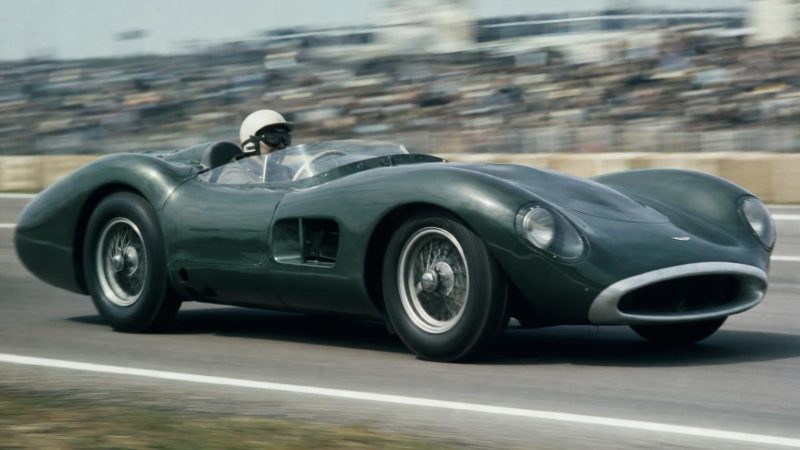
To place 2026 within Aston Martin’s long Le Mans history, revisit our analysis of the keys to the DBR1’s 1959 victory. And to trace the Hypercar programme from its Sarthe debut, our round-up dedicated to the first Le Mans 2025 sets out the essentials.
Conclusion – what Le Mans 2025 signals (and what it doesn’t) about the Valkyrie LMH
Le Mans 2025 delivered modest finishing spots, but robust lessons: two cars at the flag, points, a validated technical base and tangible WEC progress through to Imola 2026. The choice of a naturally aspirated Cosworth V12 embraces a clear, exploitable identity over 24 hours, while stable crews consolidate iteration. In 2026, the Valkyrie LMH promises nothing it can’t keep: target further points, raise its pace benchmark and give itself, methodically, a chance to exist in the race’s final quarter. Sober, British, effective.
For further sources, see the encyclopaedic overview of the 2025 edition and official announcements on astonmartin.com.