DB4 GT Zagato, des 19 originales aux Sanction II et III, Spada à 23 ans et la Continuation 2019 : genèse, chiffres clés, coulisses et cotes actuelles.
The DB4 GT Zagato is both an icon and a textbook case: 19 originals instead of the 25 planned, a young 23-year-old stylist refining its lines, then “sanctioned” series and a Continuation dated 2019. Here is the monograph that places this Anglo-Italian coupé in its true chronology, explaining where the three “sanctions” came from and how Ercole Spada shaped the car’s stance, without needless folklore.
1960: why 19 and not 25 – the order that didn’t fill
Originally, Aston Martin planned 25 examples of the DB4 GT Zagato. Industrial reality delivered 19. According to the official sheet published by media.astonmartin.com, the initial plan was not fully met, resulting in a curtailed production. The UK list price stood at £5,157 including taxes, placing the model at the top of Newport Pagnell’s range.
The process was clear: chassis left Newport Pagnell before being shipped to Zagato in Italy for body shaping and assembly. This round trip embodied the alliance of Aston Martin engineering and Milanese craftsmanship. The DB4 GT Zagato therefore emerged from an international supply chain, already demanding in 1960, where each batch added delays, costs and commercial uncertainties.
As the order was not completed, the series stopped at 19 units. This numerical shortfall contributed to the cars’ reputation and value, but above all reflects a period when the viability of such a collaboration was judged car by car. On the mechanical side, the 3.7-litre twin-spark straight-six claimed 314 bhp, according to media.astonmartin.com and astonmartin.com, giving this shortened coupé a decidedly sharpened foundation.
Ercole Spada, 23, apprentice at Zagato: how he redrew the GT
February 1960: Ercole Spada, 23, joins Zagato as an apprentice. A few months later, he leaves his mark on the DB4 GT, proposing a lighter, more fluid interpretation. According to media.astonmartin.com, it was this very young stylist who redrew the key volumes of the DB4 GT Zagato, in the spirit of the Milanese house: fewer embellishments, greater aerodynamic efficiency, taut surfaces and a roofline that looked visually lighter.
Spada didn’t reinvent; he pared back. The curves tightened, the overhangs were disciplined, and the silhouette gained tension. In this DB4 GT Zagato one sees the language of a racing workshop transposed to the road, born of a fresh eye yet firmly rooted in Zagato’s grammar. It is this almost intuitive coherence that gave the model its distinctive stance, both urgent and elegant.
Context matters: with chassis supplied by Aston Martin and a clear brief – lighten and refine – the young designer set out to make the car more alert and more effective. Spada signed off one of his first achievements here, a foundational work that, in retrospect, established his reputation. The DB4 GT Zagato is not just a pretty dress: its lines express a search for performance consistent with its 3.7-litre straight-six.
Sanction II (1991) and Sanction III (2000): the “new old” cars approved by Newport Pagnell
The rarity of the 19 originals paved the way for “official” re-runs. Sanction II appeared between 1987 and 1991: four cars in total, assembled with Aston Martin’s approval. According to Wikipedia, these DB4 GT Zagato Sanction II sold for over $1,000,000 each, an early signal of collectors’ appetite for reconstructions duly authenticated by the marque.
In 1992, Walter Hayes – then Aston Martin’s chairman – approved two additional units, known as Sanction III, using available Zagato bodies, according to Wikipedia. The common thread of Sanction II and III? Formal legitimacy conferred by Newport Pagnell, which recognised and supported these late resurrections, without confusing them with the 19 cars from 1960.
This “sanctions” regime set a precedent: the idea that a DB4 GT Zagato could be reborn to period standards, under the marque’s oversight and with original or Zagato-method bodies. For owners, the interest is twofold: to recapture the stylistic and mechanical experience, while clearly distinguishing the DNA of the 1960 cars from that of the later series.
The 2019 Continuation: 4,500 hours per car and the DBZ collection
A new step in 2019: Aston Martin launched the DB4 GT Zagato Continuation. According to media.astonmartin.com, 19 examples were built, each requiring around 4,500 hours of work. The programme formed part of the DBZ Centenary Collection, a pair comprising a DB4 GT Zagato Continuation and a contemporary DBS GT Zagato, announced at £6 million for the set.
The mechanical heart evolved: the DB4 GT Zagato Continuation received a straight-six enlarged to 4.7 litres for around 400 PS (source Wikipedia), preserving the spirit of the original unit but with extra breathing. The aim is not to rewrite history, but to offer a faithful, usable reading of it, under the direct eye of Aston Martin Works.
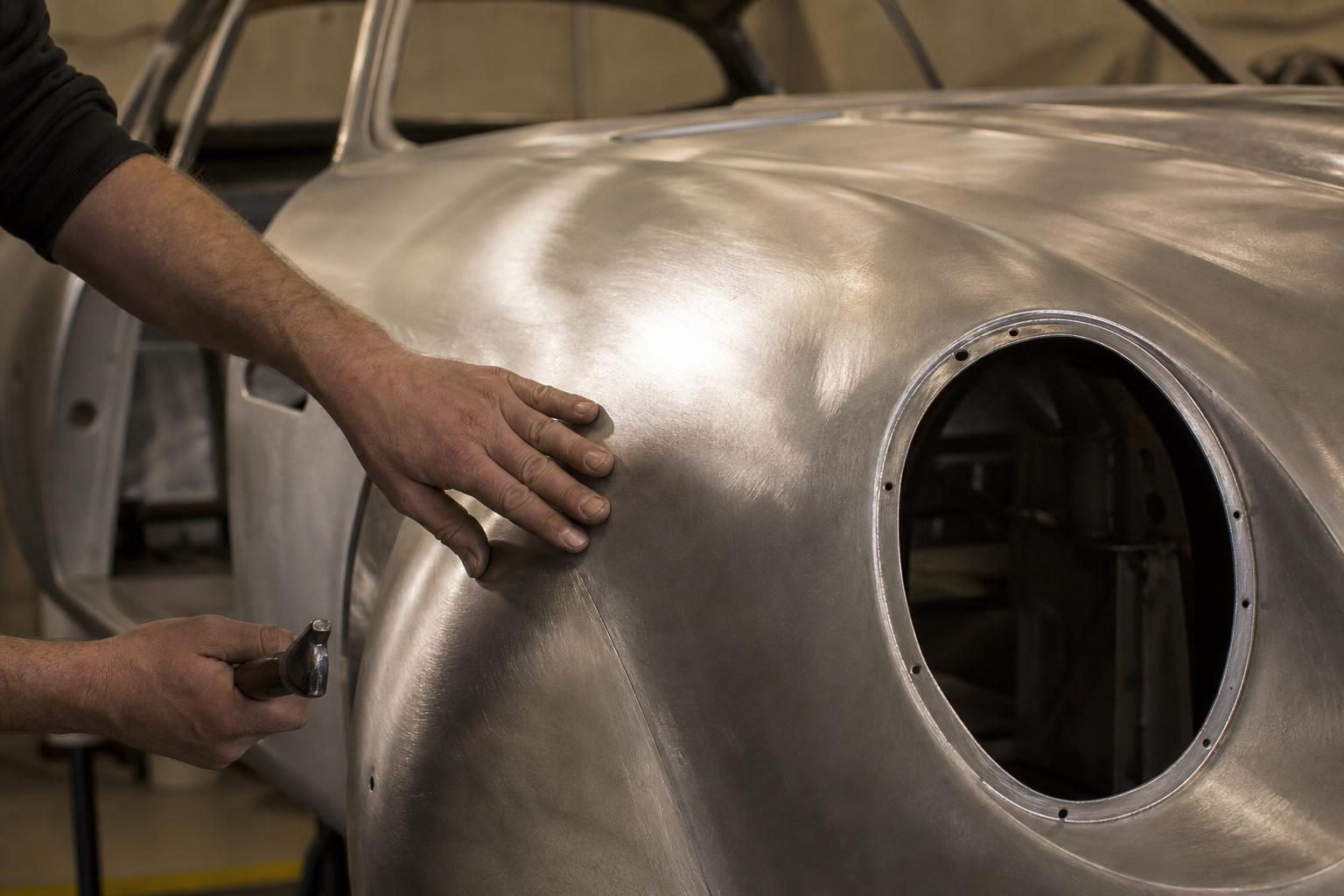
The stated level of craftsmanship – those 4,500 hours per car – reflects a near-archaeological approach: recover the touch, the bucks, the texture, and tune each element. This stance, publicly embraced by Aston Martin, places the Continuation not as a rival to the 19 from 1960 but as a meticulously replicated homage, within an official, well-documented framework.
Current values: what auctions say about originals and continuations
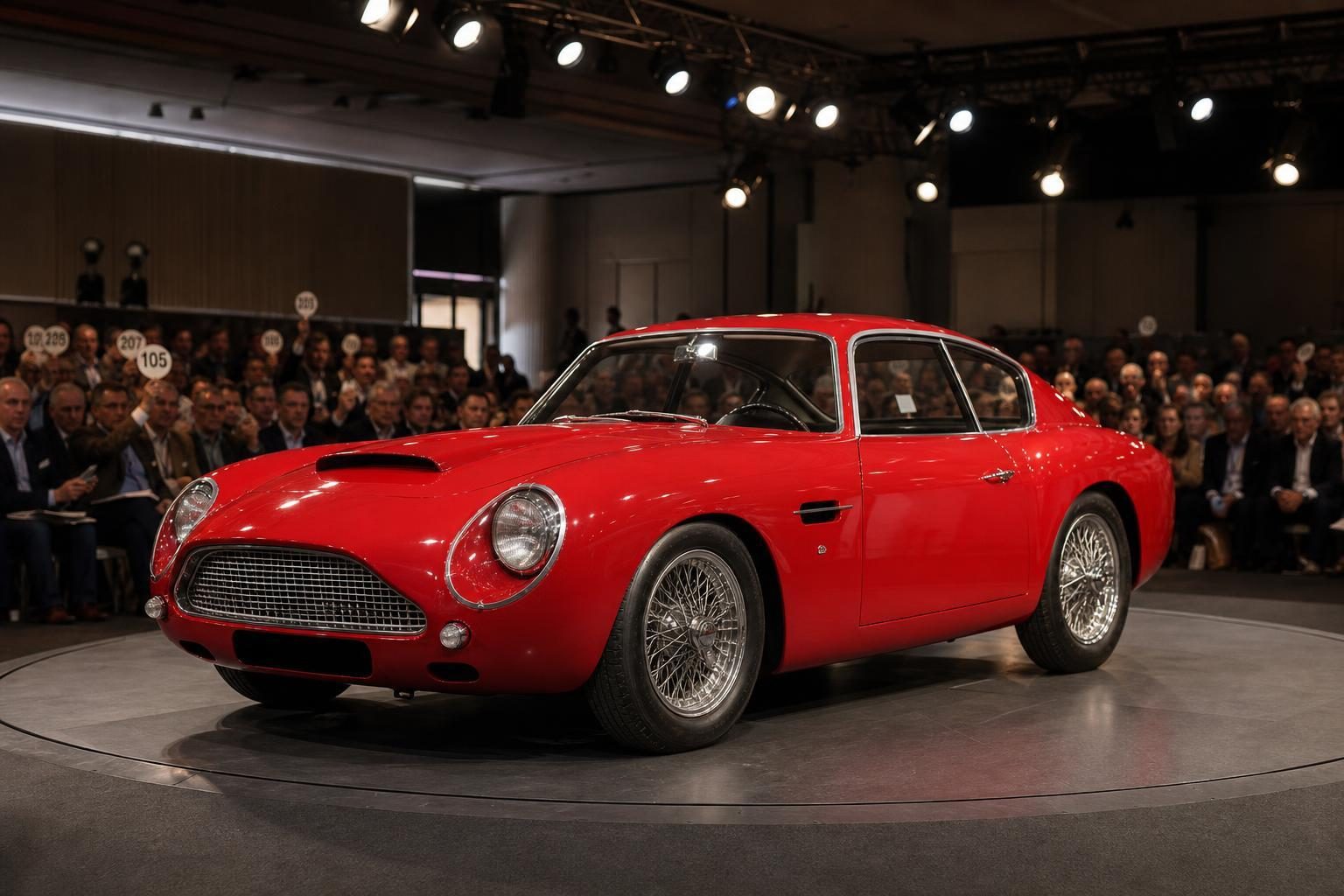
On the market, the categories are read distinctly. The 19 original DB4 GT Zagatos, with their joint Newport Pagnell–Zagato history and 3.7-litre twin-spark 314 bhp engine, occupy a rarefied summit. The Sanction II (four cars, 1987–1991) and Sanction III (two cars, 1992), all approved by Aston Martin, form a second sought-after tier, already beyond the million-dollar mark from launch, according to Wikipedia.
As for the 19 Continuations of 2019, they form a third way, signposted by the marque and endowed with known characteristics – around 400 PS from 4.7 litres – and a particular sales framework: the DBZ Centenary Collection at £6 million for the pair (source media.astonmartin.com). This specific positioning, devised by Aston Martin, tends to stabilise their status as recent heritage objects, without encroaching on the aura of the 1960 vintages.
For a collector, the equation comes down to intent: absolute historical purity and documentary rarity of the 19 originals; official legitimacy and scarcity of the Sanction II/III; or serene usability and exemplary traceability of the Continuations. In all cases, the DB4 GT Zagato remains a marker, as much for its production figures as for the clarity of its successive “chapters”.
Conclusion: one DB4 GT Zagato, three chapters and Spada’s signature style
The DB4 GT Zagato tells a simple, precise story: 19 originals instead of 25, a silhouette refined by a 23-year-old Ercole Spada, then three successive “sanctions” – Sanction II, Sanction III and the 2019 Continuation – all approved or led by Aston Martin. The marque’s official sources, relayed by media.astonmartin.com and complemented by Wikipedia, unambiguously frame the figures and chronology.
This sequence illuminates the model’s heritage value: the “1960” cars for absolute authenticity, the Sanction II/III for authorised rarity, the Continuations for contemporary executional excellence. If one thread is to be retained, it is that of a right, unfussy design, conceived at Zagato by a young man impatient to simplify. In this, the DB4 GT Zagato remains a lesson in swift sobriety, preserved by each chapter.
- To review official sheets and releases, see the dedicated page on media.astonmartin.com devoted to the DB4 GT Zagato and the announcement of the DBZ Centenary collection at Aston Martin.
- For a synthesis of Sanction II/III and the Continuation specifications, see the reference article dedicated to the DB4 GT Zagato.
To go further on the models and detailed history:
- The model file and variants on our DB4 GT Zagato page.
- An overview of chassis and examples on the history of DB4 GT Zagato examples.
- The technical context of the DB4 lineage on our DB4 dossier.