DBRS9 : comment AMR a transformé le DBR9 en GT3 client via 4 compromis techniques clés, du V12 dépotentialisé à la boîte séquentielle et au programme client
DBRS9: here is how Aston Martin Racing turned the factory DBR9’s DNA into a saleable, reliable and fast GT3 weapon, by embracing four carefully weighed technical compromises. We revisit the shared carbon bodywork, the de-tuned V12, the choice of the sequential gearbox and the logic of a customer programme aimed at privateer teams, to understand what made the difference on FIA GT3 grids.
DBR9 and DBRS9: the same carbon body, two radically different missions
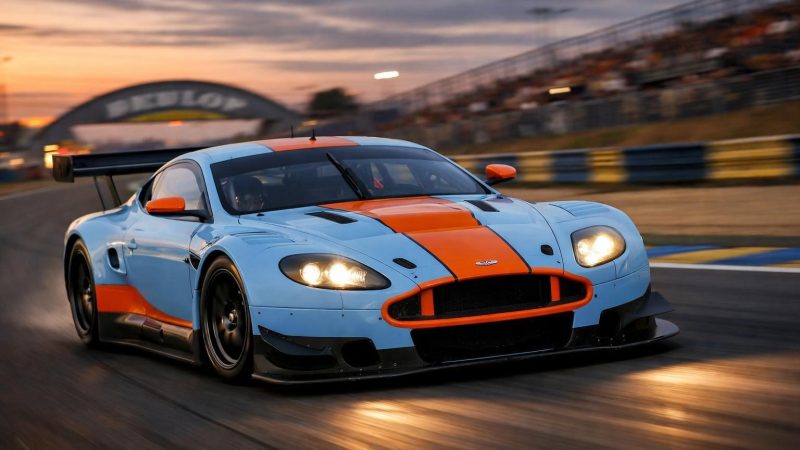
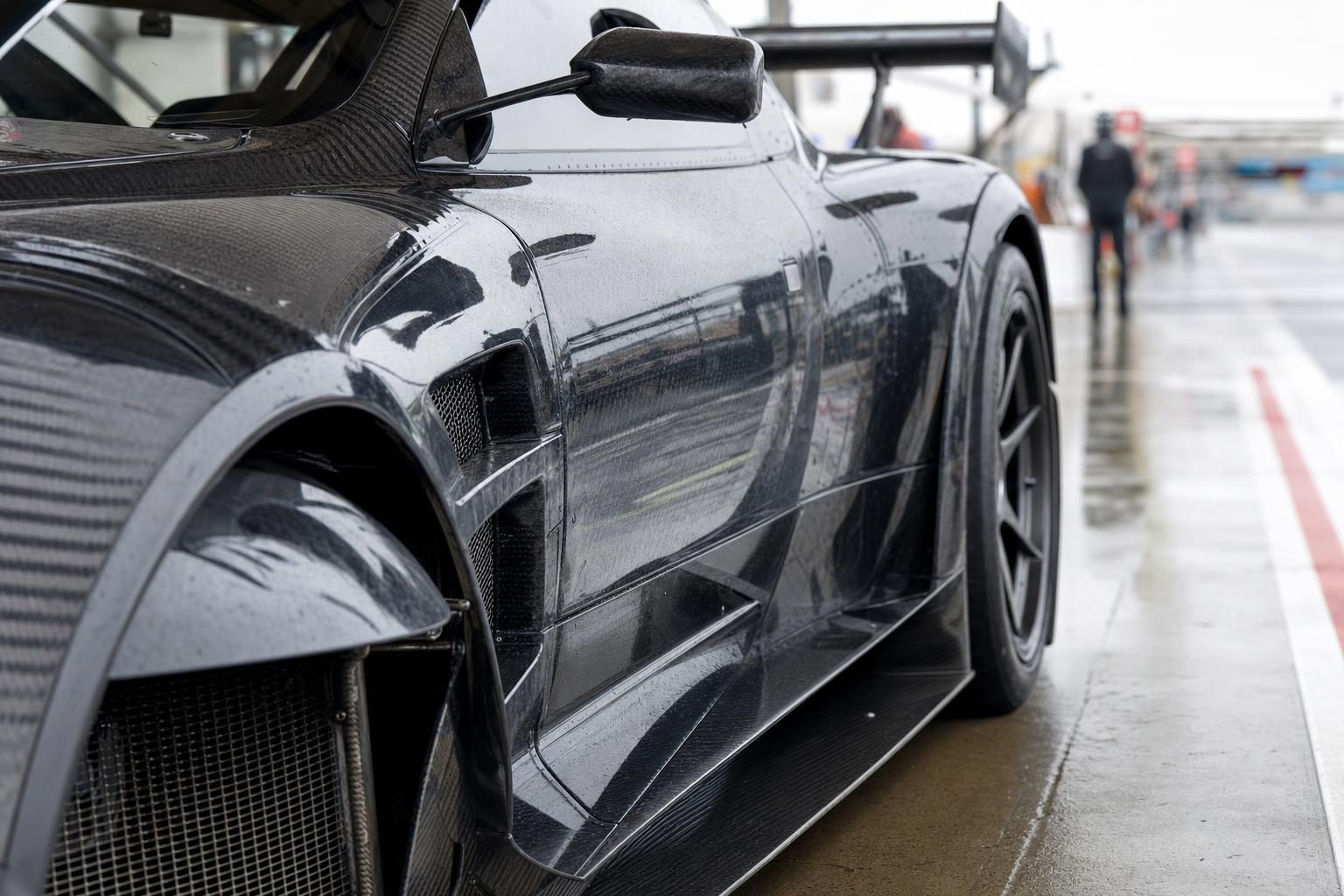
The kinship is clear: the DBRS9 shares its carbon-fibre bodywork, its chassis and its suspension layout with the DBR9. According to the page dedicated to the DBR9 on Wikipedia, “The DBRS9 shares its carbon-fibre bodywork, chassis and suspension layout with the DBR9”. The fundamentals are therefore common — no small thing when you consider the DBR9’s imprint in GT1.
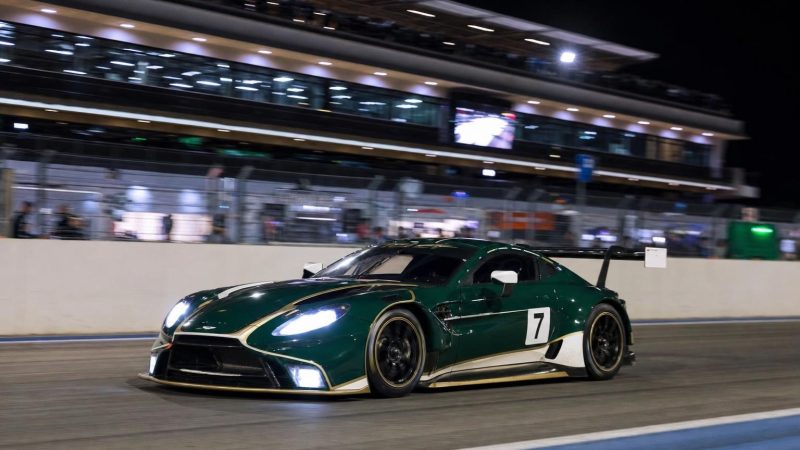
The mission, however, diverges. The DBR9 targeted top-flight endurance, with factory entries and class-win objectives at Le Mans — goals achieved in 2007 and 2008, again according to Wikipedia. The DBRS9, for its part, was developed by Aston Martin Racing to meet FIA GT3 regulations — a framework designed for private teams, controlled budgets and balanced performance across brands.
This shared architecture gave the DBRS9 a rigid, efficient base, while allowing AMR to optimise costs and serviceability for customer outfits. The core of the engineering therefore consisted in retaining the DBR9’s excellence where it was transferable, and softening it — in the best sense — where GT3 usage required.
The V12 de-tuned to 550 hp: why less power meant more endurance
The DBRS9’s engine remains an Aston Martin V12, but it is deliberately de-tuned to 558 PS (410 kW), or 550 hp, with 620 Nm of torque. This calibration, documented by Wikipedia, steps away from the DBR9’s peaks to meet the GT3 brief: speed, yes, but above all consistency and usability over time.
Less power means less thermal and mechanical stress, hence improved reliability for races of varying formats and privateer calendars. It also means more predictable traction, particularly useful when the field brings together mixed driving levels. In GT3, winning engineering often favours mechanical endurance as much as human consistency.
The DBRS9 is anything but sluggish. Published data indicate 0 to 97 km/h in 3.4 s and 314 km/h flat out. In other words, the compromise is not a punishment, but a fine-tuning of the performance curve to make it usable by more teams and drivers.
Six-speed sequential gearbox: the choice that made the car driveable for discerning amateurs
The DBRS9 was offered with a conventional six-speed gearbox or a six-speed sequential, again per Wikipedia. The very fact of offering the option speaks volumes about the intention: lower the entry barrier without curbing on-track potential. In the GT3 arena, a sequential transmission delivers quicker, more consistent shifts, limiting jolts and wear.
For a gentleman driver partnered with a pro, the benefit is twofold. First, the sequential gearbox simplifies race rhythm management and reduces handling errors. Second, it evens out stints within a crew, which carries weight in a championship where regularity often trumps the one-off, stratospheric qualifying lap.
Combined with the generous torque curve of the V12 calibrated to 620 Nm, this transmission makes the DBRS9 less intimidating than the DBR9, without sacrificing top speed or acceleration. Once again, the same logic applies: capitalise on the DBR9’s genes, while adapting driving ergonomics to the GT3 core target.
The AMR customer programme: what Prodrive offered private teams between 2005 and 2011
By design, the DBRS9 is a product of the FIA GT3 rulebook. It is conceived to be fielded by private teams and forms part of a customer programme run by Aston Martin Racing/Prodrive. Established facts indicate the model specifically targeted GT3 races and preceded the arrival of a GT3 derived from the V12 Vantage, its announced replacement in 2011.
In practice, the “customer” approach is evident in the technical choices mentioned above: components shared with the DBR9 for robustness, a de-tuned V12 for longevity, a sequential gearbox for ease of use. In the GT3 context, these decisions make preparation and operation more accessible to private outfits, with costs and complexity contained compared with a factory programme.
To gauge the cultural gap with the DBR9, consult our reference dossier dedicated to the factory GT1’s spec sheet and history, the DBR9 model page, as well as the analysis of its 2007 and 2008 Le Mans class wins. The DBRS9 stands as a counterpoint: an Aston conceived for owners who truly “enter” the fray.
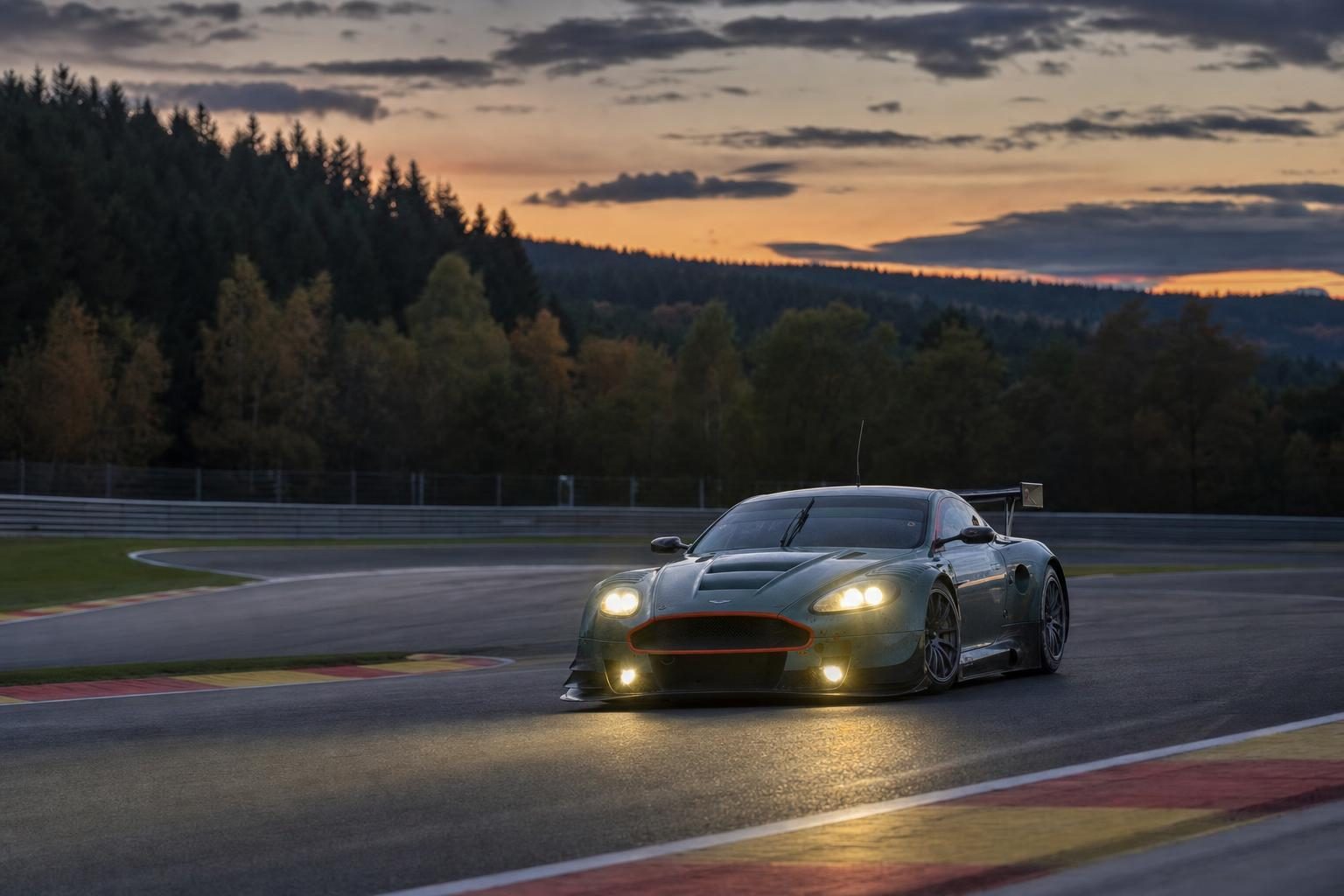
Career summary in FIA GT3: the series, the podiums and the transition to the V12 Vantage GT3
Available facts clearly place the DBRS9 in the FIA GT3 European Championship, before its replacement by a GT3 version of the V12 Vantage in 2011. That is the main axis of its sporting career, perfectly aligned with its raison d’être. For detailed race-by-race honours, the general sources consulted here do not provide a consolidated tally.
This lack of precise counts does not prevent a clear conclusion: the DBRS9 served as a springboard for a continuous Aston Martin presence in GT3, up to the transition to the V12 Vantage GT3. The passing of the baton in 2011 confirms the platform’s evolution, while preserving the spirit: a racing Aston usable by customer teams, backed by AMR engineering.
In the lineage of Aston Martin’s customer programmes in endurance, you can extend your reading with the study of competition DNA transposed to other machines, such as the 2012 V8 Vantage GTE and its four WEC seasons. Again, the challenge is to make performance coherent over time, rather than chase a single peak.
Conclusion — DBRS9: four compromises that made an irresistible GT3 for privateers
Starting from a common base with the DBR9, the DBRS9 shifted the cursor across four decisive axes: shared body and chassis for robustness, a V12 de-tuned to 550 hp for consistency, a sequential gearbox for accessibility, and a customer philosophy tailored to FIA GT3. The key figures — 620 Nm, 3.4 s from 0 to 97 km/h, 314 km/h — say it all: less spectacle, more usability. An engineering choice that ensured Aston Martin’s continuity in GT3 until the handover to the V12 Vantage in 2011.
To position this model against its factory-built elder, see the DBR9’s context, spec sheet and Le Mans successes on the Wikipedia page dedicated to the DBR9 and on Aston Martin’s media archives around the road-going DB9, which recall the shared DNA. To continue exploring the marque and its programmes, the official Aston Martin site provides a useful overview of the ecosystem, past and present.