Vantage GT3, THOR aligne deux LMGT3 en 2026. Retour sur les pôles, podiums et la 4e place 2025, la technique, le palmarès GT et l’Académie AMR.
Vantage GT3 shifts up a gear in the WEC: in 2026, THOR enters two LMGT3s after two solo campaigns. Here’s what the numbers say — poles, podiums, standings — and why this step up makes sense for both team and car. All set against the Vantage’s technical DNA and a GT record that already carries serious weight.
THOR solo 2024–2025: poles, podiums and 4th in the championship
The basis of the 2026 ambition is factual. According to Aston Martin (December 2025), the Vantage GT3 took 3 poles in WEC 2025, including at the 24 Hours of Le Mans in June, and claimed 2 podiums over the season. The tally includes victory at Lone Star Le Mans 2024, the high point of THOR’s two solo-run campaigns.
In the 2025 LMGT3 standings, Ian James finished 4th, again per the same source. In a dense, reshuffled category, this just-off-the-podium finish makes THOR a fixture without overstatement. It’s precisely this numerical bedrock — qualifying at the level, solid race execution — that justifies moving to two cars.
Taken in isolation, these results don’t make a manufacturer’s season. But added together, they validate the approach: a sharpened Vantage, clean stints and a team able to convert performance into points. The squad thus gains extra strategic latitude for 2026.
To place this trajectory in the marque’s story, our feature on the Vantage GTE legacy in the WEC and at Le Mans recalls how the discipline has often rewarded consistency more than showboating.
Two Vantage LMGT3s in 2026: who drives what and why this choice
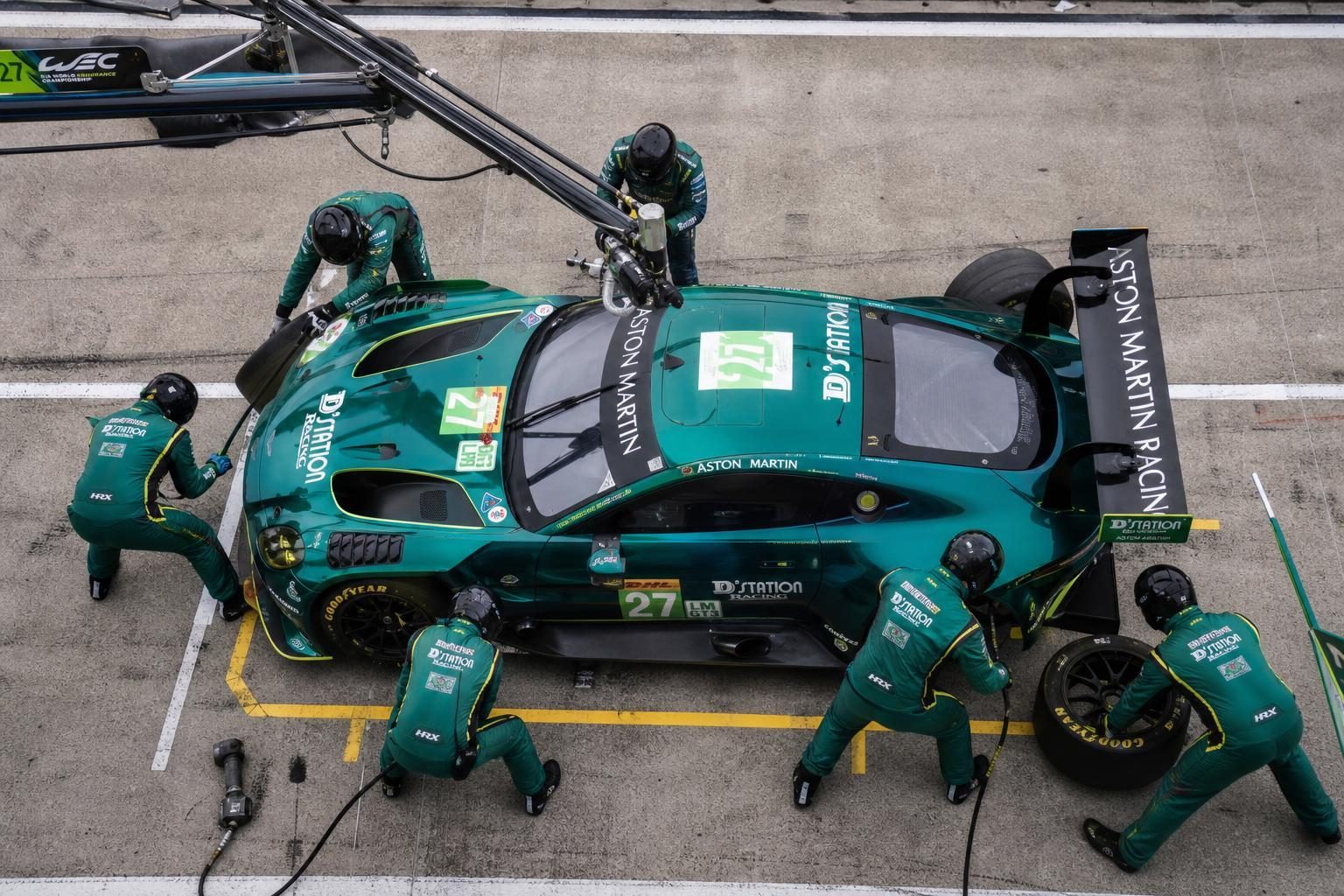
In 2026, THOR doubles down with two Vantage LMGT3s. According to Aston Martin (December 2025), #27 is entrusted to Briton Ian James, while #23 goes to American Gray Newell. Two complementary profiles, serving one strategy: multiply options in the race and capitalise on the experience banked in 2024–2025.
The choice of line-ups is first about continuity. James comes off a complete campaign, highlighted by poles and a 4th overall in LMGT3. Newell brings valuable stability on the #23 side. Two cars also mean two strategy windows, two ways to cover rivals and to secure the points that matter in a long championship.
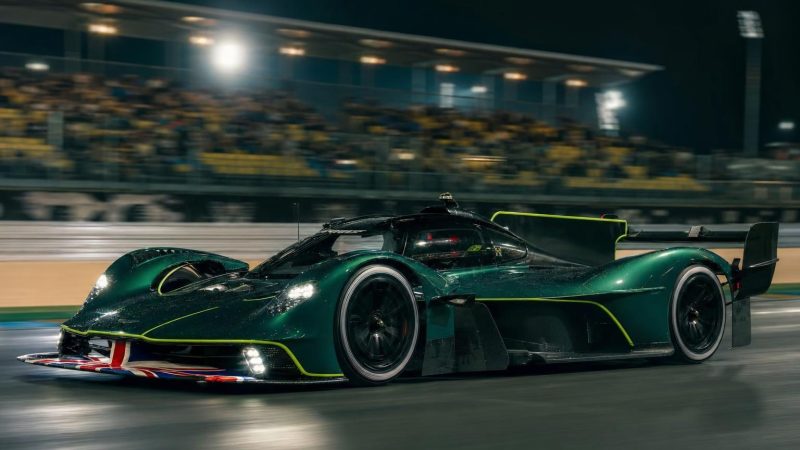
This switch to two cars also fits a broader momentum within Aston Martin Racing. The 2026 programme has been detailed by the manufacturer, notably for its endurance projects, as evidenced by the official announcement regarding the Valkyrie entry (Aston Martin, December 2025). A common thread runs through it: continuity of drivers, progressive ramp-up and data-led decisions rather than lyrical statements. For more, see our calendar analysis Imola–Spa and the WEC 2026 roadmap.
Practically, two cars offer a major lever in qualifying (tows, divergent sims) and in the race (risk split, cover under neutralisations). With this duo, the Vantage GT3 can express its potential across a broader strategic palette.
The Vantage GT3 in detail: aluminium chassis and AMG 4.0-litre twin-turbo V8
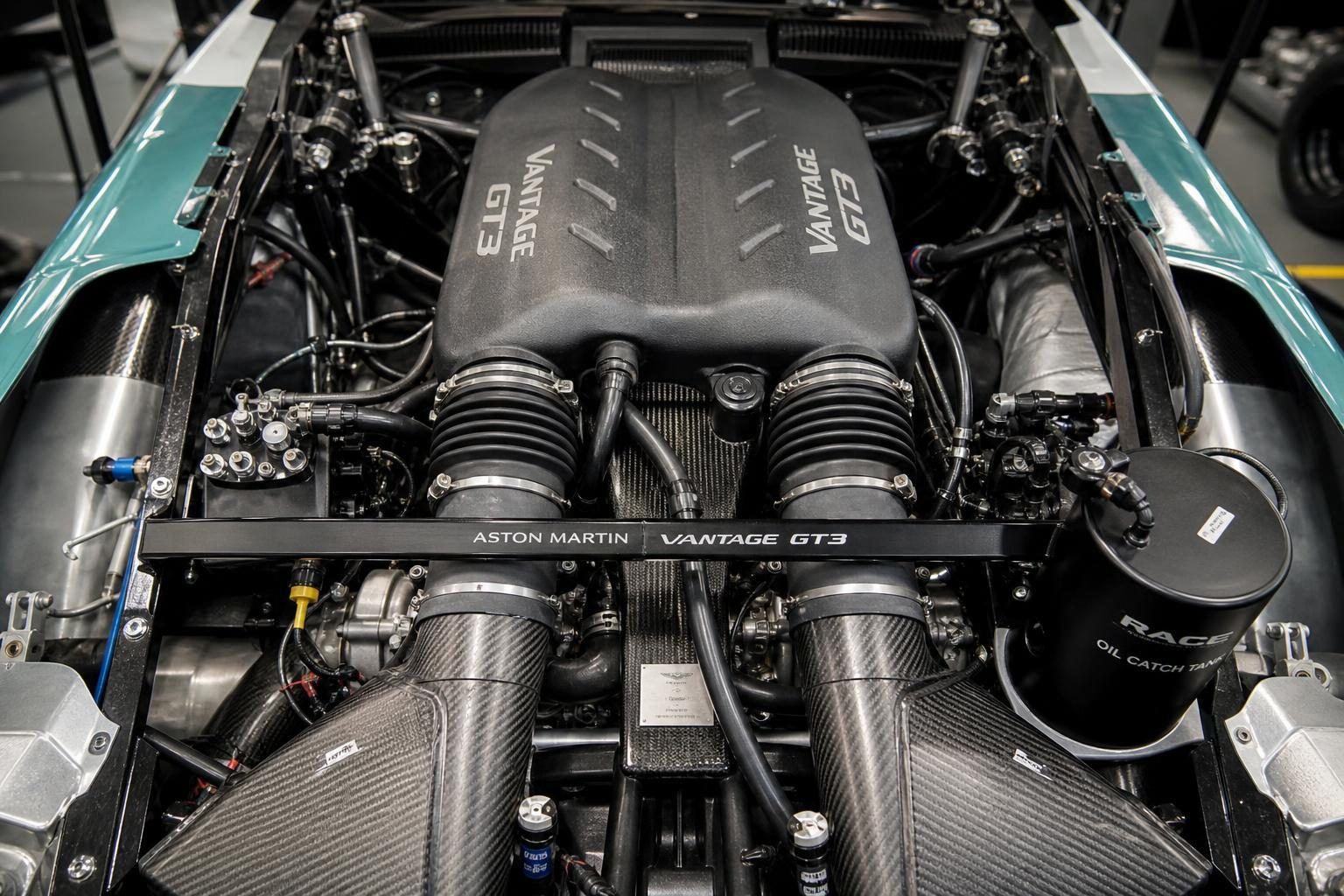
Engineering doesn’t win alone, but it sets the tone. The Vantage GT3 is built on a bonded aluminium chassis and uses an AMG-derived 4.0-litre twin-turbo V8, per Aston Martin’s model sheet. A package known for stiffness, thermal endurance and a generous operating window — all assets in long stints.
This 4.0 L twin-turbo V8, restrained in architecture and efficient in its torque curve, suits LMGT3 Balance of Performance constraints. The bonded aluminium base, light and precise, eases setup windows, notably in tyre management and aero balance on circuits with wide speed ranges.
For the road-to-race panorama, our file on the second-generation Vantage (MKII) clarifies the technical correspondences. In addition, the reference page for the road model on the technical encyclopaedia of the 2018 Vantage helps situate the base architecture as adapted to GT3 standards.
Without extrapolating, the equation is clear: a modern base, well known to engineers and customer teams, which makes performance reproducible from meeting to meeting. That’s exactly what THOR seeks over a full season.
11 world titles and 69 poles in LMGT: what the record says about the Vantage
According to Aston Martin (December 2025), the Vantage counts 11 world titles and 69 poles in the WEC’s GT categories. The number doesn’t prejudge future results, but it frames things: the car knows how to qualify, and the programmes anchored in Gaydon have learned to turn Saturday into a useful Sunday.
This record, aggregated over several seasons and Vantage GT iterations, highlights a constant: pure performance coupled with the capacity to absorb the swings of a world championship. In 2025, the 3 poles, including Le Mans, confirmed the tradition. Two cars in 2026 are the chance to maximise these statistical strengths.
For THOR, the benefit is direct. Cover rivals in qualifying, control pit windows more tightly, and better absorb an isolated incident. Sixty-nine poles don’t magically become trophies, but they outline a structural edge: starting ahead lets you dictate the tempo, at least at the start of stints.
This pragmatic approach — stacking micro-gains rather than promising revolutions — suits the Vantage’s competition character. The team knows where it scores, and where it must improve: race management and cold exploitation, precisely the areas where two cars change the equation.
AMR Academy 2026: Kobe Pauwels, first graduate to race in the WEC
The other 2026 lever lies in the talent pool. Per Aston Martin (April 2026), Kobe Pauwels, the 2025 AMR Academy winner, makes his WEC debut with THOR at Imola in April 2026. A notable first for the junior programme, with a graduate stepping straight onto the world stage.
The 2026 Academy intake fields 22 drivers from 10 countries (Aston Martin). This diversity isn’t a slogan: it’s a structured pipeline feeding customer and works seats. THOR gains a natural pathway to consolidate its crews long-term, with an eye on freshness and adaptability.
This bridge between development and the WEC aligns with an ecosystem logic. The manufacturer’s communications emphasise the step-by-step promotion of young drivers and the role of customer teams as springboards. The Pauwels case, from Imola, is the tangible illustration.
To grasp the system from the manufacturer side, see the official announcement on the 2026 endurance programme and driver dynamics on Aston Martin’s site, as well as the detailed 2026 Academy presentation on the AMR Driver Academy page.
Conclusion: Vantage GT3, two cars to turn form into points
In 2025, the facts speak: 3 poles (including Le Mans), 2 podiums, and a 4th overall for Ian James. In 2026, THOR doubles its commitment with two Vantage LMGT3s, hands #27 to James and #23 to Newell, and leans on a Vantage GT3 that’s technically sound — bonded aluminium chassis, 4.0 L twin-turbo V8 — and a record that counts 11 world titles and 69 poles in LMGT. Add a pool of 22 talents via the AMR Academy, and ambition stops being a word and becomes a numbers-backed equation. Soberly, efficiently.
What remains is to convert over the length of a championship. Two cars mean more options, more cover, and more chances to let the Vantage speak — in qualifying and in the race alike. The structure is in place; at Imola, then elsewhere, we’ll see whether these combined choices convert 2025 form into 2026 points.