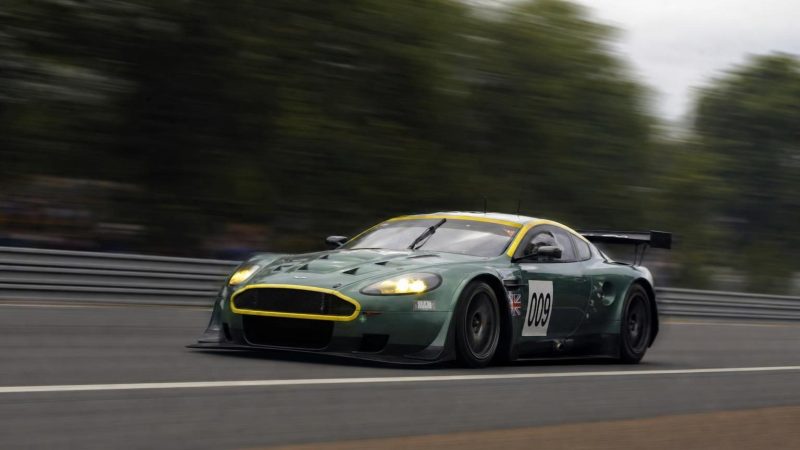
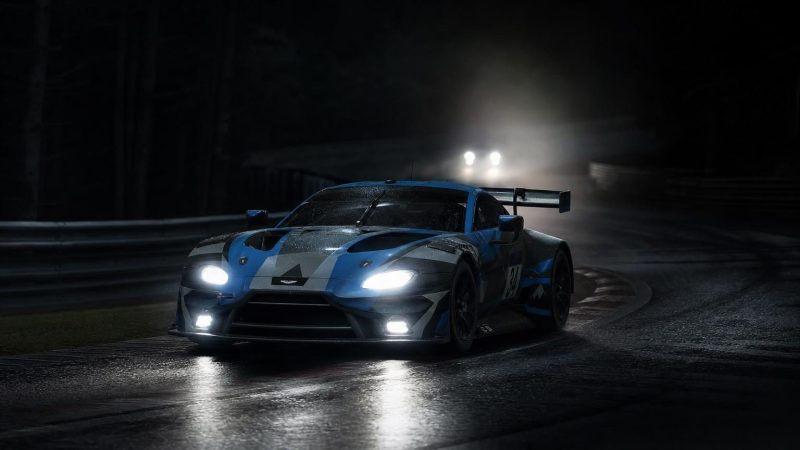
Vantage Le Mans 2026, 11e podium de classe et 3e place LMGT3 pour la #23. Une progression nourrie par 4 podiums IMSA et une Vantage GT3 affûtée.
Vantage Le Mans is now as much a telling statistic as it is a long-form story. On 14 June 2026, Heart of Racing / THOR’s Vantage #23 clinched 3rd in the LMGT3 class at the 24 Hours of Le Mans, a result that adds to ten other class podiums already earned by the Vantage and confirms a momentum set well before the Sarthe. Here we revisit the race unfold, the crew line-up, the role of the 2026 IMSA season, the case of the unconverted pole position, and the technical architecture that makes this record possible.
The result on 14 June 2026: how Vantage #23 secured the podium
Heart of Racing / THOR’s #23 completed the 2026 24 Hours of Le Mans in 3rd place in LMGT3, after a clean final stint with no excessive caution. According to media.astonmartin.com (14 June 2026), this brings the number of class podiums achieved by the Vantage at Le Mans to 11. Consistency, rather than fireworks, set the tempo: tidy stints, penalty-free pit stops, and tight management of double and triple tyre stints.
In a dense LMGT3 field punctuated by neutralisations, the British car stayed on the right train. Changing conditions were handled methodically: pit windows aligned with slow zones, rational tyre choices, and no reckless gambles under safety car. The crux came at night, when the Vantage settled into the top five before converting the opportunity at daybreak.
This podium also carries symbolism. Prodrive, a historic partner of the programme, celebrates 25 years at Le Mans and signs its 19th podium at the Sarthe (media.astonmartin.com, 14 June 2026). A statistic that underlines how, in endurance, well-worn habits often yield a few tenths a lap.
Gray Newell, Dudu Barrichello, Jonny Adam: a crew built for consistency
You don’t improvise on the gearbox late on a Sunday morning. Gray Newell delivered solid opening stints without draining the mechanical capital. Dudu Barrichello, in fine form this season, set the pace as the track evolved, particularly at stint ends where gaps hinge on steadiness. And Jonny Adam fulfilled his role as closer, as he has demonstrated in the past.
Jonny Adam’s pedigree matters. A double class winner at Le Mans, he took GTE Pro in 2017 alongside Darren Turner (media.astonmartin.com). That experience shows in the details: calibrating double tyre stints, reading Full Course Yellow phases, and sticking to the run plan set with engineering.
Newell and Barrichello, for their part, bring a clear upward curve. The former strings together clean stints, the latter arrived at the Sarthe leading IMSA GTD. Together, they draw a clear line: a crew structured for consistency, rather than a single headline lap.

4 IMSA podiums before Le Mans: a 2026 season that primes the Sarthe
The Le Mans 3rd place didn’t fall from a capricious sky. Before Le Mans, the Vantage amassed four IMSA 2026 podiums, with Dudu Barrichello leading GTD on 54 points (source Aston Martin, Laguna Seca release, April 2026). These results embed valuable automatisms: handling neutralisations, executing pit stops, and frictionless communication.
IMSA meetings served as a full-scale testbed for the British GT3. Long runs, refining fuel window strategies, and pitlane discipline translate effectively to Le Mans. This foundation converts a good qualifying into a complete race and explains a podium achieved without spectacle but with method.
This documented progression illuminates the story: Le Mans 2026 is no one-off. It is also reflected in our detailed analyses of the North American campaign, to be found in our recap of the Vantage GT3’s four IMSA podiums in 2026, where performance-building week after week clearly emerges.
The pole paradox: #27 starts up front but misses the podium
The Vantage #27 of Ian James, Zacharie Robichon and Mattia Drudi took LMGT3 pole, but did not convert it into a podium (media.astonmartin.com). It’s the classic endurance paradox: starting ahead does not immunise you against twists of fate. Traffic, neutralisations and pit sequencing reshuffled the deck.
Over 24 hours, average pace, mechanical frugality and error-free running count more than the perfect lap. The #27 showed outright speed; the #23 capitalised on consistency. Together they paint a faithful picture of the house philosophy: prioritising the exploitable performance window without forcing it.
To place this result in the context of the event, a factual summary of the 94th edition is available on the 2026 24 Hours of Le Mans page, useful to revisit the chronology of neutralisations that influenced LMGT3.
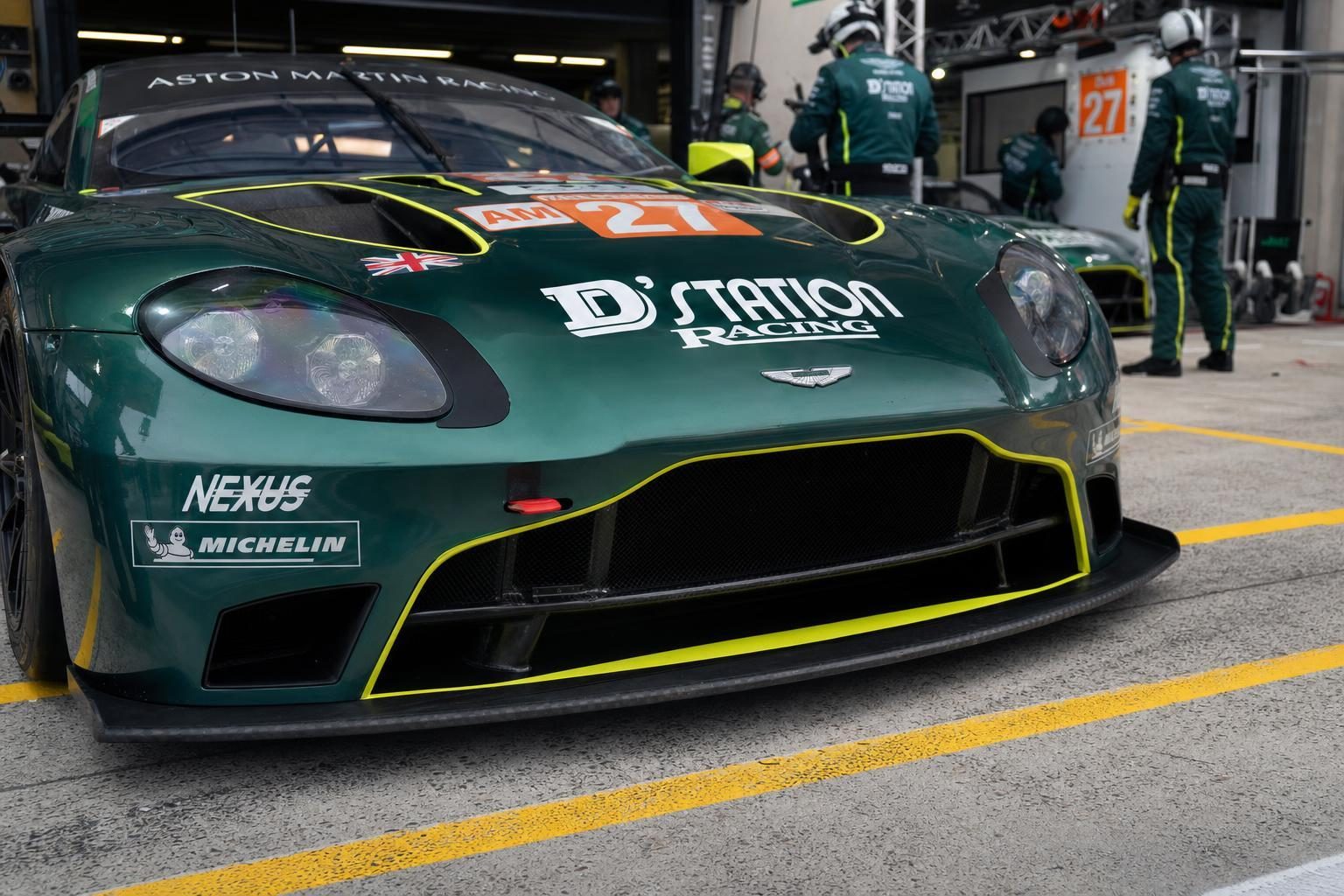
Vantage GT3 and its 4.0-litre twin-turbo V8: the architecture that makes it all possible
The technical base partly explains the consistency. The Vantage LMGT3 is built around a 4.0-litre twin-turbo V8 and a bonded aluminium chassis, a package described by Aston Martin in its Laguna Seca release. It offers an exploitable torque curve and stiffness beneficial to trail-braking phases and loading the car into the corner, two hallmarks of GT3 performance.
The choice of a twin-turbo V8, backed by endurance-honed electronics and refined traction control maps, favours repeatable lap times at the end of stints. Over a Le Mans night, that’s a guarantee of consistency on worn tyres and a light fuel load. The bonded aluminium architecture also aids camber precision and stability under aerodynamic load.
This technical foundation sits in continuity with the competition Vantages that have built the marque’s record at the Sarthe. For a wider view of the bloodline and GTE successes at LM, revisit our feature on the history and victories of the Vantage GTE, and for the road-going bridge, the Vantage MkII page highlights shared architectural choices.
The official manufacturer sheet also provides useful pointers on the GT3 and its road-going kin. See the Aston Martin website, alongside the detailed race report published by media.astonmartin.com.
Conclusion: Vantage Le Mans, proof through continuity
Beyond the immediate satisfaction of an LMGT3 podium, the message is clear: Vantage Le Mans advances by continuity. The #23’s 3rd place on 14 June 2026 adds to ten other class podiums to form a trajectory rather than an isolated fact. It rests on four IMSA podiums already banked this year and on proven hardware — 4.0-litre twin-turbo V8 and bonded aluminium — that favours repeatability.
In endurance, nuance often makes the difference. Between the #27’s unconverted pole and the #23’s rewarded consistency, Aston Martin reminds us that victory is sometimes prepared more in the workshop than in qualifying. The 2026 edition confirms it with restraint: Vantage Le Mans has chosen the patient path, and it knows where it’s going.