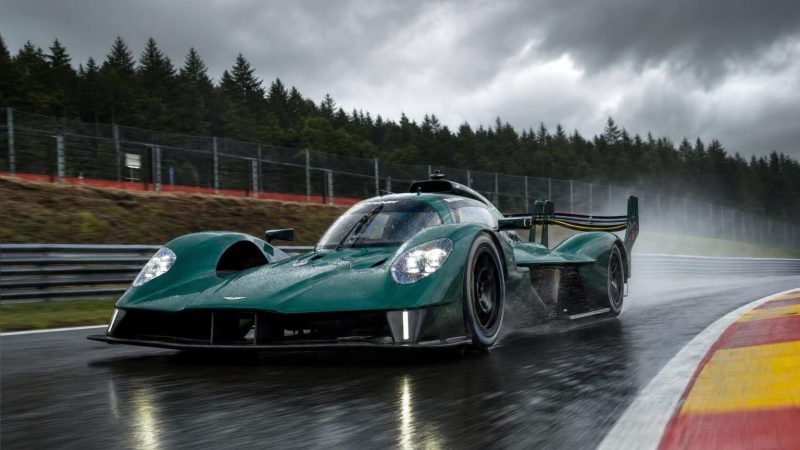
DB4 GT course, de Silverstone au Mans : chiffres, moteur et empattement raccourci éclairent la stratégie d’homologation et la rivalité face aux Ferrari.
DB4 GT racing: here’s what four key episodes of its career really reveal, from the prototype’s debut win at Silverstone to jousts with the Ferrari 250 GT, via engineering and homologation. Beyond the often-quoted 75 examples and 302 PS, we put into perspective facts sometimes drowned in legend, sticking to official and public sources.
Prototype DP199/1 at Silverstone, May 1959: debut victory and lap record before the official launch
On 2 May 1959, Stirling Moss gave prototype DP199/1 the kind of opening many models hardly dare dream of: the DB4 GT won its first outing at the Silverstone International Trophy, paired with a new lap record. According to the official DB4 GT media dossier and the dedicated Wikipedia page, this victory marked a flying start to its competition career.
This success, achieved even before production began, sheds light on the very clear intent behind the DB4 GT in racing: to validate radical technical choices on track and to establish the car’s credibility from the outset against continental benchmarks. Moss, a master at exploiting a lively engine and a sharp chassis, merely revealed potential that was already there.
The point here isn’t only the trophy won, but what that lap record implies: the DB4 base, enhanced by weight saving and a more compact geometry, could absorb a significant increase in pace. The DB4 GT in racing thus immediately showed a command of tempo that only the keenest rivals could contest.
Le Mans 1959 in the GT class: a single private DB4 GT versus the Ferraris, and what happened
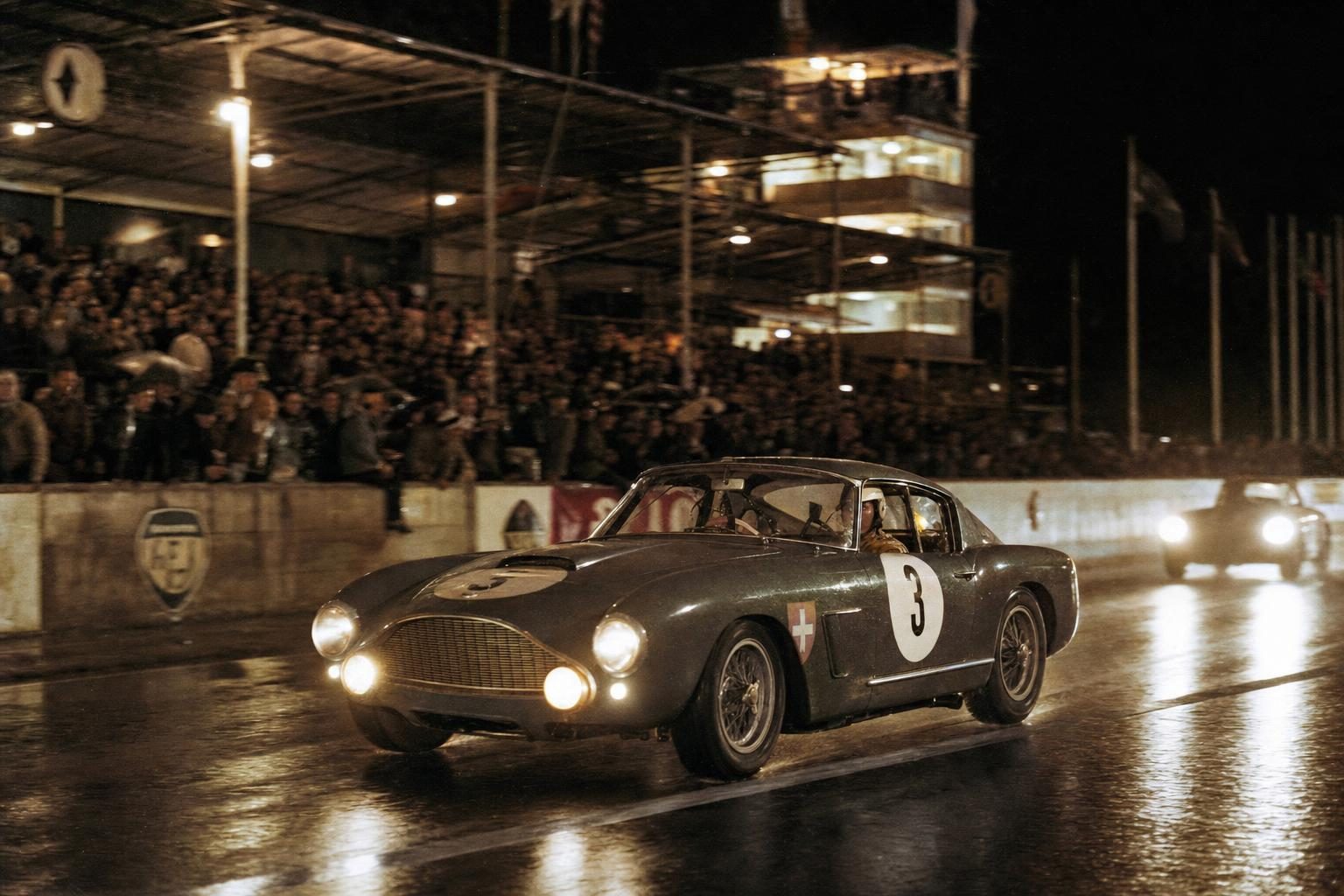
At the 1959 24 Hours of Le Mans, the blue-riband event highlighted another reality. A single DB4 GT was entered in the GT class by Écurie Trois Chevrons, for the Patthey/Calderari pairing. Opposite stood the highly honed Ferrari 250 GTs. Public sources — notably Wikipedia on the DB4 GT and the 1959 Le Mans edition — concur: the car retired.
Far from contradicting the Silverstone coup, this result recalls an ageless truth of endurance: consistency trumps brilliance. The DB4 GT in racing, fast and promising, did not complete its Sarthe story in 1959. But that lone, private entry also speaks to a transition phase for a model then in the midst of homologation and rollout.
Here one gauges the duality of the programme: shine in sprints, tame endurance and, in the background, secure recognition in the right category. Le Mans was a high hurdle, and the duel with the 250 GTs, instructive. What followed would confirm that outright speed wasn’t the issue… it still needed to be married to watchmaker-grade reliability.
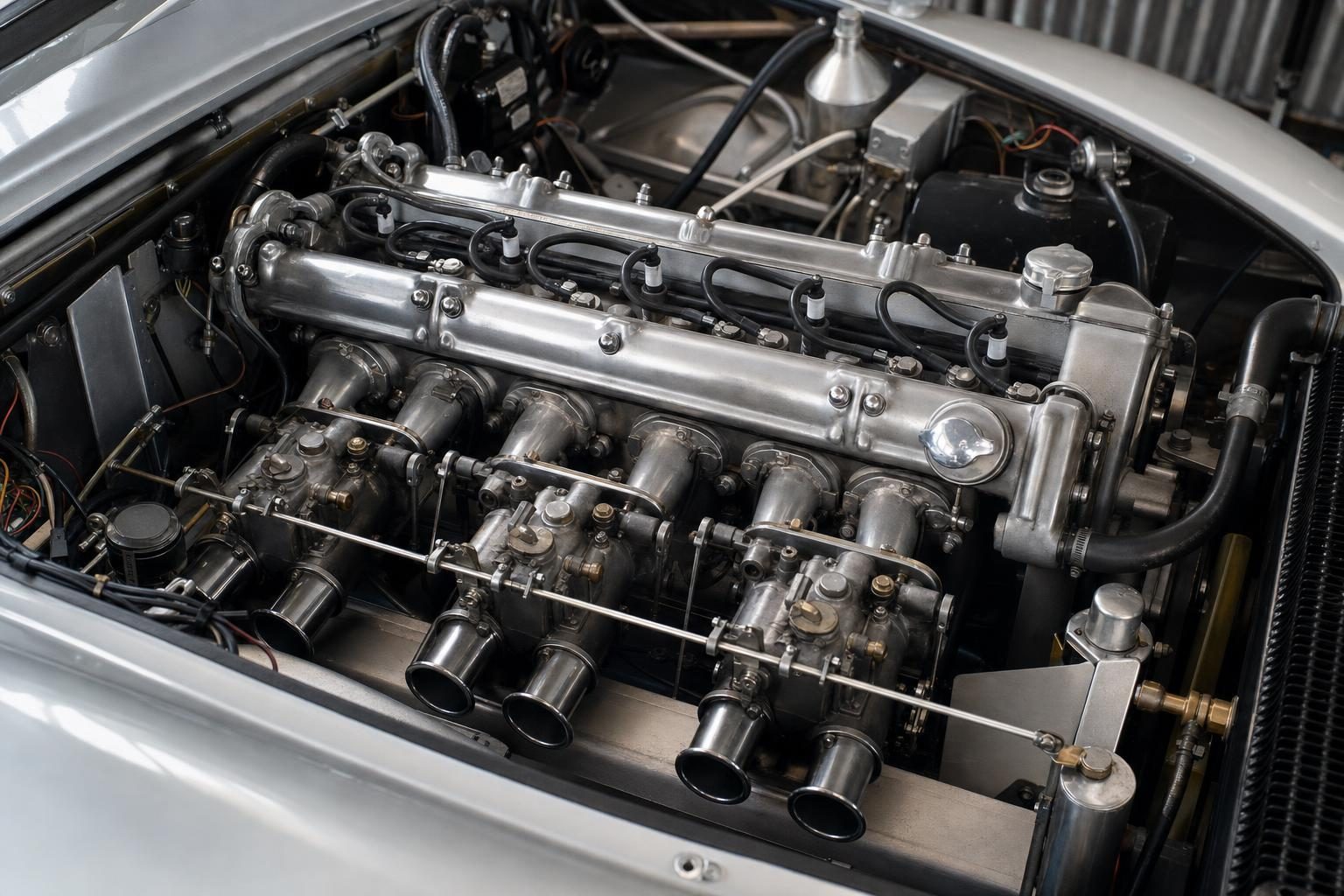
The 3.7-litre twin-plug engine with triple Weber: 302 PS in racing tune
Under the bonnet, the DB4 GT in racing relied on a 3.7-litre straight-six with twin ignition and three Weber carburettors, delivering 302 PS at 6,000 rpm and a compression ratio of 9:1. These figures, reported by the Wikipedia reference and the Aston Martin media site, illustrate a no-nonsense approach: more air, better-managed combustion and crisp throttle response.
In this configuration, the Aston could exceed 160 mph (around 257 km/h) and post 0–100 mph–0 in 20 seconds, again according to the brand’s media dossier. In other words: a broad usable range and incisive pickup, valuable out of corners as well as down long straights.
This mechanical character sculpts the DB4 GT’s racing identity. Twin ignition sharpens combustion at high revs, while the triple Weber ensures stable fuelling at sustained cadence. The whole provides an ideal bandwidth for track use without sacrificing the progressive response prized by drivers.
The 127 mm shorter wheelbase: why this choice made the GT more agile than the standard DB4
Compared with the standard DB4, the wheelbase was reduced by 5 inches (about 127 mm), and weight dropped by around 85 kg. These data, published on the Aston Martin DB4 GT and DB4 GT Zagato page and corroborated by Wikipedia, are no footnotes: they signal a clear chassis focus.
A shorter wheelbase reduces rotational inertia and makes changes of direction crisper. On track, the DB4 GT in racing proved more eager to pivot, more inclined to point its nose at the apex. The weight saving, for its part, reduced weight transfer and eased the burden on the brakes. Together, these choices shaped a car that thought corner first, grand touring second.
There is also a GT homologation logic at play. Lighten, compact, sharpen: three levers to meet the rulebook and assert a civilised track-car identity. Far from a styling exercise, this shortened wheelbase is the keystone of the handling, fundamental to the DB4 GT’s racing story.
Rivalry with the Ferrari 250 GT: what the 1960–1963 international results really reveal
The rivalry with the Ferrari 250 GT is the natural lens through which the DB4 GT in racing from 1960 to 1963 is judged. The duel was signposted from 1959 at Le Mans and fed by opposing strengths: on one side, a sharp, light and lively English contender; on the other, the GT benchmark from Italy. Detailed standings are beyond our factual scope, but two milestones frame the debate: the debut win at Silverstone and the retirement at Le Mans.
These bookends tell of a car with indisputable potential, still being orchestrated. The 302 PS, the quoted top speed beyond 160 mph and the 0–100–0 in 20 s support the case for a front-rank competitor. Yet regularity, especially in endurance, demanded a perfect alignment of mechanical planets.
Finally, a word on production, which ties into the entry strategy. According to astonmartin.com, 75 examples with Touring coachwork were built between 1959 and 1963; according to the Aston Martin media site, total production reached 94 units including special versions. This divergence — between strict Touring scope and a broader tally — illustrates the complexity of a lineage shaped as much for track as for road.
To set this rivalry in the family tree, our feature on the DB4 and the article dedicated to the DB4 GT’s racing history versus Ferrari from 1959 to 1963 usefully complete the picture.
Conclusion: what the DB4 GT in racing still teaches us today
In light of these four facets, the DB4 GT in racing tells a simple, lasting truth. First, a sound base can win on its first outing — Silverstone 1959 proves it. Next, endurance demands more than speed, as Le Mans reminded us. Between the two, the engineering — 3.7 litres with twin plugs, triple Webers, 302 PS — and the chassis — shortened wheelbase, lower mass — form the equation of a sporting GT that is more precise than the standard DB4.
The rivalry with the 250 GT detracts nothing from the elegance of the approach: target homologation, establish performance and let the facts speak. To explore this chapter further, one can cross-reference Wikipedia’s synthesis with Aston Martin’s official documentation, without forgetting our take on the DB4’s technical ruptures at Newport Pagnell. In short, a way to let the DB4 GT in racing keep leading the dance, without raising its voice more than necessary.