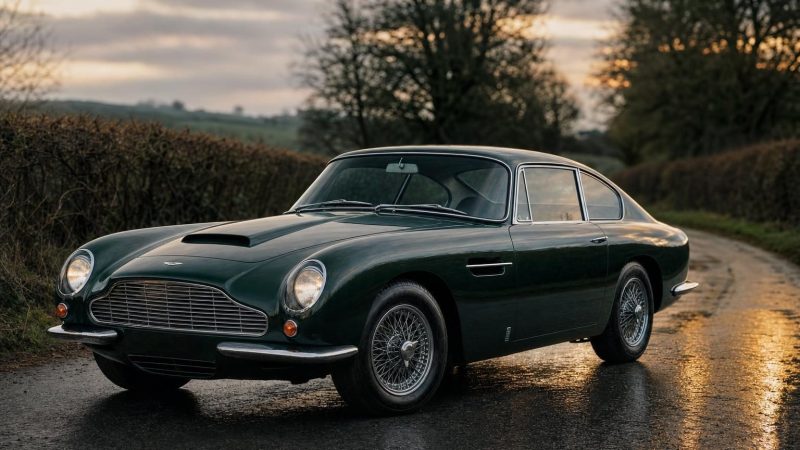
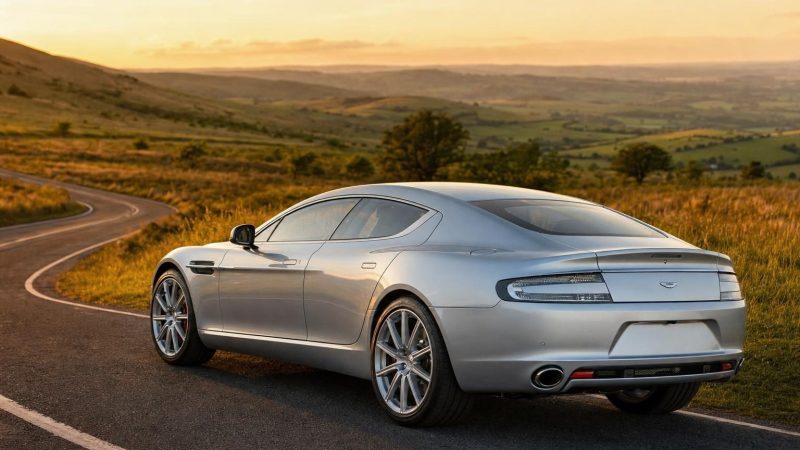
DB Mark III, de Genève à New York en 1957 : moteur Marek repensé, grille signature, freins Girling et 551 exemplaires. Le vrai jalon avant la DB4.
The DB Mark III is not a mere refinement of the DB2/4 line: it is the moment when Aston Martin comes together, visually and technically. On the menu: a two-stage launch between Europe and America, a six-cylinder reinterpreted by Tadek Marek, the first “signature” grille devised by Bert Thickpenny, and the progressive adoption of disc brakes. Behind these understated choices lies a strategic shift often eclipsed by the flamboyant DB4. Here is why this pivotal model deserves a front-row place.
Geneva and New York, March 1957: a launch across two hemispheres
Unveiled simultaneously at the Geneva Motor Show and in the United States in March 1957, the DB Mark III immediately chose an international career. According to media.astonmartin.com, this coordinated launch preceded an opening of the British market only in October 1957, at the London Motor Show. In other words: for several months, this Aston was “export only”, a clear symbol of the marque’s ambitions in the major transatlantic markets.
This unusual timetable suggests a clear-sighted strategy: consolidate reputation in the United States while nurturing desire in Europe. The DB Mark III then addresses an audience already attuned by racing and the DB reputation, but in need of a stronger signature. It would get it, starting with its front end and through targeted technical evolutions.
The double unveiling also placed this model at the heart of a transatlantic narrative: the same coupé, the same silhouette, presented to different car cultures, yet with an identical message: Aston Martin now plays on equal terms on the world stage, with a confident identity.
Tadek Marek and the reworked six-cylinder: more than fine-tuning
The 3-litre inline “twin-cam” six is not simply tweaked: it is fundamentally redrawn by Polish engineer Tadek Marek. According to astonmartin.com (news 2018), this work is not a matter of detail but a mechanical refoundation, while extending the original Lagonda architecture. The DB Mark III thus becomes the last DB model powered by this Lagonda-lineage six-cylinder, a hinge between heritage and renewal.
This reworked engine anchors the car in a logic of lasting optimisation: better breathing, increased efficiency and preparation of the ground for the generations to come. In the workshop, no talk of a noisy revolution, but of exacting continuity. That is the art of Aston Martin at this time: improving without denaturing, clarifying without brutalising.
At the other end of the chassis, the DB Mark III also marks an end of cycle. It is the last model to use the chassis designed by Claude Hill, notes media.astonmartin.com. Here again we touch a symbolic threshold: a technical stronghold closes just as the style and handling identity becomes firmer. The page is about to turn, and not only for the mechanics.
Bert Thickpenny’s grille: the birth of a face that has lasted 70 years
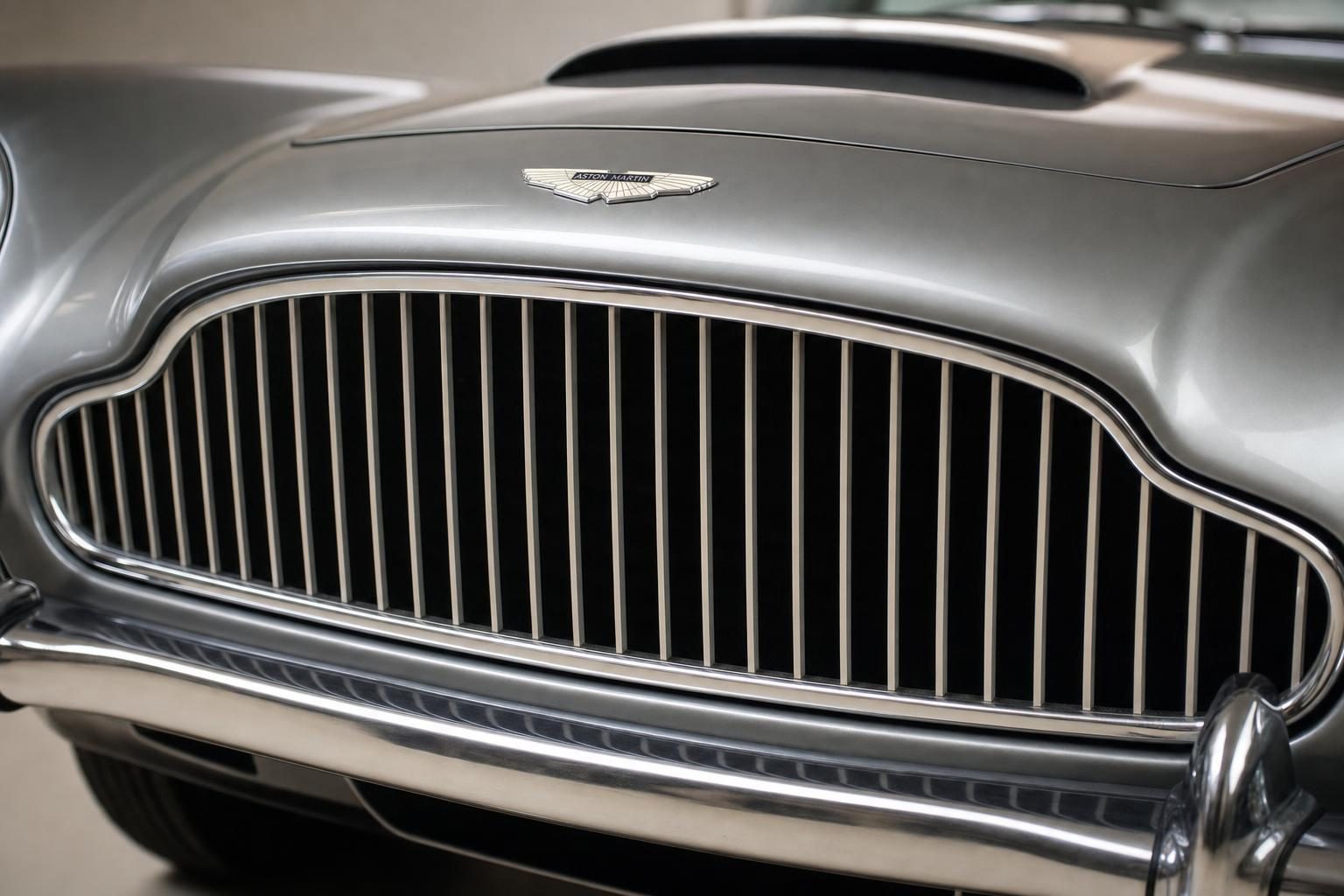
The DB Mark III inaugurates the radiator grille that would become the marque’s signature. Designed by Bert Thickpenny, it is, according to Wikipedia and media.astonmartin.com, the first appearance of a “face” adopted on all subsequent road models. In a single styling decision, Aston Martin gained what many seek for decades: an identity legible at first glance.
This grille is not a mere ornament. It structures perception: width, curvature, proportion, everything contributes to a formal language that would set the tone to this day. On the DB Mark III, the design pairs with a slender bonnet and understated wings. Discretion does not preclude imprint. It makes it last.
In an industry where fashions turn quickly, this stylistic continuity amounts to brand capital. The front end inaugurated here would become a cultural marker, from the DB4 to the moderns, and a motif instantly associated with the hushed performance dear to Newport Pagnell. The DB Mark III is its template.
Girling disc brakes: optional, then mandatory after 100 cars
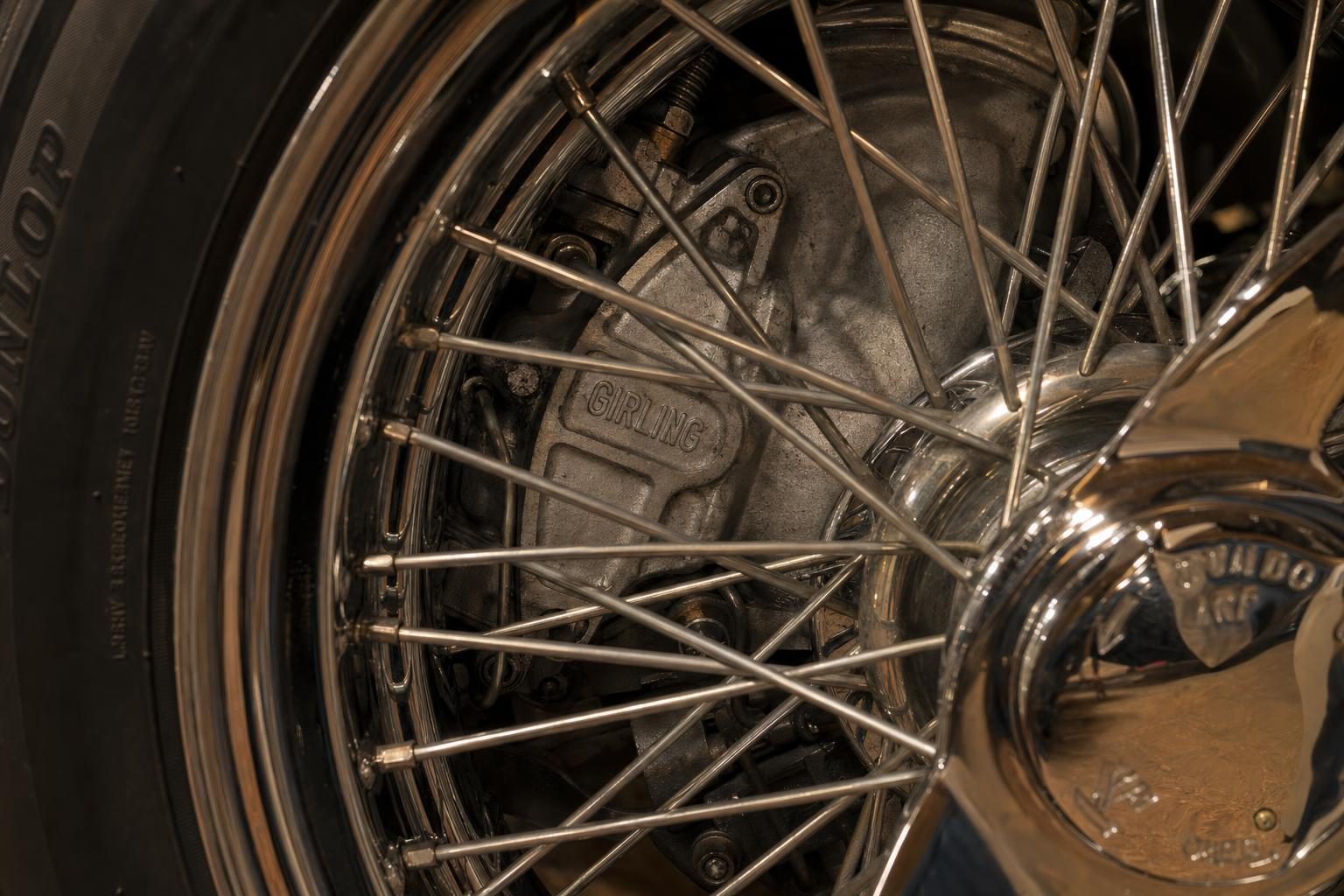
Another structuring decision: the adoption of Girling disc brakes. According to media.astonmartin.com and Wikipedia, they were initially optional on the first 100 cars, then became standard. This cautious phasing illustrates the Aston Martin method: validate in real-world conditions before universalising.
Such a technical evolution changes everyday use. Brake consistency, resistance to fade and the confidence it inspires transform the high-speed experience. The coupé becomes more homogeneous: Marek-honed engine up front, Girling discs at all four corners thereafter, the whole gains modernity without breaking with the house balance.
One can see here a synthesis of the DB Mark III spirit: progress by measured touches. First the option, then generalisation. Neither fad nor stubborn conservatism: a controlled ramp-up that anchors this model as a technical milestone.
551 cars built at Feltham: production figures and rare variants
The DB Mark III was produced in 551 examples, according to Wikipedia. Among them, 84 Drophead Coupés, and only 5 Fixed Head Coupés: discreet volumes that speak to the model’s intrinsic rarity. Built at Feltham, this Aston belongs more to artisan series than mass production, which does nothing to harm its aura today.
This measured diffusion also illuminates the strategy: aiming for rightness rather than profusion. The collector reads distinct variants, most discreet in appearance but significant in the marque’s chronology. The Drophead Coupés bring open-air elegance to the same technical framework; the ultra-rare Fixed Head Coupés embody an even more specialised choice.
Cultural posterity plays its part: in Ian Fleming’s novel Goldfinger, James Bond drives a DB Mark III, the only car in the novels to feature gadgets, recalls Wikipedia. Before cinema and the DB5, literature had already sealed the link between the British spy and this lineage. A further symbolic validation for this model too often relegated behind its famous junior.
To delve deeper into the genealogy and specifics of this model, see our dedicated feature on the origins and variants of the DB Mark III, and the perspective alongside the foundational technical history of the DB2 and the rise of the DB4.
Conclusion — why the DB Mark III has all the hallmarks of an Aston Martin milestone
In many respects, the DB Mark III is the crucible where Aston Martin’s modern fundamentals are expressed. A confident transatlantic launch, a six-cylinder reworked by Tadek Marek while closing the Lagonda era, the first grille signed by Bert Thickpenny and Girling brakes initially optional then generalised: the sequence is clear and coherent.
Faced with the DB4, which would grab the spotlight, the DB Mark III establishes the grammar. It asserts a lasting visual identity and prepares, mechanically, what follows. Its limited production (551 cars, including 84 Drophead Coupés and 5 Fixed Head Coupés) and its cultural imprint — all the way to James Bond in Goldfinger — finish setting it apart.
This model is therefore not a mere perfected DB2/4: the DB Mark III charts a path, discreet but decisive. To understand where the modern Aston comes from, this is where you must begin.