DBX S comparé au DBX707 : +20 PS des turbos Valhalla, roues magnésium 23 pouces (-19 kg), toit carbone (-18 kg) et équilibre revu. Guide d’achat éclairé.
The DBX S is aimed at DBX707 owners who want to quantify, factually, what the latest evolution changes: mechanical gains, targeted weight savings and set-up tuned for efficiency, without hyperbole. Here, we compare what Aston Martin has confirmed — turbochargers from the Valhalla, 23-inch magnesium wheels, a carbon-fibre roof and a new grille — against the DBX707’s profile, to guide a rational choice.
DBX S turbochargers borrowed from the Valhalla: +20 PS and a shared development philosophy
According to Aston Martin, the DBX S adopts turbochargers directly derived from the forthcoming Valhalla. The claimed result: +20 PS over the DBX707. The exact output is not published separately from the DBX707’s 707 PS; the marque therefore suggests around 727 PS, to be verified on the configurator at the time of purchase. True to the house ethos: measured gains, delivered by proven in-house hardware.
This technology sharing between a supercar powertrain and the grand touring SUV reveals a strategy of a common boost platform. For the buyer, the benefit is twofold: an extra margin of performance without complicating day-to-day use, and a development chain backed by a halo-car programme. It’s a cautious, effective, very British approach.
Versus the DBX707, this added puff doesn’t reinvent the character; it sharpens it. Drivers who often use dynamic mode will chiefly feel stronger mid-range response, the product of more advanced turbines. Others will appreciate the idea of a better-breathing engine without upending the acoustic signature.
23-inch magnesium wheels: 19 kg less unsprung mass, a first in the segment
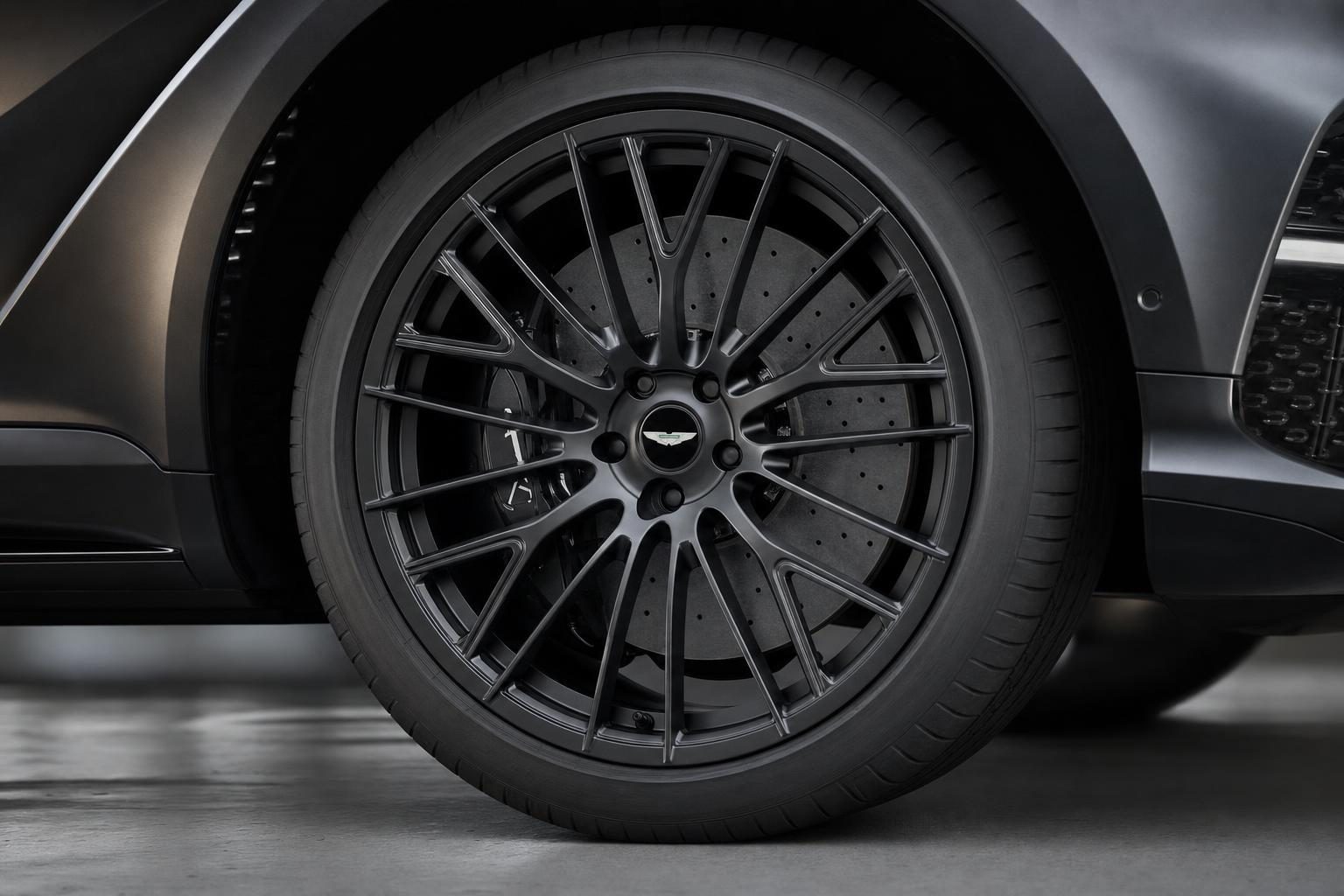
The DBX S offers optional 23-inch magnesium wheels, a first in the luxury SUV segment according to Aston Martin. The saving can reach 19 kg of unsprung mass. For anyone coming from a DBX707, that figure speaks volumes: taking weight out where it matters most to the chassis means better front-end agility, more repeatable grip and improved bump isolation on imperfect roads.
Practically, less rotational inertia eases the dampers’ job and reduces steering effort in rapid transitions. At a brisk pace, the Aston benefits from cleaner line-holding over crests and more consistent braking. At a gentler pace, the car exudes that hushed effortlessness Gaydon clients seek. The DBX707 retains a lower running cost if you stick with 22s; but for precision, the DBX S’s magnesium option is the decisive argument.
To place these choices within the range, see our dossier on the DBX universe, as well as our reference DBX707 road test to build your own hierarchy of sensations.
The carbon-fibre roof: 18 kg off the very top, and what it changes dynamically
Another key DBX S option: a carbon-fibre roof, replacing the standard glass roof and removing 18 kg at the vehicle’s highest point (source: Aston Martin). Dynamically, taking weight out high up reduces roll moment and promotes crisper turn-in. The benefit shows as much on a B-road as on a sweeping motorway: the attitude moves less, the steering feels more even around the straight-ahead.
Clients used to a glass-roof DBX707 will also appreciate the drop in resonances and the impression of a “taut” cabin in the Anglo-Saxon sense: a structure that flexes less under compression. It’s an option that appeals to drivers who value overall coherence more than spectacle.
In use, the trade-off is clear: the glass roof preserves a bright ambience, the carbon prioritises overall rigidity. One doesn’t cancel out the other; the choice is about priorities.
Splitter, diffuser and exhausts: aero more assertive than the DBX707’s
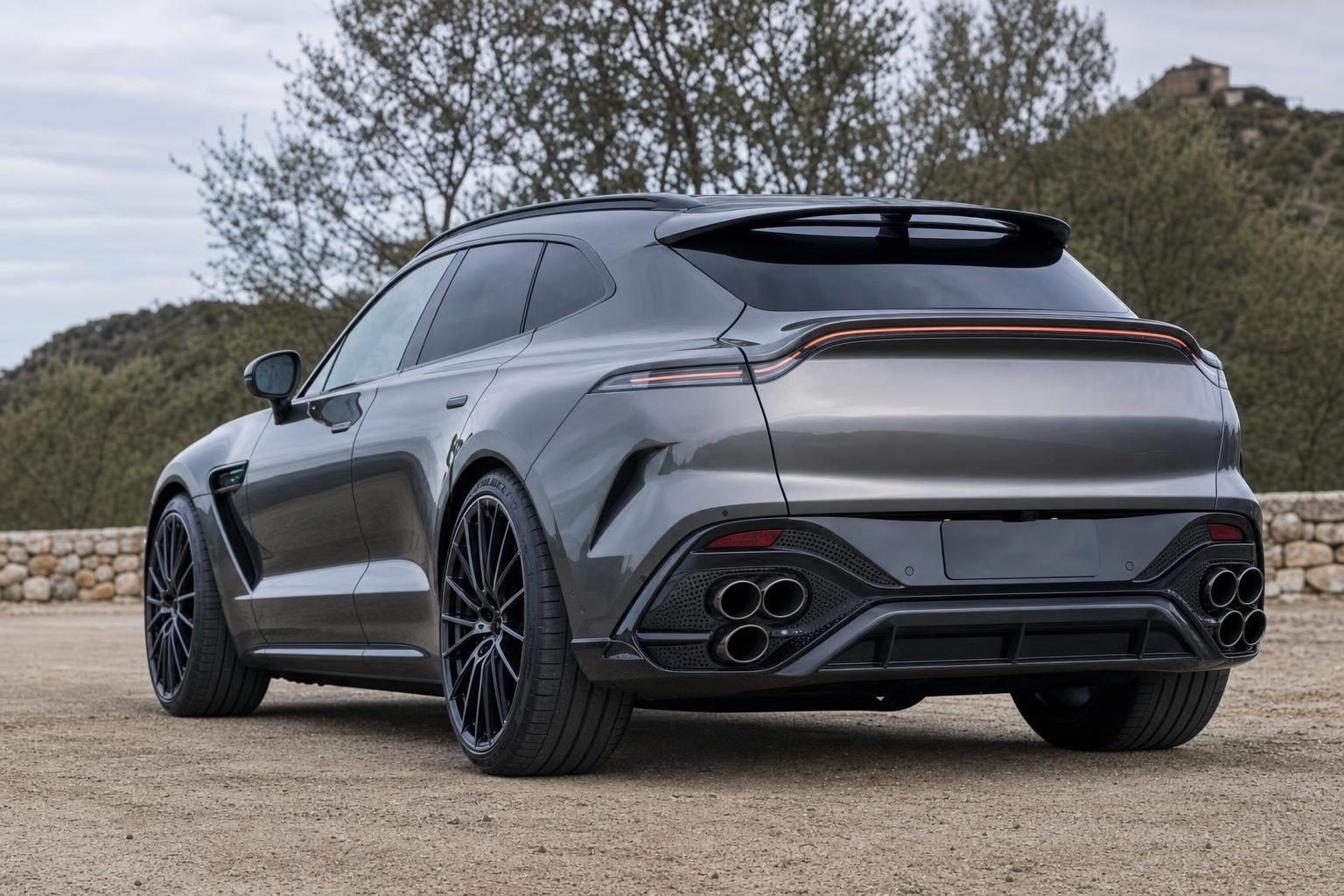
Visually and functionally, the DBX S puts greater emphasis on efficiency. If one stand-out piece must be retained, it’s the optional polycarbonate honeycomb grille, with more than 25,000 facets and contributing to shifting mass distribution rearwards (per Aston Martin). Moving a few kilos that way helps the car rotate and gain high-speed stability.
As for the lower-body elements — splitter, diffuser, tailpipes — their treatment aligns with the pursuit of cleaner downforce and contained drag. Without public figures directly comparable to the DBX707, the interest is chiefly pragmatic: better-controlled airflow management and a visual identity that matches the mechanical promise.
For product context and official media deliverables, the Aston Martin Media portal centralises releases and imagery; for the model’s genealogy, the DBX page on Wikipedia is a useful refresher.
Price and positioning: Top Gear Super SUV 2026 and what the market expects
The DBX S has been named Super SUV of the Year 2026 by Top Gear, a distinction noted by Aston Martin. Coupled with the marque’s description of it as “the world’s most powerful SUV powered solely by an internal combustion engine”, the positioning is clear: a cutting-edge proposition, unapologetic, sitting above the DBX707 in performance and set-up.
In the absence of a detailed public price in the sources consulted, pricing signals will first show in the technically rich options: magnesium wheels and carbon roof. These lines reflect a logic of selective lightening and chassis responsiveness rather than cosmetic inflation. Clients configuring with focus will prioritise these two to secure the most tangible dynamic gap versus a like-for-like DBX707.
To place the philosophy within the range and anticipate resale, our page dedicated to the Valhalla sheds light on shared turbo know-how, while the DBX guide helps gauge overall coherence against other variants.
Conclusion: should you move from DBX707 to DBX S?
If your priority is steering precision and consistent performance, the DBX S bundles measurable advances: +20 PS thanks to the Valhalla turbos, -19 kg of unsprung mass via the 23-inch magnesium wheels, -18 kg off the roof with carbon-fibre, and tidier airflow management, exemplified by the 25,000-facet polycarbonate grille. Together they create a keener SUV than the DBX707 without sacrificing everyday amenity.
On like-for-like equipment, the DBX707 retains rational appeal. But if you target the magnesium option and the carbon roof, the dynamic gap becomes tangible. The exact output remains to be checked on the official configurator, and your decision should reflect your use. In any case, the DBX S stands as the line’s most complete iteration: an evolution by facts rather than words.